Hopper Mixer: Plan Residual-Blend Checks Before Container Reuse
By QUANPIN
A hopper may contain material after the apparent end of discharge. Define how residual blend is identified and handled before the container enters another pharmaceutical campaign.
The focus is the boundary between a completed blend’s discharge and the container’s approved reuse. The discussion does not assume that retained material can automatically join another batch. See the matching pharmaceutical industry applications.
How Should Residual Blend Be Handled Before Hopper Reuse?
Identify the discharge endpoint, the relevant inspection locations and the intended next use of the hopper.
Keep retained material visible in the batch reconciliation and follow the approved quality and cleaning procedures for its disposition. Use product-specific development knowledge to justify the attributes being examined. See FDA ICH Q8 pharmaceutical development.
Equipment Principle and Material Requirements
The hopper mixer redistributes an identified container charge during its specified motion. Emptying and preparation for reuse are separate operating stages. Describe the intended hopper mixer machine duty using the actual ingredient properties and working load.
Material can remain in contact locations or the discharge path; its significance depends on the actual blend and campaign sequence.
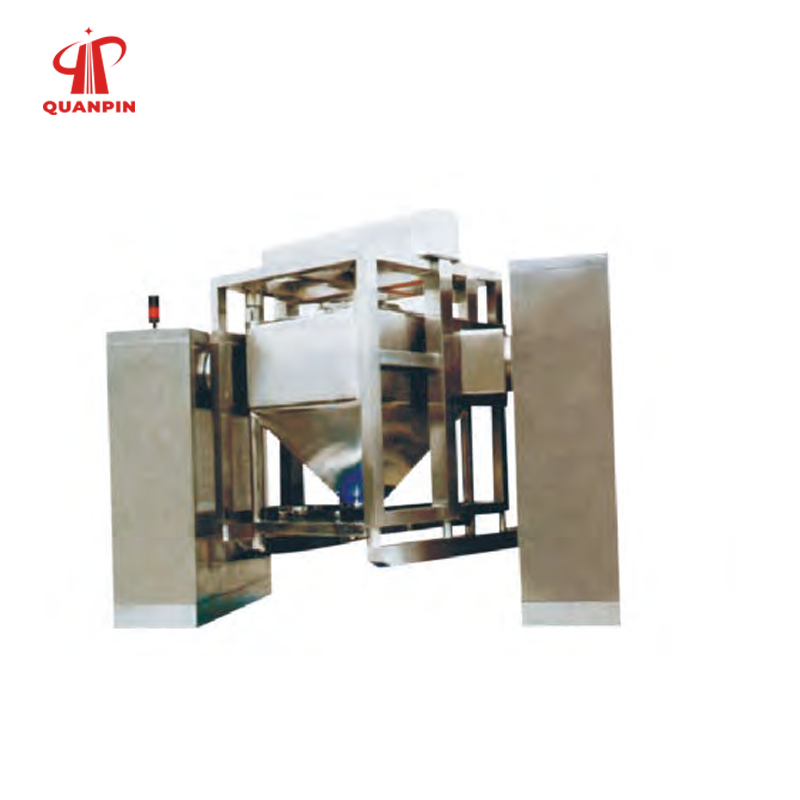
Five Steps for the Application Study
Define discharge completion
Define the completed blend and the approved event marking the end of its discharge.
Inspect approved locations
Inspect relevant accessible locations only through the supplied safe-access procedure.
Record retained material
Record retained material using the site’s established inspection or measurement method.
Resolve disposition and cleaning
Resolve material disposition and the required cleaning or preparation for the next campaign.
Release the identified hopper
Document the hopper’s released status before it receives a new identified charge.
Four Process Boundaries to Record
Batch boundary: preserve the identity of material remaining from the completed blend.
Inspection: identify the locations and method actually covered.
Disposition: keep removal, reuse or rejection decisions within the approved quality process.
Container release: distinguish a visually empty vessel from approved readiness for its next duty.
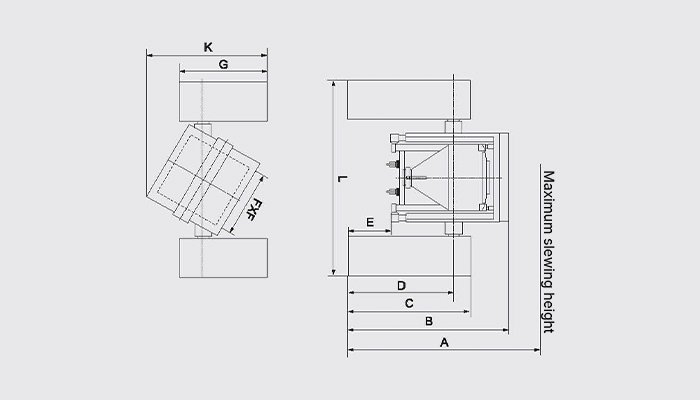
Hopper Mixer Components and Interfaces
Hopper loading
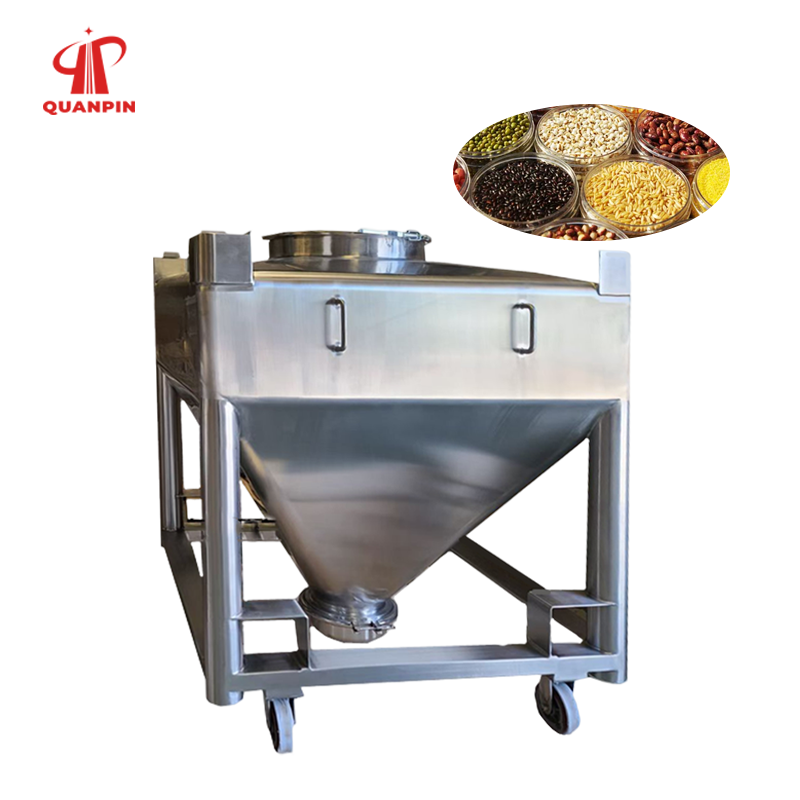
The container interior defines much of the product-contact space and needs practical inspection access. The bin blender comparison needs both the sample method and the discharge boundary.
Clamping frame
The outlet valve and nearby surfaces belong in the residual-material review. Choose the granule blending arrangement for the documented material rather than a generic vessel-volume claim.
Rotation drive
Connections and transfer accessories can hold material beyond the visible hopper body.
Container closure
The support and securing arrangement must follow the supplied procedures during discharge and inspection.
Transfer interface
The cleaning and preparation scope should identify the parts actually included between campaigns.
Identification and sampling records
Batch and equipment-status records should link the emptied container with its next approved use.
Comparison Choices and Process Interfaces
Define the Reference Basis
Reuse for another batch of the same formulation can pose a different review question from a different product campaign. Review the low-shear tumble mixing interfaces, including charging, sampling and receiving equipment.
Neither situation should be approved solely because the equipment model remains unchanged.
Follow the site procedure for the actual product and equipment history.
Keep the Comparison Interpretable
If residual material is measured, keep the measurement method and reporting basis with the result.
Do not treat a rough visual estimate as a quantitative recovery measurement.
Retain enough identity information to investigate a later batch-reconciliation discrepancy.
Assess the Receiving Process
A change in discharge configuration can change where material remains after emptying. Define how powder blender connects to the preceding preparation and the next operation.
Review that change against both cleaning access and the batch-accounting boundary.
Keep the container status unambiguous while any required inspection or release decision remains unresolved.
Industry Application and Acceptance
The relevant industry is pharmaceutical powder and granule preparation.
Batch identity and product-contact condition are separate from the completed blend’s uniformity result. A development comparison should not be presented as complete validation of an untested production process. See FDA process validation guidance.
The required cleaning and inspection evidence should reflect the actual formulation and campaign sequence.
Transferring the hopper to another operation does not remove the need for its documented status and material history.
Benefits and Practical Limits
A clear residual-blend review helps keep material reconciliation, cleaning and equipment release connected. Selection of powder mixer should include cleaning access and the intended campaign sequence.
It does not provide a universal permissible residue or authorize transfer of retained material between pharmaceutical batches. Assess relevant quality risks using the actual material and process context. See FDA ICH Q9 quality risk management.
Six Details That Affect the Result
Keep the completed batch and hopper identities together through the discharge record.
Define which event ends discharge for the purpose of the inspection.
Record any additional container movement or handling used during approved emptying.
Distinguish retained material in the hopper from material in an attached transfer accessory. Interpret measurements through process understanding rather than treating an isolated instrument reading as product acceptance. See FDA process analytical technology framework.
Retain the responsible disposition and equipment-release decisions.
Reassess relevant discharge or contact-path changes before applying an earlier inspection method automatically.
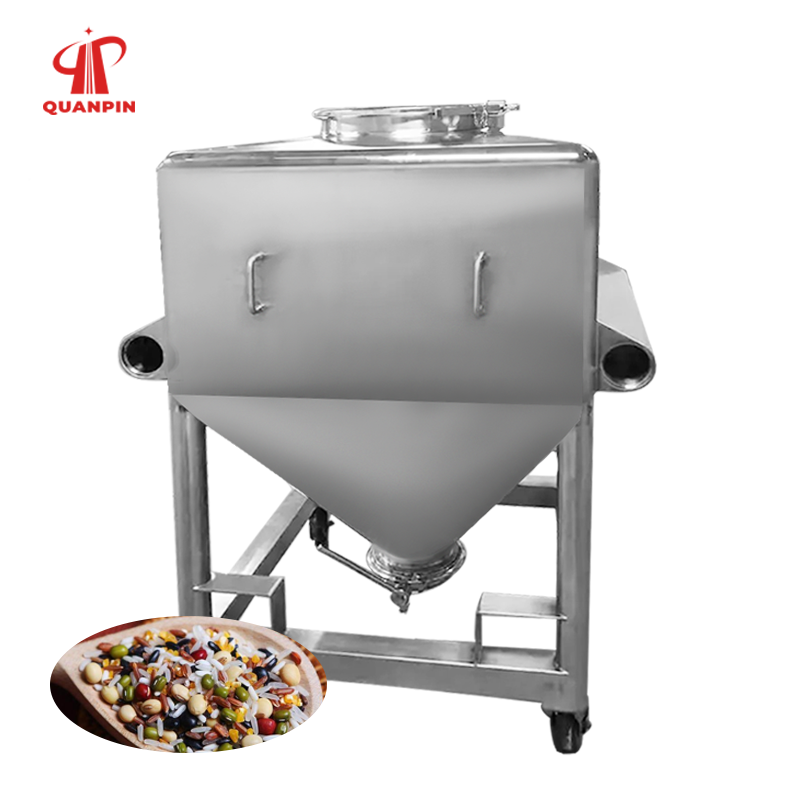
Safety and Operating Requirements
Follow approved securing, isolation and access arrangements for the hopper and connected equipment.
Assess product exposure and cleaning hazards independently from the blend-recovery calculation.
Prepare Your Equipment Enquiry
Send QUANPIN the material properties, discharge arrangement and required inspection and campaign-change duties. Specify the evidence required for Mixing Equipment; a favorable visual impression is insufficient where composition matters.
Ask the proposal to identify contact components and access arrangements relevant to the intended container-reuse procedure. Compare uniform powder mixing at the same material and acceptance boundary before scaling the working batch. Retain knowledge and manage adopted process changes through the pharmaceutical quality system. See FDA ICH Q10 pharmaceutical quality system.
Frequently Asked Questions
Does an empty appearance establish readiness for reuse?
Not necessarily. The defined inspection and release procedure determines whether the hopper is ready for reuse.
Can retained blend move automatically into another batch?
Use the responsible quality procedure for the actual material; do not assume automatic transfer into another batch.
Does uniformity establish container condition?
No. Container condition, batch identity and blend composition answer different questions.
Should transfer accessories be inspected?
Where relevant, include their retained material and cleaning scope in the review.
How should residual-mass figures be reported?
Record both the method and the material boundary represented by any recovery figure.
What discharge requirements should be supplied?
Share discharge and inspection requirements so QUANPIN can review the proposed hopper contact path.
Discuss Your Hopper Mixer Application with QUANPIN
Discuss your application with Hopper Mixer specialists at QUANPIN. Use the enquiry below or our contact page.
Email sales@quanpinmachine.com or stacie@quanpinmachine.com. Call +86 19850785582, or contact us on WhatsApp: +86 15921493205.