
QUANPIN Mixing Equipment
Compare hopper, tumble, motion, trough, conical-screw and ribbon mixing configurations with QUANPIN. The directory below contains 9 equipment types for batch blending discussions. Assess this powder mixer as part of the complete mixing equipment scope, with representative dry blending and granule blending trials to check uniformity and handling after discharge.
Send the material name, bulk density, particle size, moisture, batch size and blending target. Product-contact materials, loading and discharge arrangements, cleaning access, controls and any special protection requirements are agreed for the selected equipment.
Mixing Equipment
Model: HLD
HLD Series Hopper Mixer
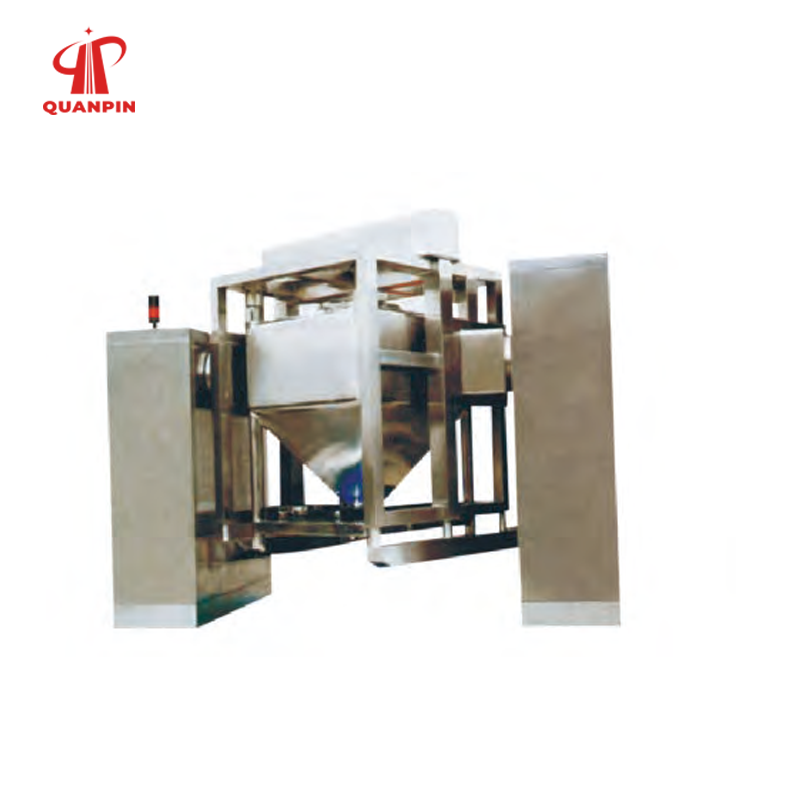
A hopper mixer blends a batch in its own vessel and supports a workflow built around removable mixing containers.
Working Principle, Materials & Selection
Working principle. The loaded hopper is clamped within a rotating frame. As the assembly turns, the material rolls, divides and recombines under gravity. After blending, the hopper can be released for the agreed transfer or discharge arrangement.
Suitable materials. Dry powders and granules suited to container tumbling, particularly where batch handling needs to be considered together with mixing.
Selection and configuration. Match hopper volume and working fill to batch mass and bulk density. Confirm container interchangeability, loading access, discharge height and cleaning arrangements; evaluate segregation during transfer as well as blend uniformity.
Model: FZH
FZH Series Square-Cone Mixer
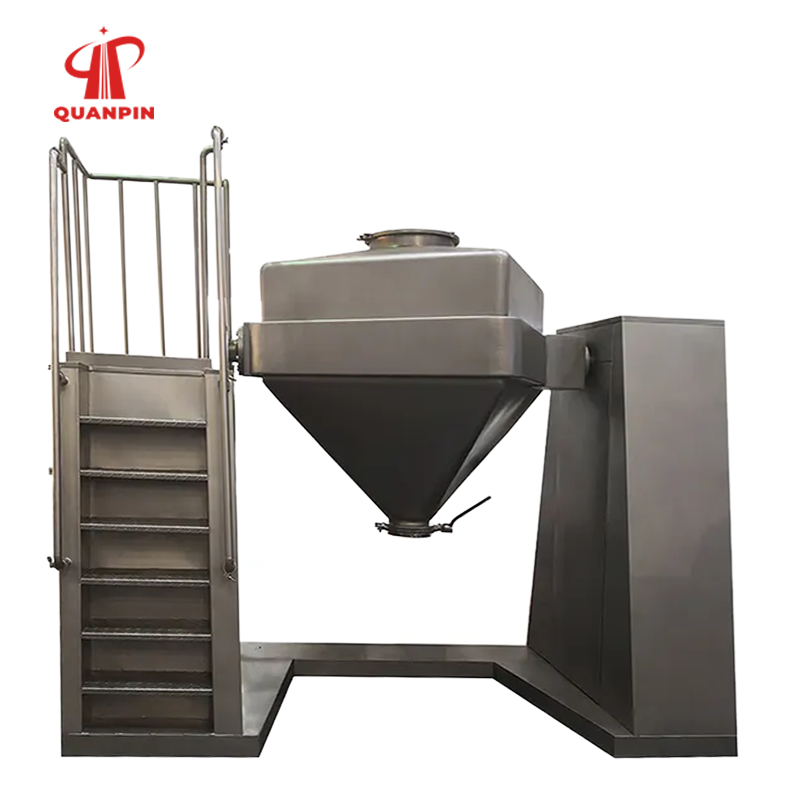
A square-cone mixer uses a rotating shaped vessel to redistribute powder and granule batches.
Working Principle, Materials & Selection
Working principle. Rotation changes the position of the square and conical sections relative to gravity. Material moves through the changing vessel geometry, repeatedly separating and coming back together during the mixing cycle.
Suitable materials. Dry powders and granules that tumble freely enough to move throughout the vessel. Material flow and particle fragility should be assessed for the proposed formulation.
Selection and configuration. Review batch mass, bulk density, working fill and mixing time together. Confirm inlet and outlet access, available rotation clearance, product-contact surfaces and how representative samples will be taken to establish the blending endpoint.
Model: EYH
EYH Series Two-Dimensional Motion Mixer
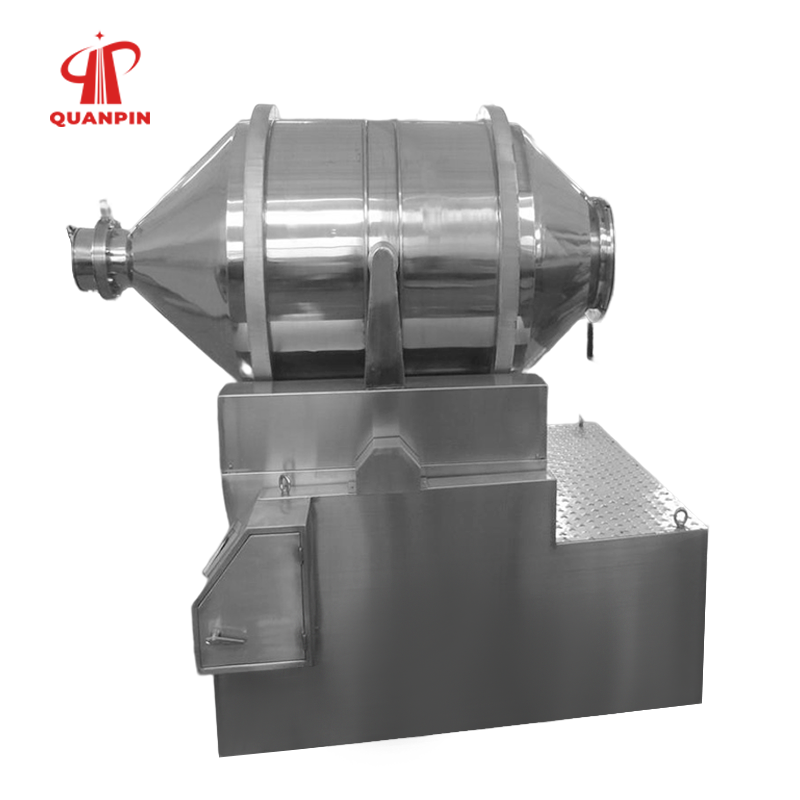
A two-dimensional motion mixer combines drum rotation with a second swinging movement to redistribute a batch.
Working Principle, Materials & Selection
Working principle. The drum rotates while its supporting frame swings. These overlapping movements change the material path, encouraging rolling and tumbling instead of relying on a single fixed rotation pattern.
Suitable materials. Dry powders and granules suitable for motion-based blending. Assess particle damage and segregation where the formulation contains fragile particles or components with different densities.
Selection and configuration. Provide batch size, material flow characteristics and the required uniformity. Check the full movement envelope, foundation and loading access. Define cleaning requirements and validate the mixing cycle using samples from an agreed test procedure.
Model: SYH
SYH Series Three-Dimensional Motion Mixer
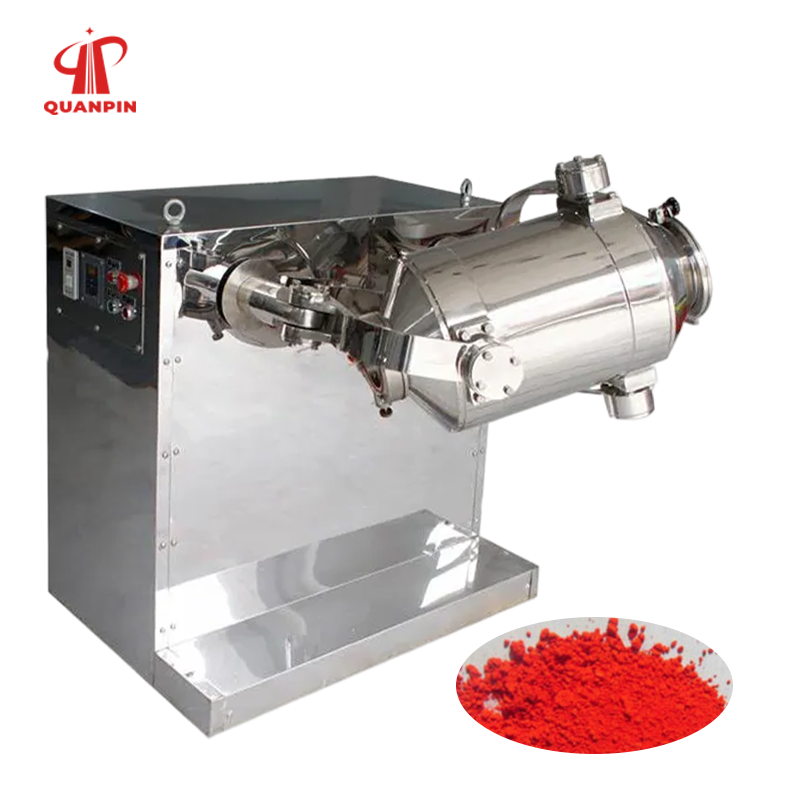
A three-dimensional motion mixer changes the orientation of a closed vessel along multiple axes during blending.
Working Principle, Materials & Selection
Working principle. Compound motion continually redirects the material inside the vessel. Repeated changes in movement bring portions of the batch together along different paths, supporting redistribution without an internal ribbon or screw agitator.
Suitable materials. Dry powders and granules that can move within the vessel. Blends with large differences in particle size or density require evaluation of both mixing and post-discharge segregation.
Selection and configuration. Confirm batch volume, bulk density, working fill and the intended blending endpoint. Allow clearance around the moving assembly and review loading, discharge, cleaning and sampling arrangements for the actual material.
Model: SZH
SZH Series Double-Cone Mixer
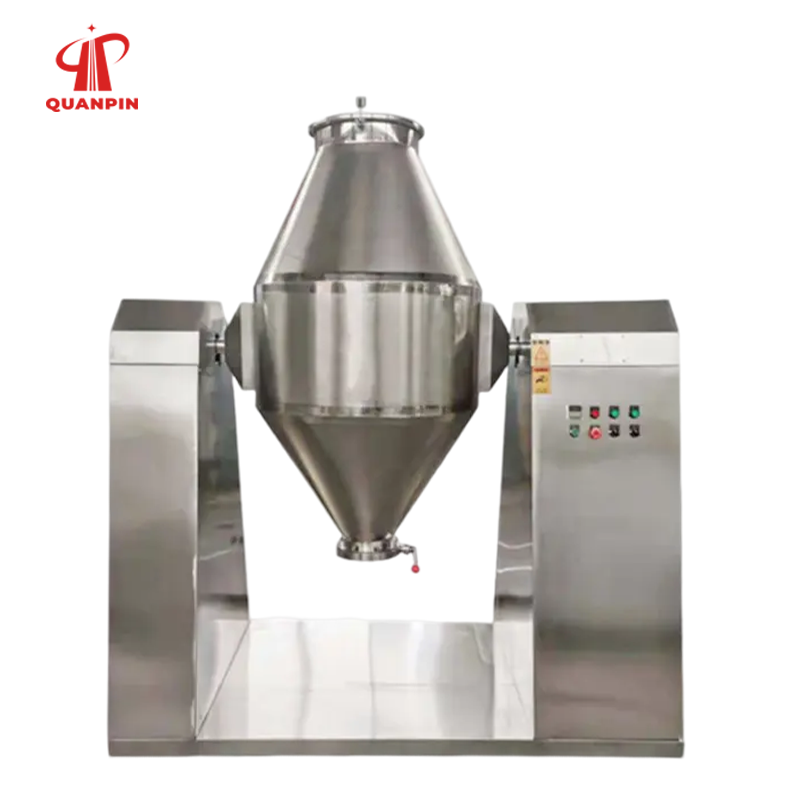
A double-cone mixer offers a rotating-vessel approach for batch blending of free-flowing dry solids.
Working Principle, Materials & Selection
Working principle. The double-cone vessel rotates about its horizontal axis. Gravity moves the material between the conical sections, repeatedly dividing and recombining the batch as the vessel changes position.
Suitable materials. Free-flowing dry powders and granules. Cohesive powders or mixtures requiring active lump breakup need a separate assessment before this tumbling method is selected.
Selection and configuration. Review the useful batch volume rather than vessel size alone. Specify bulk density, acceptable particle damage and discharge needs; confirm rotation clearance, cleaning access and a sampling plan that can identify uneven distribution or segregation.
Model: ZKH(V)
ZKH(V) Series V-Type Mixer
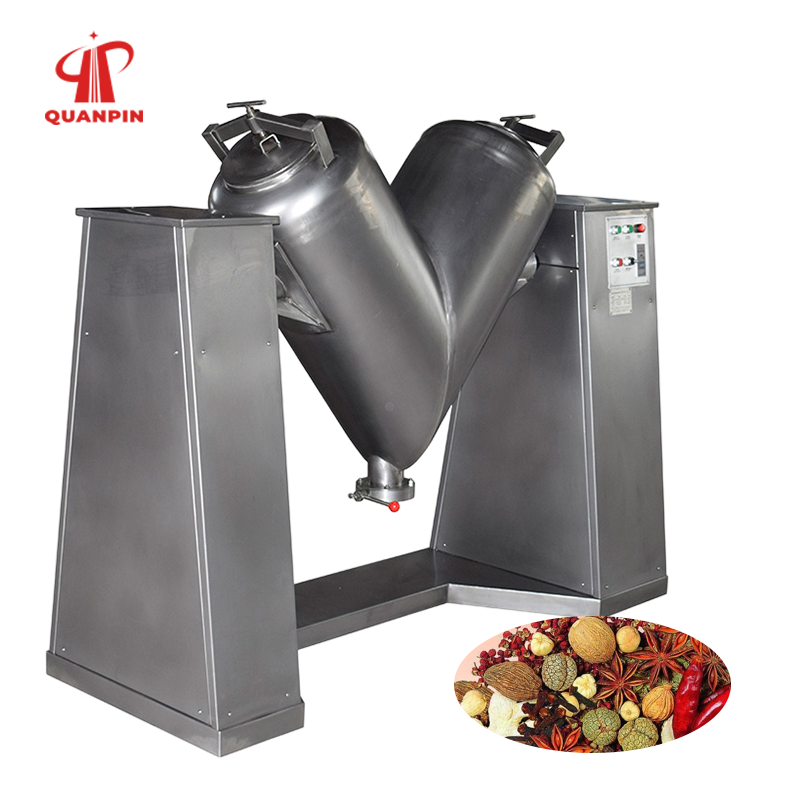
A V-type mixer blends dry solids through repeated movement between the two branches of a rotating vessel.
Working Principle, Materials & Selection
Working principle. As the V-shaped vessel rotates, material separates into the two branches and then returns toward the joining section. This repeated division and recombination redistributes the batch by tumbling.
Suitable materials. Dry powders and granules with suitable flow properties. A formulation that bridges, clumps or segregates strongly should be trialled before final selection.
Selection and configuration. Provide batch mass, bulk density, component proportions and the target uniformity. Confirm loading ports, discharge connection, cleaning access and installation clearance. Assess the finished blend after discharge as well as within the vessel.
Model: CH
CH Series Trough Mixer
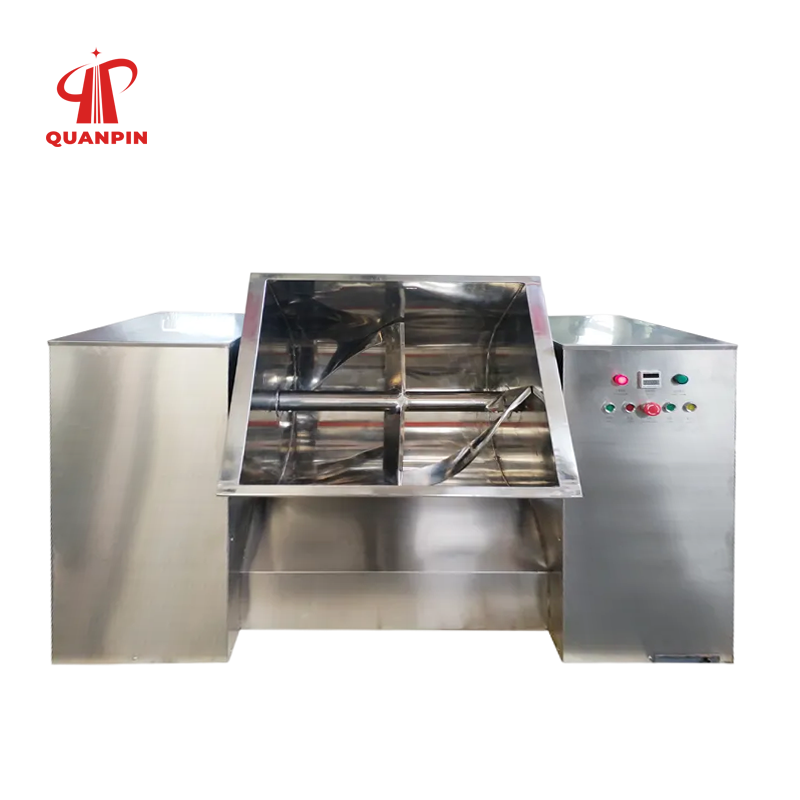
A trough mixer uses a mechanical agitator in a horizontal vessel for batch mixing of compatible powders or damp masses.
Working Principle, Materials & Selection
Working principle. The agitator moves material through the trough, exchanging material between different parts of the batch. This active mixing method should be matched to the resistance, consistency and handling needs of the formulation.
Suitable materials. Powders and damp mixtures that are compatible with the selected agitator and trough configuration. Sticky or high-resistance materials require assessment of torque, buildup and discharge.
Selection and configuration. Specify moisture level, viscosity or consistency, batch mass and required finish. Confirm drive selection, contact materials, shaft sealing, cleaning access and the actual discharge arrangement; do not assume a tilting vessel unless included in the selected design.
Model: DSH
DSH Series Double-Screw Conical Mixer
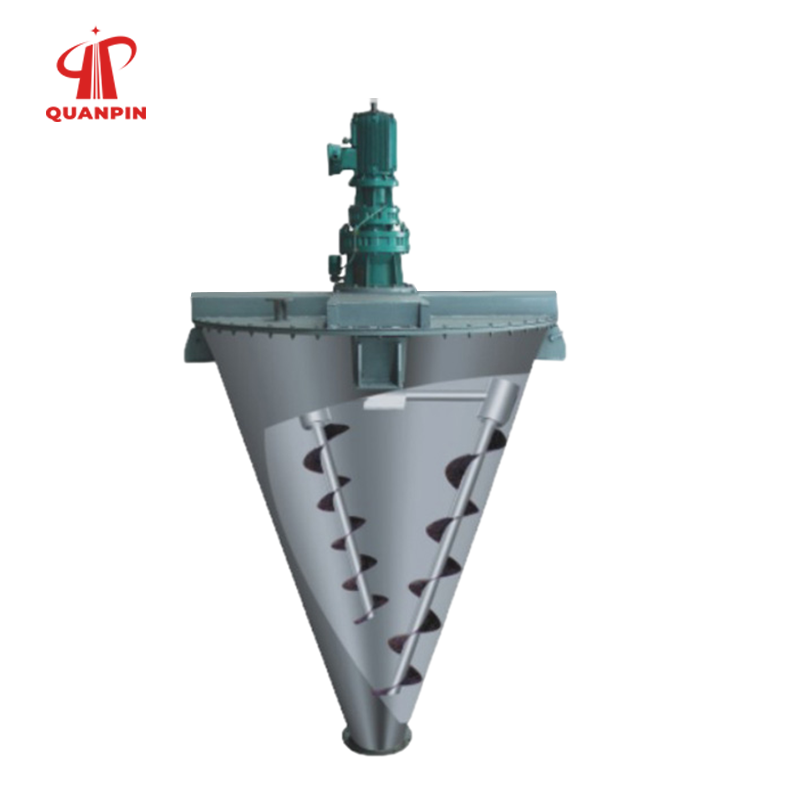
A double-screw conical mixer combines screw conveying with movement around a conical vessel to circulate a powder batch.
Working Principle, Materials & Selection
Working principle. The screws turn on their own axes while moving around the vessel. Material is lifted along the screws and redistributed through the surrounding batch, creating circulation across different regions of the cone.
Suitable materials. Powder mixtures that are compatible with screw-driven circulation. Evaluate cohesive components, large density differences and any sensitivity to mechanical action through a representative material trial.
Selection and configuration. Provide batch volume, bulk density, component ratios and flow behaviour. Confirm screw and drive configuration, discharge requirements, cleaning access and any specified sealing or protection needs. Establish uniformity using an agreed sampling method.
Model: WLDH
WLDH Series Horizontal Ribbon Mixer
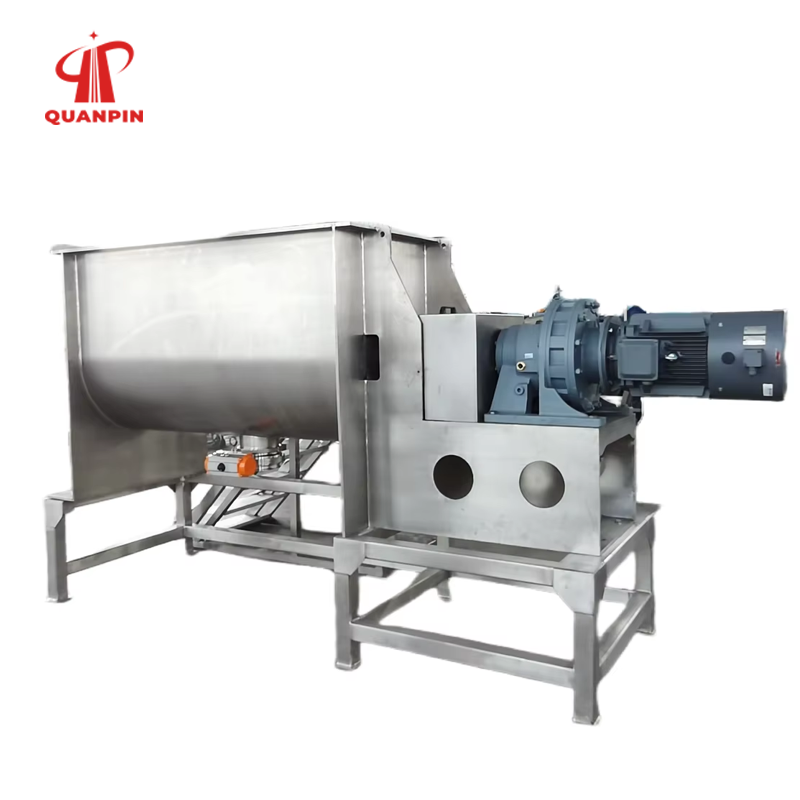
A horizontal ribbon mixer uses inner and outer helical ribbons to circulate material through a trough.
Working Principle, Materials & Selection
Working principle. Rotation of the ribbon assembly moves material in opposing axial directions and exchanges it across the vessel. The resulting circulation brings ingredients together throughout the working batch.
Suitable materials. Dry powders, granules and compatible mixtures. Liquid addition or special ingredient dosing should be reviewed as part of the actual equipment scope rather than assumed as standard.
Selection and configuration. Specify working batch volume, bulk density, flow properties and component proportions. Review drive load, shaft sealing, discharge residue and cleaning access. Where liquids are involved, confirm addition rate and distribution requirements before selecting the final configuration.
Discuss Your Mixing Requirements
Share your material and batch requirements with QUANPIN so the equipment configuration can be reviewed.
Discuss Your
Mixing Process Today.
Share your formulation, batch size and blending target with our engineers to discuss a suitable mixing configuration.