
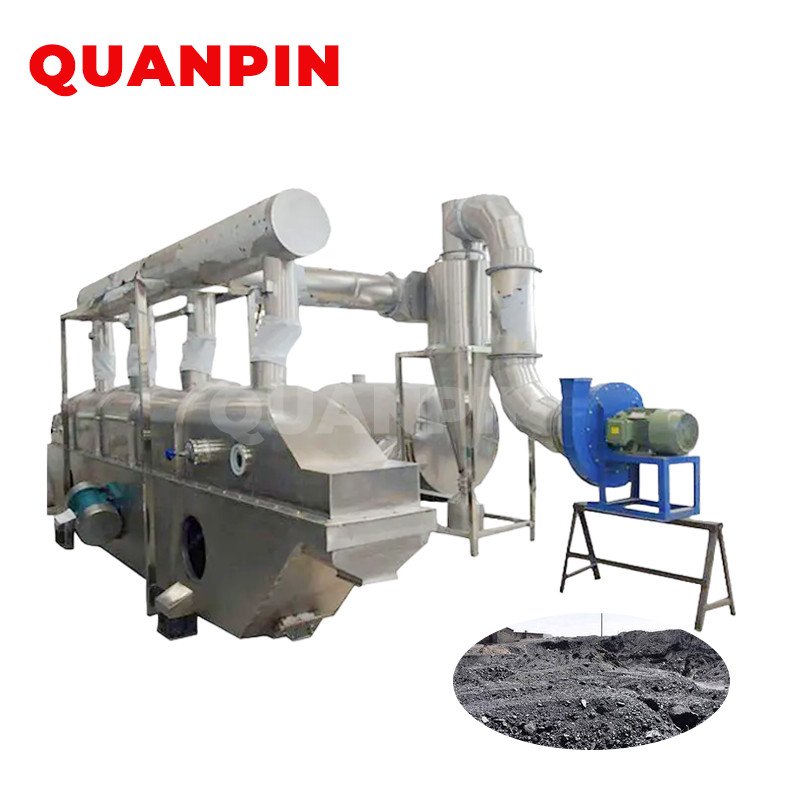
QUANPIN Vibrating Fluidized Bed Dryer
Vibration-assisted fluidization brings heated air into contact with moving granular material. The ZDG series supports drying, cooling and moisture-conditioning duties for suitable industrial feeds.
Continuous material movement along the fluidized bed.
Even air contact and vibration-assisted heat exchange.
Applications in food, chemical, pharmaceutical and related processing.
Enclosed construction helps control dust and contamination.
Select bed dimensions and operating conditions around your material.
ZDG Series Vibrating Fluidized Bed Dryer
Material enters at one end of the bed and moves towards the outlet under mechanical vibration. Heated air passes through the distributor and exchanges heat with the wet particles. Exhaust air passes to dust collection, while dried material leaves through the discharge.
Features of ZDG Series Vibrating Fluidized Bed Dryer
Vibration and air distribution promote consistent contact throughout the bed.
Motor-driven vibration supports continuous conveying and accessible maintenance.
Bed loading, conveying conditions and airflow are selected for the material.
Gentle movement can be evaluated for products sensitive to surface damage.
An enclosed machine body helps keep the processing area clean.
Applications of ZDG Series Vibrating Fluidized Bed Dryer
Evaluate the equipment for suitable salts, sugar, food ingredients, chemical granules and pharmaceutical intermediates. Drying, cooling or conditioning requirements should be confirmed with representative material trials.
Industrial Vibrating Fluid Bed Dryer
Continuous treatment of suitable granular feeds.
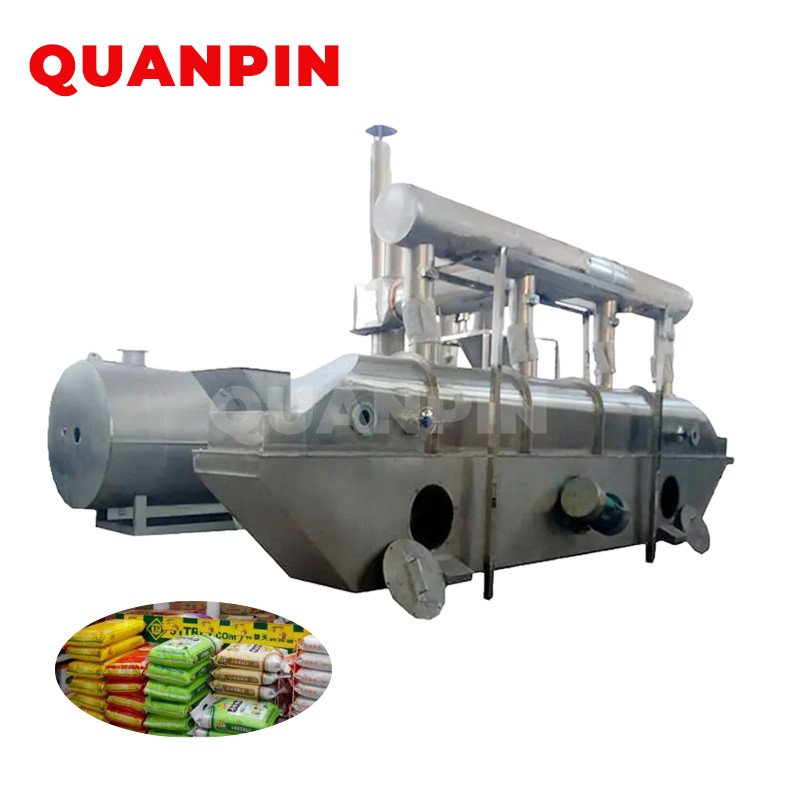
Automatic Vibrating Fluid Bed Dryer
Discuss the required instruments, alarms and control sequence.
Large Vibrating Fluidized Bed Dryer
Review production duty and the available installation space.
Sugar Drying Configuration
Assess product quality, cleaning and final moisture requirements.
Continuous Vibrating Fluid Bed Dryer
Coordinate feed delivery and product discharge with the line.
Stainless Steel Fluid Bed Configuration
Select contact materials for the process and cleaning method.
Drying and Cooling Configuration
Discuss combined treatment stages where appropriate.
Powder and Granule Drying Configuration
Confirm particle behaviour and recovery requirements through testing.
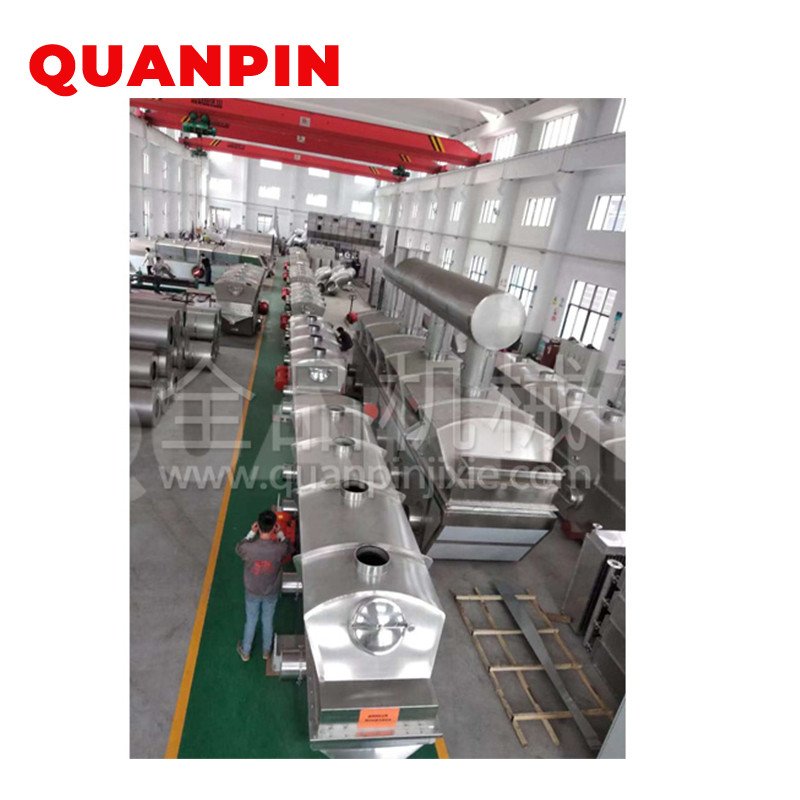
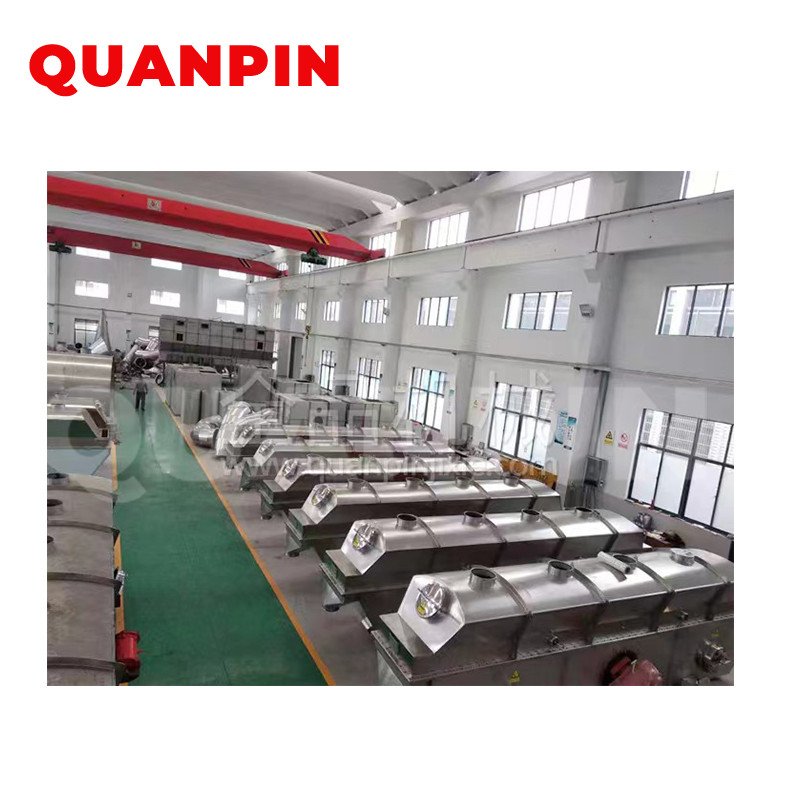
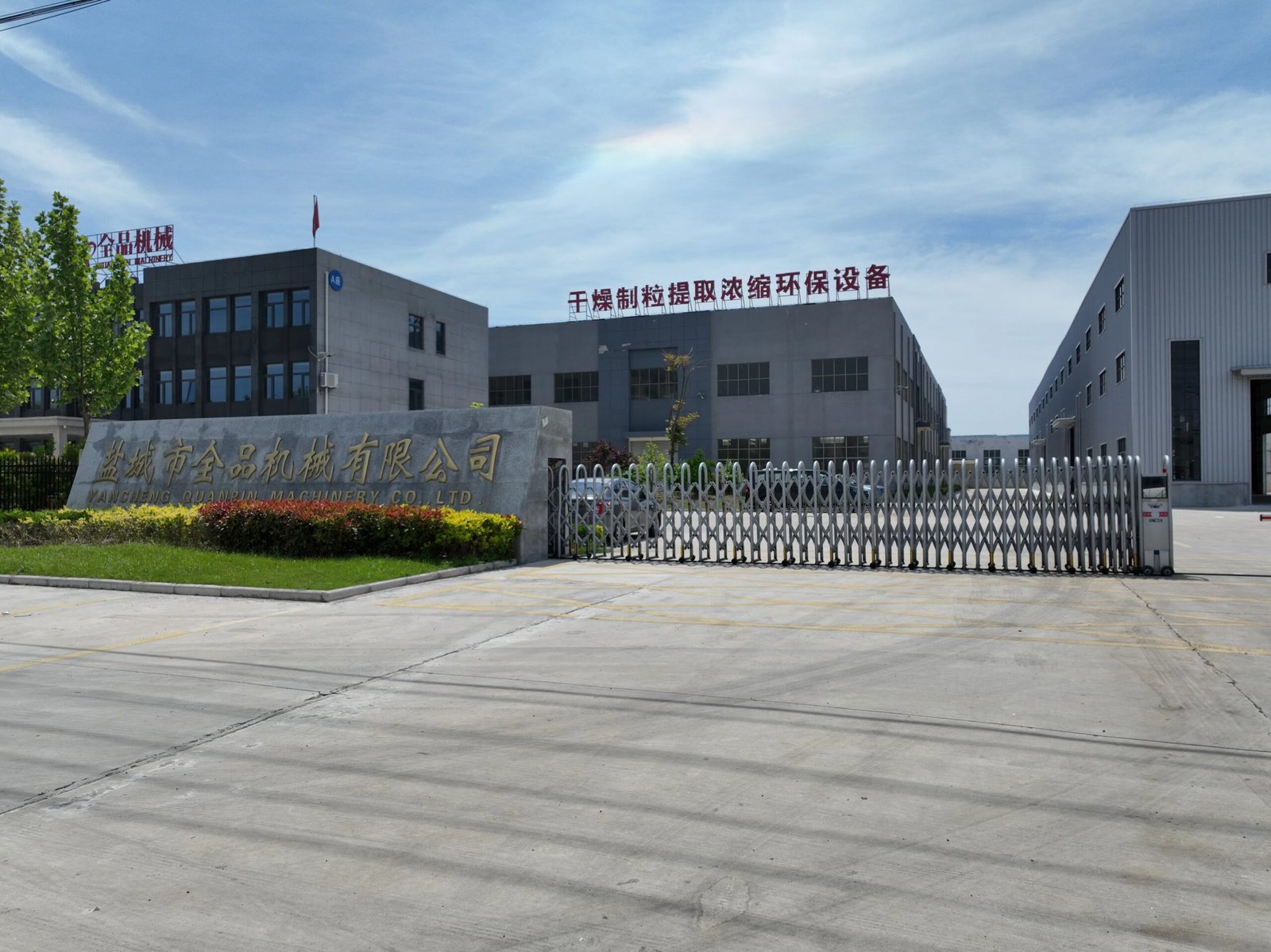
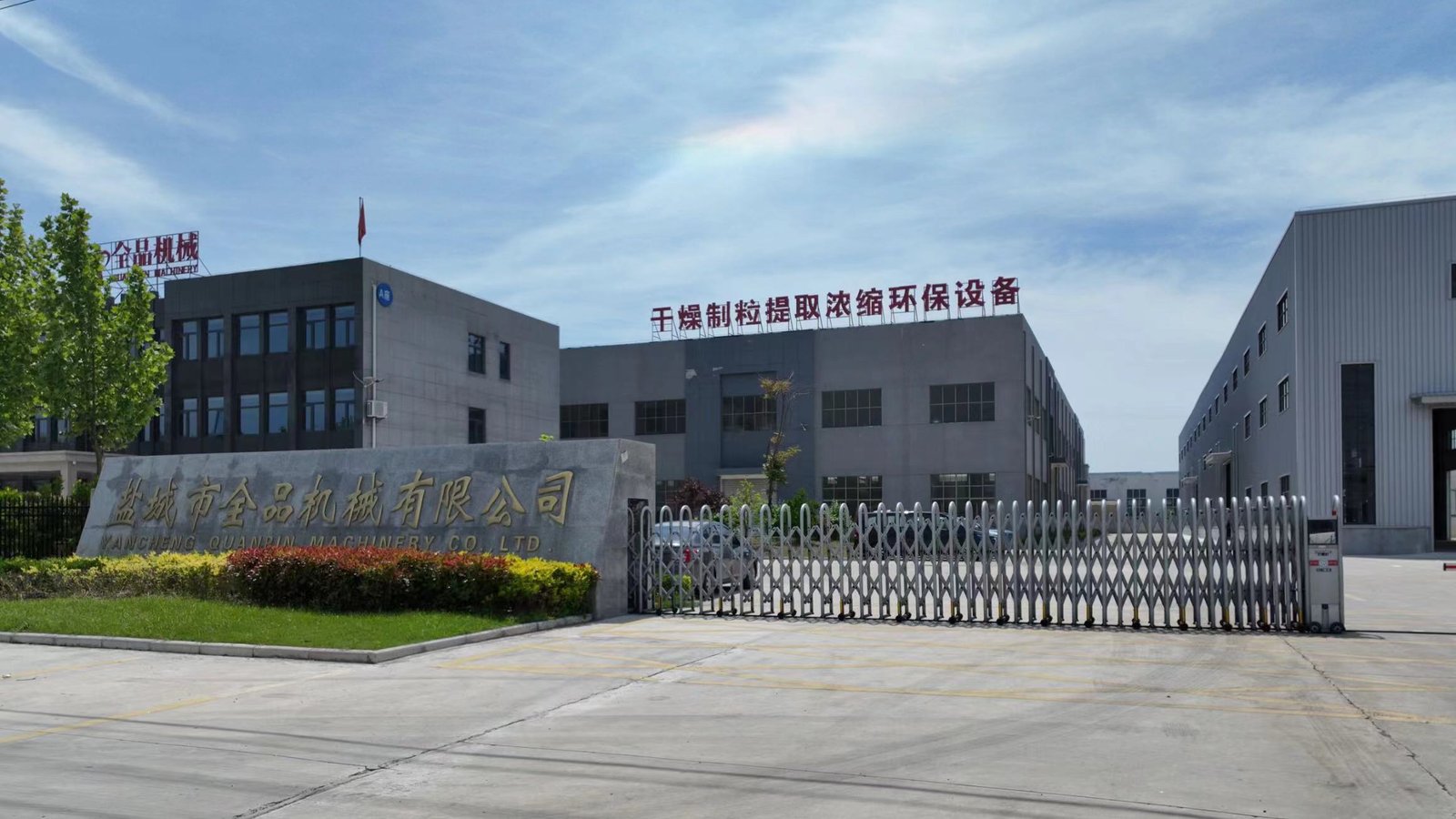
Our Factory
Technical Parameters
| Model | Bed area (m²) | Inlet (°C) | Outlet (°C) | Evaporation (kg/h) | Motor | Power (kW) |
| ZDG3×0.30 | 0.9 | 70–140 | 40–70 | 20–35 | YZS8-6 | 0.75×2 |
| ZDG4.5×0.30 | 1.35 | 70–140 | 40–70 | 35–50 | YZS10-6 | 0.75×2 |
| ZDG4.5×0.45 | 2.025 | 70–140 | 40–70 | 50–70 | YZS15-6 | 1.1×2 |
| ZDG4.5×0.60 | 2.7 | 70–140 | 40–70 | 70–90 | YZS15-6 | 1.1×2 |
| ZDG6×0.45 | 2.7 | 70–140 | 40–70 | 80–100 | YZS15-6 | 1.5×2 |
| ZDG6×0.60 | 3.6 | 70–140 | 40–70 | 100–130 | YZS20-6 | 1.5×2 |
| ZDG6×0.75 | 4.5 | 70–140 | 40–70 | 120–170 | YZS20-6 | 2.2×2 |
| ZDG6×0.90 | 5.4 | 70–140 | 40–70 | 140–170 | YZS30-6 | 2.2×2 |
| ZDG7.5×0.60 | 4.5 | 70–140 | 40–70 | 130–150 | YZS30-6 | 2.2×2 |
| ZDG7.5×0.75 | 5.625 | 70–140 | 40–70 | 150–180 | YZS40-6 | 3.0×2 |
| ZDG7.5×0.90 | 6.75 | 70–140 | 40–70 | 160–210 | YZS40-6 | 3.0×2 |
| ZDG7.5×1.20 | 9.0 | 70–140 | 40–70 | 200–280 | YZS50-6 | 3.7×2 |
| ZDG7.5×1.50 | 11.25 | 70–140 | 40–70 | 230–330 | YZS50-6 | 3.7×2 |
| ZDG8×1.80 | 14.4 | 70–140 | 40–70 | 290–420 | YZS75-6 | 5.5×2 |
Published ZDG series data from QUANPIN. Final selection depends on material properties and operating conditions.
Working Principle of Vibrating Fluidized Bed Dryer
Fluidization
Air enters beneath the distribution plate and passes through the particle layer. The air velocity and bed loading must suit the material.
Vibration
Mechanical motion loosens the bed and moves the material towards the discharge. Vibration settings interact with the feed rate and residence time.
Drying
Heat supplied through the air evaporates moisture. Exhaust handling and product collection complete the process.
Advantages of Vibrating Fluidized Bed Dryer
Heat Transfer
Air-particle contact and renewal of the bed surface support heat and mass transfer.
Uniform Treatment
Well-distributed airflow and steady material movement help limit uneven treatment.
Adjustability
Review feed rate, bed depth, airflow and vibration settings together when establishing operating conditions.
Product Handling
Evaluate vibration intensity and residence time for fragile or easily damaged particles.
Energy Use
Compare heating and fan requirements at the intended throughput; savings depend on the process.
Cleaning and Maintenance
Provide access to the distributor, enclosure and collection equipment for routine inspection.
Applications
Suitable feeds may include food ingredients, chemical granules and pharmaceutical intermediates.
Process Safety
Assess dust, temperature and material hazards when defining enclosure and exhaust arrangements.
Combined Functions
Where appropriate, drying and cooling can be considered within an integrated process.
Types of Vibrating Fluidized Bed Dryer
Horizontal Configuration
A horizontal bed supports continuous passage of the material from inlet to outlet. Consider both process length and access around the machine.
Vertical or Multi-Level Arrangement
Space-constrained layouts may require a different equipment arrangement. Discuss feasibility rather than assuming interchangeability with a horizontal ZDG unit.
Continuous Operation
Match feed, drying and discharge duties to upstream and downstream equipment, with suitable monitoring and controls.
Batch Processing Requirements
Frequent product changes or small trial quantities may require another process configuration. Confirm the appropriate dryer type with the engineering team.
Parts of Vibrating Fluidized Bed Dryer
Conveying System
The feed and discharge arrangements regulate material movement through the dryer.
Vibration System
The drive and supporting structure provide the motion needed for bed movement.
Fluidization System
The distributor and air supply create the required gas flow through the material layer.
Heating System
Choose the heat source around available utilities and the temperature limits of the product.
Hot Air System
Fans and ductwork deliver the process airflow and manage pressure losses.
Separation System
Cyclones or suitable filters collect entrained material from the exhaust stream.
Control System
Monitor the agreed operating parameters and define alarms, interlocks and data needs.
Considerations for Vibrating Fluidized Bed Dryer
Material Properties
Provide moisture content, particle size distribution, bulk density, heat sensitivity and flow behaviour.
Particle Requirements
Wide size distributions, sticking and agglomeration can change fluidization behaviour; use representative samples for evaluation.
Required Drying Rate and Final Moisture
Define both hourly duty and the acceptable outlet moisture range before selecting bed dimensions.
Energy Consumption
Review steam, electricity or other site utilities alongside fan power and exhaust losses.
Cleaning and Integration
Specify product changeover needs, maintenance access and connections to the rest of the production line.
Technical Specifications
| Item | Project specification |
| Equipment | Vibration-assisted fluid bed dryer |
| Heating | Select for available utilities |
| Contact materials | Confirm chemical compatibility and cleaning needs |
| Controls | Define temperature, airflow and vibration monitoring |
| Dimensions | Select from the process duty and layout |
| Documentation | Confirm required drawings, manuals and inspection records |
Send your material details and production requirements to QUANPIN for equipment selection.
Send Your Inquiry Now
Start Optimizing Your
Drying Process Today.
Discuss your material and production requirements with QUANPIN.