
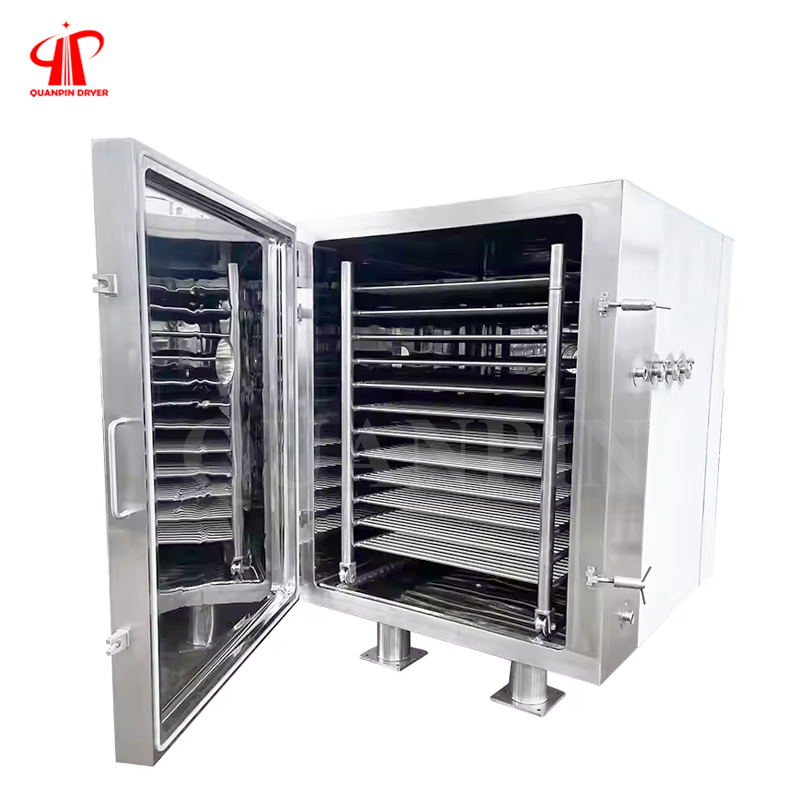
FZG vacuum tray dryer for Pharmaceutical and Chemical Processing
When comparing drying environments, read our vacuum tray and hot air tray dryer comparison to define material quality, loading and batch-cycle requirements. For low-temperature vacuum drying, review the proposed vacuum dryer and industrial vacuum dryer system against the actual limits relevant to heat-sensitive material drying.
A vacuum tray dryer uses stationary trays inside a sealed chamber to dry suitable materials under reduced pressure. For a vacuum tray drying machine, tray loading, heating contact and vapor removal must be matched to the batch. This vacuum drying oven differs from mechanically agitated systems such as a double cone vacuum dryer. Share your material, batch size and drying target to review chamber, heating and vacuum requirements with QUANPIN.
Stationary trays for batch drying without mechanical agitation
Heat supplied through the selected tray or shelf arrangement
Vacuum equipment matched to the vapor load
Product-contact materials specified for the application
Door access for tray loading, unloading and cleaning
Process controls defined for your production
Vacuum Tray Drying System
Material is spread on trays inside a sealed square chamber. The selected heating system supplies energy while reduced pressure supports moisture evaporation. Vapor is removed through the vacuum arrangement; condensation equipment can be specified for the process.
Features of a FZG vacuum tray dryer
• Chamber size and tray capacity selected around the batch.
• Tray loading depth and shelf spacing matched to the material.
• Heating arranged around the available utilities.
• Vacuum and condensation equipment reviewed together.
• Contact materials and seals chosen for the process.
• Access provided for inspection, cleaning and discharge.
Applications
Suitable materials may include wet powders, granules and tray-loadable pastes. Selection depends on composition, moisture, temperature limits, loading thickness and the required final product condition.
Key Features
- Designed for static tray drying under vacuum with indirect heating.
- The equipment and control configuration are selected according to the material and process requirements.
Suitable Materials
- Heat-sensitive materials arranged on trays for vacuum drying.
- Material suitability should be confirmed through review of physical properties, moisture or solvent content, temperature sensitivity and the required final product condition.
Wide Range of Applications
Suitable for low-temperature drying of heat-sensitive materials that are prone to decomposition, polymerization, and deterioration at high temperatures; widely used in industries such as pharmaceuticals, chemicals, food, and electronics.
Technical Parameters
| Item | YZG-600 | YZG-1000 | YZG-1400 | FZG-8 | FZG-15 | FZG-20 | FZG-30 | FZG-45 |
|---|---|---|---|---|---|---|---|---|
| Internal Chamber Dimensions (mm) | Φ600×976 | Φ1000×1527 | Φ1400×2054 | 1140×890×1400 | 1500×1220×1400 | 1500×1800×1400 | 3200×1220×1400 | 3200×1220×1700 |
| Overall Dimensions (mm) | 1150×810×1020 | 1740×1226×1385 | 2386×1657×1800 | 1580×1203×1924 | 2060×1513×1924 | 2060×1883×1924 | 3760×1513×1924 | 3760×1513×2224 |
| Shelf Layers | 4 | 6 | 8 | 8 | 8 | 8 | 8 | 12 |
| Layer Spacing (mm) | 81 | 98 | 102 | 122 | 122 | 122 | 122 | 102 |
| Tray Dimensions (mm) | 310×600×45 | 640×460×45 | 640×460×45 | 640×460×45 | 640×460×45 | 640×460×45 | 640×460×45 | 640×460×45 |
| Number of Trays | 4 | 12 | 32 | 16 | 32 | 48 | 64 | 96 |
| Capacity (kg) | 5 | 30 | 60–80 | 30–40 | 60–80 | 100–120 | 130–150 | 200–240 |
| Allowable Heating-Pipe Pressure (MPa) | ≤0.784 | ≤0.784 | ≤0.784 | ≤0.784 | ≤0.784 | ≤0.784 | ≤0.784 | ≤0.784 |
| Operating Temperature (°C) | 35–150 | 35–150 | 35–150 | 35–150 | 35–150 | 35–150 | 35–150 | 35–150 |
| No-Load Chamber Vacuum (MPa) | −0.09 to −0.096 | −0.09 to −0.096 | −0.09 to −0.096 | −0.09 to −0.096 | −0.09 to −0.096 | −0.09 to −0.096 | −0.09 to −0.096 | −0.09 to −0.096 |
| Vacuum-Pump Model and Power | SK-1.5, 3 kW | SK-3, 5.5 kW | SK-6, 11 kW | SK-3, 5.5 kW | SK-6, 11 kW | SK-6, 11 kW | SK-12, 18.5 kW | SK-12, 18.5 kW |
| Weight (kg) | 400 | 900 | 1400 | 1400 | 2300 | 2800 | 3500 | 4800 |
Product Advantages
- Vacuum operation lowers the evaporation temperature for heat-sensitive products.
- Static tray drying avoids mechanical agitation of delicate materials.
- Tray loading accommodates suitable powders, granules and shaped products.
- Indirect heating keeps the product separate from the heating medium.
- Batch operation allows drying conditions to be set for each product.
- Solvent recovery is possible with a compatible condenser and collection system.
- Accessible trays simplify batch loading, unloading and product inspection.
Frequently Asked Questions
Q. What is the primary function of the YZG/FZG Series Vacuum Tray Dryer?
A. Its primary function is static tray drying under vacuum with indirect heating.
Q. What materials can be processed?
A. Heat-sensitive materials arranged on trays for vacuum drying. Final suitability should be confirmed through material and process evaluation.
Q. How should a model be selected?
A. Confirm material form, solvent or moisture content, heat sensitivity, vacuum level, heating medium, recovery requirement, cleaning method and discharge characteristics.
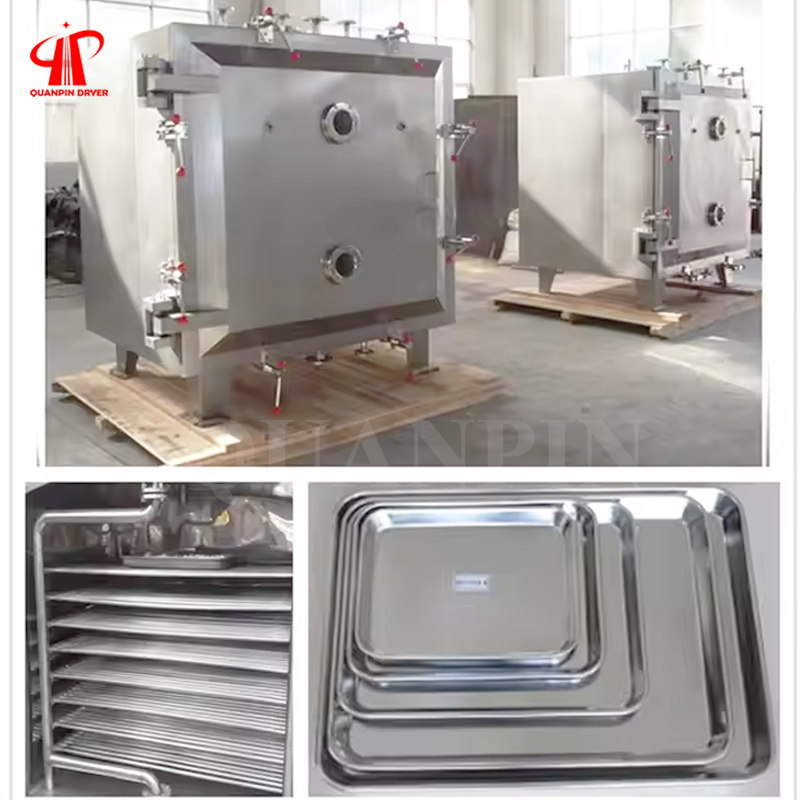
Static Tray Vacuum Drying
Assess the feed consistency and its behavior through the drying cycle.
Powder and Filter Cake Drying
Provide particle properties, initial moisture and the required final condition.
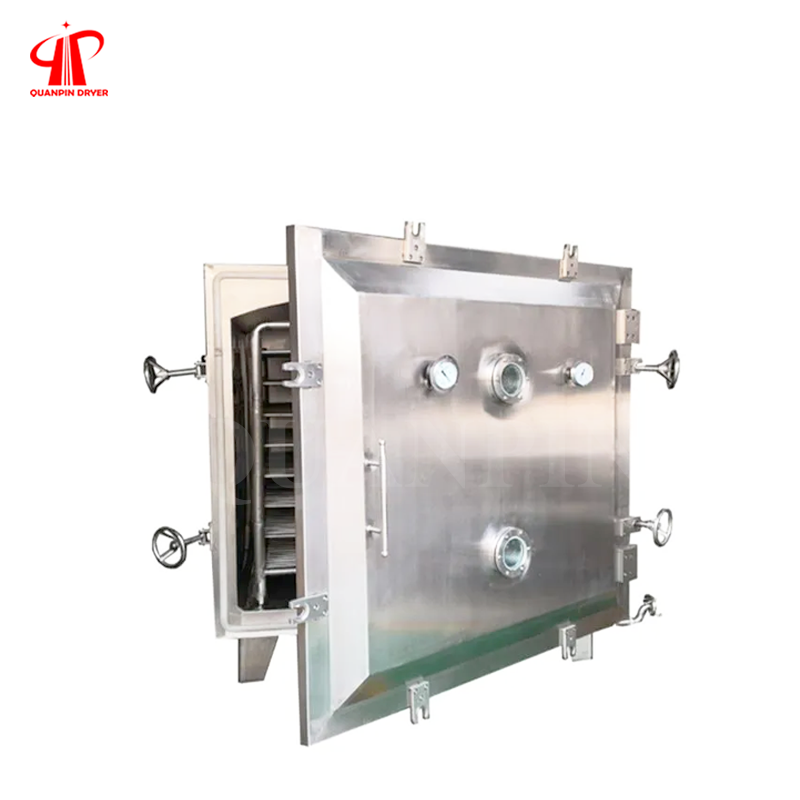
Square Chamber Configuration
Review chamber size, tray dimensions, shelf spacing and batch handling.
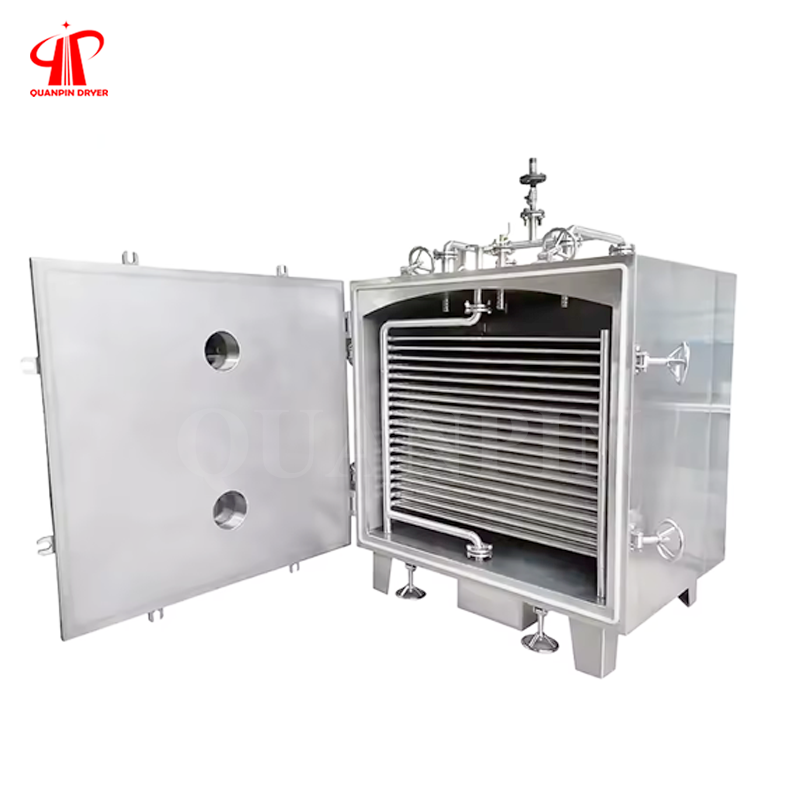
Vacuum System Selection
Coordinate the pressure requirement, vapor load and condensation equipment.
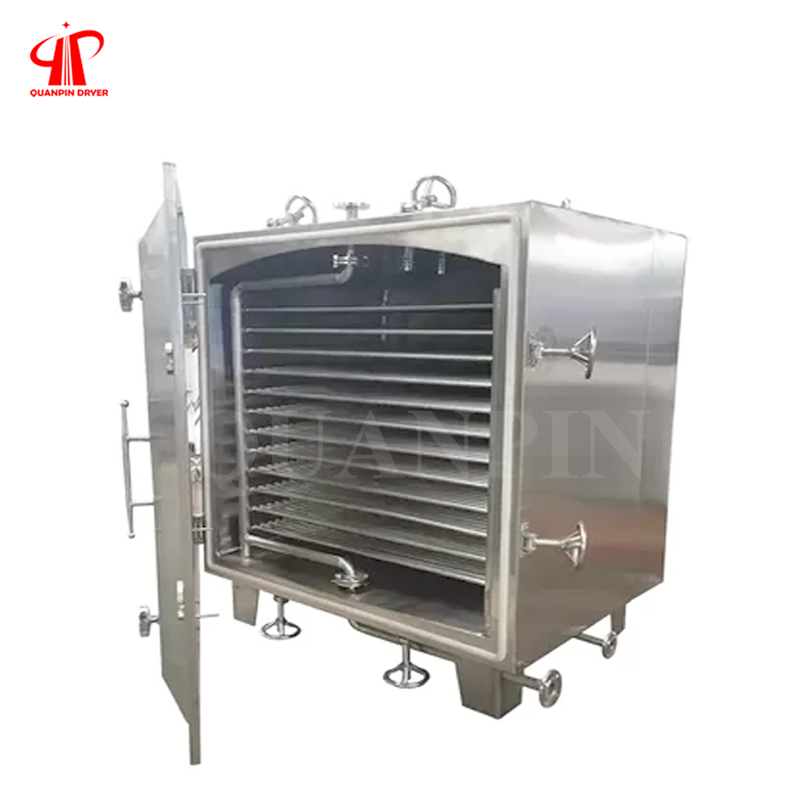
Trays and Shelves
Select tray construction and loading depth around heat transfer and material handling.
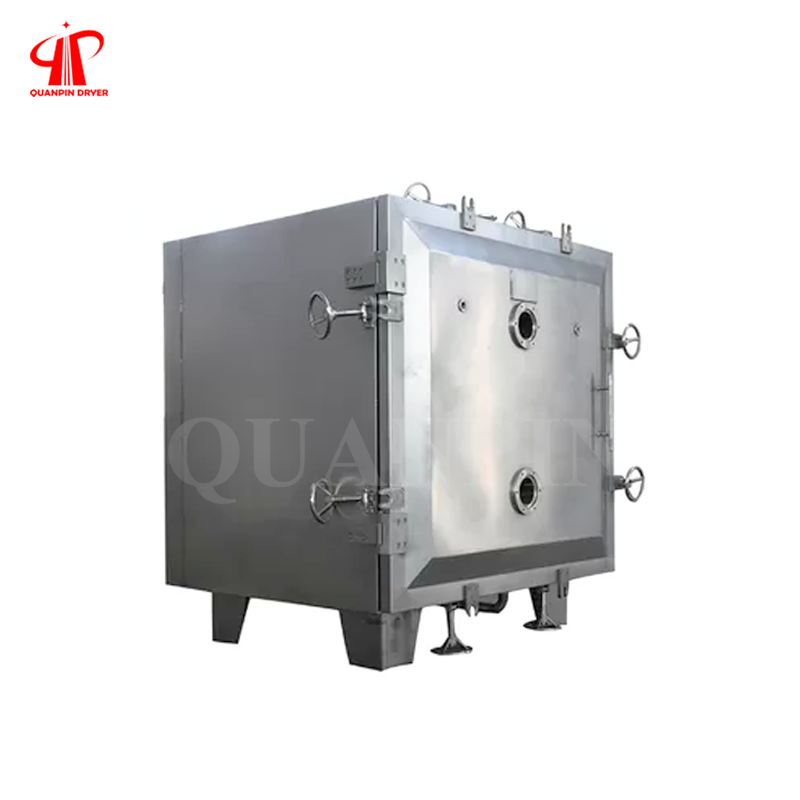
Solvent-containing Materials
Provide composition and vapor information for a project-specific review.
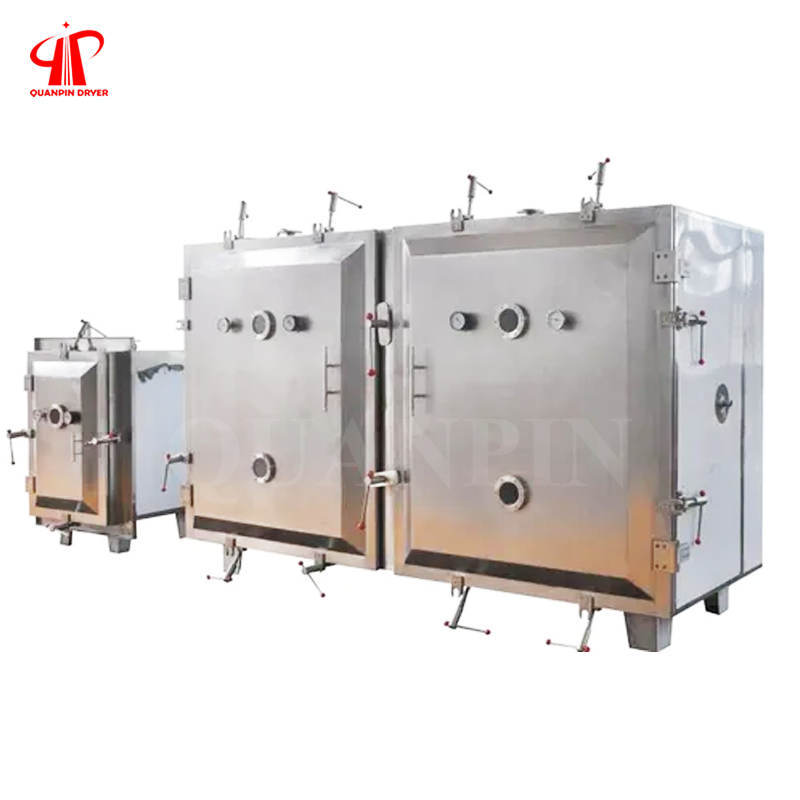
Chemical Material Assessment
Confirm compatibility, temperature limits and documentation requirements.
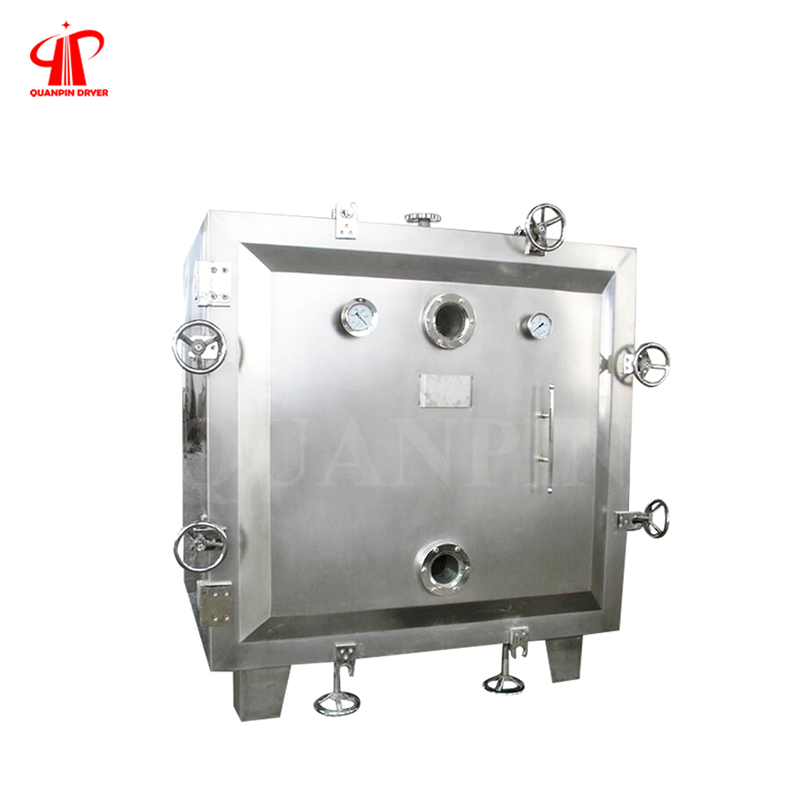
Organic Material Drying
Discuss feed properties, product quality and downstream handling.
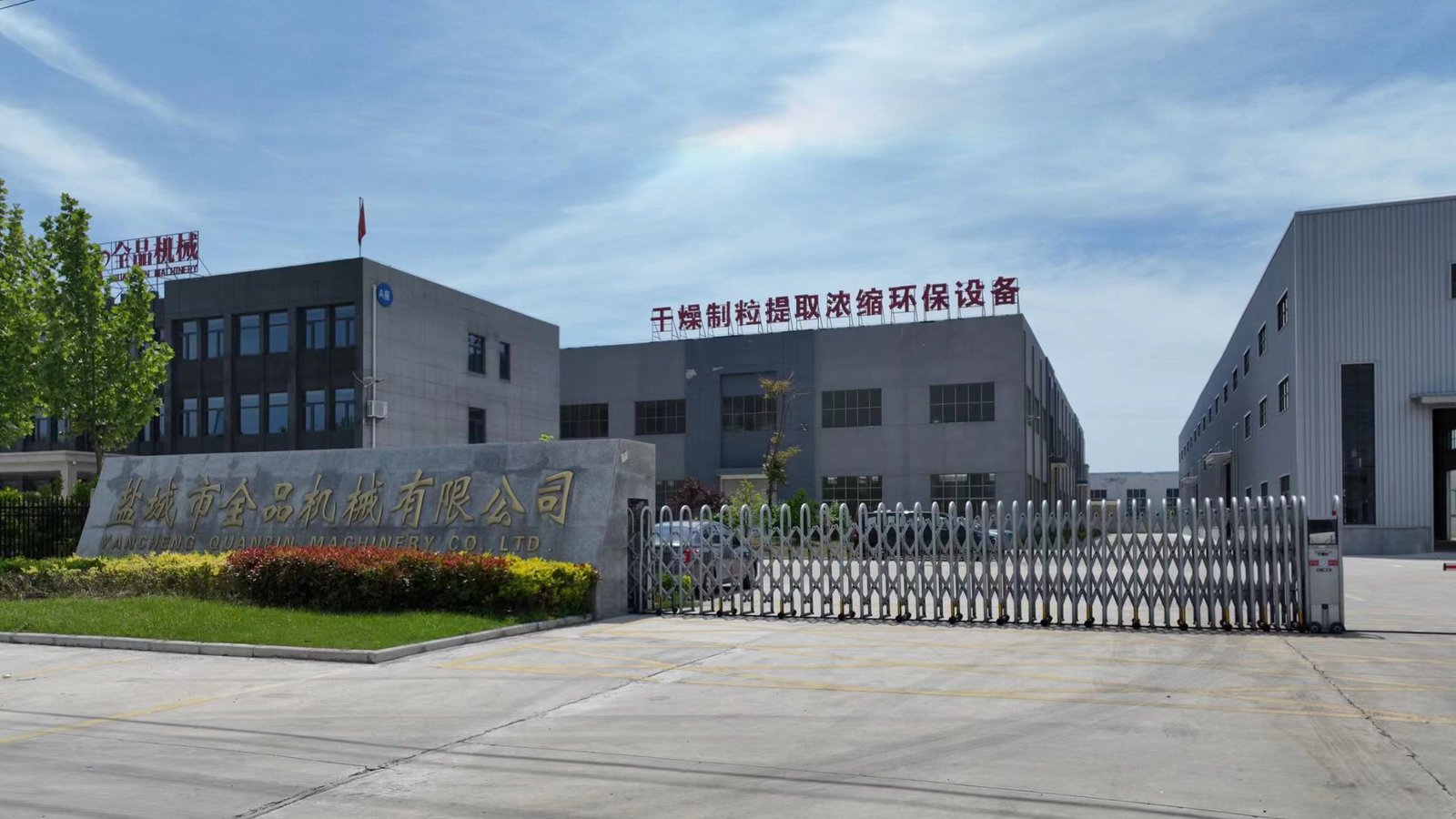
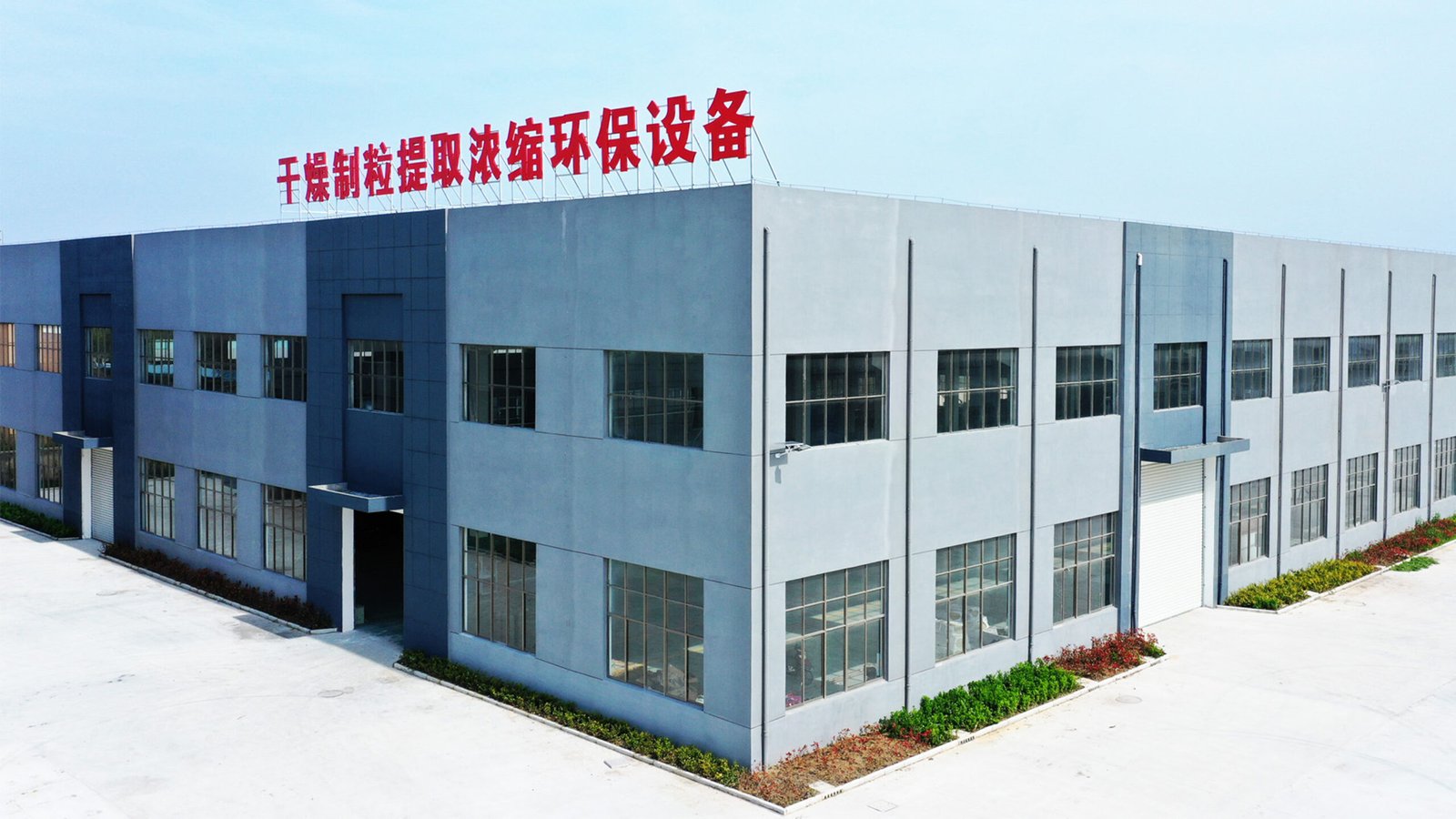
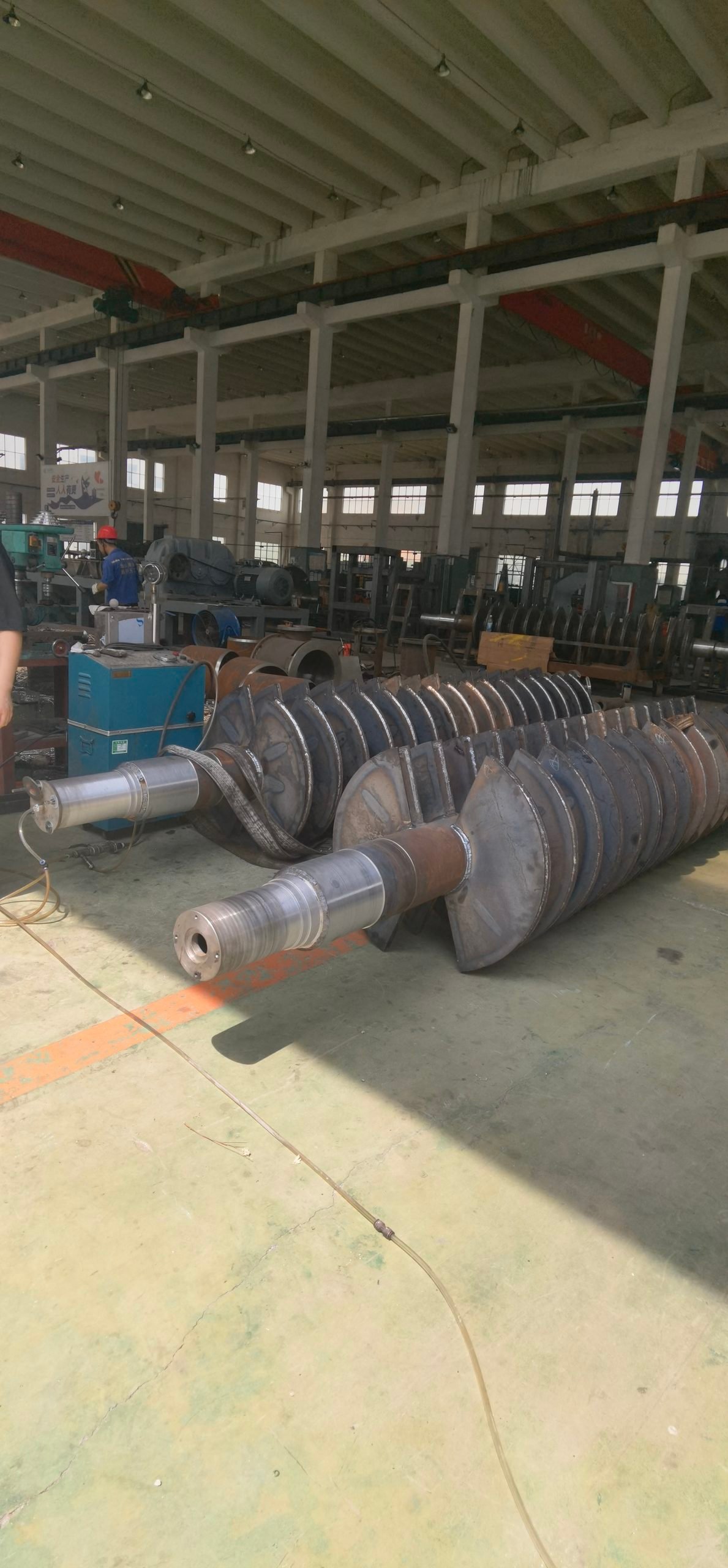
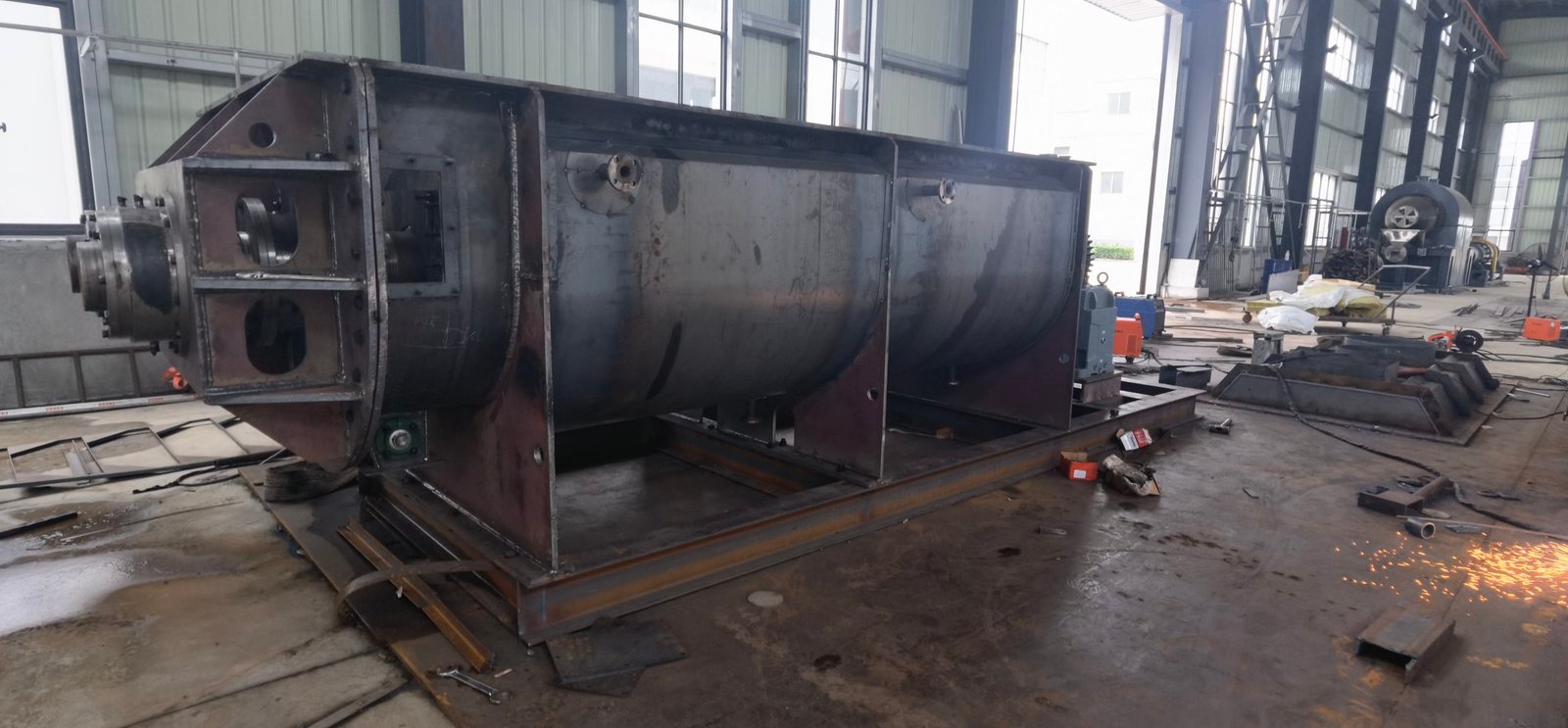
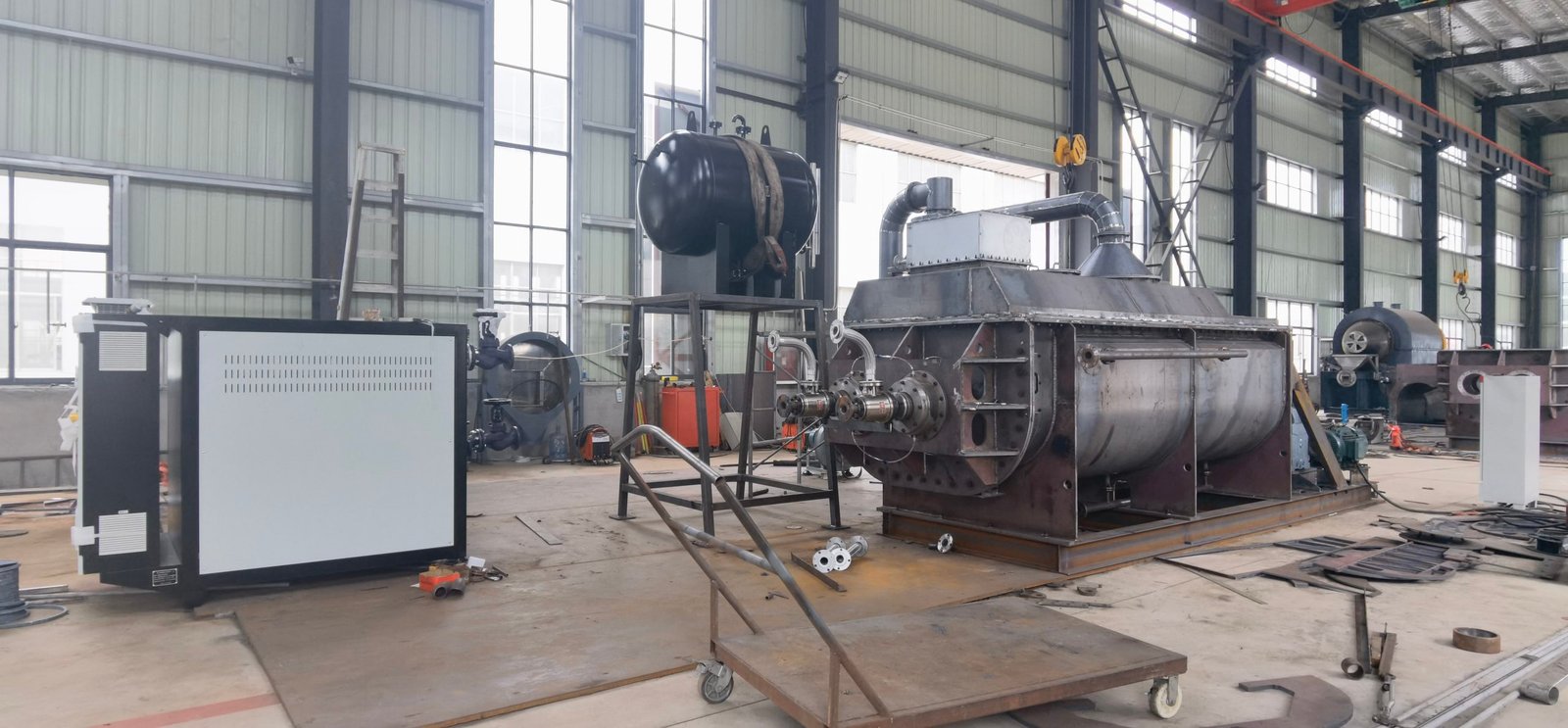
Our Factory
Additional Technical Data
| Selection Item | Information Required |
| Material | Composition, consistency and bulk density |
| Batch | Required loading quantity and production schedule |
| Moisture | Initial moisture and target final moisture |
| Temperature | Product temperature limit and heating utilities |
| Vacuum | Process pressure and expected vapor load |
| Construction | Contact materials, seals and cleaning requirements |
| Installation | Space, access and process connections |
Final numerical specifications are defined for the selected QUANPIN equipment and material.
What is a FZG vacuum tray dryer?
A FZG vacuum tray dryer is a sealed rectangular chamber for batch drying on stationary trays. Material remains on the trays while heat and reduced pressure support evaporation, without a rake agitator.
Working Principle
Material is distributed on trays, loaded into the chamber and sealed behind the door. The vacuum system establishes the required pressure and heat is supplied through the specified heating arrangement. Vapor is removed during drying. After the cycle, the chamber is cooled and returned to a safe opening pressure before trays are unloaded.
Components of a FZG vacuum tray dryer
The chamber, trays, shelves, heating system, vacuum equipment, door seals and controls are selected as a coordinated system.
Vacuum Chamber
The chamber holds the trays and provides the vacuum boundary, door access and process connections. Tray quantity and loading depth depend on the selected design and material.
Heating System
Available utilities, the product temperature limit and the moisture-removal duty inform the heating arrangement.
Vacuum System
The vacuum and condensation equipment are selected around the operating pressure, vapor composition and vapor load.
Tray and Shelf System
Trays support the material in controlled layers. Shelf arrangement, tray material and loading access are specified for the batch and cleaning requirements.
Control System
Define the operating sequence, process measurements and information required by the operators.
Applications of Vacuum Tray Drying
For an FZG vacuum tray dryer inquiry, state mass per tray, layer depth, batch size, loading method and moisture measurement basis. Specify whether the product must remain static and how trays will be cleaned. Compare the vacuum drying and freeze drying processes when structure or rehydration affects the choice; an ordinary vacuum chamber is not a freeze dryer.
Mineral Materials
Review abrasiveness, composition and the required moisture target.
Food Products
Specify ingredient properties, cleaning requirements and temperature limits.
Chemical Materials
Provide material compatibility and vapor information for the process review.
Electronic Materials
Set out contamination limits and the required finished-product characteristics.
Pharmaceutical Materials
Identify the required contact materials, cleaning scope and documentation for the facility.
Environmental Processing
Describe feed consistency, solids content and the intended final handling or use.
Send Your Inquiry Now
To request a quote for the FZG vacuum tray dryer, send the material form, tray dimensions and loading, batch mass, initial and final moisture, temperature limit and vapor composition. Include site space, utilities and installation requirements so QUANPIN can review the equipment scope and discuss a suitable configuration. Material-specific targets should be agreed before model selection.
Application Review: Pharmaceutical and Chemical Processing
Review the actual feed composition, consistency, initial and final moisture, temperature limits and discharge requirements. Define heating, vapour handling, cleaning and collection around the selected material and process.
For pharmaceutical process evaluation, consult FDA process validation guidance.
For an active-ingredient application, review the equipment and documentation topics in FDA Q7A guidance.
For pharmaceutical cleaning requirements, consult the FDA equipment and cleaning questions.
Review the actual powder characteristics using the HSE safe handling of combustible dusts.
Include moving-part access in the installation review using HSE work equipment and guarding guidance.
Start Optimizing Your
Drying Process Today.
Our engineers are ready to assess your material and recommend a reliable, cost-effective drying solution.