
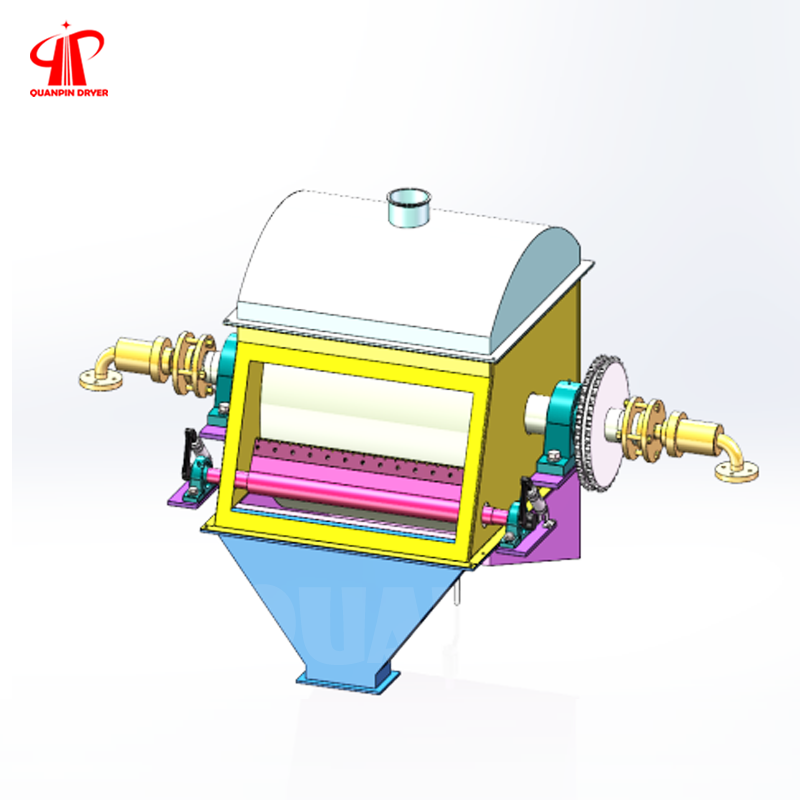
TG Drum Scraper Dryer for Food and Chemical Processing
Before selecting a drying route, compare drum drying and spray drying by feed behavior and finished product requirements. The guide explains the evidence buyers should request from a material trial. Review the drum scraper dryer using film-formation and discharge trials: drum dryers rely on conductive drying, and thin-film drying behaviour depends on the actual feed.
A drum scraper dryer spreads a suitable liquid or paste over a heated drum and removes the dried layer with a scraper. When reviewing drum drying equipment, define feed consistency, layer thickness, discharge form and cleaning access. Compare spray drying equipment when a pumpable liquid needs a different particle-forming route. A drum dryer price assessment should follow your material and process specification; request a configuration review before comparing offers.
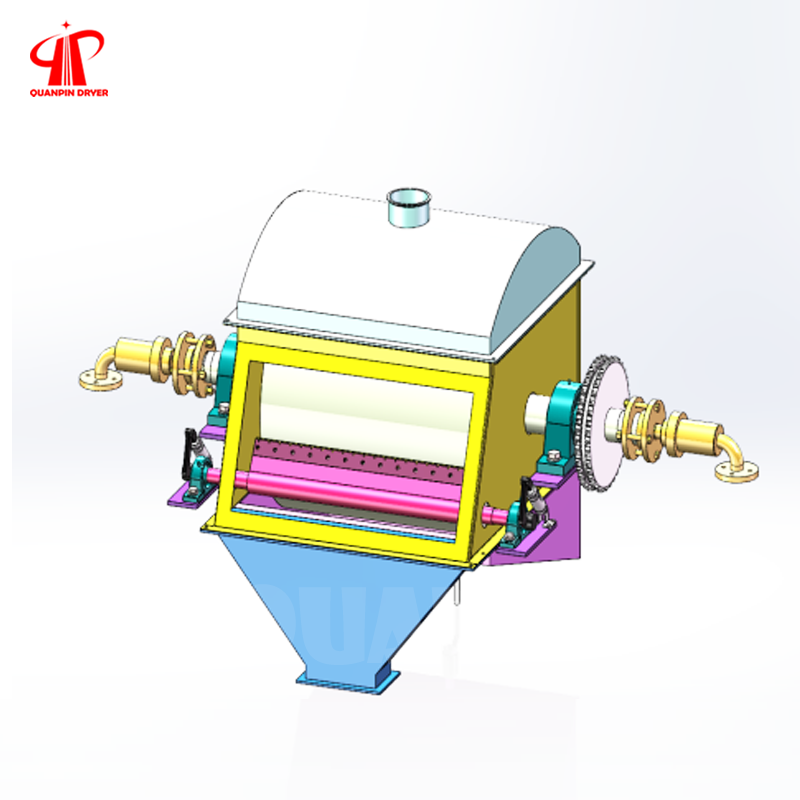
Heated rotating drum surface
Feed arrangement matched to the material
Controlled material layer
Scraper discharge arrangement
Drum speed and heating control
Material trials for process selection
Drum Scraper Drying System
A drum scraper dryer applies material to a heated rotating surface. Moisture evaporates as the drum rotates, and a scraper removes the dried layer. The configuration must suit the material and required product properties.
How Does a Drum Scraper Dryer Work?
Stage 1 — Feeding
Prepare and distribute the material onto the drum using the selected feed arrangement. Review viscosity, solids content and feed consistency.
Stage 2 — Contact Drying
Heat passes through the drum surface to the material layer. Drum speed, heating conditions and layer thickness influence the drying process.
Stage 3 — Scraping and Collection
The scraper removes the dried material from the drum. Review the discharge arrangement and downstream handling for the finished product.
Features to Specify
• Feed composition, solids content and viscosity.
• Required moisture removal and production output.
• Available heating utilities and temperature limits.
• Drum speed and material layer requirements.
• Contact materials and scraper arrangement.
• Exhaust, discharge and installation requirements.
Key Features
- Designed for formation and drying of a thin material film on a heated rotating drum, followed by scraping.
- The equipment and control configuration are selected according to the material and process requirements.
Suitable Materials
- Liquid or paste feeds capable of forming a film on the drum surface.
- Material suitability should be confirmed through review of physical properties, moisture or solvent content, temperature sensitivity and the required final product condition.
Wide Range of Applications
Applications include liquid or paste feeds capable of forming a film on the drum surface. Final suitability should be confirmed from the material characteristics and process requirements.
Technical Parameters
| Model | Drum Dimensions (mm) | Effective Heating Area (m²) | Drying Capacity (kg H₂O/h) | Steam Consumption (kg/h) | Motor Power (kW) | Overall Dimensions (mm) | Weight (kg) |
|---|---|---|---|---|---|---|---|
| TG-600 | Φ600×800 | 1.12 | 20–50 | 30–80 | 2.2 | 1700×800×1500 | 850 |
| TG-700 | Φ700×1000 | 1.65 | 30–70 | 50–100 | 3 | 2100×1000×1800 | 2000 |
| TG-800 | Φ800×1200 | 2.26 | 40–100 | 60–150 | 4 | 2500×1100×1980 | 3000 |
| TG-1000 | Φ1000×1400 | 3.30 | 60–150 | 90–230 | 5.5 | 2700×1300×2250 | 6200 |
| TG-1200 | Φ1200×1500 | 4.24 | 80–200 | 120–300 | 7.5 | 2800×1500×2450 | 8500 |
| TG-1400 | Φ1400×1600 | 5.28 | 100–250 | 150–400 | 11 | 3150×1700×2800 | 10000 |
| TG-1600 | Φ1600×1800 | 6.79 | 140–320 | 200–500 | 11 | 3350×1900×3150 | 12000 |
| TG-1800 | Φ1800×2000 | 8.48 | 170–400 | 250–600 | 15 | 3600×2050×3500 | 14000 |
| TG-1800A | Φ1800×2500 | 10.60 | 200–500 | 300–750 | 18.5 | 4100×2050×3500 | 15200 |
| TG-2000 | Φ2000×3000 | 14.1 | 300–700 | 450–1000 | 22.5 | 5000×2500×3600 | 17500 |
| TG-2500 | Φ2500×3500 | 20.6 | 400–1000 | 600–1500 | 25.5 | 5500×2900×3800 | 20500 |
Core Advantages of the Drum Scraper Dryer:
- High conduction thermal efficiency: Heat is transferred directly through the drum wall to the material film, achieving a thermal efficiency of 80%–90% and significant energy savings.
- Extremely high drying rate: The material film is as thin as 0.3–1.5 mm, with heat and mass transfer proceeding in the same direction, resulting in high evaporation intensity.
- Extremely short drying time: The material remains on the drum wall for only 10–300 seconds, making it suitable for rapid dehydration of heat-sensitive materials.
- Wide operating flexibility: Feed concentration, film thickness, drum speed, and temperature can all be independently adjusted to suit different production capacities.
- Wide material adaptability: Suitable for solutions, pastes, and viscous liquids, covering industries such as chemicals, food, and pharmaceuticals.
- Stable continuous operation: The rotating drum picks up the material and the scraper continuously removes it, achieving full continuity from feed to discharge.
- Uniform and controllable material film: The film formed on the drum wall is uniform in thickness, avoiding local over-drying or under-drying and ensuring good product consistency.
Frequently Asked Questions
Q. What is the primary function of the TG Series Drum Scraper Dryer?
A. Its primary function is formation and drying of a thin material film on a heated rotating drum, followed by scraping.
Q. What materials can be processed?
A. Liquid or paste feeds capable of forming a film on the drum surface. Final suitability should be confirmed through material and process evaluation.
Q. How should a model be selected?
A. Confirm material rheology, initial and final moisture, heat sensitivity, residence time, heating medium, agitation requirement and discharge method.
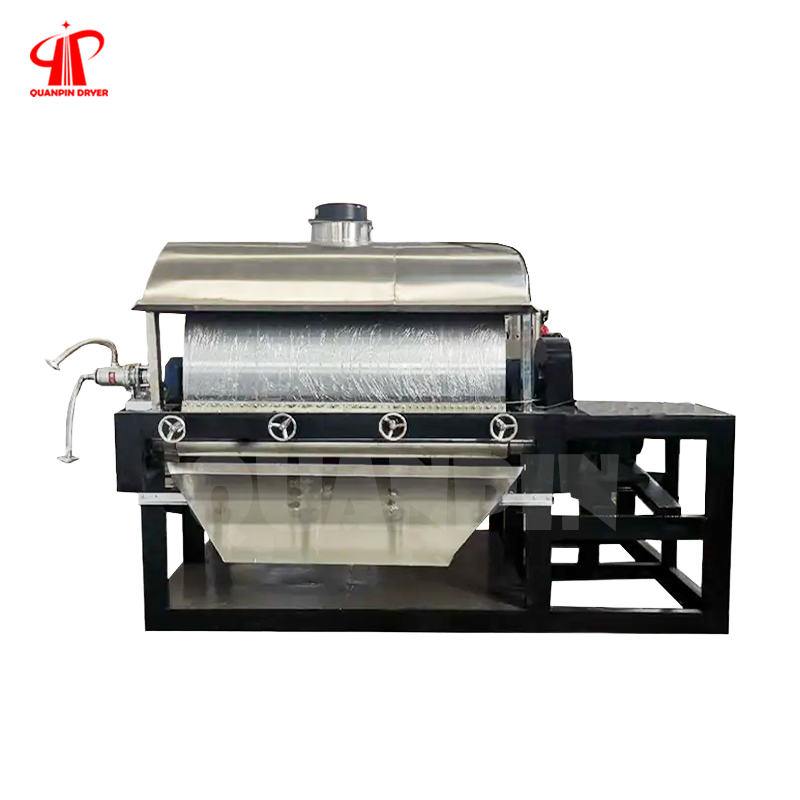
Feed Preparation
Confirm the consistency and handling requirements of the feed.
Material Distribution
Discuss how to maintain an appropriate layer on the drum.
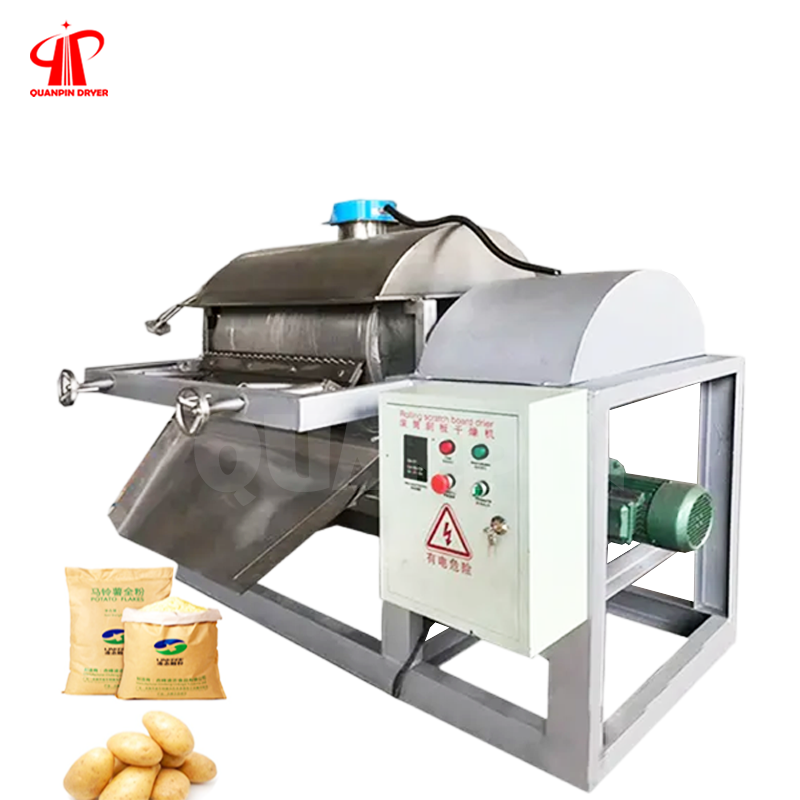
Heated Drum
Review the heating utility and permitted material temperature.
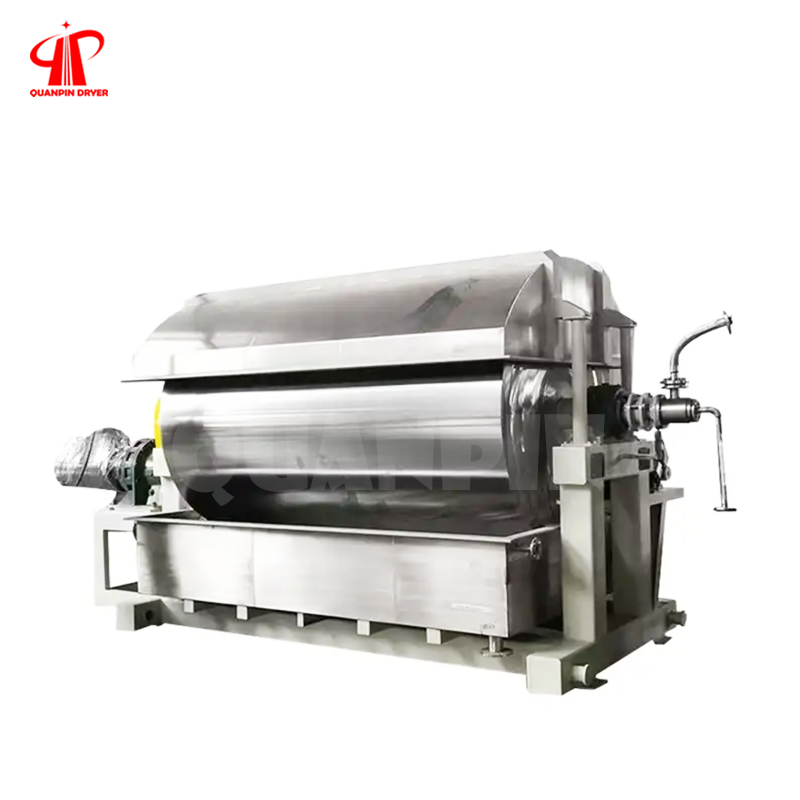
Scraper Arrangement
Specify product removal and maintenance access.
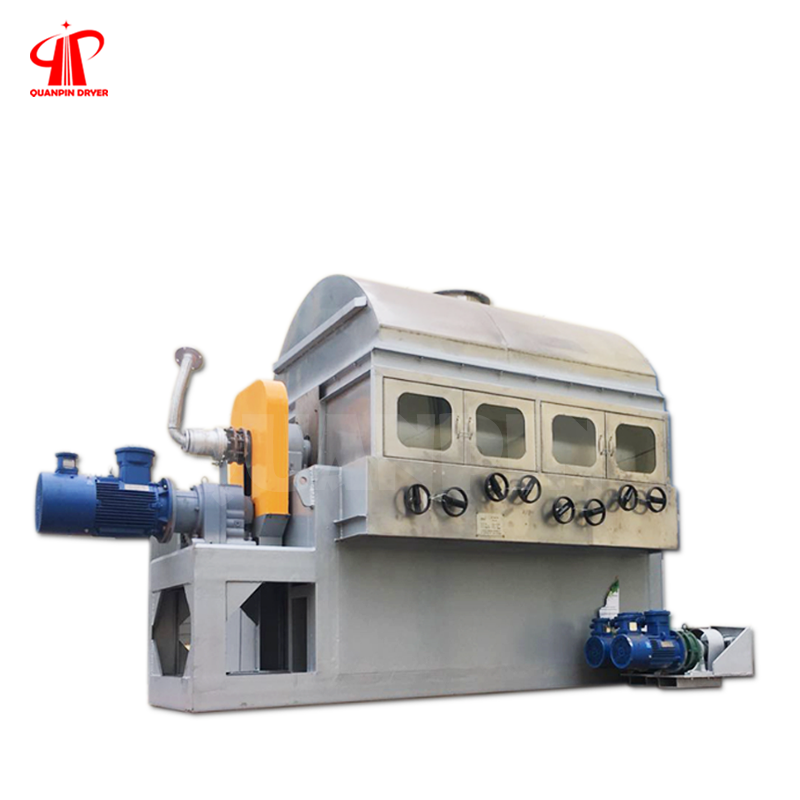
Drive Configuration
Discuss operating speed and control requirements.
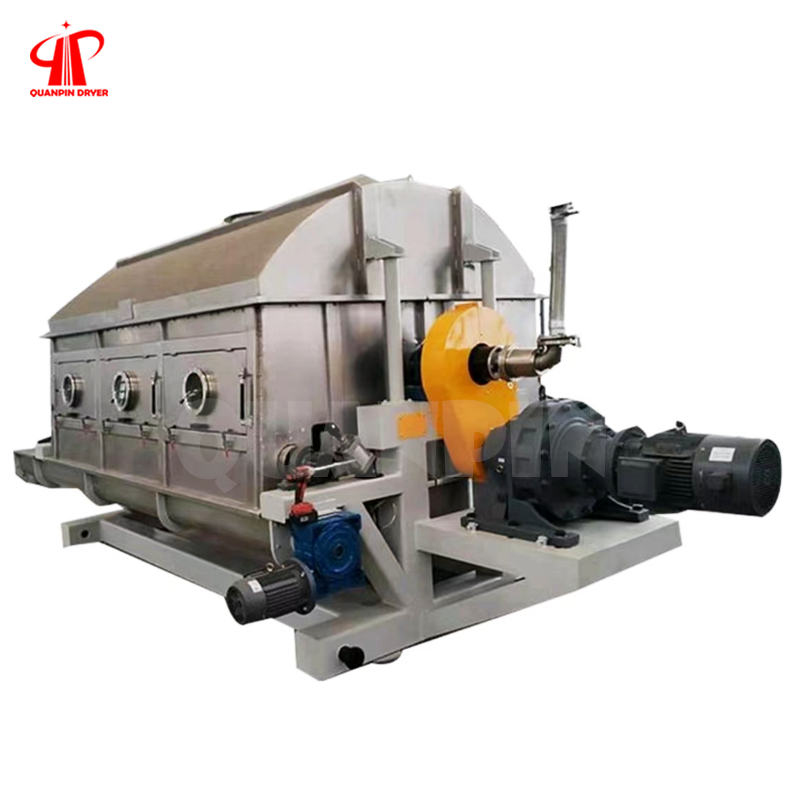
Product Collection
Coordinate the discharge and downstream handling arrangement.
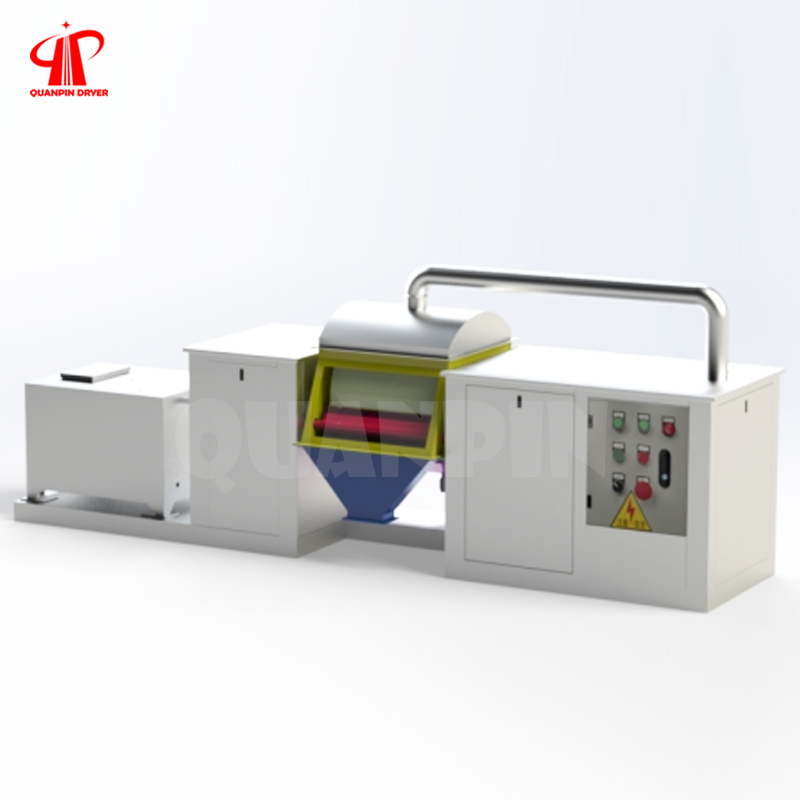
Production Requirements
Provide the expected feed rate and finished-product targets.
Material Trials
Use representative feed to assess the proposed drying conditions.
Additional Technical Data
| Parameter | Project Information |
| Product | Feed composition, moisture, viscosity and temperature limits |
| Feed Rate | Required input and output rates |
| Drum | Working surface and operating speed |
| Heating | Heat source and supply conditions |
| Discharge | Scraper and product collection requirements |
| Controls | Process settings and monitoring requirements |
| Installation | Available utilities, space and cleaning requirements |
The final specification is defined in the QUANPIN technical proposal.
Performance Test
Agree the feed conditions, operating settings and acceptance criteria before a representative material trial.
| Test Item | Record or Assessment |
| Feeding | Material, solids content, feed rate and layer distribution |
| Feed preparation | Feed temperature and consistency |
| Contact drying | Heating conditions, drum speed and material layer |
| Scraping | Scraper settings and product discharge |
| Final product | Residual moisture, appearance and product form |
| Utilities | Measured consumption under the stated test conditions |
Evaluate trial results against the agreed material and operating conditions.
What is a Drum Scraper Dryer?
A drum scraper dryer uses a heated rotating surface to dry a layer of material. A scraper removes the dried layer for collection and further handling.
How Does Drum Scraper Drying Work?
Material is distributed over the drum surface. Heat transfer removes moisture during rotation, then the scraper separates the dried product from the surface.
Material Characteristics
Share the feed composition, viscosity, solids content and temperature limits before equipment selection.
Temperature Requirements
Confirm the permitted product temperature and available heating conditions.
Layer Formation
Review the feed arrangement and layer thickness using representative material.
Product Discharge
Specify the desired product form and downstream handling.
Storage and Transport
Discuss cooling and packaging after discharge.
Finished-product Checks
Define moisture, appearance and other acceptance criteria for the dried material.
Material Suitability
Provide representative feed information so suitability can be assessed.
Utility Requirements
Review the heating supply, drive power and exhaust requirements.
Drum Dryer Configurations
Select the drum and feeding arrangement around the material behaviour and production target.
Trial Requirements
Material testing can help determine operating conditions before selection.
Feed Arrangements
Review distribution and feed consistency with the engineering team.
Production Configuration
Coordinate throughput, heating, discharge and maintenance access.
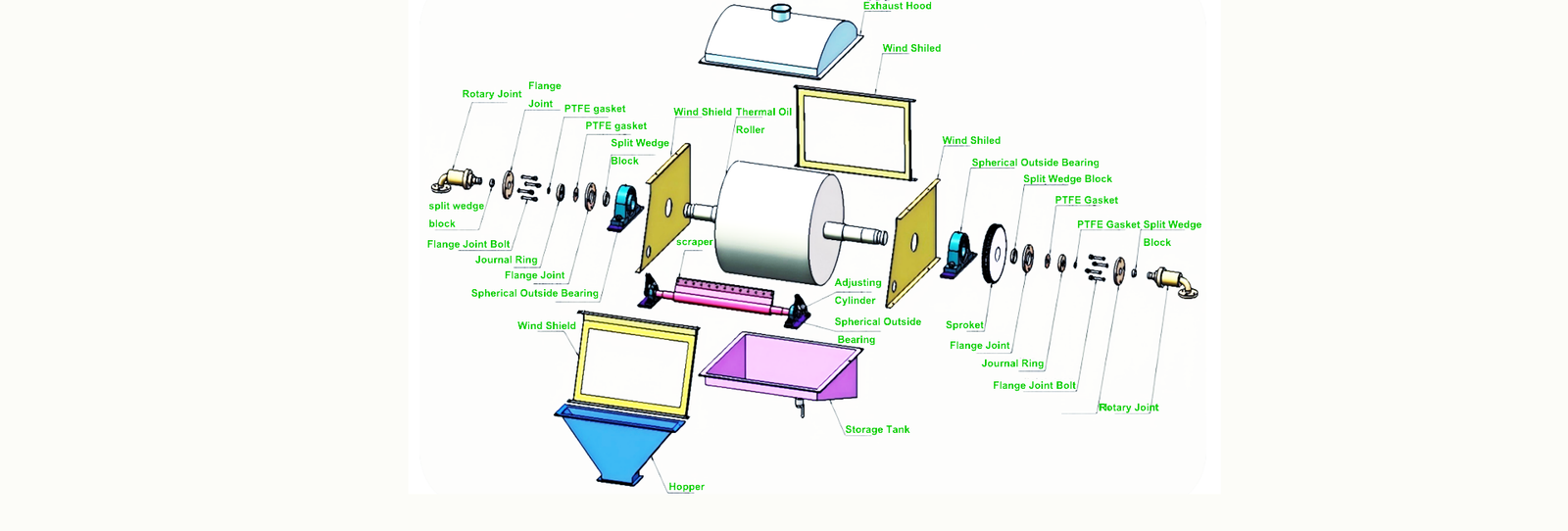
Main Components
The drum, heating connections, feed arrangement, scraper, drive and controls operate together as a drying system.
Drum and Contact Surface
Specify surface material and working dimensions in the technical proposal.
Heating Connections
Review the heat supply and associated connections for the selected equipment.
Scraper and Drive
Discuss scraper adjustment, drum speed and maintenance requirements.
Controls
Specify operating settings, monitoring and operator requirements.
Applications
Contact QUANPIN with your material composition and product targets to assess whether drum scraper drying is suitable.
Selecting a Drum Scraper Dryer
Provide feed rate, solids content, viscosity, moisture target, temperature limits and available utilities for technical review.
Send Your Inquiry Now
To request a quote for the TG Drum Scraper Dryer, send the slurry solids concentration, viscosity, heat sensitivity, required dried-film or flake properties and throughput. Include site space, utilities and installation requirements so QUANPIN can review the equipment scope and discuss a suitable configuration. Material-specific targets should be agreed before model selection.
Application Review: Food and Chemical Processing
Review the actual feed composition, consistency, initial and final moisture, temperature limits and discharge requirements. Define heating, vapour handling, cleaning and collection around the selected material and process.
For food ingredients, review the Codex food hygiene and HACCP framework when defining hygienic handling.
For a food-processing application, consult FDA food manufacturing practices for the intended market.
For dried foods, the FDA water activity reference helps distinguish water activity from moisture content.
Review the actual powder characteristics using the HSE safe handling of combustible dusts.
For the heating-system review, consult the U.S. Department of Energy process heat overview.
Start Optimizing Your
Drying Process Today.
Our engineers are ready to assess your material and recommend a reliable, cost-effective drying solution.