
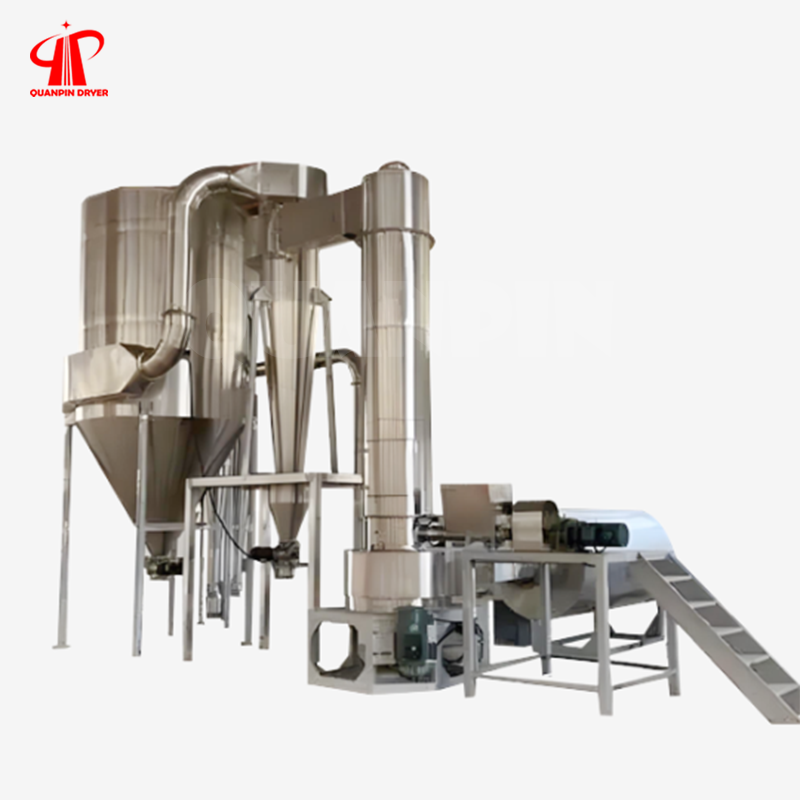
QUANPIN Spin Flash Dryer
A spin flash dryer combines mechanical dispersion with hot-air drying for suitable wet powders, filter cakes and pastes. QUANPIN reviews the material and production requirements to select the feeding, drying and collection arrangement.
Controlled feeding of suitable wet material
Mechanical dispersion in the drying chamber
Hot-air contact for moisture removal
Particle separation and powder collection
Heating and control arrangements for your site
Material testing to support equipment selection
Spin Flash Drying System
Wet feed enters the drying chamber through the selected feeding device. Mechanical agitation breaks up suitable agglomerates and disperses material into the moving hot air. Moisture evaporates as particles travel through the drying zone, and the dried material is separated from the air stream.
Features of the Spin Flash Dryer
• Feed delivery is coordinated with the drying duty.
• Mechanical dispersion helps expose wet material to the process air.
• The drying chamber and separation arrangement are selected together.
• Heating is specified around the available utilities.
• Product-contact materials are chosen for the application.
• Access for cleaning and maintenance is included in the layout.
• Process measurements support operating adjustments.
• Final capacity and operating settings depend on the material.
Materials for Spin Flash Drying
Suitability depends on feed consistency, moisture, particle behavior and temperature limits. Provide a representative sample and the required finished-product properties when discussing filter cakes, pastes or wet powders with QUANPIN.
Rotary Spin Flash Drying
Review material dispersion, airflow and collection as one process.
Motor and Drive Selection
Specify the site power supply and the required operating conditions.
Automatic Operation
Discuss feeding, process measurements and the intended control sequence.
Chemical Material Drying
Provide composition and compatibility information for equipment selection.
PLC Control Options
Define the operating interface and monitoring requirements for the project.
Airflow and Heating
Match process air and heating arrangements to the required moisture removal.
Integrated Drying Line
Review upstream feed preparation and downstream powder handling.
Starch Drying Assessment
Review the specific starch feed and required powder characteristics before selection.
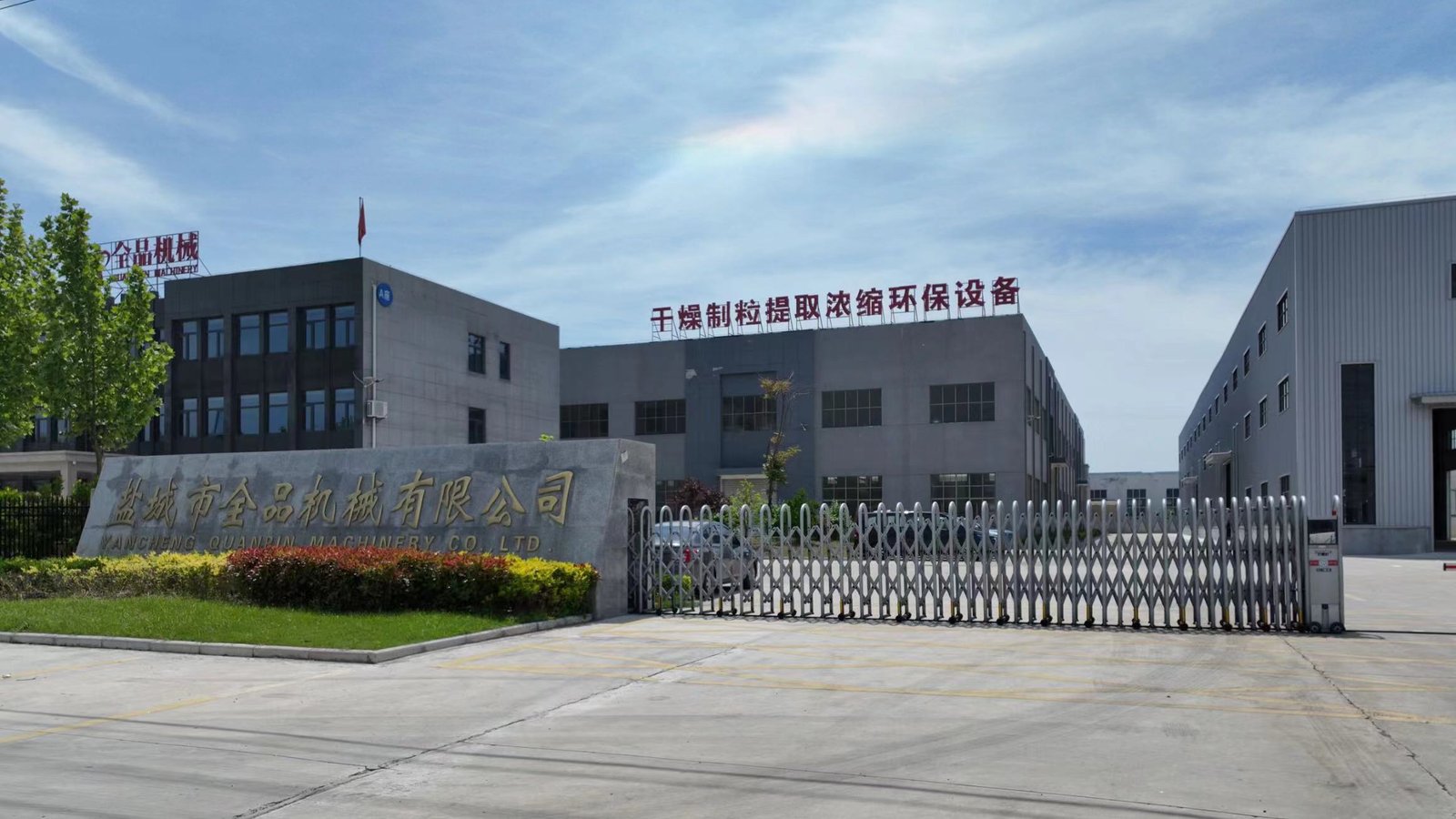
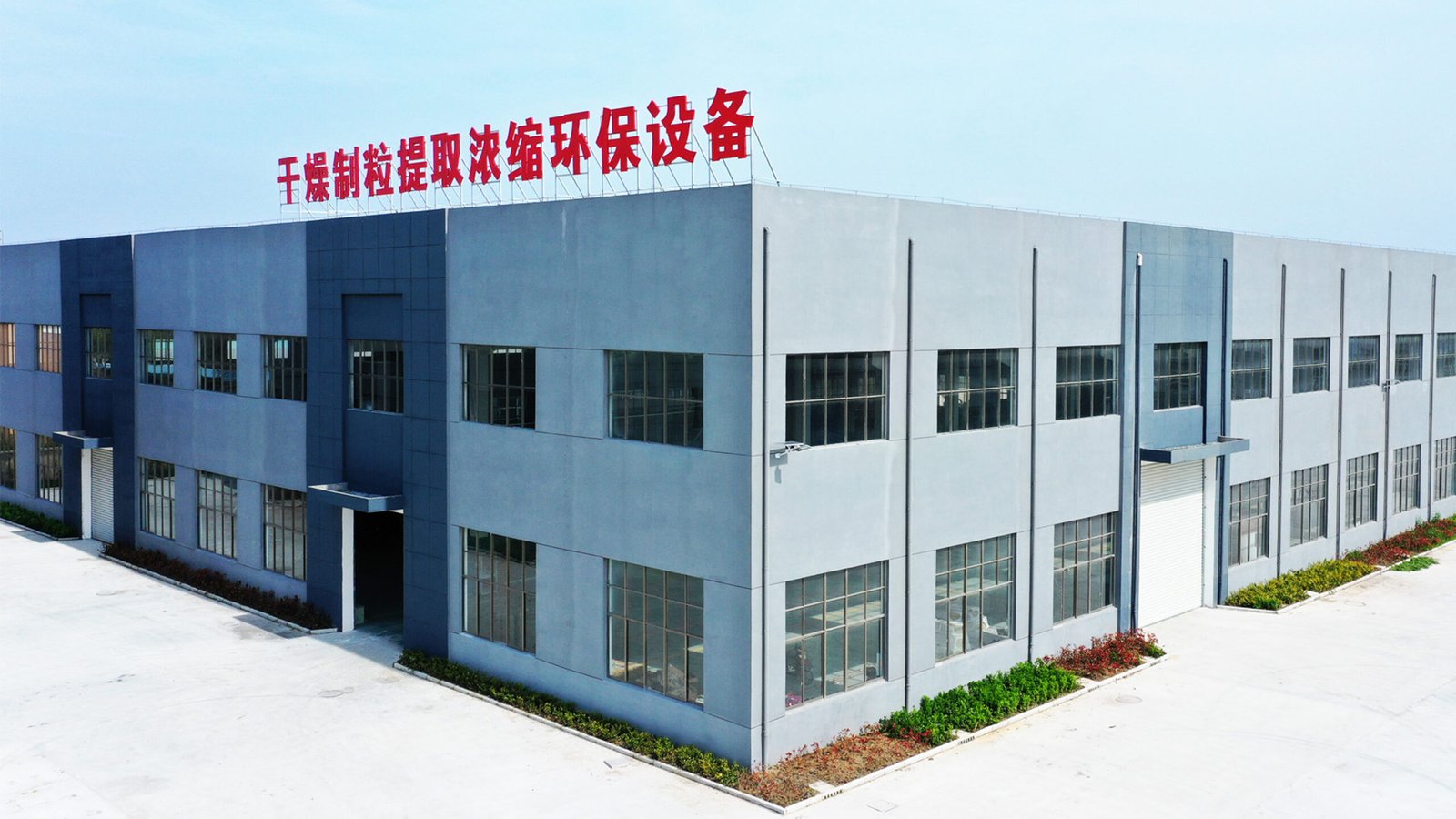
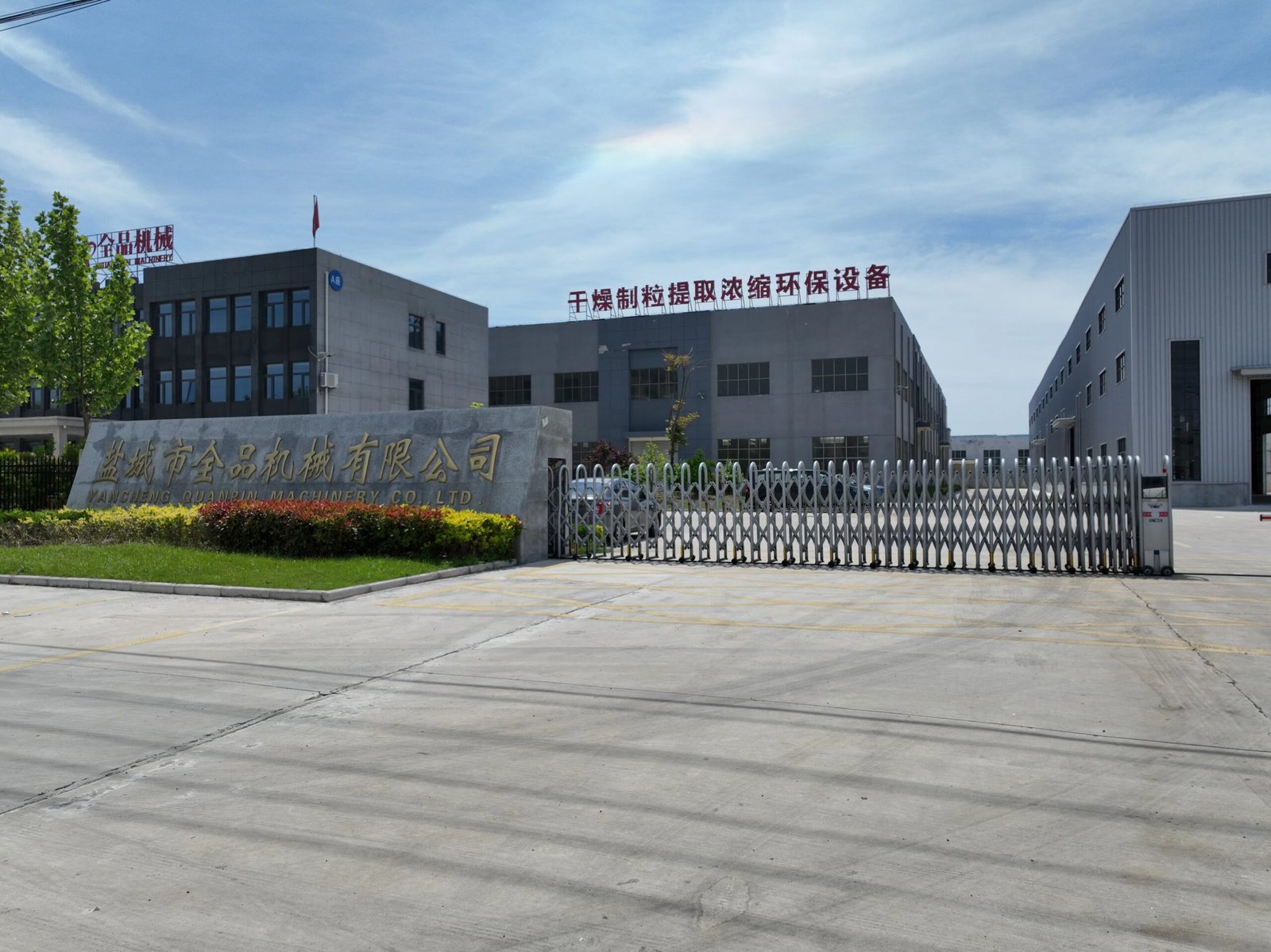
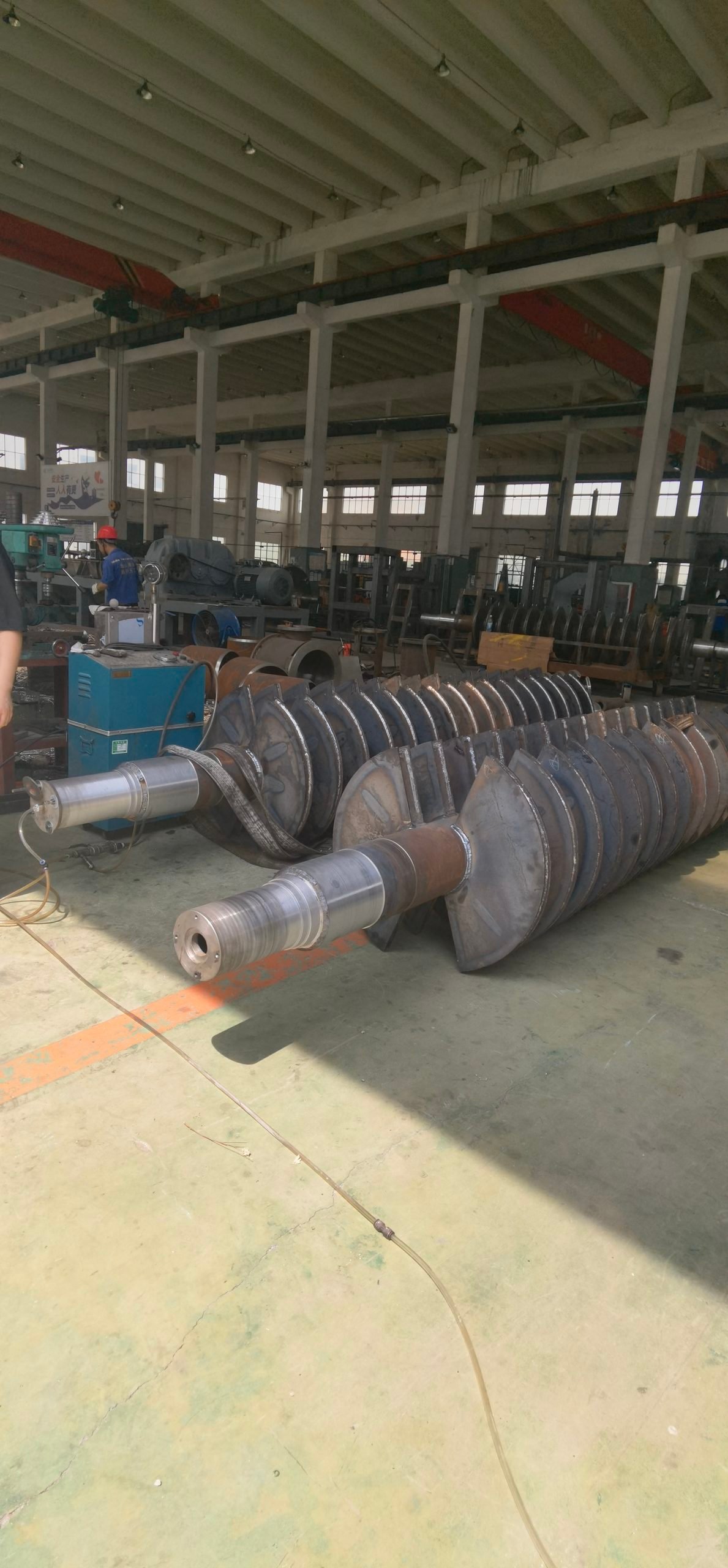
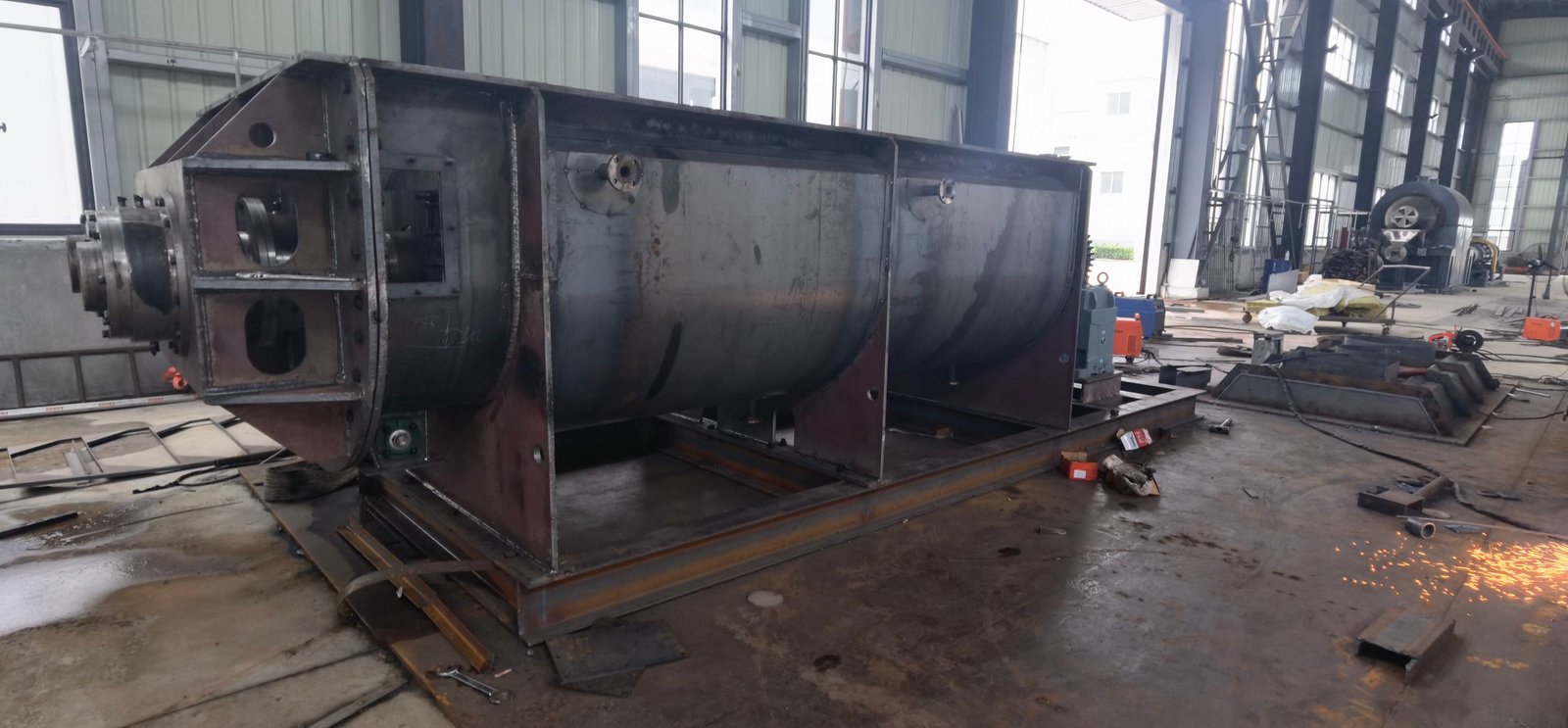
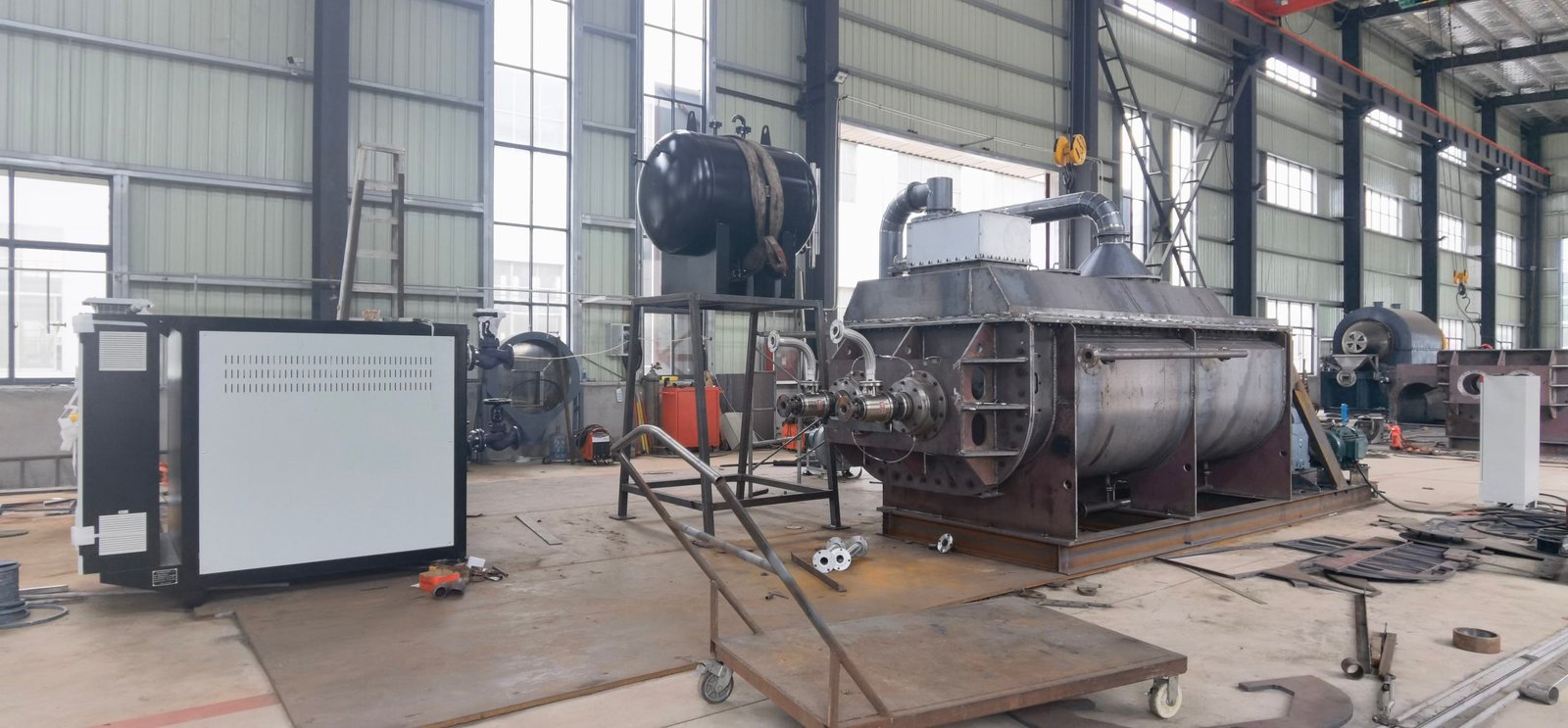
Our Factory
Technical Specifications
| Selection Item | Information Required |
| Feed material | Composition, consistency and bulk density |
| Moisture | Initial moisture and target final moisture |
| Throughput | Required feed rate and finished product output |
| Temperature | Product temperature limit and available heating utilities |
| Powder | Required particle characteristics and collection method |
| Installation | Site dimensions, utilities and process connections |
Numerical specifications are confirmed in the project-specific QUANPIN proposal.
Raw Materials
| Material Group | Information for Assessment | Trial Review |
| Agricultural chemicals | Composition and handling requirements | Moisture removal and product properties |
| Ceramic materials | Feed consistency and particle requirements | Dispersion and collection |
| Food materials | Ingredient properties and cleaning scope | Temperature exposure and powder quality |
| Inorganic chemicals | Composition and compatibility | Drying behavior and collection |
| Organic chemicals | Material and vapor properties | Process suitability |
Material-specific temperature, moisture and capacity results require a representative trial. This table lists assessment items rather than guaranteed performance.
What is a Spin Flash Dryer?
A spin flash dryer disperses suitable wet material in a heated air stream. Mechanical agitation and moving air act together to break up feed and remove moisture. The process is considered for materials that can be fed and dispersed under the selected conditions.
How Does a Spin Flash Dryer Work?
The complete line coordinates feed delivery, chamber agitation, hot air and particle collection. Each stage affects the finished powder and should be reviewed together.
Step 1: Disperse Wet Material
A feeding device introduces wet material into the chamber. The agitator breaks up suitable agglomerates and exposes more of the material to the process air.
Step 2: Drying
Hot air supplies energy for evaporation. Feed rate, air conditions and material behavior influence moisture removal and residence time.
Step 3: Collection
The selected separation equipment collects powder from the air stream. Particle properties help determine the collection arrangement.
Step 4: Exhaust Air
The process air passes through the specified separation and treatment equipment. Exhaust requirements are considered as part of the complete installation.
Features to Consider
The value of a spin flash drying system depends on the material and operating duty. Compare the entire process against the required output and powder properties.
Drying Performance
Representative trials help establish whether the feed disperses and dries as required. Capacity depends on the actual moisture removal duty.
Automatic Controls
A project can define the required operating sequence, monitoring points and operator interface. The agreed scope should be included in the proposal.
Energy Requirements
Review heating, air movement and drive requirements together. Utility demand changes with feed moisture and the intended process conditions.
Process Adjustments
Feed delivery and process-air settings are coordinated to meet the required operating conditions. The appropriate settings are material-specific.
Material and Process Requirements
Share material composition, handling information and installation requirements with the engineering team before equipment selection.
Cleaning Access
Specify the cleaning method and any changeover requirements so that access and product-contact surfaces can be reviewed.
Maintenance
Plan inspection of the drive, agitator, feed system and collection equipment. Maintenance intervals follow the selected equipment and operating duty.
Applications of Spin Flash Drying
The following groups may contain suitable materials. Suitability is assessed for the actual formulation, feed condition and finished-product target.
Agricultural Chemicals
Provide formulation information, handling requirements and desired particle properties.
Ceramics
Review the feed consistency, dispersion behavior and powder characteristics required by the downstream process.
Food
Specify ingredient behavior, product temperature limits and cleaning requirements.
Inorganic Chemicals
Identify material compatibility and the target moisture and particle characteristics.
Organic Chemicals
Provide composition and vapor information for the process review.
Send Your Inquiry Now
Start Optimizing Your
Drying Process Today.
Our engineers are ready to assess your material and recommend a reliable, cost-effective drying solution.