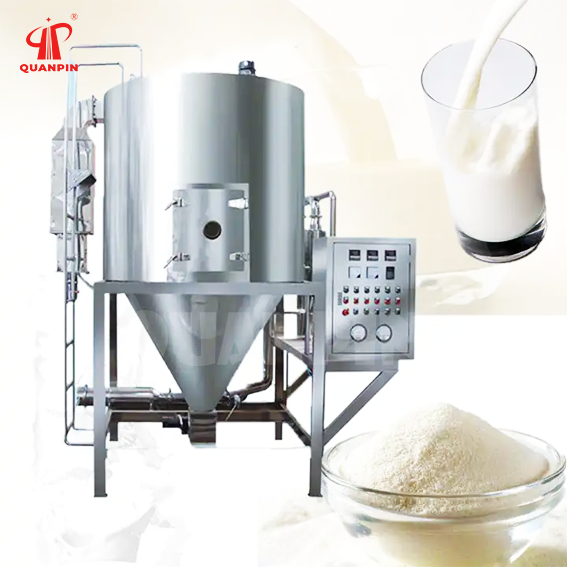
QUANPIN Spray Dryer
Turn pumpable liquid feed into powder through controlled atomization and hot-air drying. QUANPIN helps you select a spray drying system around the feed material, required throughput and finished powder properties.
Select product-contact materials to suit corrosion resistance, hygiene and cleaning requirements.
Evaluate solutions, emulsions and suspensions using feed solids, viscosity and thermal sensitivity.
Size the system by water evaporation duty and the required production rate.
Coordinate atomizer selection, air temperature and residence time with product quality targets.
Discuss testing, documentation, controls and installation requirements before final equipment selection.
Technical Specifications
| Specification | Selection basis |
| Product-contact material | Selected for the feed chemistry and cleaning procedure |
| Feed rate | Determined by feed solids, evaporation load and required output |
| Drying duty | Application-specific water removal and outlet moisture target |
| Atomization | Centrifugal, pressure-nozzle or two-fluid configuration |
| Heating and controls | Matched to available utilities and process requirements |
| Documentation | Confirmed with the project specification |
Centrifugal Spray Dryer
Rotating atomization for suitable liquid feeds and continuous powder production.
Vacuum Spray Drying Configuration
Discuss lower-temperature operation and the pressure conditions required by your material.
Pressure Spray Dryer
Pressure-nozzle atomization for suitable feed properties and powder specifications.
Small-Batch Spray Drying Configuration
Evaluate feed preparation and product recovery for smaller production batches.
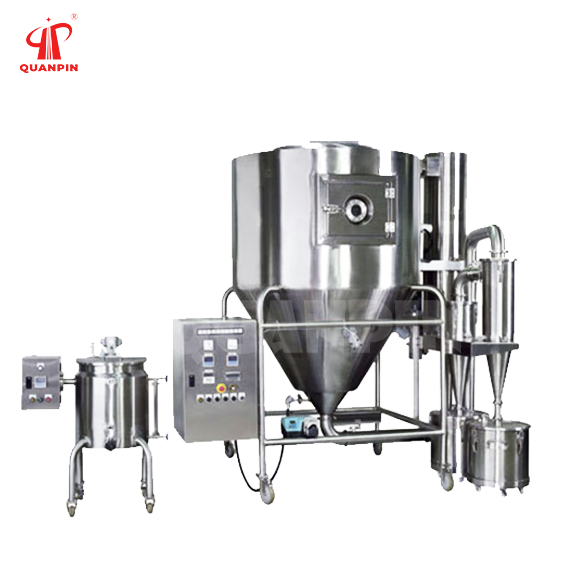
Particle-Size-Controlled Spray Drying
Select atomization and drying conditions around the target powder size distribution.
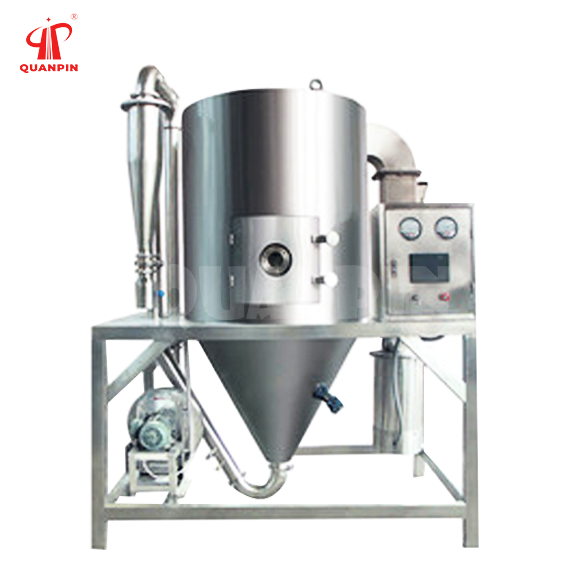
Pharmaceutical Spray Drying Configuration
Define containment, cleaning and documentation needs before selecting the system.
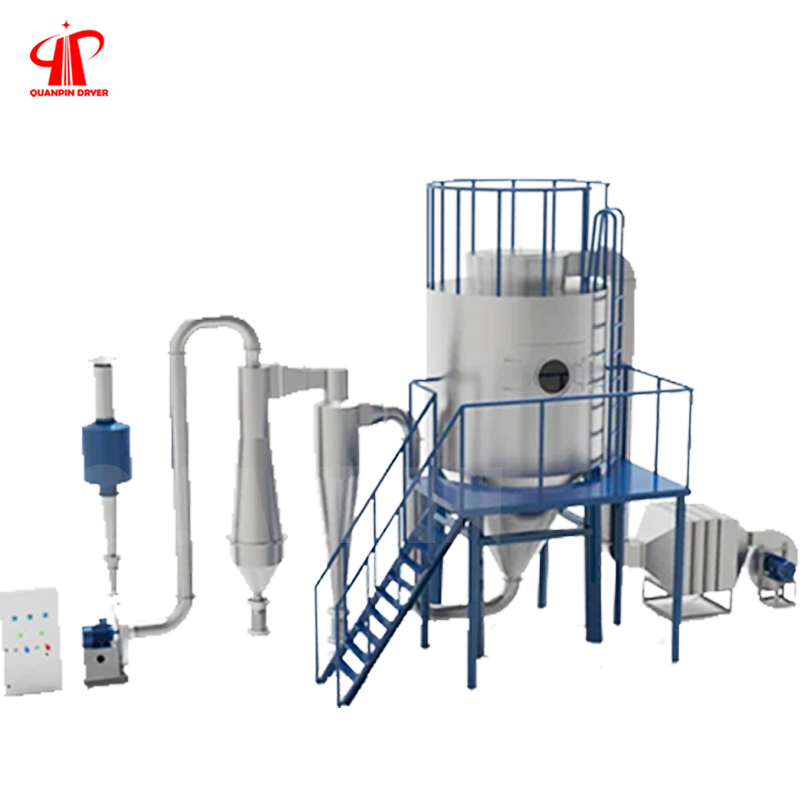
Industrial Spray Drying System
Coordinate feed delivery, heat supply, separation and controls in one process.
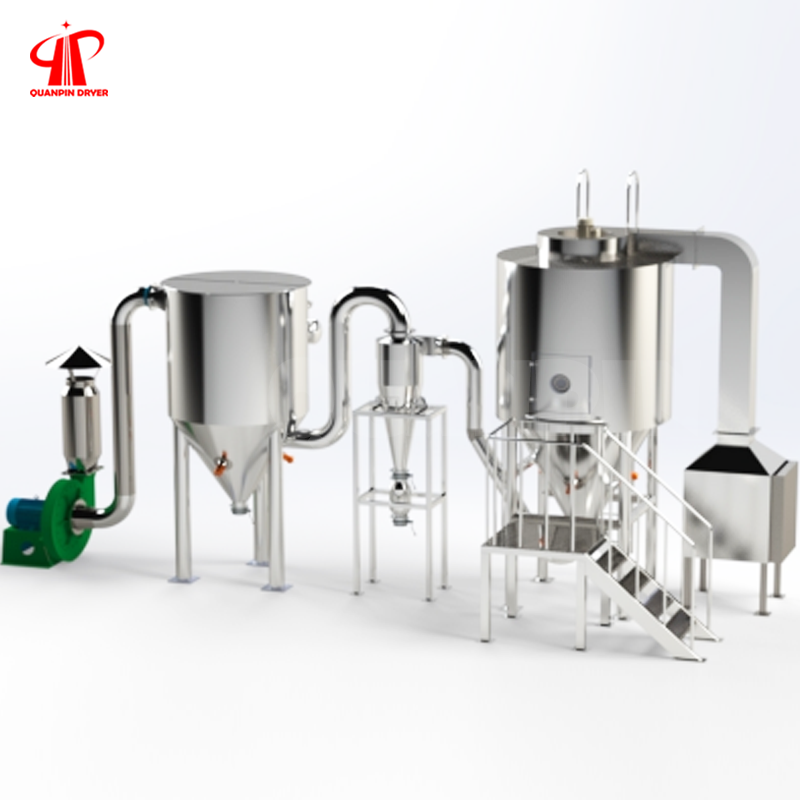
Laboratory Spray Drying Configuration
Discuss sample quantity, trial objectives and scale-up requirements.
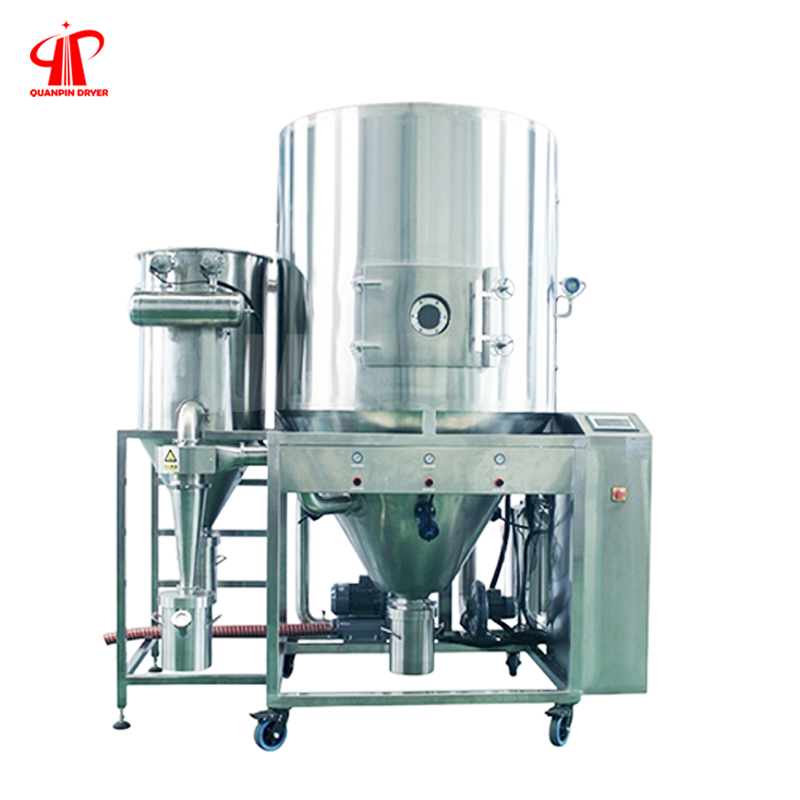
Stainless Steel Spray Drying System
Choose contact surfaces and cleaning access to suit the intended product.
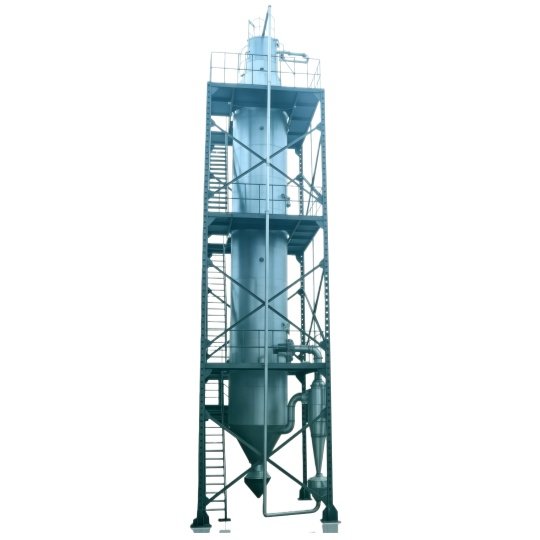
High-Speed Centrifugal Atomization
Review atomizer speed, feed characteristics and droplet formation together.
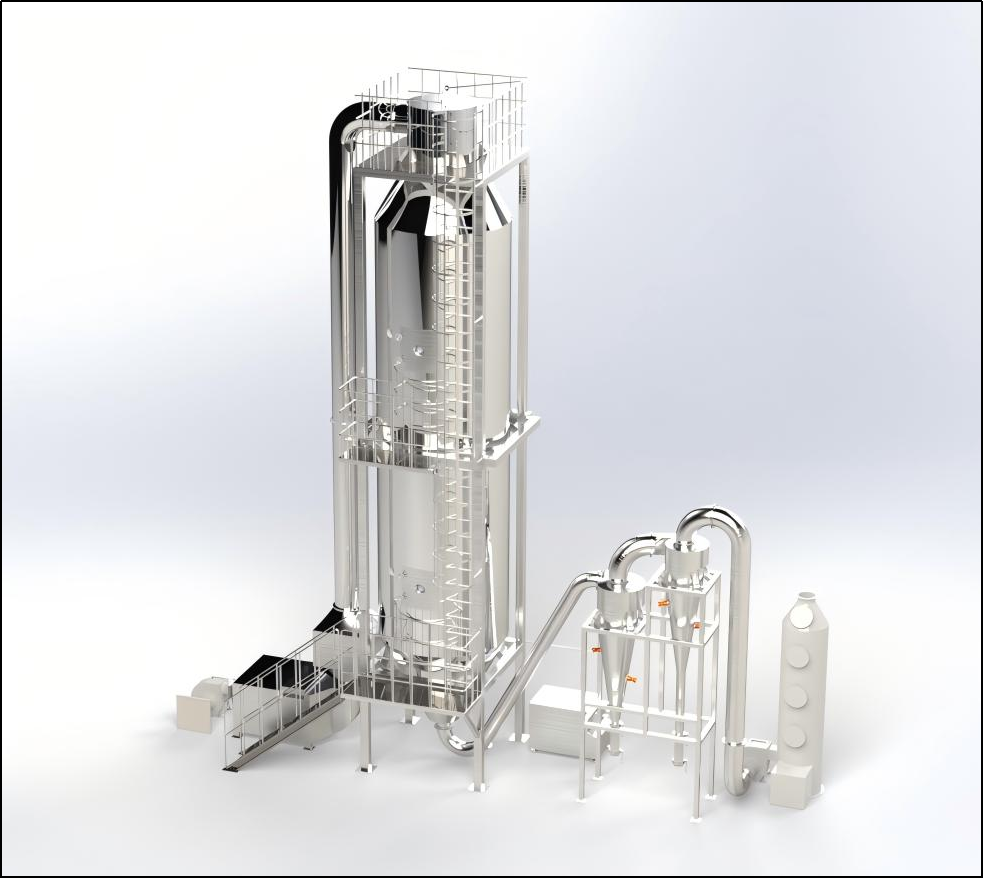
Customized Spray Drying System
Adapt the layout, utilities and recovery system to the production site.
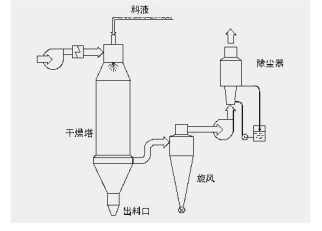
Chemical Industry Spray Drying
Assess compatibility, emissions and solvent-related requirements for the feed.
Test Your Material Before Order
Discuss a representative material trial with QUANPIN. Define the feed information, powder targets and measurements needed to evaluate the proposed drying process. Confirm test arrangements and reporting with our team.
What is Spray Dryer
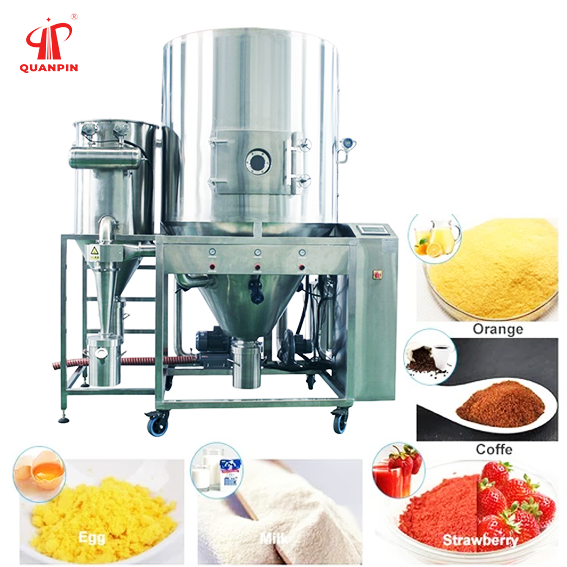
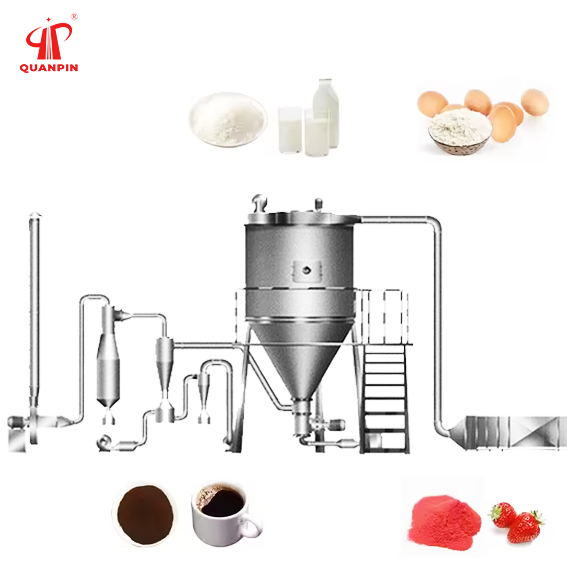
Spray drying converts an atomized liquid feed into a collectable powder. The small droplets provide a large contact area for evaporation, while the drying chamber and separation equipment manage the air and product flows. The process can be evaluated for solutions, emulsions and suspensions.
Working Principle of Spray Dryer
1. Feed preparation and atomization. Prepare a stable feed and deliver it to a rotating atomizer or nozzle. Droplet formation depends on the feed properties and atomization conditions.
2. Contact with drying air. Heated air enters the chamber and transfers heat to the droplets. Evaporation, airflow and outlet conditions must be balanced against the material’s temperature tolerance.
3. Powder collection. Separate the dried particles from the exhaust stream using suitable collection equipment. Review product cooling, discharge, cleaning and emissions as part of the complete system.
Types of Spray Dryer
The atomization method is an important selection decision. Feed testing helps establish which arrangement can achieve the required powder characteristics.
Pressure Spray Dryer
A pump feeds liquid through a pressure nozzle. Nozzle design and operating pressure influence droplet formation. Review filtration, nozzle wear and cleaning alongside product requirements.
Centrifugal Spray Dryer
A rotating atomizer disperses the incoming liquid. Atomizer settings, feed rate and chamber design work together to influence the powder. This configuration requires attention to the available floor space and maintenance access.
Two Fluid Nozzle Spray Dryer
A second fluid, commonly compressed gas, assists atomization. The gas supply, nozzle arrangement and feed properties must be evaluated together, especially when considering small-scale trials or specialist powders.
Advantages of Spray Dryer
Product Quality
Control of droplet formation and drying conditions helps target consistent powder properties. Validate moisture, solubility and thermal sensitivity through suitable trials.
Production Controllability
Feed delivery, atomization and air conditions provide operating variables for process adjustment. Establish a repeatable operating window for each material.
Continuous Processing
A suitably designed system combines liquid feeding, evaporation and powder recovery. Capacity depends on the complete process, including downstream handling.
Operating Cost
Review heat supply, exhaust losses, collection efficiency and cleaning time when comparing alternatives. Consider heat recovery where the process permits.
Application Flexibility
Different feeds require different equipment and operating conditions. Material testing helps identify feasible configurations and process limitations.
How to Select Proper Spray Dryer
Start with a representative sample and a clear product specification. Include feed solids, viscosity, heat sensitivity, target moisture, powder handling and the required production schedule.
| Atomization method | Key considerations | Typical selection questions |
| Pressure nozzle | Pump and nozzle conditions | Is the feed stable and suitable for the nozzle? |
| Centrifugal | Atomizer operation and chamber layout | What powder characteristics and capacity are needed? |
| Two-fluid nozzle | Atomizing gas and feed delivery | What are the trial scale and gas requirements? |
Core parameters: Calculate evaporation duty and review inlet/outlet conditions, collection requirements and available utilities.
Application requirements: Specify cleaning, containment, corrosion resistance and any hazardous-material controls with the engineering team.
Service and testing: Agree on trial objectives, acceptance criteria, spare parts, training and commissioning scope before ordering.
Spray Dryer Applications
Food Industry
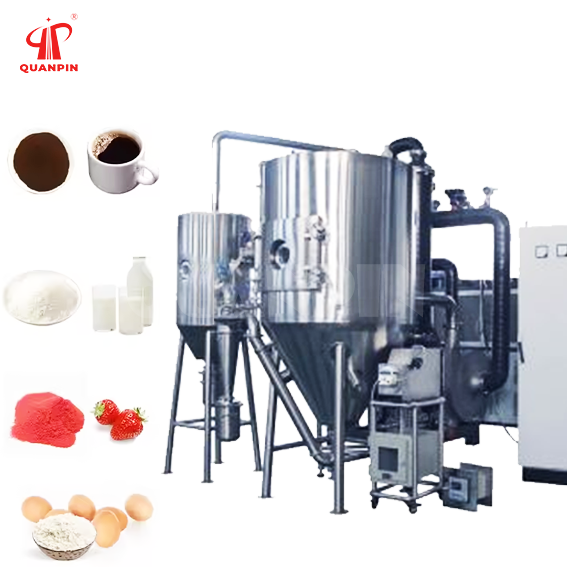
Evaluate feeds such as dairy ingredients, beverages and food formulations against hygiene, flavour, solubility and moisture requirements. Cleaning and product recovery are part of the selection.
Chemical Industry
Assess chemical compatibility and powder handling for salts, polymers and other suitable feeds. Exhaust treatment and material hazards must be considered at the design stage.
Pharmaceutical Field
Discuss product temperature limits, containment, cleaning and documentation with the process team. Product-specific validation is required rather than assuming suitability from the dryer type alone.
New Energy Materials
Review particle properties, contamination control and downstream processing needs for suitable advanced-material suspensions. Trials can help establish the process window.
Agriculture
Consider formulation stability, handling and environmental requirements for suitable agricultural products. Confirm the feed’s chemical and thermal behaviour before equipment selection.
Frequently Asked Questions
What determines energy consumption?
Evaporation duty, feed solids, air conditions and heat losses all contribute. Compare systems using a defined feed and production target.
Can the system process organic solvents?
Solvent service needs a dedicated engineering assessment covering containment, atmosphere control, recovery and applicable safety requirements. It should not be assumed suitable for a standard open-air dryer.
Can automation be included?
Discuss the required control functions, alarms, data recording and integration with your production system as part of the specification.
Send Your Inquiry Now
Start Optimizing Your
Drying Process Today.
Share your material and production requirements with our engineering team.