Vacuum Freeze Dryer: Separate Probiotic Moisture Content from Water Activity at Packing
By QUANPIN
Moisture content and water activity answer different questions about a freeze-dried probiotic ingredient. Preserve both method identities before using their results to assess packing and storage conditions. The Vacuum Freeze Dryer comparison begins with the actual formulated food ingredient.
This guide concerns a formulated food ingredient, not a guaranteed shelf life or health claim. The culture, protective ingredients and packaging route define the actual evaluation. This application belongs to our food ingredient industry scope.
Which Water Measurement Answers the Question?
Moisture content reports water on a stated mass and method basis. Water activity describes water availability under the measurement conditions and is not the same quantity.
Two formulations cannot be assumed equivalent because they share one moisture result. The relevant physical and biological quality tests still need their own evidence.
Equipment Principle and Material History
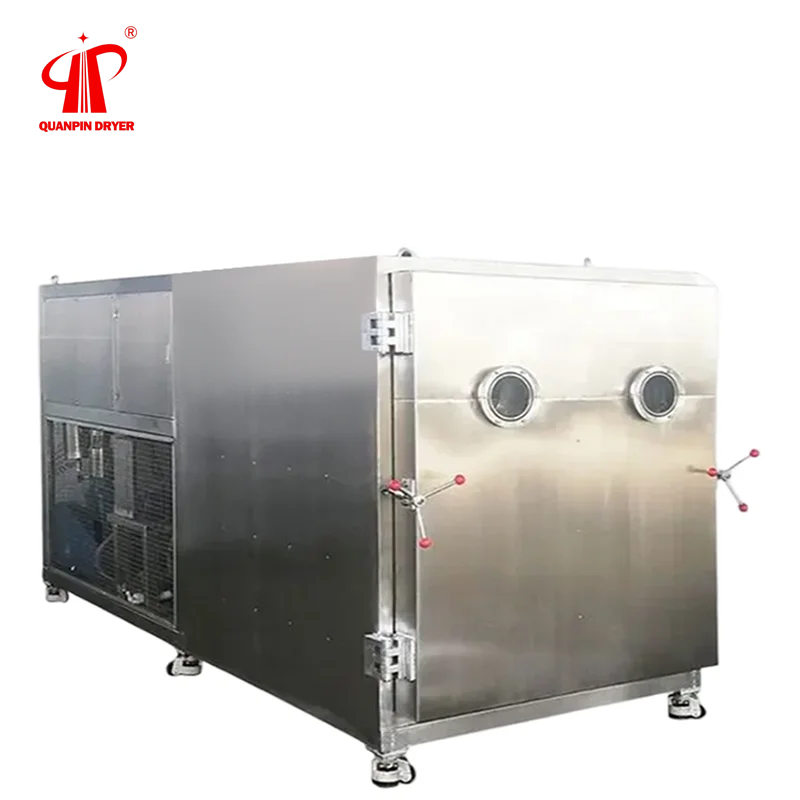
The prepared load is frozen before water removal under vacuum through the designed drying stages. The resulting ingredient then passes through unloading and packing. A Vacuum Freeze Dryer Machine quotation should state the load and the agreed assay basis.
Exposure after drying can change the specimen before testing. Record that handling history when comparing shelf samples and packed material.
A Trial Sequence for This Application
Identify formulation and quality attributes
Identify the culture, protective formulation and required food-ingredient attributes before defining an endpoint or packing decision.
Define two distinct water measurements
Specify the moisture and water-activity methods, reporting bases and relevant measurement conditions. Keep their results labeled separately.
Sample traceable load positions
Map the loaded material and collect identified specimens using the approved procedure at the defined processing boundary.
Record exposure through packing
Record unloading, transfer and packing exposure for the material tested. Preserve the identity of any deliberately protected comparison specimen.
Review physical and biological evidence
Review the physical measurements alongside the agreed viable-count or activity method and the relevant storage evidence.
Four Observation Boundaries
Before freezing, retain formulation composition and the initial sampling basis rather than treating all solids as culture material.
After drying, identify the load position represented by the specimen and the handling used to obtain it.
During transfer, record the actual exposure and temporary-container condition included in the evaluation.
After packing, identify the package and storage history before comparing it with an immediate post-drying specimen.
Vacuum Freeze Dryer Components to Include
Preparation and freezing
The preparation and freezing step establish the formulation and initial load condition used in the study. Evaluate a vacuum freeze drying machine with the formulation and planned packing boundary visible.
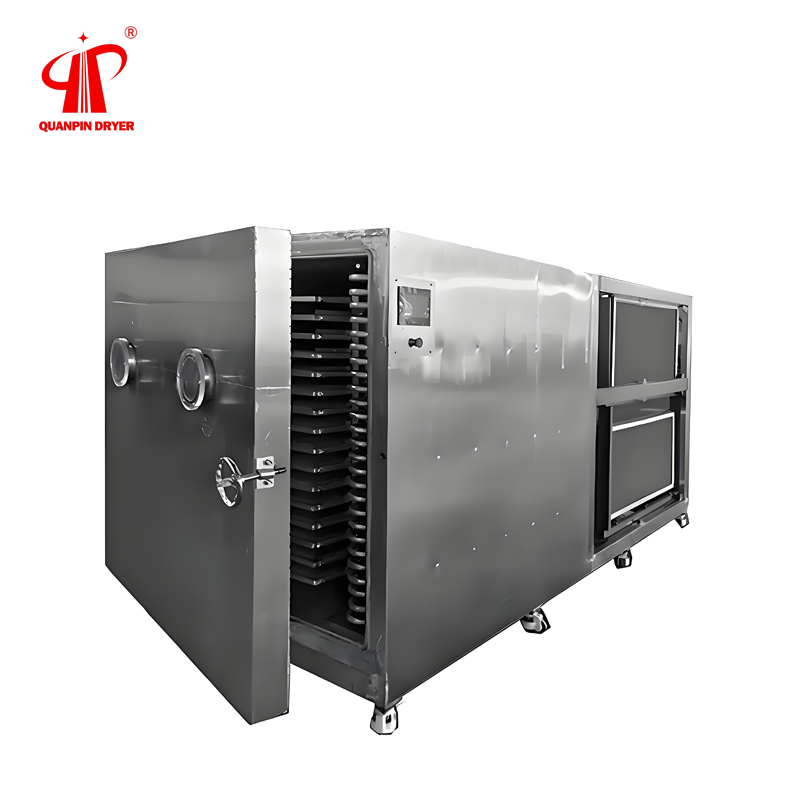
Shelves and trays
The shelves and trays define the loaded arrangement. Their identities help connect specimens to the demonstrated batch. A food vacuum freeze dryer needs an application-specific test; a generic low-temperature description cannot establish retained activity.
Thermal system
The thermal system supplies the recorded process history but does not itself measure a finished ingredient’s water activity.
Vacuum chamber
The vacuum chamber provides the process environment. Chamber pressure is not a substitute for a moisture or biological assay. See GEA food freeze drying for removing moisture from frozen food loads.
Condenser and vacuum supply
The condenser and vacuum supply support vapor removal within the proposed design and operating duty.
Unloading and packing
The protected unloading and packing arrangement, where included, needs its actual scope confirmed rather than assumed from the dryer name.
Configuration and Study Choices
Define the Demonstrated Starting Point
An immediate endpoint assessment should state how the specimen was handled between the load and the instrument. The term food vacuum drying also covers processes that differ from the frozen-load sublimation duty discussed here.
A packing comparison should use the actual food formulation and defined package conditions.
A storage study needs its own time and condition record. An immediate assay cannot establish future viability. See GEA batch freeze drying for batch loading and food ingredient handling.
Separate the Changed Variable
A changed protective ingredient can change the relation between measured water and product behavior. Review the new formulation directly.
A changed tray load requires the represented positions and preparation to remain traceable.
A changed analytical method requires review before treating the results as equivalent historical values.
Review the Complete Process Boundary
A changed package should retain its actual material and closure history rather than a broad moisture-resistant label. An industrial vacuum dryer designation alone does not establish a freeze-drying arrangement or a probiotic quality result.
A changed receiving environment should be described at the boundary where exposure actually occurs. See FDA food manufacturing practices for food ingredient hygiene.
A proposed acceptance range requires formulation-specific justification. Neither a generic moisture number nor a generic water-activity number establishes universal suitability.
Industry Application and Product Acceptance
The intended application is a probiotic food ingredient within the site’s food and heat-sensitive material processing scope.
Use the agreed culture-specific assay and preparation procedure when evaluating biological quality.
Interpret physical stability, viable count and package performance as related but distinct requirements.
Keep any eventual storage or label claim tied to its supporting evidence rather than the type of drying equipment alone.
Benefits and Limits of the Comparison
Distinguishing the measurements helps a team avoid using a convenient moisture result to answer a different packing or storage question. Specify the frozen-feed duty explicitly when comparing descriptions such as low-temperature vacuum drying.
It does not guarantee microbial safety, retained viability or a shelf life. Those outcomes require the appropriate product and process evidence.
Variables That Need a Clear Record
Method identity matters because different moisture procedures can have different scopes and reporting bases.
Measurement conditions matter when comparing water-activity results. Preserve them with the instrument report.
Formulation matters because protective ingredients are part of the material being tested.
Specimen exposure matters because the tested material may have changed after it left the chamber.
Load-position identity matters when evaluating how well the sampled material represents a batch. See FDA water activity background for distinguishing storage measurements.
Assay preparation matters because the reported viable count depends on the defined organism and analytical procedure.
Safe Operation and Material Handling
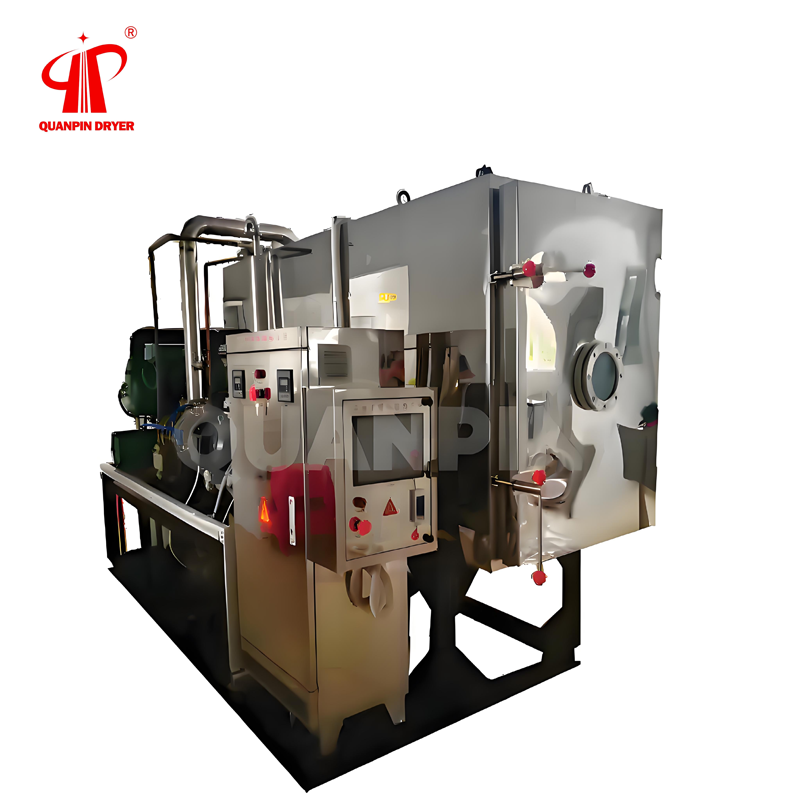
Use approved vacuum-breaking, unloading and sampling procedures. Do not open or access the system contrary to its specified operating sequence. See FAO/WHO probiotic evaluation report for product-specific probiotic evaluation and analytical evidence.
Apply the food ingredient’s hygiene and handling controls through packing. The dryer is not a substitute for the facility’s food-safety program.
Prepare a Useful Equipment Enquiry
Provide QUANPIN with the formulation, load basis, moisture and water-activity methods, biological tests and intended packing route. For heat-sensitive material drying, investigate the actual formulation response through the agreed assay and sampling plan.
Agree what the trial can demonstrate immediately and which storage or package questions require separate evidence. Compare Drying Equipment at the same accepted-ingredient boundary, including unloading and packing.
Frequently Asked Questions
Are moisture content and water activity interchangeable?
No. Moisture content and water activity are different measurements and should retain separate labels, methods and interpretation.
Does a low moisture result prove viable count?
No. Biological quality requires its own appropriate culture-specific assay and supporting evidence.
Does a shelf specimen represent packed material?
Not automatically. Define the exposure boundary and compare the actual specimens and their handling history.
What if a protective ingredient changes?
Review the changed composition, measurement response and biological quality requirements before transferring an earlier acceptance conclusion.
What universal water-activity limit should be used?
Use the formulation-specific quality process and evidence. This guide does not provide a universal number for probiotic ingredients.
Does a successful drying trial prove shelf life?
Storage performance requires an appropriate study under the stated package and conditions; an immediate drying result is not a shelf-life demonstration.
Discuss Your Vacuum Freeze Dryer Application with QUANPIN
Discuss this application with Vacuum Freeze Dryer specialists at QUANPIN. Share the material specification and the trial question through our contact page.
Email sales@quanpinmachine.com or stacie@quanpinmachine.com. Contact QUANPIN on WhatsApp: +86 15921493205.