Coffee Spray Dryer: Specify Cleanability Across Extract-to-Powder Campaign Changeovers
By QUANPIN
A coffee powder campaign includes more than the drying chamber. Define the extract-to-powder product-contact route before comparing access and cleaning requirements for a spray dryer. A coffee dryer machine enquiry for coffee must specify liquid extract rather than whole-bean drying.
The proposed line should accommodate the actual formulation and changeover objectives. A chamber access door alone cannot establish readiness of feed lines, atomizer and powder collection equipment. This application belongs to our food ingredient industry scope.
What Does the Cleaning Boundary Include?
Cleanability describes how the equipment arrangement permits the required cleaning and inspection actions. It is different from proof that a particular cleaning operation achieved its acceptance criteria.
The coffee extract, any added ingredients and the next intended product determine the practical cleaning question. Preserve those identities rather than describing every campaign as simply coffee.
Equipment Principle and Material History
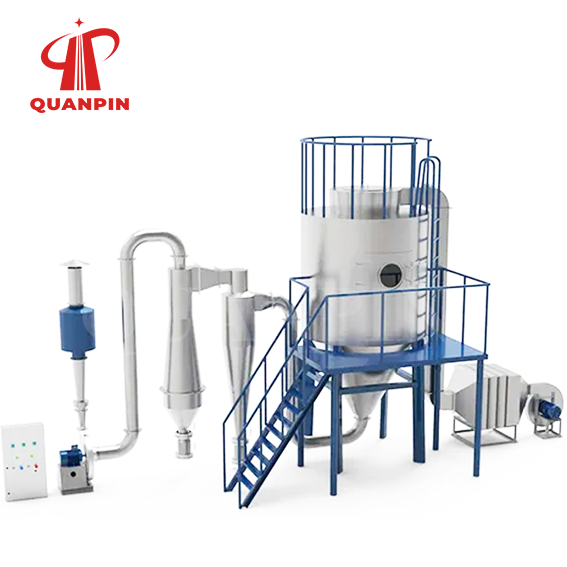
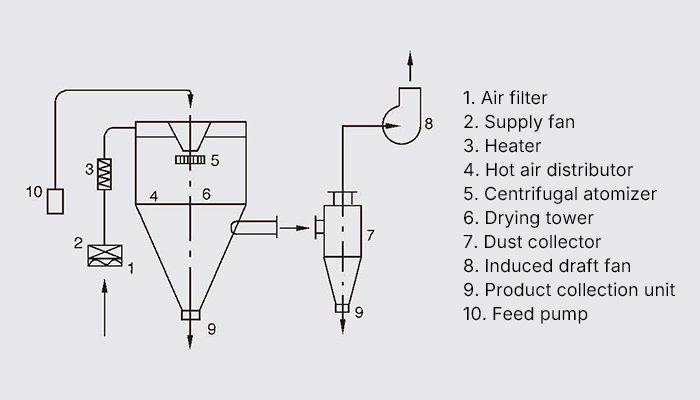
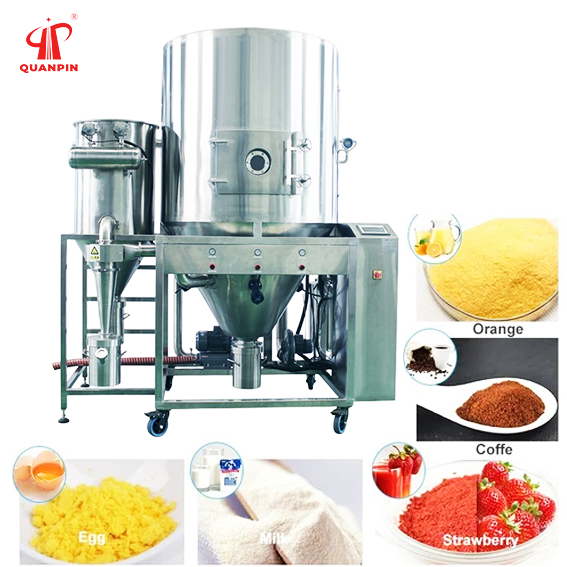
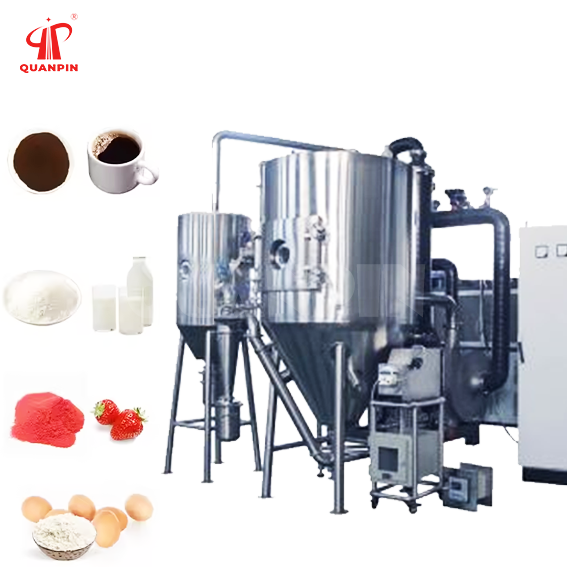
A centrifugal atomizer disperses prepared extract into droplets while process gas removes liquid. Powder is recovered through the selected chamber and collection arrangement. The coffee spray dryer route should preserve the identity of coffee solids and any carrier additions.
The product-contact path therefore spans liquid-feed components and powder-handling components. They can require different access and readiness considerations.
A Trial Sequence for This Application
Map the extract-to-powder route
Map the formulation vessel, feed route, atomizer, chamber and included collection or packing interfaces.
Define the campaign and next product
Identify the actual campaign ingredients and the reason for changeover. State which residues or carryover questions the facility needs to address.
Review component access and cleaning
Review the proposed access and cleaning method for each included component under the supplier’s design and procedures.
Verify readiness across interfaces
Define inspection and any required verification before the next product. Keep liquid and powder-route readiness records connected.
Compare full changeover availability
Compare the complete changeover scope and accepted production availability. Do not quote only chamber cleaning time as the full line turnaround.
Four Observation Boundaries
At feed preparation, include shared vessels, connections and any ingredient addition points in the route map.
At atomization, follow the specified removal, inspection and reassembly procedures for the actual installed unit.
At powder recovery, identify cyclone, filter and discharge components that belong to the selected arrangement.
At restart, connect the inspected equipment state to the next accepted product collection rather than treating startup powder as automatically usable.
Coffee Spray Dryer Components to Include
Extract formulation vessel
The formulation vessel contains extract and any specified additions. Its connections belong to the material-contact assessment. The Centrifugal Spray Dryer assessment needs a prepared, atomizable liquid feed and a defined powder target.
Feed pump and piping
The feed pump and piping need an identified cleaning boundary, including the components actually present in the proposed line. Compare an Industrial spray dryer machine on its complete food ingredient duty, not gross powder mass alone.
Rotary atomizer
The rotary atomizer requires equipment-specific inspection and maintenance access; generic instructions should not replace its manual.
Chamber and air distributor
The chamber and air-distribution area should be reviewed for safe inspection access and the demonstrated deposition history. See Tetra Pak spray drying principle for liquid feed atomization and powder formation.
Powder recovery and discharge
The powder recovery and discharge equipment need their own cleaning and readiness review at each included outlet.
Cooling and packing interfaces
The downstream cooling or packing interface should appear in the assessment when it is included in the purchased production boundary.
Configuration and Study Choices
Define the Demonstrated Starting Point
A coffee-only campaign still requires a defined product and cleaning objective. Similar product names do not establish identical residues. A Spray Dryer does not establish formulation equivalence when carrier content changes.
A formulation change involving an added carrier should retain that ingredient identity in the material-contact review.
A proposed wet-cleaning arrangement must be confirmed for the actual equipment and subsequent readiness requirements. See GEA food spray drying for food ingredient drying arrangements.
Separate the Changed Variable
A dry-cleaning operation needs a defined method and verification scope rather than a general claim that dry powder is easy to remove.
A removable atomizer component requires controlled handling and correct reassembly before restart.
A filter-related changeover should identify the actual construction and manufacturer procedure; do not assume every collector is cleaned identically.
Review the Complete Process Boundary
A short trial can reveal access questions but does not establish the residue behavior of every future campaign length. Evaluate Spray Drying with the input solids balance and the final beverage method visible.
A quotation should distinguish confirmed cleaning features from optional systems that remain subject to design review. See FDA food manufacturing practices for hygienic ingredient processing.
A production-availability comparison should include shutdown, cleaning, inspection, restart and the return to accepted powder collection.
Industry Application and Product Acceptance
The intended industry is instant beverage ingredient processing from prepared coffee extract.
Assess the actual powder composition and beverage requirement after restart using the facility’s appropriate acceptance methods.
Keep flavor or ingredient carryover concerns distinct from microbiological and other food-safety verification requirements.
Review the line boundary again when the next product or formulation changes, particularly where shared upstream or downstream equipment remains.
Benefits and Limits of the Comparison
A complete route review gives buyers a more realistic view of changeover access and campaign availability. Select Spray drying equipment only after defining accepted coffee ingredient composition and recovery.
It cannot supply a universal cleaning time, guarantee food-safety compliance or establish that every residue is removed by one method.
Variables That Need a Clear Record
Extract preparation affects what contacts the feed route. Retain the actual solids and ingredient history with the cleaning discussion.
Campaign duration affects which production history the inspection represents. Do not replace a long campaign question with a brief clean trial.
Deposits should be located and described through safe approved inspection rather than inferred solely from final powder recovery.
Collector configuration changes the product-contact boundary. Preserve its actual arrangement in the scope drawing.
Verification results represent the locations, specimens and methods used. State that scope beside the readiness decision. See FDA food sanitation resources for food-contact sanitation and relevant guidance scope.
Restart accounting should identify when accepted coffee powder collection resumes, including separate material where required.
Safe Operation and Material Handling
Isolate the atomizer and follow approved access procedures before inspection or cleaning. Hot surfaces, dust and moving parts need equipment-specific controls. See FAO dried ingredient storage for packing and exposure boundaries.
Apply the facility’s food-safety program to the full route. Drying and a visually clean surface do not automatically establish microbiological acceptance.
Prepare a Useful Equipment Enquiry
Provide QUANPIN with the extract formulation, intended campaign, next product and actual feed-to-packing boundary. The spray drying system boundary should include collection, cooling and packing where those duties are purchased.
Request a component-level access and cleaning discussion, with turnaround defined through the return to accepted product rather than a single isolated task. A rotary atomizer spray dryer arrangement must be assessed with the actual extract and product specification.
Frequently Asked Questions
Where does a coffee changeover review begin?
Begin with a complete map of the liquid and powder product-contact path and the actual changeover objective.
Is chamber access enough to establish cleanability?
No. Feed components, atomization and collection interfaces can remain outside a chamber-only assessment.
Can any proposed line use wet cleaning?
Only after confirming the actual equipment design, approved method and requirements for returning it to service.
How should turnaround time be compared?
Include the shutdown-to-accepted-product scope, stating which inspection, verification and restart duties are included.
Does drying prove microbiological acceptance?
No. Suitable microbiological and other food-safety controls remain separate requirements under the facility’s program.
What if the next formulation changes?
Review ingredients, residue behavior, shared components and verification scope before extending the earlier cleaning conclusion.
Discuss Your Coffee Spray Dryer Application with QUANPIN
Discuss this application with Coffee Spray Dryer specialists at QUANPIN. Share the material specification and the trial question through our contact page.
Email sales@quanpinmachine.com or stacie@quanpinmachine.com. Contact QUANPIN on WhatsApp: +86 15921493205.