V-Type Mixer: Assess Lubricant Addition as a Separate Pharmaceutical Blending Stage
By QUANPIN
The main powder blend and the later lubricant addition can have different development objectives. Define the lubrication stage separately when evaluating a V-type mixer for a pharmaceutical formulation. A V-Type Mixer enquiry should start with formulation and the required composition evidence.
An acceptable initial blend does not establish the effects of every subsequent tumbling interval. Preserve the addition sequence and the relevant finished-product tests. This application belongs to our pharmaceutical processing industry scope.
Why Separate the Lubrication Stage?
Lubricant addition is a formulation step, not merely more elapsed mixing time. Its purpose and acceptance need to be stated for the actual dosage product.
Do not infer dosage performance from appearance alone. The appropriate evidence can extend beyond composition uniformity to the product attributes identified during development.
Equipment Principle and Material History
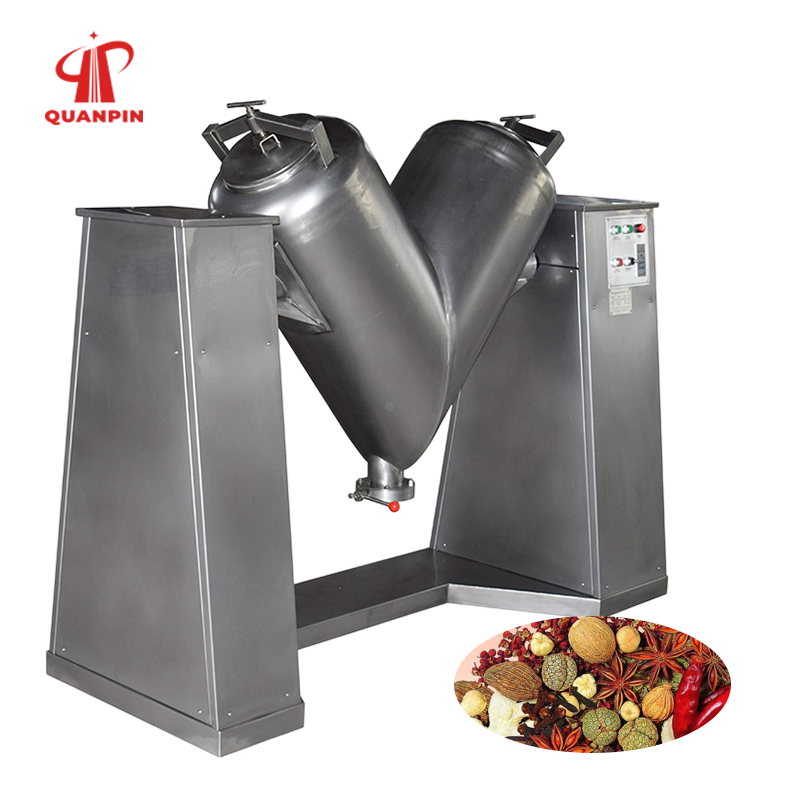
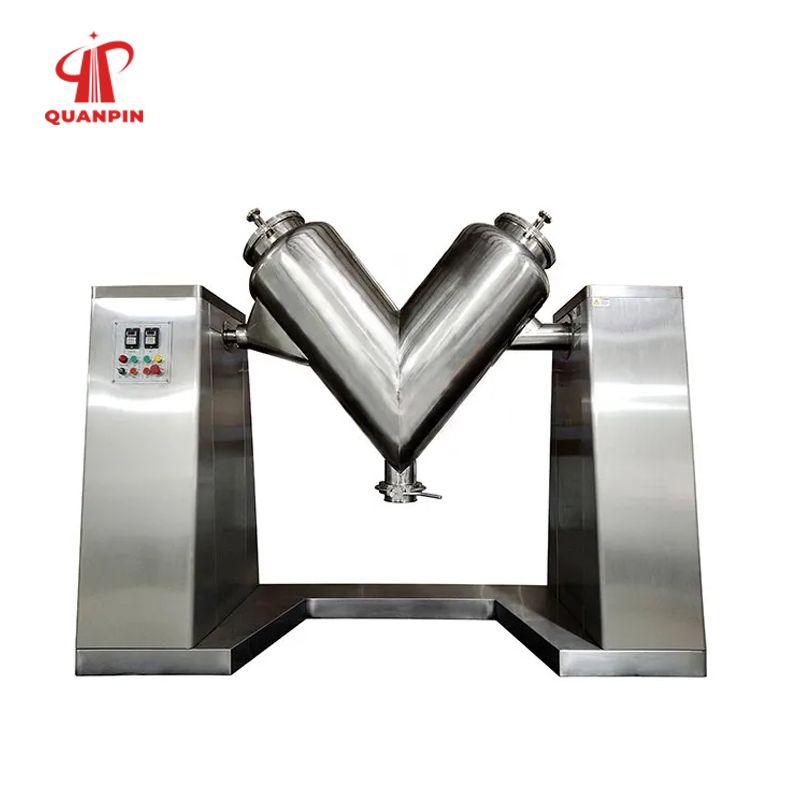
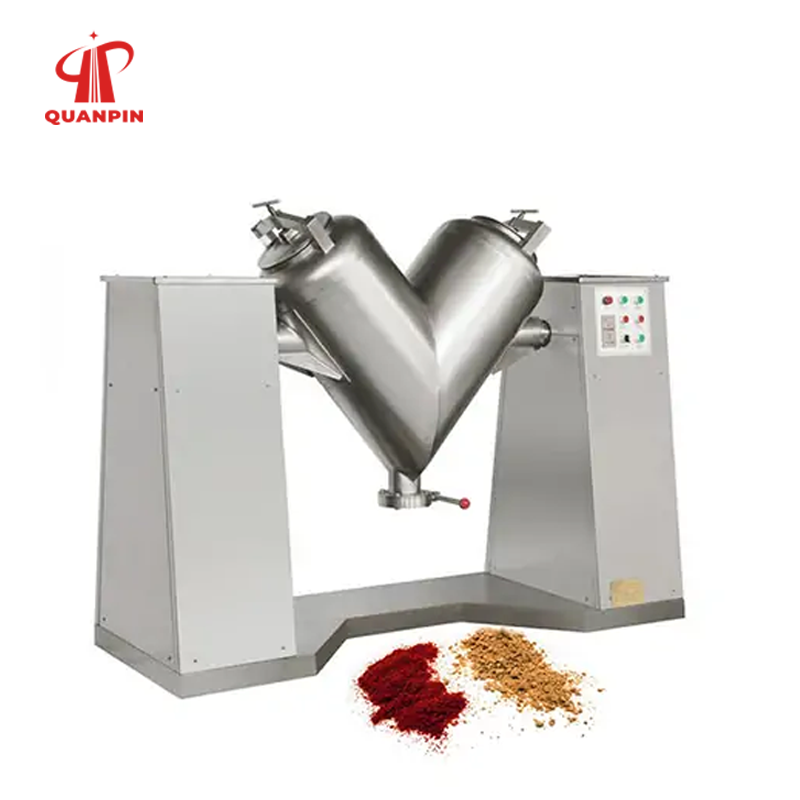
The V-shaped vessel tumbles suitable powders as its two legs separate and recombine the material. The same movement can act on a main blend and a later ingredient addition. Describe the intended low-shear tumble mixing duty using the actual ingredient properties and working load.
The development question concerns the material history after lubricant addition. A universal number of minutes or revolutions cannot replace formulation-specific evidence.
A Trial Sequence for This Application
Identify the lubrication objective
Identify the formulation and the intended role of the lubricant. Keep its grade and addition amount with the approved development record.
Define the main-blend endpoint
Define the end of the main blending stage before recording the additional ingredient. Preserve any intervening handling or sampling.
Record addition and later tumbling
Record the lubricant addition method and subsequent tumbling history. State what changes between the compared trials.
Sample the defined stage
Use a justified sampling and analytical plan for the attributes being examined. Avoid selecting only a convenient surface specimen.
Assess downstream product attributes
Assess the intended downstream dosage process under comparable conditions. Keep its contribution separate from what the mixer trial alone establishes.
Four Observation Boundaries
Before addition, document the main blend’s identity and preparation. An unexplained preblend change can confound the lubrication comparison.
At addition, record the ingredient, sequence and relevant handling. A written formulation percentage does not describe every physical addition detail.
After tumbling, identify samples and the represented working batch. Preserve the stage boundary when labeling them.
At downstream evaluation, retain the actual compression or receiving conditions that belong to the comparison. Do not attribute every difference solely to blending.

V-Type Mixer Components to Include
Ingredient charging
The charging arrangement determines how the later ingredient is introduced. Review access and repeatability for the specified formulation. The dry blending comparison needs both the sample method and the discharge boundary.
V-shaped vessel
The vessel provides tumbling space for the working load. Geometric volume alone does not describe the demonstrated powder movement. Choose the powder blender arrangement for the documented material rather than a generic vessel-volume claim.
Rotation drive
The drive supplies the recorded rotation history. Equipment settings are process records, not finished-product acceptance criteria.
Closures and access
The closures and access points need suitable cleaning and inspection procedures between the defined campaigns. See GEA pharmaceutical IBC blending for container movement and powder blending.
Discharge connection
The discharge connection creates another handling boundary. Material can change during transfer after the lubrication stage.
Receiving and sampling
The receiving container and sampling records connect the demonstrated blend to its downstream tests.
Configuration and Study Choices
Define the Demonstrated Starting Point
A main-blend comparison should retain the later lubrication route when that route is outside the variable being studied. Review the powder mixer interfaces, including charging, sampling and receiving equipment.
A lubrication-stage comparison should keep the starting blend comparable. Otherwise two changes remain mixed in the interpretation.
A changed ingredient grade requires review of its formulation relevance before reusing an earlier tumbling history. See GEA contained materials handling reference for blending interfaces and transfer boundaries.
Separate the Changed Variable
A changed load should state the actual working-fill basis. Identical times do not establish an equivalent material history at another load.
A changed loading sequence needs its own record. It should not be hidden by a common batch formula.
A changed receiving route can introduce segregation after blending. Evaluate that boundary separately from the added-ingredient stage.
Review the Complete Process Boundary
A development plan should define which attributes detect a meaningful change. More mixing is not an automatic corrective action. Define how Mixing Equipment connects to the preceding preparation and the next operation.
A scale-up proposal needs evidence for the proposed vessel and load. A development vessel result supports only its demonstrated scope. See FDA ICH Q8 pharmaceutical development for product attributes and formulation-specific development.
A routine record should distinguish the two stages clearly so deviations can be traced to the relevant material history.
Industry Application and Product Acceptance
The application concerns pharmaceutical solid-dose powder preparation. The particular formulation determines the evidence needed for acceptance.
Composition uniformity and later dosage performance address different questions. A favorable result for one does not automatically establish the other.
Use the approved downstream product tests that are relevant to the formulation rather than substituting a generic flow observation.
Review any changed material, stage sequence or receiving process before extending the original trial conclusion.
Benefits and Limits of the Comparison
Separating the two blending stages makes an equipment enquiry more precise and helps isolate which material history needs investigation. Selection of industrial mixers should include cleaning access and the intended campaign sequence.
The guide provides a development framework, not a universal lubrication recipe, validated process time or claim of dosage equivalence.
Variables That Need a Clear Record
The initial blend condition matters because the later stage starts from that actual material, not an idealized uniform powder.
Lubricant grade and physical condition should remain traceable to the compared batch.
Working fill should be documented alongside tumbling history. A vessel name is not a load definition.
Addition sequence should include any preblend or handling step that changes how the ingredient reaches the vessel.
Sampling should represent the specified stage and product boundary. Repeated analysis of one specimen does not establish batch representativeness. See FDA process validation guidance for linking process evidence to the demonstrated operating range.
Downstream test conditions should remain comparable so a receiving-process change is not mistaken for a blending effect.
Safe Operation and Material Handling
Charge, inspect and sample only through the approved equipment procedure. Never approach an operating vessel or improvise access during rotation. See FDA ICH Q9 quality risk management for risk-based sampling and process review.
Apply the material-specific exposure and cleaning controls. A closed vessel does not establish that charging and discharge are contained.
Prepare a Useful Equipment Enquiry
Send QUANPIN the intended formulation stage, working load, addition sequence and required downstream quality attributes. Specify the evidence required for uniform powder mixing; a favorable visual impression is insufficient where composition matters.
Agree which uncertainty the trial must resolve before selecting a vessel or extending the tumbling stage. Compare mixing machines at the same material and acceptance boundary before scaling the working batch.
Frequently Asked Questions
Where should the lubrication review begin?
Begin by separating the main blending record from the lubricant addition and the material history that follows it.
Is longer mixing always preferable?
No. Extra tumbling changes the process history and needs evidence against the actual formulation’s quality requirements.
Does uniform composition prove dosage performance?
No. The required product attributes can include downstream behavior that is not established by a composition assay alone.
Can the same time be used at another scale?
Only after assessing the proposed vessel, load and ingredient preparation. Equal elapsed time does not prove scale equivalence.
Which records belong with the result?
Identify the formulation, stage boundaries, addition record, sampling method and actual downstream test conditions.
What if the downstream result changes?
Investigate the relevant blend stage, transfer and receiving process together. Keep each potential cause identifiable rather than assuming the mixer alone caused the change.
Discuss Your V-Type Mixer Application with QUANPIN
Discuss this application with V-Type Mixer specialists at QUANPIN. Share the material specification and the trial question through our contact page.
Email sales@quanpinmachine.com or stacie@quanpinmachine.com. Contact QUANPIN on WhatsApp: +86 15921493205.