Ribbon Mixer for Seasonings: Define Allergen Changeover Boundaries Between Recipes
By QUANPIN
A seasoning recipe change can introduce a different allergen profile even when both blends use the same ribbon mixer. Define the complete product-contact boundary before planning the next recipe. A Horizontal Ribbon Mixer enquiry should start with formulation and the required composition evidence.
This guide considers food powder blending and the interfaces around the mixer. Cleaning decisions need the actual ingredients, equipment arrangement and applicable food-safety program. This application belongs to our food ingredient industry scope.
What Belongs in the Allergen Changeover?
An allergen changeover concerns the intended next product as well as the preceding recipe. The equipment name alone cannot establish an acceptable cleaning outcome.
Visible residue, analytical verification and the facility’s release decision have different roles. Do not present a visually empty trough as proof of an allergen-free line.
Equipment Principle and Material History
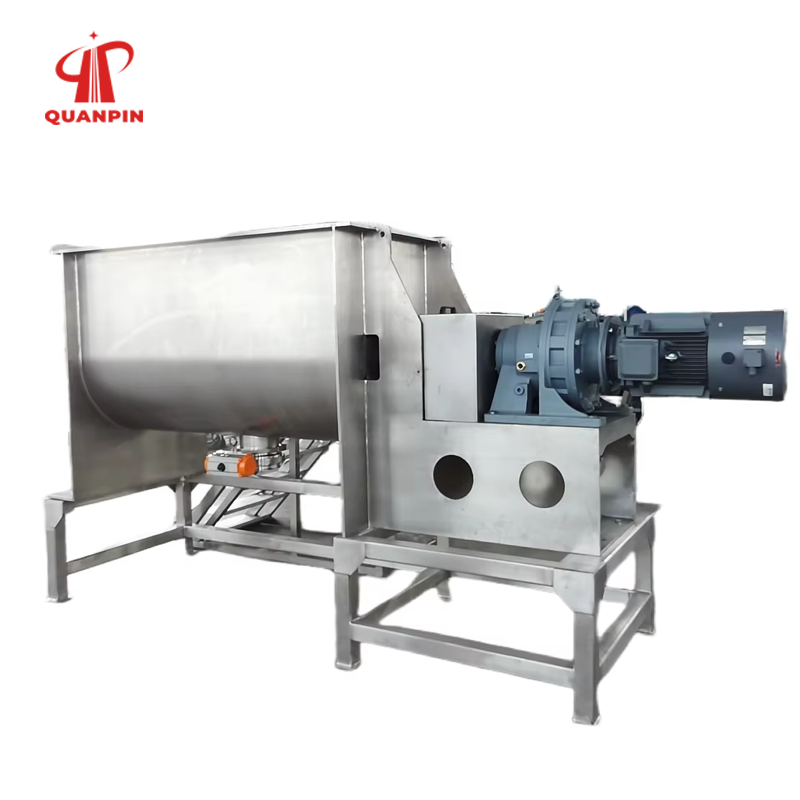
Ribbon movement circulates suitable dry ingredients through the working batch. The trough, ribbon assembly and discharge path all form part of the material-contact history. Describe the intended ribbon blender duty using the actual ingredient properties and working load.
Residue can also remain upstream or downstream of the trough. The changeover boundary should follow the actual ingredient route into the next packed product.
A Trial Sequence for This Application
Identify both recipe allergen profiles
List the ingredients and allergen identities for both recipes under the facility’s approved program. Include preblends and rework where relevant.
Map all shared product-contact components
Map charging, mixing, discharge and receiving components that can contact either product. Identify detachable parts and shared utensils.
Specify cleaning and verification
Select the approved cleaning procedure and the evidence needed for verification. State which locations represent the actual risk review.
Record component readiness
Document cleaning, inspection and any required testing before the next recipe begins. Keep component identities and readiness status traceable.
Review the next product release
Review the next product’s disposition under the facility’s procedures. A supplier demonstration does not replace the manufacturer’s food-safety responsibilities.
Four Observation Boundaries
At ingredient staging, review shared tools and containers rather than limiting attention to the mixer interior.
At the ribbon assembly, assess accessible and difficult-to-access product-contact areas through the approved isolation procedure.
At discharge, include the valve, connection and receiving path that belong to the actual installation.
Before the next batch, verify that removed parts have returned in their accepted condition and that the correct recipe is staged.
Ribbon Mixer for Seasonings Components to Include
Ingredient charging interface
The charging port connects ingredient handling to the trough. Dust and residue around this interface need a defined cleaning boundary. The Ribbon Mixer comparison needs both the sample method and the discharge boundary.
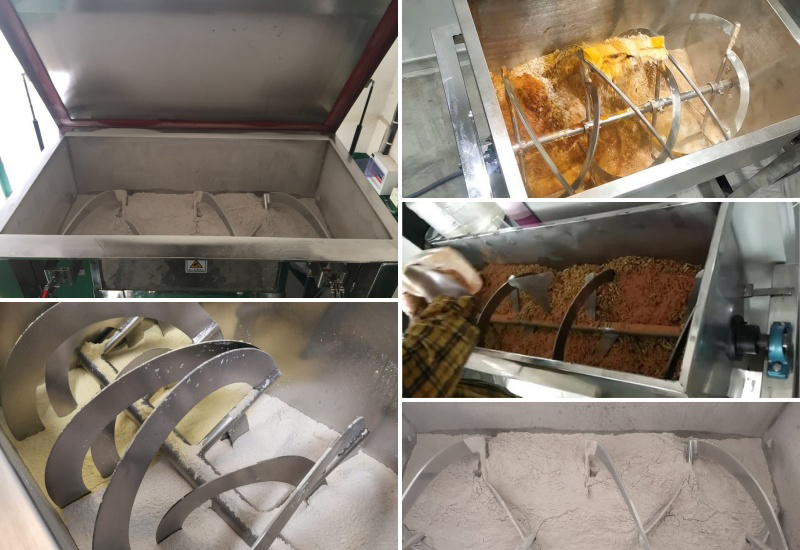
Ribbon assembly
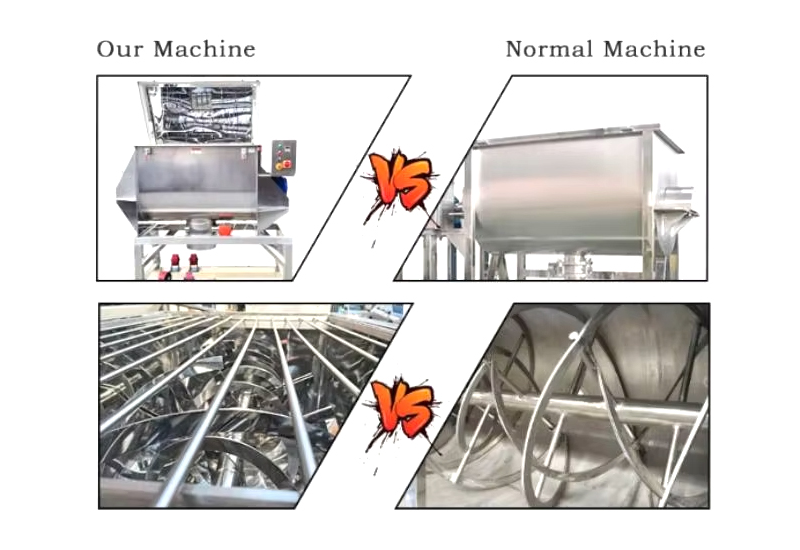
The ribbon assembly provides circulation but can also create inspection-access questions. Review its actual construction and approved access. Choose the dry blending arrangement for the documented material rather than a generic vessel-volume claim.
Trough and end areas
The trough and end areas require a practical cleaning method suited to the ingredients. Avoid assuming every dry powder responds identically.
Discharge valve and connections
The discharge valve and its connections should appear on the product-contact map, including any detachable pieces. See Munson horizontal blending equipment for ribbon circulation and application-specific mixer arrangements.
Receiving equipment
The receiving container or conveyor can remain shared between recipes. Excluding it from the map does not remove its carryover relevance.
Cleaning verification records
The verification record connects cleaning actions, inspected locations and the next production release decision.
Configuration and Study Choices
Define the Demonstrated Starting Point
A dry-cleaning approach should be reviewed for the actual ingredient residues and facility program. It is not universally adequate. Review the powder blender interfaces, including charging, sampling and receiving equipment.
A wet-cleaning approach requires consideration of subsequent readiness and the suitability of the equipment. Do not introduce water through an unapproved procedure.
A removable component needs identity and status control while it is outside the machine. See Munson spice blending example for a spice blending application, not a QUANPIN performance claim.
Separate the Changed Variable
A recipe sequence may affect changeover planning, but sequencing alone does not establish successful allergen control.
A shared preblend station needs review even if its material enters a cleaned mixer.
A shared discharge route should be evaluated for the next product, not only the preceding batch’s visible residue.
Review the Complete Process Boundary
A test method needs appropriate scope for the ingredient and surface or product being assessed. A generic negative result has a defined meaning and limitation. Define how powder mixer connects to the preceding preparation and the next operation.
A new formulation can change residue behavior and the relevant allergen review. Retain the ingredient specification with the cleaning plan. See FDA food manufacturing practices for food-contact handling and hygienic production.
A supplier quotation should distinguish equipment access from a facility-specific validated or verified cleaning procedure.
Industry Application and Product Acceptance
The intended industry is seasoning and condiment processing. Recipe-specific food-safety controls remain central to the comparison.
The blending trial should address composition while the changeover assessment addresses the preceding material-contact history.
Retain labeling and ingredient identity in the facility’s process review. A mixer capability statement cannot establish labeling compliance.
Include packing and shared transfer equipment when those duties are part of the purchased line and the actual changeover.
Benefits and Limits of the Comparison
A defined boundary helps buyers compare access, removable components and verification needs before ordering a seasoning mixer. Selection of Mixing Equipment should include cleaning access and the intended campaign sequence.
It does not guarantee absence of allergens or establish an acceptable residue threshold for every ingredient and market.
Variables That Need a Clear Record
Ingredient complexity matters because a seasoning can contain several supplied preblends with their own declared components.
Residue location matters because an accessible trough observation may miss a connected discharge component.
Cleaning access matters because the proposed procedure must be practical on the actual installed arrangement.
Verification scope matters because a result represents the sampled material or location and the method used.
Component handling matters because a cleaned part can acquire a different status before reassembly. See FDA food allergen controls overview for food manufacturing allergen cross-contact and cleaning controls.
Recipe change control matters because a previously reviewed cleaning route may not answer a newly introduced allergen question.
Safe Operation and Material Handling
Isolate the mixer and follow approved access procedures before cleaning near ribbons or the drive. Never clean rotating equipment by improvised methods. See FDA food allergen manufacturing information for ingredient identity and allergen cross-contact prevention.
Use the facility’s food-safety plan and qualified review for allergen controls. Supplier access features support that work but do not replace it.
Prepare a Useful Equipment Enquiry
Provide QUANPIN with the recipe categories, relevant ingredient identities and the mapped charging-to-receiving boundary. Specify the evidence required for industrial mixers; a favorable visual impression is insufficient where composition matters.
Ask how the proposed mixer permits the required inspection and cleaning actions, and separate confirmed features from options needing design review. Compare uniform powder mixing at the same material and acceptance boundary before scaling the working batch.
Frequently Asked Questions
Where does allergen changeover planning begin?
Begin with the previous and next recipe, then map every shared product-contact component between staging and receiving.
Is a visibly clean trough sufficient?
No. Visual inspection is useful but does not by itself establish the facility’s allergen-control acceptance.
Can one method cover every seasoning recipe?
Not without reviewing the actual ingredient and equipment requirements. Cleaning methods need a defined scope and verification basis.
Should the discharge valve be included?
Yes, when it is part of the shared product route. A cleaned trough cannot establish the condition of an excluded component.
Who determines changeover acceptance?
Use the facility’s approved evaluation and release process. A trial article cannot supply a universal allergen limit.
What changes when a recipe changes?
Review the changed ingredients, residue behavior, method scope and equipment boundary before reusing an earlier conclusion.
Discuss Your Ribbon Mixer for Seasonings Application with QUANPIN
Discuss this application with Ribbon Mixer for Seasonings specialists at QUANPIN. Share the material specification and the trial question through our contact page.
Email sales@quanpinmachine.com or stacie@quanpinmachine.com. Contact QUANPIN on WhatsApp: +86 15921493205.