KZL Granulator-Crusher: Reconcile Startup and Shutdown Granules in Campaign Yield
By QUANPIN
A favorable steady-running sample can hide granules retained or rejected during startup and shutdown. Include those collections before stating the accepted yield of a KZL sizing campaign. The High-Speed Granulator/Crusher duty must distinguish lump breakup from primary particle grinding.
This guide addresses dry pharmaceutical granule sizing. It separates stable operating observations from the complete material boundary used for an equipment acceptance comparison. This application belongs to our pharmaceutical processing industry scope.
What Does the Campaign Yield Include?
Campaign yield relates accepted output to a stated input boundary. It is different from a momentary feed-rate observation.
Startup material, interruption collections and shutdown residue need identified dispositions. Their presence does not automatically mean rejection, but their omission makes the balance incomplete.
Equipment Principle and Material History
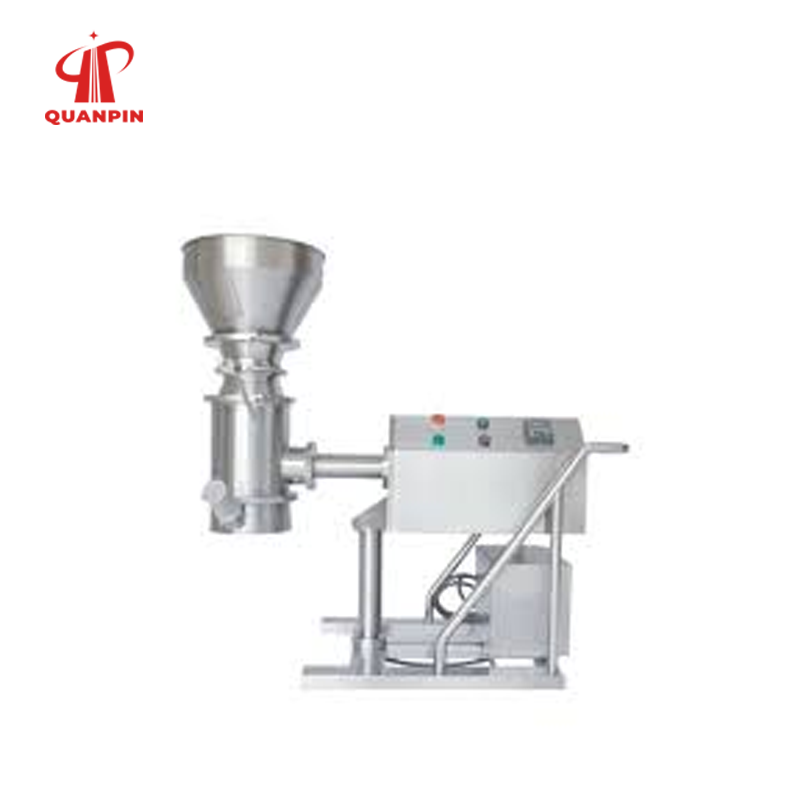
The rotating sizing element works suitable agglomerates against a screen. Feed condition and the fitted arrangement influence the resulting granule fractions. Treat granulation and size reduction as different material transformations when defining the process route.
The screen is not a product acceptance decision. Collected material still needs the agreed distribution and downstream quality checks.
A Trial Sequence for This Application
Define input and accepted output
Identify the input granules and weigh or otherwise quantify them on the agreed basis before loading.
Identify startup collections
Define when startup collection begins and how it is labeled. State which evidence determines whether that material can join accepted product.
Track steady running and interruptions
Track steady collection with operating events and sample identities. Avoid treating an unrecorded interruption as uninterrupted production.
Inspect the shutdown boundary
During shutdown, identify material left in the feeder, chamber, discharge and receiving connection through approved procedures.
Reconcile the full granule campaign
Reconcile accepted granules, separate fractions, samples and retained inventory. Investigate differences before presenting a campaign yield.
Four Observation Boundaries
At charging, distinguish the intended lot from material already retained from another operation.
At startup, preserve collection identity until quality and disposition are established under the relevant procedure.
At interruptions, document the affected material interval rather than combining every container into a single average.
At shutdown, record the inspected material boundary and avoid counting uncollected residue as accepted discharge.
KZL Granulator-Crusher Components to Include
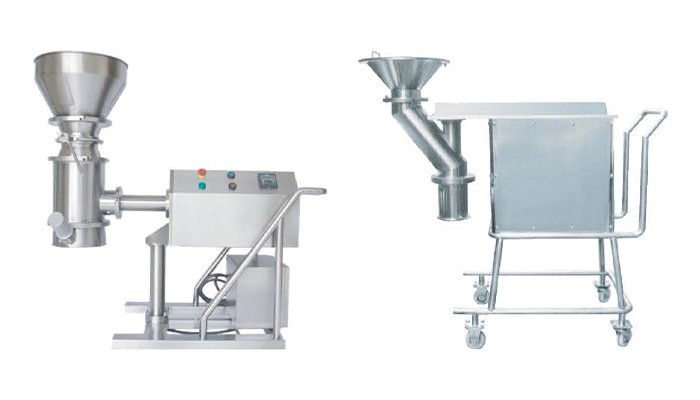
Feed hopper
The feed hopper can retain part of the charged granules. Its condition belongs in the shutdown assessment. Compare the proposed granulation equipment by the actual feed and final distribution it must handle.
Sizing rotor and drive
The rotor and drive establish the sizing action. Record the actual arrangement used for the demonstrated campaign. A Granulator name alone does not describe the required intensity of size reduction.
Fitted screen
The screen must be identified and inspected under the approved procedure. A changed screen condition can require review of an affected interval.
Discharge path
The discharge path connects sizing to collection. Material lodged there should remain visible in the reconciliation. See Frewitt size reduction and sifting for the distinction between milling and classification.
Receiving containers
Receiving containers need identities and tare records suitable for the accepted-output calculation.
Material sample records
Sample records must explain what material was removed for analysis. A sample should not disappear from the balance merely because it was tested.
Configuration and Study Choices
Define the Demonstrated Starting Point
For a short demonstration, retained material may represent a different share of input than in a longer campaign. State the run length. Upstream granule drying history can change the strength of the material entering sizing.
For a larger charge, assess whether the same charging and discharge boundaries still apply rather than scaling a percentage blindly.
For repeated campaigns, distinguish a deliberate carryover arrangement from an unmeasured residual quantity. See Fitzpatrick milling and granulation technologies for separating size reduction from agglomeration.
Separate the Changed Variable
For separate fines, define the quality decision and disposition before calculating accepted output.
For retained oversize, keep reprocessing permission separate from a mechanical ability to pass material again.
For startup comparisons, use equivalent definitions of the first accepted collection. Different cutoff choices can create a misleading improvement.
Review the Complete Process Boundary
For shutdown comparisons, state whether cleaning recovery is inside the purchased production boundary. Subsequent granule blending needs a stated particle basis so different fractions are not hidden during pooling.
For a line quotation, identify any upstream preparation and downstream handling excluded from the sizing campaign. See FDA ICH Q8 pharmaceutical development for product attributes and formulation-specific development.
For an investigation, retain the raw input, collection and sample records alongside the final calculation.
Industry Application and Product Acceptance
The material is dried pharmaceutical granules with a defined downstream use. Sizing performance should be assessed on the accepted granule fraction.
The upstream drying history can affect agglomerate strength and fines generation. Keep it with the feed description.
The receiving blend or dosage process may require additional quality checks. A closed material balance alone does not establish formulation suitability.
Apply the same input and accepted-product definitions to every supplier comparison. A nominal rate and a full campaign yield are not interchangeable.
Benefits and Limits of the Comparison
A complete reconciliation makes retained inventory and rejected fractions visible, helping buyers understand usable rather than gross output. Keep dry blending acceptance separate from the quality of the material leaving the sizing chamber.
Mass accounting cannot establish uniform composition or absence of contamination. Product testing and equipment inspection retain separate roles.
Variables That Need a Clear Record
Container tare differences can distort a small demonstration. Keep the actual weighing basis and scale records.
Unrecorded sample removal can create an apparent loss. Identify sample collections with the associated processing interval.
Feed interruption can produce material with a different history. Preserve its identity until disposition is reviewed.
A change in incoming lump condition can change the sizing duty. Do not conceal it behind an unchanged product name.
Pooling startup and stable material can hide a distribution change. Review the fractions before combining them. See FDA process validation guidance for linking process evidence to the demonstrated operating range.
Residue measured after cleaning may include material outside the production boundary. Define its role before adding it to accepted output.
Safe Operation and Material Handling
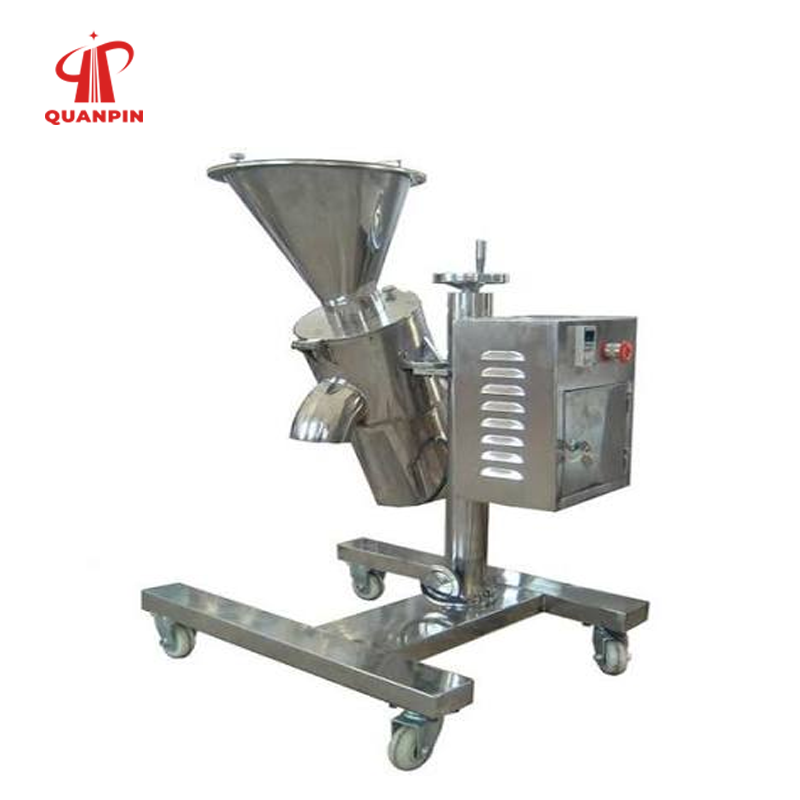
Inspect the rotor, screen and retained-material locations only after the specified isolation steps. Shutdown accounting does not justify access to moving parts. See FDA ICH Q9 quality risk management for risk-based sampling and process review.
Handle pharmaceutical granules and collected dust under the material-specific procedures. An accepted balance is not a containment certification.
Prepare a Useful Equipment Enquiry
Provide QUANPIN with charge size, granule history, target distribution and the intended start-to-finish campaign boundary. The receiving powder mixer and its transfer path can introduce a later handling change.
Ask for a trial report that identifies separate collections and retained material instead of a single unexplained throughput figure. Place the sizing duty explicitly within the granulation line for solid dosage form, with clear input and output acceptance.
Frequently Asked Questions
Where does campaign-yield review begin?
Begin with the boundary: identify which input and output collections the reported yield includes.
Must startup granules be rejected?
Not automatically. Quality tests and the approved material disposition determine whether a startup collection is acceptable.
Does a steady feed rate describe campaign output?
No. A short observation can establish that interval’s rate, while a campaign includes additional time and material boundaries.
How should retained granules be recorded?
Record both its location and disposition. Retained material should not be counted as accepted discharge without the defined recovery step.
Can oversize simply be passed again?
Only under an approved reprocessing decision. Additional passage can change the distribution and must not be assumed harmless.
What makes two supplier yields comparable?
Compare the same granule preparation, accepted distribution and full campaign boundary, including samples and separate fractions.
Discuss Your KZL Granulator-Crusher Application with QUANPIN
Discuss this application with KZL Granulator-Crusher specialists at QUANPIN. Share the material specification and the trial question through our contact page.
Email sales@quanpinmachine.com or stacie@quanpinmachine.com. Contact QUANPIN on WhatsApp: +86 15921493205.