KZL Granulator-Crusher: Review Cleaning Access Before a Pharmaceutical Sizing Campaign
By QUANPIN
Cleaning access deserves an equipment review before a pharmaceutical sizing campaign begins. The KZL granulator-crusher should be assessed against the actual product-contact path and the proposed cleaning procedure. The High-Speed Granulator/Crusher duty must distinguish lump breakup from primary particle grinding.
This review concerns access and evidence, rather than a claim that a particular machine automatically delivers a validated cleaning result. See the matching pharmaceutical industry applications.
What Should the Cleaning-Access Review Establish?
Map the contact surfaces, identify how they are reached and document the permitted cleaning arrangement. Resolve inaccessible or poorly defined locations before agreeing the campaign scope.
An easy-to-see surface is not necessarily easy to clean, and a clean-looking component is not evidence that every relevant residue has been controlled. Use product-specific development knowledge to justify the attributes being examined. See FDA ICH Q8 pharmaceutical development.
Equipment Principle and Material Requirements
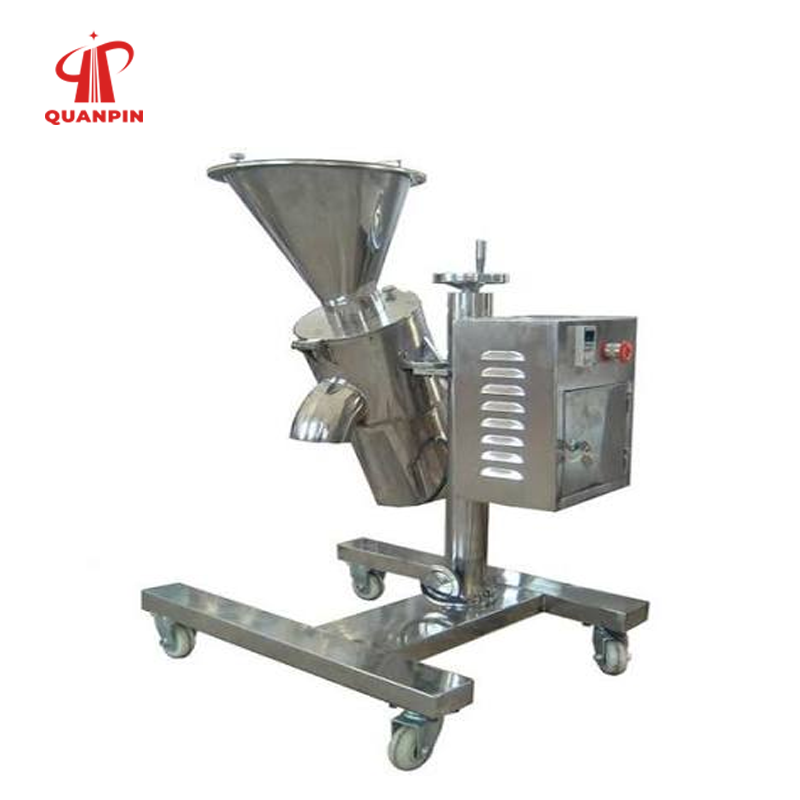
The KZL sizes material through a rotating working assembly and screen arrangement. Product-contact interfaces therefore extend beyond the visible feed opening. Treat granulation and size reduction as different material transformations when defining the process route.
Use the actual equipment drawings and instructions to identify removable parts, seals and other contact locations; do not infer disassembly methods from photographs.
Five Steps for the Application Study
Identify campaign residues
List the formulations and residues relevant to the proposed campaign, including any material that may adhere or remain after discharge.
Trace the contact path
Trace the product-contact path from charging through sizing to the agreed discharge connection.
Review permitted access
Review the documented safe access and disassembly sequence for each identified component.
Define cleaning evidence
Discuss the proposed cleaning, inspection and sampling approach with the pharmaceutical quality and engineering teams.
Resolve outstanding interfaces
Record unresolved access questions and close them before treating the arrangement as ready for the intended campaign.
Four Process Boundaries to Record
The contact boundary includes the supplied sizing equipment and the defined connecting parts.
The cleaning boundary identifies which actions occur in place and which require removal under the equipment instructions.
The evidence boundary distinguishes visual inspection from analytical residue or other required assessments.
The campaign boundary defines product sequence, changeovers and the circumstances that trigger further review.
KZL Granulator-Crusher Components and Interfaces
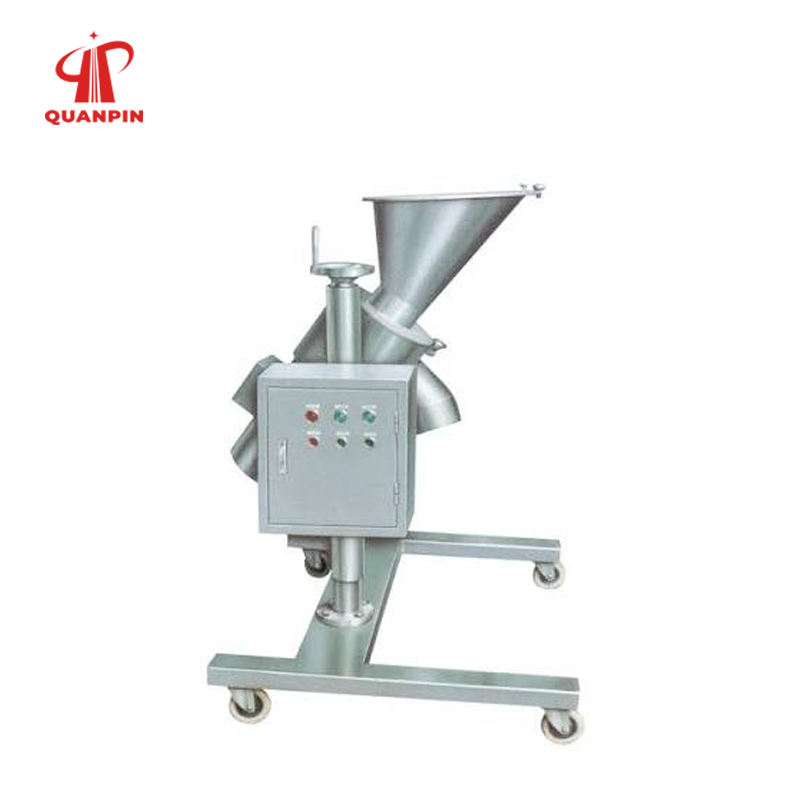
Granule feeding
Review the screen arrangement for safe removal, identification and reassembly according to the actual instructions. Compare the proposed granulation equipment by the actual feed and final distribution it must handle.
Rotor and drive
Identify the working element and the surfaces exposed when it is removed using the approved procedure.
Sizing screen
Include the feed connection and any detachable hopper in the contact-path review.
Product path
Check the discharge interface and any customer-supplied container connection within the agreed scope.
Collection container
Record seals, joints and other relevant interfaces rather than reviewing metal surfaces alone.
Inspection and sample records
Confirm which documentation and maintenance instructions accompany the proposed configuration.
Comparison Choices and Process Interfaces
Define the Reference Basis
Start the review with the intended product and cleaning method, not a generic stainless-steel description. Upstream granule drying history can change the strength of the material entering sizing.
Identify the evidence required for the actual residue and pharmaceutical use.
Preserve the agreed contact-path map as the reference for later equipment changes.
Keep the Comparison Interpretable
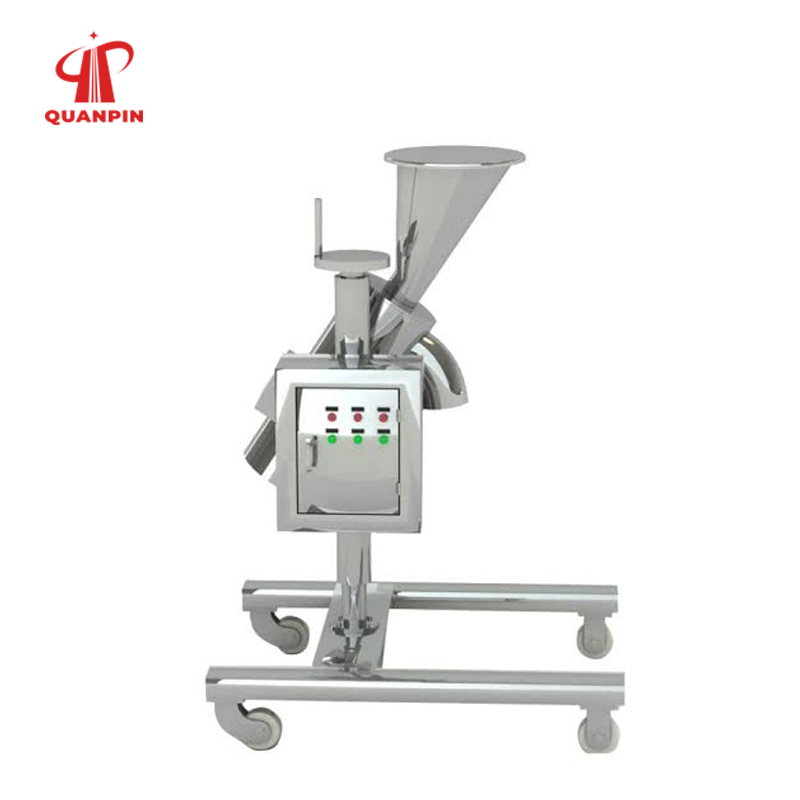
Where alternative configurations are compared, assess access and reassembly as well as sizing duty.
A configuration with fewer visible parts still needs a complete contact-path assessment.
Do not assume that an accessory shown on a different machine is included in the quoted scope.
Assess the Receiving Process
Extend the review to the receiving connection where it forms part of the supplied arrangement. Subsequent granule blending needs a stated particle basis so different fractions are not hidden during pooling.
Record ownership of cleaning tasks at the boundary between QUANPIN equipment and site equipment.
Keep campaign operation and cleaning acceptance as connected but separate decisions.
Industry Application and Acceptance
Pharmaceutical sizing may involve multiple excipients or granules, each with a different residue and changeover context.
The cleaning assessment should use the actual materials and the site’s justified acceptance approach. A development comparison should not be presented as complete validation of an untested production process. See FDA process validation guidance. The FDA historical inspection guide discusses cleaning procedures and evidence; it is not an application-specific cleaning limit or a current approval of this equipment. See FDA historical cleaning-process validation inspection guide.
Cleaning-process evidence cannot be replaced by a photograph or a general claim about hygienic design.
An agreed equipment review supports development work without representing a completed cleaning validation.
Benefits and Practical Limits
Resolving access early can expose a missing interface or procedure before installation. Keep dry blending acceptance separate from the quality of the material leaving the sizing chamber.
The review does not establish a cleaning limit, cleaning time or universal changeover procedure. Assess relevant quality risks using the actual material and process context. See FDA ICH Q9 quality risk management.
Six Details That Affect the Result
Identify components consistently across the drawing, procedure and inspection record.
Record the condition in which each surface is inspected, including removed parts when applicable.
Distinguish cleaning access from maintenance access; their purposes and controls may differ.
Consider reassembly checks so the correct screen and components return to the intended configuration.
Document damage or wear that may affect the contact surface assessment.
Retain unresolved questions explicitly instead of converting them into assumed design features.
Safety and Operating Requirements
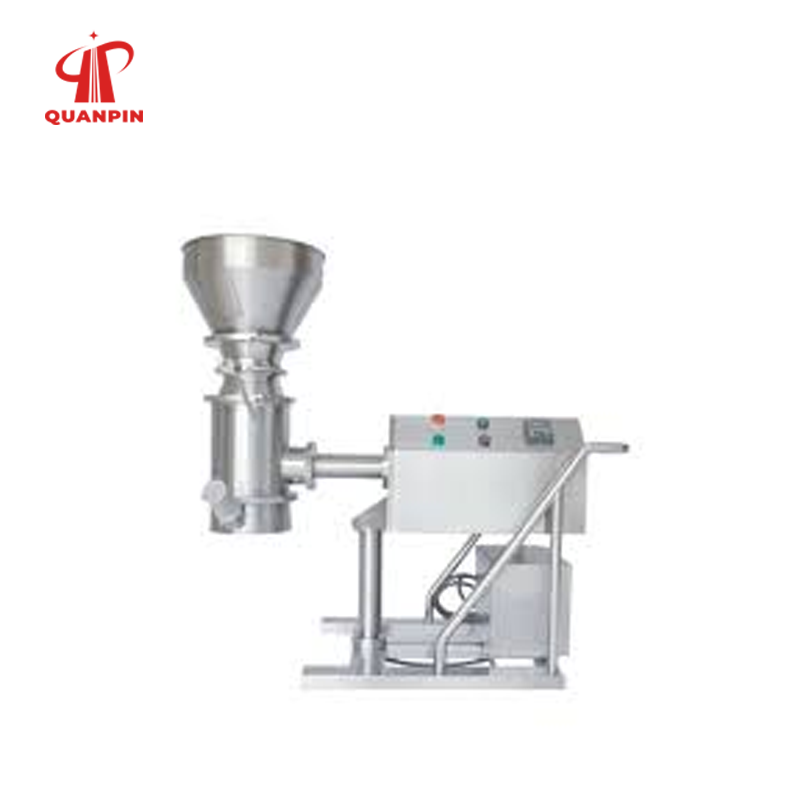
Access to the working assembly requires the approved isolation and safe maintenance procedures.
Cleaning chemicals, waste handling and operator exposure need assessment for the actual site and materials.
Prepare Your Equipment Enquiry
Send QUANPIN the product description, sizing duty and intended changeover sequence. The receiving powder mixer and its transfer path can introduce a later handling change.
Include the proposed cleaning method and any required access, documentation or sampling interfaces. Place the sizing duty explicitly within the granulation line for solid dosage form, with clear input and output acceptance. Retain knowledge and manage adopted process changes through the pharmaceutical quality system. See FDA ICH Q10 pharmaceutical quality system.
Frequently Asked Questions
Does visual cleanliness establish every residue requirement?
Visual cleanliness is useful evidence within a defined procedure but does not replace every required residue assessment.
Does a material certificate validate cleaning?
A material certificate identifies specified construction information; it does not validate a cleaning process.
Do removable parts need a controlled procedure?
Removable parts still require a controlled procedure for removal, cleaning, storage and reassembly.
Can campaign duration be assumed from the machine name?
Campaign duration should follow the justified site process, not an unsupported equipment claim.
Can connecting equipment affect the review?
Changes to connecting equipment may require the contact-path review to be updated.
What cleaning requirements should QUANPIN receive?
QUANPIN needs the actual cleaning and sizing requirements to review a suitable supply configuration.
Discuss Your KZL Granulator-Crusher Application with QUANPIN
Discuss your application with KZL Granulator-Crusher specialists at QUANPIN. Use the enquiry below or our contact page.
Email sales@quanpinmachine.com or stacie@quanpinmachine.com. Call +86 19850785582, or contact us on WhatsApp: +86 15921493205.