V-Type Mixer: Compare Ingredient Particle-Size Differences Before Pharmaceutical Dry Blending
By QUANPIN
An ingredient particle-size difference can matter when planning a pharmaceutical dry-blending study. Describe the individual powders before deciding what a V-type mixer trial needs to demonstrate.
The objective is to connect formulation characteristics with blend and discharge evidence, without assuming that particle size alone predicts the final result. See the matching pharmaceutical industry applications.
How Should Ingredient Particle Sizes Inform the Blend Study?
Characterize the relevant ingredients with suitable methods and retain the method basis. Compare the blend using the required composition tests and a justified sampling plan.
Two powders with different reported sizes are not automatically incompatible, just as similar size values do not establish uniform blending. Use product-specific development knowledge to justify the attributes being examined. See FDA ICH Q8 pharmaceutical development.
Equipment Principle and Material Requirements
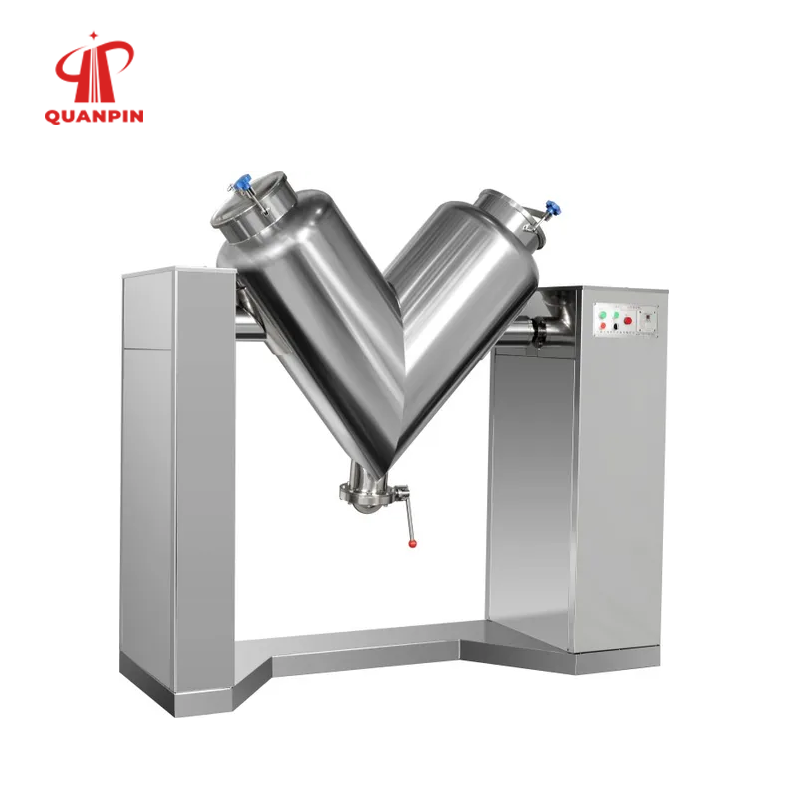
A V-type mixer moves the powder charge by rotating the vessel. The behavior of the complete formulation depends on the materials and operating arrangement. Describe the intended low-shear tumble mixing duty using the actual ingredient properties and working load.
Describe the actual machine, loading condition and discharge route; avoid turning a general mixing principle into an application-specific performance guarantee.
Five Steps for the Application Study
Describe the ingredients
List the ingredients and identify which particle-size attributes are relevant to the formulation question.
Retain the method basis
Record the analytical method and sample preparation used for each ingredient comparison.
Define trial conditions
Define the charging, mixing and discharge conditions for a controlled development run.
Collect the required samples
Collect samples through an approved plan that represents the blend boundary being assessed.
Review composition evidence
Review composition results with the ingredient information before proposing a material or operating change.
Four Process Boundaries to Record
The ingredient boundary includes the powder condition at charging, not an unrelated supplier sample from another lot.
The analytical boundary states how size is measured and how unlike methods are interpreted.
The mixing boundary identifies the vessel charge and actual operating sequence.
The delivery boundary states whether acceptance concerns the vessel, discharge or subsequent handling stage.
V-Type Mixer Components and Interfaces
Ingredient loading
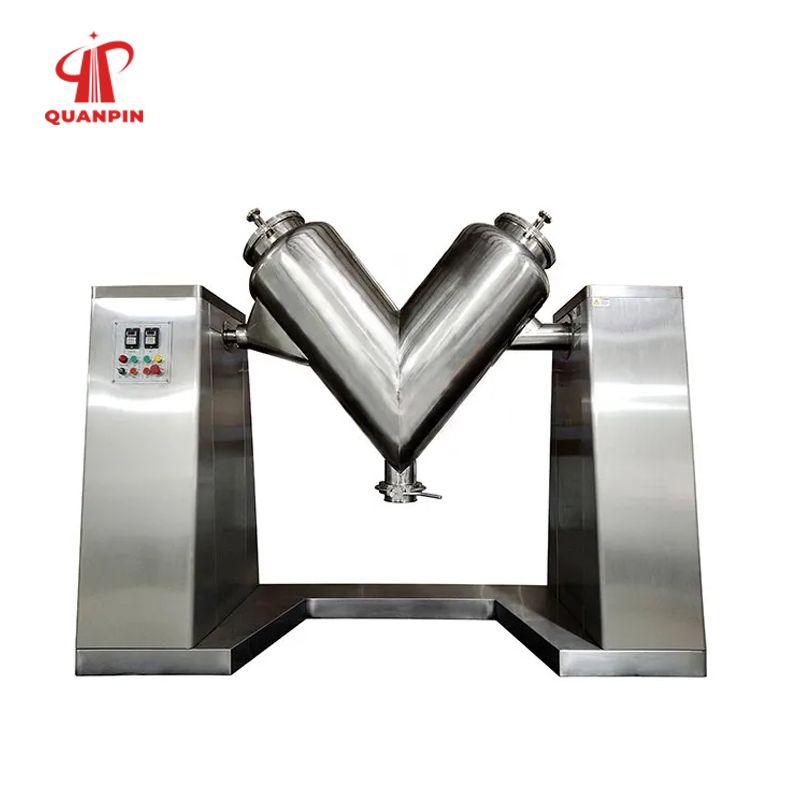
Identify the vessel configuration and the documented permissible operating arrangement. The dry blending comparison needs both the sample method and the discharge boundary.
V-shaped vessel
Record the loading connection and how minor ingredients enter the charge. Choose the powder blender arrangement for the documented material rather than a generic vessel-volume claim.
Rotation and drive
Describe the rotation controls from the actual equipment specification.
Access and closure
Identify the discharge valve and any connection to the receiving container.
Discharge connection
Review the available sampling access without assuming that vessel sampling represents every delivered portion.
Receiving and sampling records
Include cleaning and line-clearance requirements for the actual pharmaceutical formulation.
Comparison Choices and Process Interfaces
Define the Reference Basis
Establish a reference formulation using identified ingredient lots and documented preparation. Review the powder mixer interfaces, including charging, sampling and receiving equipment.
Keep the particle-size methods and reporting basis with the batch record.
Retain composition acceptance criteria independently of the size comparison.
Keep the Comparison Interpretable
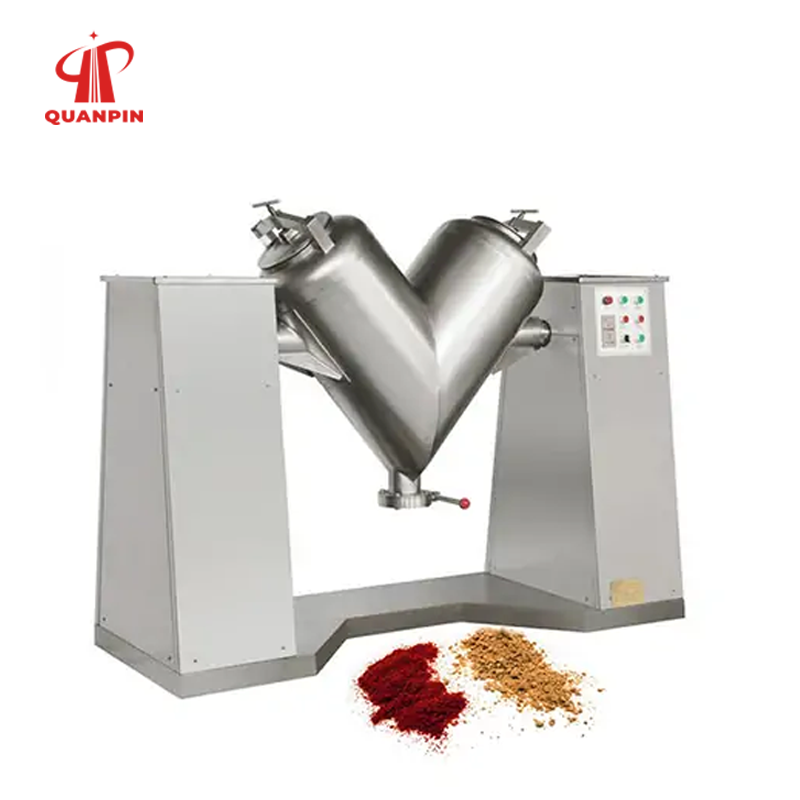
When studying an ingredient change, record any accompanying density, moisture or handling differences.
Avoid changing several formulation and equipment variables without acknowledging the combined comparison.
Investigate unexpected blend results using the complete material and handling record.
Assess the Receiving Process
Assess the intended discharge boundary because a vessel observation alone may not answer the delivery question. Define how Mixing Equipment connects to the preceding preparation and the next operation.
Record downstream transfer conditions when they are included in the study scope.
Adopt a change only within the evidence and quality-system requirements established for the product.
Industry Application and Acceptance
Pharmaceutical dry blends require a formulation-specific definition of acceptable composition and other relevant quality attributes.
An ingredient-size study can help frame development questions, but cannot replace the required product tests. A development comparison should not be presented as complete validation of an untested production process. See FDA process validation guidance.
Low-dose ingredients deserve a sampling and analytical approach appropriate to their role in the formulation.
Results for one formulation should not be generalized to all powders processed in a V-type vessel.
Benefits and Practical Limits
Ingredient characterization can make a blending investigation more focused and interpretable. Selection of industrial mixers should include cleaning access and the intended campaign sequence.
It cannot establish a universal particle-size ratio, mixing duration or guaranteed uniformity for an untested formulation. Assess relevant quality risks using the actual material and process context. See FDA ICH Q9 quality risk management.
Six Details That Affect the Result
Retain the ingredient lot numbers used in the actual trial.
Document whether the reported size values use the same measurement and preparation method.
Record agglomerates and powder preparation when they may affect the analytical interpretation.
Preserve the minor-ingredient addition sequence with the complete formulation record. Interpret measurements through process understanding rather than treating an isolated instrument reading as product acceptance. See FDA process analytical technology framework.
Keep individual blend results rather than relying only on an overall average.
Describe the sampling and discharge boundaries in the final conclusion.
Safety and Operating Requirements
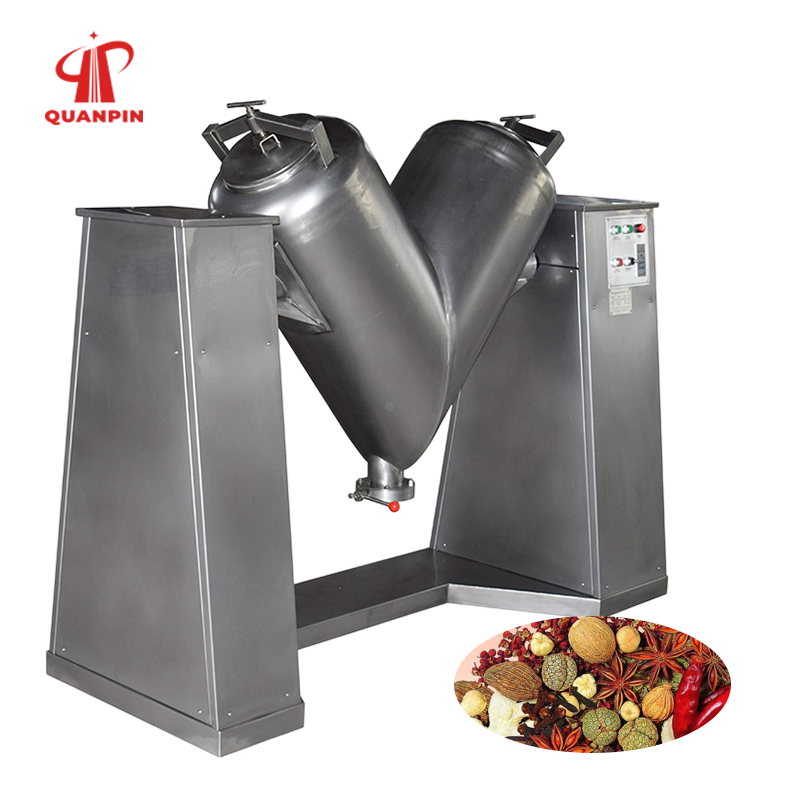
Powder charging and sampling must follow site exposure controls and the machine’s safe operating instructions.
Formulation hazards, cleaning compatibility and cross-contamination requirements remain part of the equipment review.
Prepare Your Equipment Enquiry
Supply QUANPIN with the formulation duty, ingredient information and intended batch-handling arrangement. Specify the evidence required for uniform powder mixing; a favorable visual impression is insufficient where composition matters.
State the required blend evidence and whether transfer to the next process belongs in the equipment assessment. Compare mixing machines at the same material and acceptance boundary before scaling the working batch. Retain knowledge and manage adopted process changes through the pharmaceutical quality system. See FDA ICH Q10 pharmaceutical quality system.
Frequently Asked Questions
Do similar particle sizes establish blend acceptance?
Matching ingredient particle sizes does not by itself establish acceptable blend composition.
Can different size methods be compared without review?
Different measurement methods may require additional interpretation before numerical size values are compared.
Will longer mixing solve every difference?
A longer mixing period should not be assumed to solve every material or discharge problem.
Can appearance replace composition testing?
Visual similarity is not a substitute for the required composition test.
Does a vessel sample establish later handling results?
Results obtained before discharge do not automatically establish every later handling result.
What should the formulation enquiry include?
A useful enquiry combines material characteristics with an explicit acceptance boundary.
Discuss Your V-Type Mixer Application with QUANPIN
Discuss your application with V-Type Mixer specialists at QUANPIN. Use the enquiry below or our contact page.
Email sales@quanpinmachine.com or stacie@quanpinmachine.com. Call +86 19850785582, or contact us on WhatsApp: +86 15921493205.