WFJ Fine Pulverizer: Document Process-Air Measurements Before Comparing Classifier Performance
By QUANPIN
A classifier adjustment is difficult to interpret when the air moving through the milling system is undocumented. For pharmaceutical excipients, record the process-air measurement basis alongside the accepted powder distribution. The fine pulverizer duty begins with the required powder rather than an isolated machine setting.
This guide concerns the WFJ fine-pulverizer application study. It distinguishes an instrument reading from evidence that the complete milling and collection arrangement produces the required excipient. See the matching pharmaceutical industry applications.
What Must an Air Record Establish Before a Classifier Comparison?
Identify where air is measured, what the instrument reports and which operating condition the reading represents. A fan setting alone does not establish the airflow through the installed process.
Compare classifier settings only within a documented feed, air and collection arrangement. Otherwise, a changed powder distribution may have more than one plausible explanation. Use product-specific development knowledge to justify the attributes being examined. See FDA ICH Q8 pharmaceutical development.
Equipment Principle and Material Requirements
The WFJ combines fine grinding with classification and pneumatic movement of powder. These functions interact, so the classifier setting should not be assessed as an isolated particle-size guarantee. In pharmaceutical milling, the feed and product measurement method must be stated together.
Describe the actual fitted arrangement from the equipment documents. Do not infer a measurement port, control loop or available instrument from a photograph.
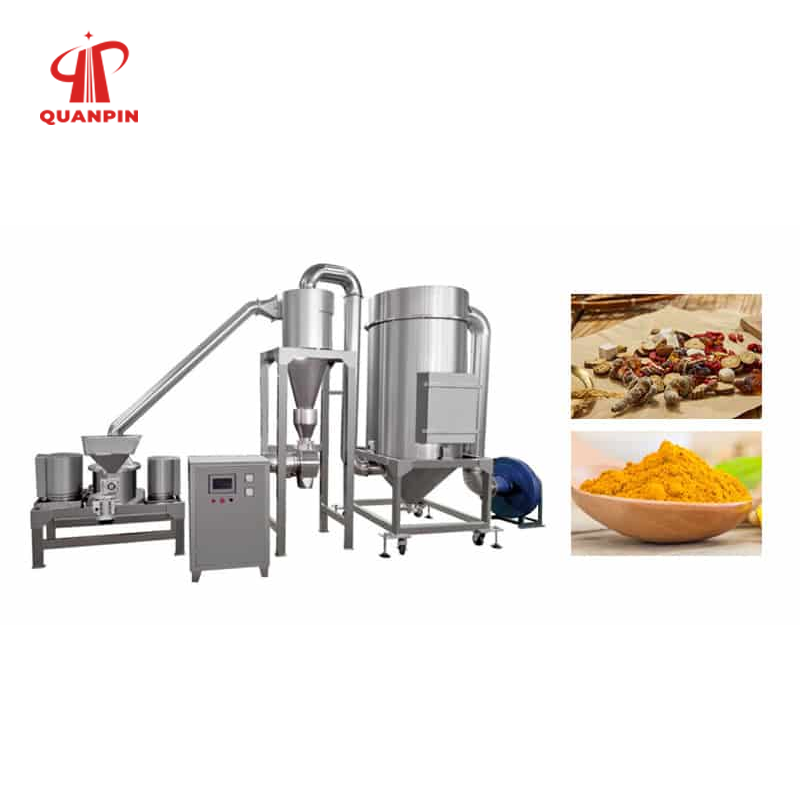
Five Steps for the Application Study
Map the air route
Draw the air route from intake through milling, separation and collection, identifying any branches that affect the measurement boundary.
Define the measurement basis
Record the instrument location, measurement units and whether values represent actual operating conditions or a stated reference condition.
Preserve feed conditions
Retain the feed-lot identity, feed preparation and operating sequence for each classifier comparison.
Link samples with records
Collect powder samples during defined intervals and associate each sample with the contemporaneous air and equipment records.
Review the complete comparison
Review particle-size results together with accepted mass, filter condition and any interruptions before selecting an operating setting.
Four Process Boundaries to Record
The equipment boundary includes the installed mill, classifier and specified auxiliaries; it does not automatically include every site extraction branch.
The air boundary identifies the measurement points and any unmeasured leakage, bypass or shared service that may affect interpretation.
The material boundary follows the excipient from prepared feed to separately identified collected fractions.
The acceptance boundary states the analytical method and powder specification, rather than relying on visual fineness.
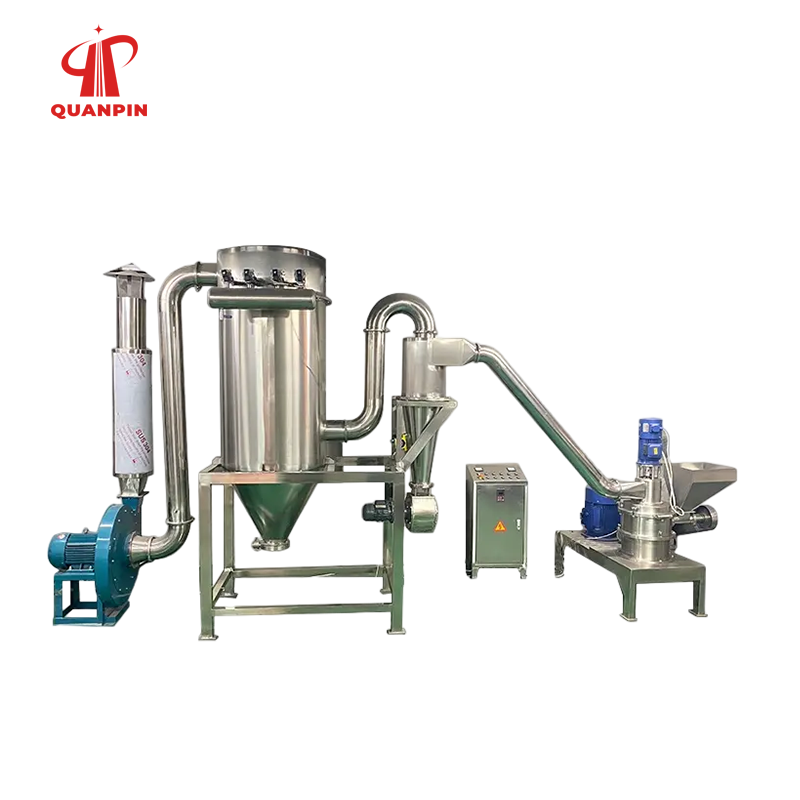
WFJ Fine Pulverizer Components and Interfaces
Feed delivery
Identify the grinding assembly and its documented operating condition without assuming that different materials respond identically. Evaluate particle size reduction against the incoming and accepted distributions, with the collection boundary defined.
Grinding rotor
Record the installed classifier configuration and setting, including the units or indication used by the actual controls. The classifier mill assessment should include retained inventory and separately collected fractions.
Classification assembly
Describe the fan and duct arrangement using the supplied documents; a motor nameplate is not an airflow measurement.
Process air path
Identify the collector and filter arrangement because an altered collection condition may complicate comparisons between runs.
Powder collection
Review measurement access with the equipment supplier and site engineering team before proposing new instrument connections.
Sample and event records
Preserve instrument identification and relevant calibration or verification records with the trial report.
Comparison Choices and Process Interfaces
Define the Reference Basis
A reference run should use a defined excipient lot and a documented preparation method. Downstream dry blending needs powder whose relevant properties remain traceable after size reduction.
Preserve its classifier setting and process-air record as a linked pair, rather than separate notebook entries.
Retain the collection and sampling boundaries so the reference can be interpreted later.
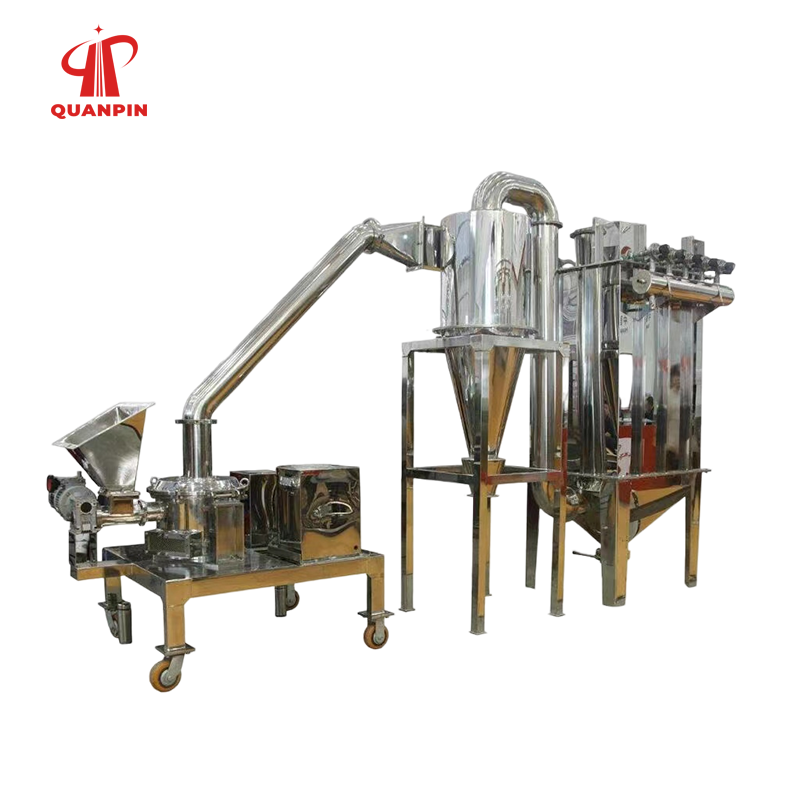
Keep the Comparison Interpretable
When a classifier setting changes, document any accompanying fan, duct or filter changes.
Avoid attributing every output difference to the classifier when the surrounding system also changed.
If multiple variables must change, describe the run as a combined configuration comparison.
Assess the Receiving Process
Assess the powder delivered to the agreed receiving stage, not just material found in one collection point. A receiving powder blender is a separate operation; its uniformity cannot be inferred from the mill result alone.
Keep rejected fractions and any proposed rework separate from accepted output accounting.
Choose the next trial from the unresolved evidence rather than promising a universal optimum.
Industry Application and Acceptance
Pharmaceutical excipient acceptance may depend on properties beyond particle-size distribution; identify the formulation-relevant attributes with the product team.
The trial report should connect those attributes with the actual sample identities and analytical methods. A development comparison should not be presented as complete validation of an untested production process. See FDA process validation guidance.
Air-system observations belong in process understanding, while pharmaceutical acceptance remains a separate documented decision.
A successful development comparison does not by itself establish routine production validation or suitability for another excipient.
Benefits and Practical Limits
A defined air record makes it easier to investigate an unexplained difference between classifier trials. Check whether transfer into the specified powder mixer changes segregation or handling behavior.
It cannot replace representative sampling, suitable analysis or an agreed specification for the material being supplied. Assess relevant quality risks using the actual material and process context. See FDA ICH Q9 quality risk management.
Six Details That Affect the Result
State whether an airflow value is measured or inferred; label an estimate as an estimate.
Retain the instrument location because readings from different points may describe different boundaries.
Record temperature and other reference conditions when they are needed to interpret the reported flow units.
Document filter condition and any relevant pressure readings instead of silently assuming an unchanged system. Interpret measurements through process understanding rather than treating an isolated instrument reading as product acceptance. See FDA process analytical technology framework.
Mark startup, stopping and feed interruptions on the same time basis used for sampling.
Keep individual analytical results available before reducing the comparison to an average.
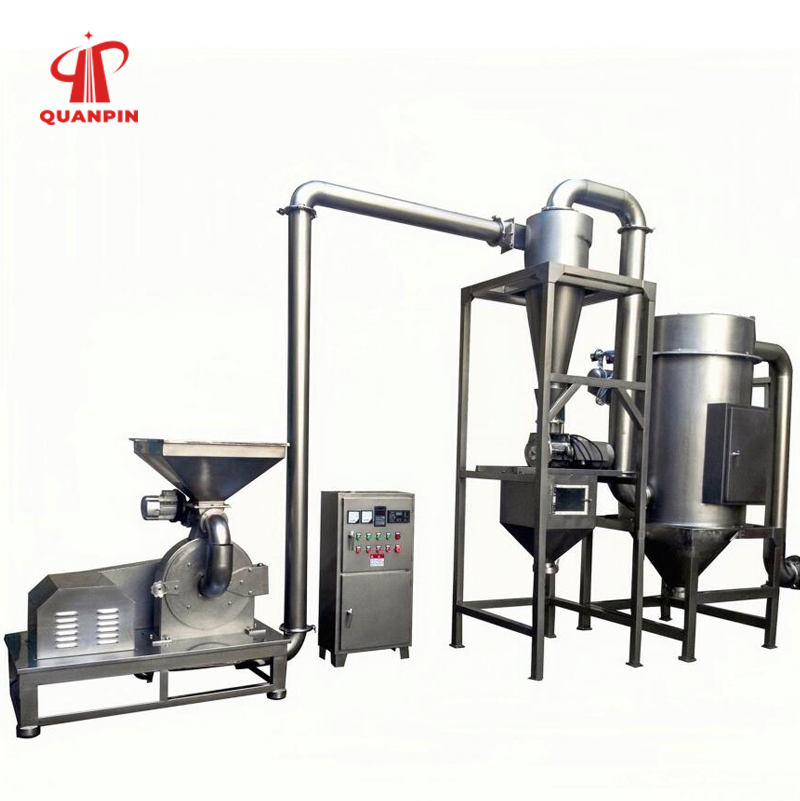
Safety and Operating Requirements
Review actual-powder dust, exposure and cleaning requirements before the trial. Sampling must not require opening moving equipment or defeating protective arrangements.
Any proposed instrument connection or operating change needs an engineering review appropriate to the installed system.
Prepare Your Equipment Enquiry
Send QUANPIN the excipient description, target distribution, feed preparation and intended collection arrangement. Define the interface with downstream Mixing Equipment rather than treating grinding and blending as one machine duty.
Include available air-measurement records and identify which interfaces remain outside the proposed supply scope. Where granulation follows milling, assess that later product independently under its own acceptance plan. Retain knowledge and manage adopted process changes through the pharmaceutical quality system. See FDA ICH Q10 pharmaceutical quality system.
Frequently Asked Questions
Does a fan setting establish airflow?
A fan setting cannot substitute for a measured airflow unless the relationship has been established for the relevant installed condition.
Can unlike flow values be compared directly?
Different flow units or reference conditions should be resolved before numerical values are compared.
Does finer powder establish accepted yield?
A finer collected powder does not establish a higher accepted-product yield without a reconciled material account.
Does one classifier indication describe the whole process?
An unchanged classifier indication does not prove that every relevant process condition stayed constant.
Does one run establish repeatability?
Repeatability should be assessed with an appropriate trial plan; one favorable run is limited evidence.
What air-system information does QUANPIN need?
QUANPIN can review the equipment duty when the material, measurement boundary and acceptance requirements are supplied together.
Discuss Your WFJ Fine Pulverizer Application with QUANPIN
Discuss your application with WFJ Fine Pulverizer specialists at QUANPIN. Use the enquiry below or our contact page.
Email sales@quanpinmachine.com or stacie@quanpinmachine.com. Call +86 19850785582, or contact us on WhatsApp: +86 15921493205.