Rotating Flash Dryer: Review Pigment Feed Breakup and Residence-Time Evidence
By QUANPIN
Pigment cake breakup influences how wet material meets the drying gas. Review the actual feed and demonstrated product response before interpreting a short-residence-time claim as complete application evidence. A spin flash dryer trial must connect feed dispersion with the required pigment application.
This guide concerns a compatible pigment wet cake prepared for rotating flash drying. A general dryer description cannot establish the result for every pigment chemistry or cake structure. See the matching chemical industry applications.
What Does a Flash-Dryer Residence-Time Statement Establish?
Request the feed preparation, breakup arrangement and basis of any residence-time statement alongside the trial product results.
An overall nominal time does not describe every particle path or establish that all recovered material meets the pigment specification.
Equipment Principle and Material Requirements
Mechanical action disperses incoming material while heated gas supplies energy for moisture removal and transports material through the system.
Breakup, gas contact and collection work together. The accepted result also depends on pigment quality after its intended application test.
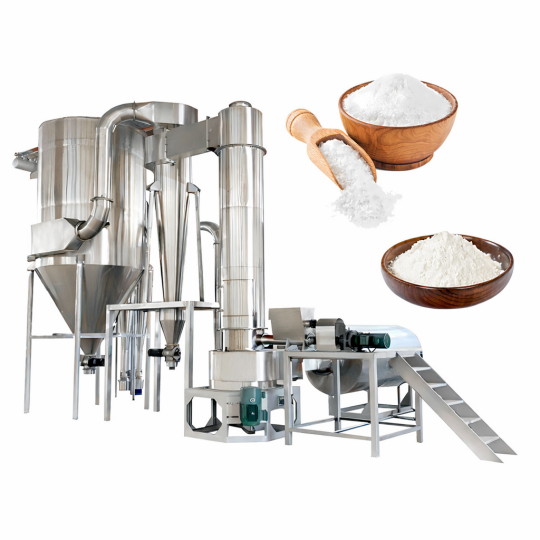
Five Steps for the Application Study
Identify the pigment cake
Identify the wet cake, its moisture basis and preparation history.
Document breakup and feeding
Record the proposed feed-delivery and mechanical-breakup arrangement from the actual equipment scope.
Preserve trial collections
Run the agreed material trial while retaining operating events and collection identities.
Test powder and application quality
Measure the specified dried-powder properties and assess the pigment in its intended application method.
Review the residence-time basis
Review any stated residence-time basis and the conditions over which the observed product result was demonstrated.
Four Process Boundaries to Record
Feed structure: a compact cake and a pre-broken feed can present different duties.
Process contact: retain the actual feed and gas conditions with the trial record.
Recovery: keep relevant collected fractions identifiable until their acceptance is decided.
Application: evaluate the pigment with the agreed dispersion and color method rather than dryness alone.
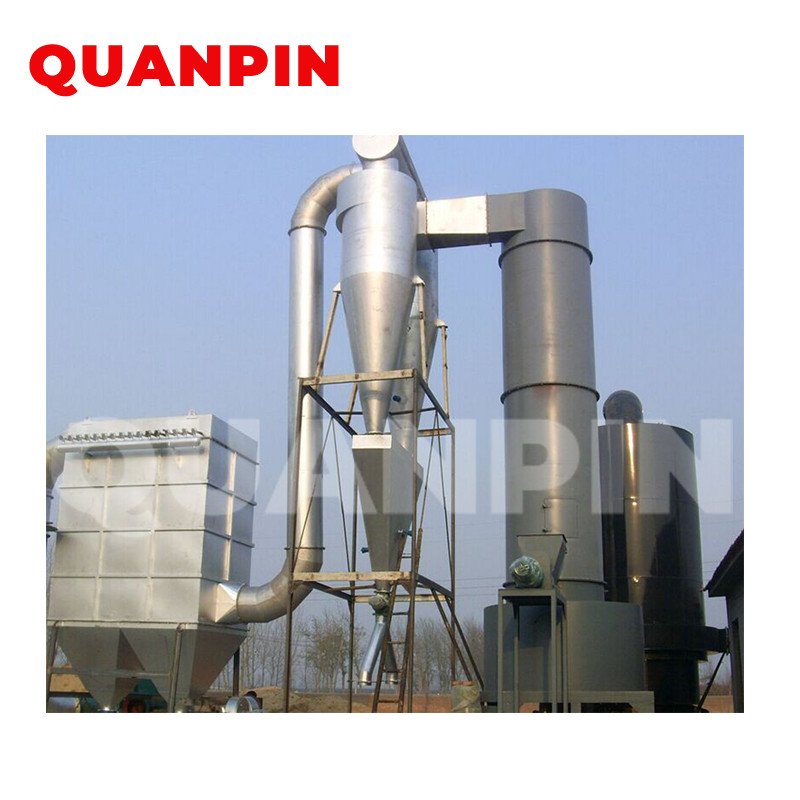
Rotating Flash Dryer Components and Interfaces
Wet cake feeder
The feed system should deliver the actual pigment form without undocumented preparation that makes the demonstration easier. Compare spin flash dryer price quotations on the same feed preparation, recovery and installation boundary.
Rotating dispersion system
The mechanical-breakup section needs an identified arrangement and an inspection procedure appropriate to its service. Do not treat this wet-cake trial as evidence for every slurry drying duty; feed form and delivery must match.
Drying chamber
The drying chamber and gas path establish the process environment; dimensions alone do not provide a complete particle-history measurement.
Gas heating and transport
Heating and gas handling should be described with the actual utilities and material constraints.
Powder recovery
Cyclone, filter and discharge equipment define which fractions are recovered and where their properties are assessed.
Discharge and application sampling
The measurement and control scope should distinguish recorded process conditions from any separately derived residence-time estimate.
Comparison Choices and Process Interfaces
Define the Reference Basis
Ask whether a quoted residence time is nominal, modeled or based on a defined experimental method. The powder drying result must include the intended coating, ink or polymer preparation method.
Keep the method’s assumptions with the number so it is not mistaken for direct evidence about every particle.
Do not infer pigment temperature or application quality solely from a short reported interval.
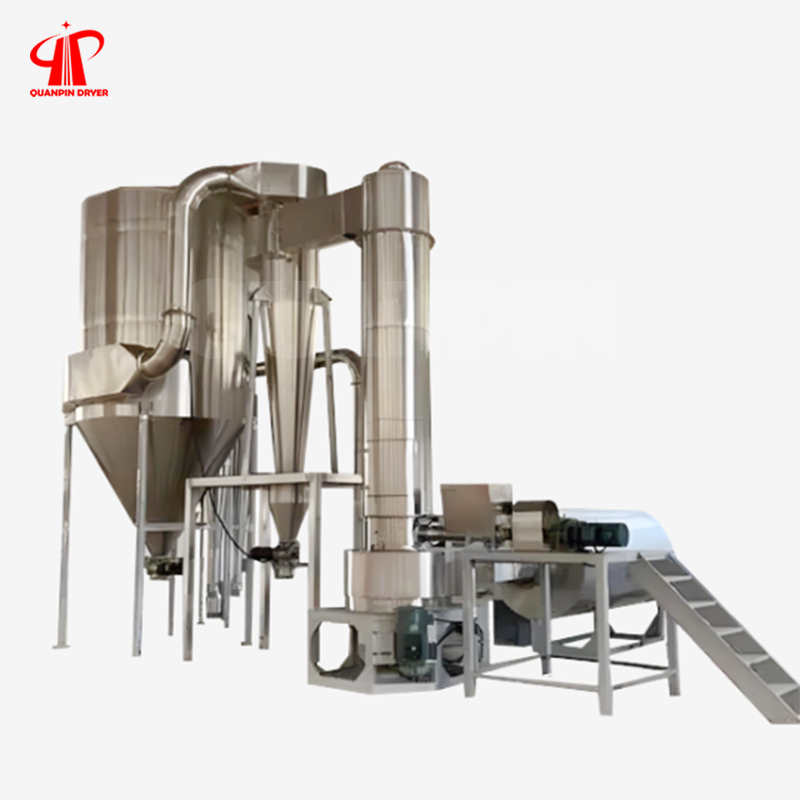
Keep the Comparison Interpretable
Compare feed preparations using a defined wet-cake basis and the same accepted-product tests.
If pre-breaking changes, include that stage in the equipment and energy scope where it belongs.
A demonstration on a differently prepared feed should state its limits for the proposed production cake.
Assess the Receiving Process
Assess the pigment after the intended dispersion procedure, preserving its method and formulation basis. For chemical powder drying, a low moisture result and a satisfactory application result are separate acceptance questions.
Separate the application result from exhaust-treatment and workplace dust requirements.
Keep startup, retained and rejected material visible when reporting accepted output across the complete trial.
Industry Application and Acceptance
Dyes and pigments are the matching chemical-industry application for this process review. Review the actual material hazard information before defining the pigment duty. See HSE safety data sheets.
The actual safety data and chemistry are needed to assess material compatibility and relevant handling hazards. Keep chemical classification, labels and material safety information appropriate to the actual pigment. See HSE chemical classification resources.
Color and dispersibility should be evaluated using the intended coating, ink or other identified formulation method. Identify potentially applicable site requirements independently from powder-quality acceptance. See EPA chemical-production emissions resources.
The proposed installation also requires a site-specific review of dust exposure and potentially applicable emissions requirements.
Benefits and Practical Limits
A feed-to-product comparison makes it easier to evaluate whether the proposed breakup and drying scope represents the production duty. Compare Industrial drying equipment using the same prepared feed and finished-product test.
It cannot provide a universal residence time, color-retention claim or emissions-compliance conclusion for every pigment.
Six Details That Affect the Result
Retain the wet-cake moisture method and reporting basis with the feed record.
Describe any pre-breaking or conditioning performed before the material reaches the dryer.
Record the basis of a stated particle or material residence time.
Compare application samples using the same dispersion preparation and observation method.
Include relevant collection fractions and retained material in the accepted-output account.
Review dust and exhaust interfaces independently from an attractive powder-quality result. Workplace extraction needs its own design and assessment. See HSE local exhaust ventilation resources.
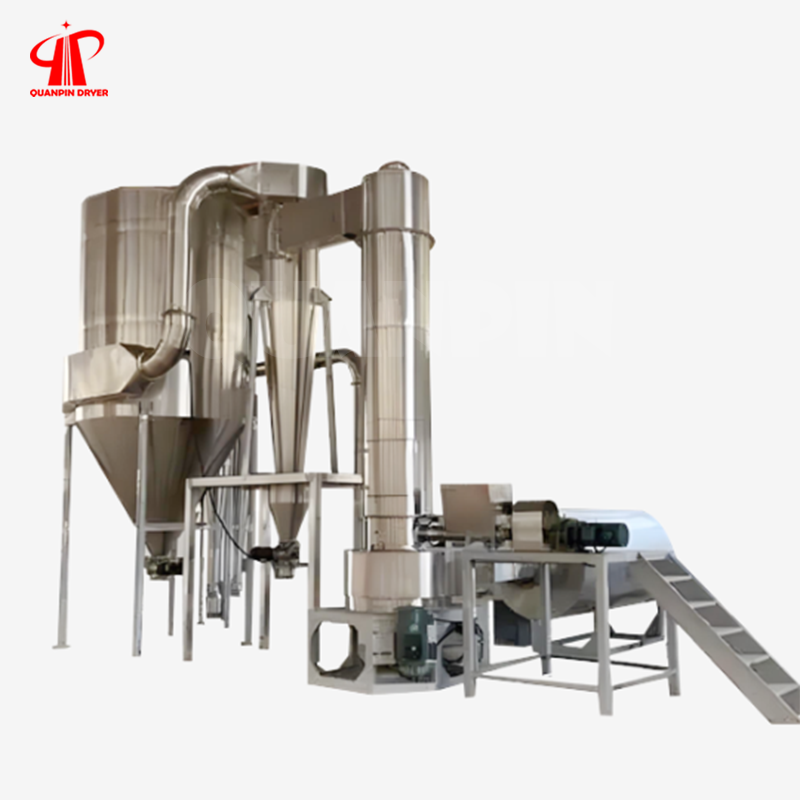
Safety and Operating Requirements
Follow equipment-specific procedures for hot gas, moving breakup components, isolation and collection-system access.
Use the actual pigment hazard information and qualified site assessment for exposure and combustible-dust protection where relevant. Assess relevant combustible-dust hazards using the actual pigment and process. See HSE dangerous substances and combustible dust guidance.
Prepare Your Equipment Enquiry
Send QUANPIN the pigment chemistry, wet-cake condition, intended powder tests and basis of any required residence-time evidence. Ask a Spin Flash Dryer Manufacturer to document the demonstrated material range, not just nominal throughput.
Ask the quotation to identify preparation, recovery and exhaust interfaces as well as the main drying chamber. A spin flash dryer supplier enquiry should include the pigment recipe test, collection boundary and real utility constraints.
Frequently Asked Questions
Does a nominal time describe every particle?
No. The stated method and assumptions must be understood before applying that number to the product.
Why does cake breakup need to be recorded?
It changes how material is presented for gas contact, so the demonstrated feed should represent the proposed production duty.
Does low moisture establish pigment quality?
No. Color, dispersion and other application-specific requirements need their own agreed tests.
How should pre-breaking be included?
Treat it as an identified preparation stage with a defined scope rather than an invisible trial convenience.
Does a product trial establish emissions compliance?
No. A separate site and material assessment is needed for workplace and environmental requirements.
What pigment information does QUANPIN need?
Provide the actual cake and application methods so QUANPIN can review the complete pigment-drying duty.
Discuss Your Rotating Flash Dryer Application with QUANPIN
Discuss your application with Rotating Flash Dryer specialists at QUANPIN. Use the enquiry below or our contact page.
Email sales@quanpinmachine.com or stacie@quanpinmachine.com. Call +86 19850785582, or contact us on WhatsApp: +86 15921493205.