WFJ Fine Pulverizer: Define Wear-Inspection Evidence for Abrasive Pharmaceutical Excipients
By QUANPIN
An abrasive excipient can make product-contact wear an important part of a milling enquiry. Define inspection evidence and product-quality checks before accepting a WFJ duty on particle size alone. The fine pulverizer duty begins with the required powder rather than an isolated machine setting.
The application is pharmaceutical excipient preparation. This guide discusses a review method, not a claim that every excipient or construction material has the same wear behavior. See the matching pharmaceutical industry applications.
What Wear Evidence Belongs to an Excipient Milling Duty?
Identify the surfaces exposed to the actual material and agree how their condition will be documented over a defined campaign.
Use the product’s contamination requirements to determine which additional evidence is needed; a satisfactory size distribution does not answer that question. Use product-specific development knowledge to justify the attributes being examined. See FDA ICH Q8 pharmaceutical development.
Equipment Principle and Material Requirements
The WFJ reduces compatible feed mechanically and separates the resulting powder through its classification and recovery arrangement. In pharmaceutical milling, the feed and product measurement method must be stated together.
Repeated contact with material is part of that duty. Any wear assessment must therefore cover the fitted contact components and the demonstrated service conditions.
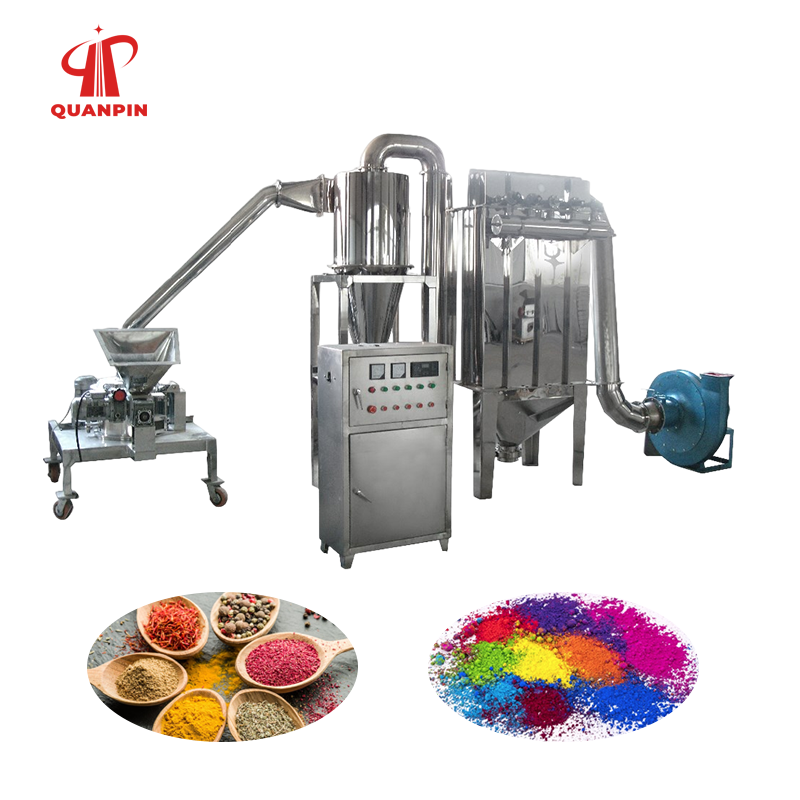
Five Steps for the Application Study
Identify the abrasive feed
Record the incoming excipient and its relevant particle and preparation history before the trial.
Record starting component condition
Identify installed contact components and retain their approved starting-condition inspection records.
Preserve the campaign history
Run the defined campaign without excluding changes or interruptions from its history.
Inspect through approved access
Inspect through the supplied isolation procedure and compare observations on the agreed basis.
Review product and equipment evidence
Review product evidence and equipment observations together before extending the demonstrated operating scope.
Four Process Boundaries to Record
Material identity: retain the actual excipient grade and lot rather than relying on a generic powder description.
Component identity: connect each inspection record to the installed part and construction documentation.
Service history: state the duration and material exposure represented by the inspected condition.
Quality decision: investigate relevant contamination evidence separately from particle-size acceptance.
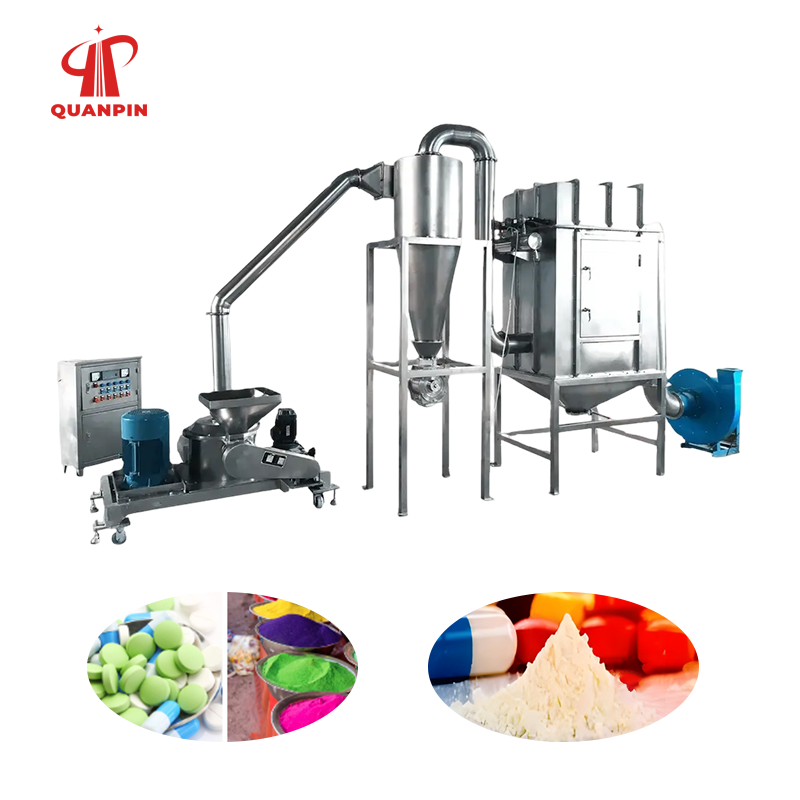
WFJ Fine Pulverizer Components and Interfaces
Feed delivery
The charging interface introduces the specified material and should remain part of the reviewed contact path. Evaluate particle size reduction against the incoming and accepted distributions, with the collection boundary defined.
Grinding rotor
Grinding elements receive repeated mechanical contact and need inspection arrangements appropriate to the actual fitted configuration. The classifier mill assessment should include retained inventory and separately collected fractions.
Classification assembly
The classification section should be included where its contact condition can affect the product or operation.
Process air path
The conveying route can introduce additional surfaces beyond the main chamber; identify which are supplied and reviewed.
Powder collection
Recovery equipment and discharge connections need their own contact-material and inspection boundaries.
Sample and event records
Maintenance and quality records should connect component observations with the campaign and product samples they represent.
Comparison Choices and Process Interfaces
Define the Reference Basis
A pre-trial photograph can support a condition record when the location and inspection method are clearly identified. Downstream dry blending needs powder whose relevant properties remain traceable after size reduction.
It does not by itself quantify material loss or establish an acceptable contamination limit.
Choose any required dimensional or product analysis through the responsible technical and quality review.
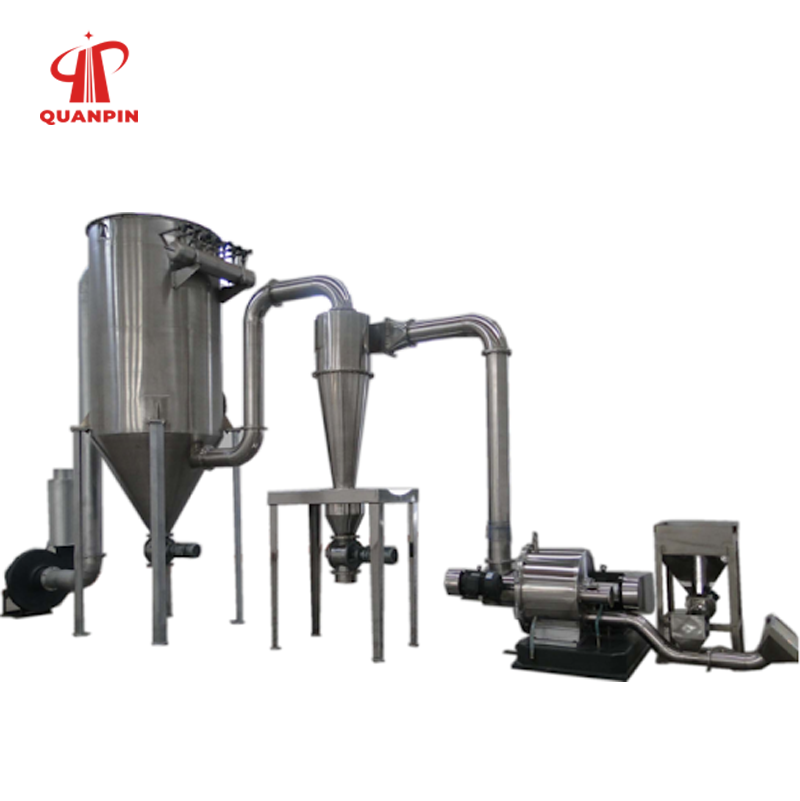
Keep the Comparison Interpretable
Compare equivalent inspection locations before interpreting an apparent change between campaigns.
If a replacement part differs in construction or geometry, record that change rather than treating its service history as continuous.
Consider whether the changed component affects cleaning, classification or the intended powder specification.
Assess the Receiving Process
Where the product enters later blending, preserve the identity of accepted powder and any affected fractions. A receiving powder blender is a separate operation; its uniformity cannot be inferred from the mill result alone.
An equipment inspection cannot establish the suitability of a downstream blend without the appropriate formulation evidence.
Keep any material disposition decision traceable instead of automatically returning an investigated fraction to production.
Industry Application and Acceptance
Medical excipient processing provides the matching pharmaceutical-industry context for this milling discussion.
The relevant product attributes come from the actual formulation and its quality strategy. A development comparison should not be presented as complete validation of an untested production process. See FDA process validation guidance.
Where wear is a concern, define the applicable investigation and acceptance evidence before the equipment trial.
A favorable run on one material does not establish the same contact behavior for a different grade or supplier lot.
Benefits and Practical Limits
A defined inspection plan makes maintenance observations useful for equipment selection and product-quality review. Check whether transfer into the specified powder mixer changes segregation or handling behavior.
It does not establish a universal replacement interval, wear rate or construction-material recommendation for every excipient. Assess relevant quality risks using the actual material and process context. See FDA ICH Q9 quality risk management.
Six Details That Affect the Result
Keep component identity and inspection location visible in each recorded observation.
State the amount and history of material processed between comparable inspections.
Distinguish a surface appearance observation from a quantitative measurement made by a defined method.
Record cleaning and handling between inspections because those steps can affect the observed condition. Interpret measurements through process understanding rather than treating an isolated instrument reading as product acceptance. See FDA process analytical technology framework.
Review unexplained product or component findings before presenting the campaign as an accepted demonstration.
Preserve the original evidence when a maintenance or quality decision leads to replacement or further testing.
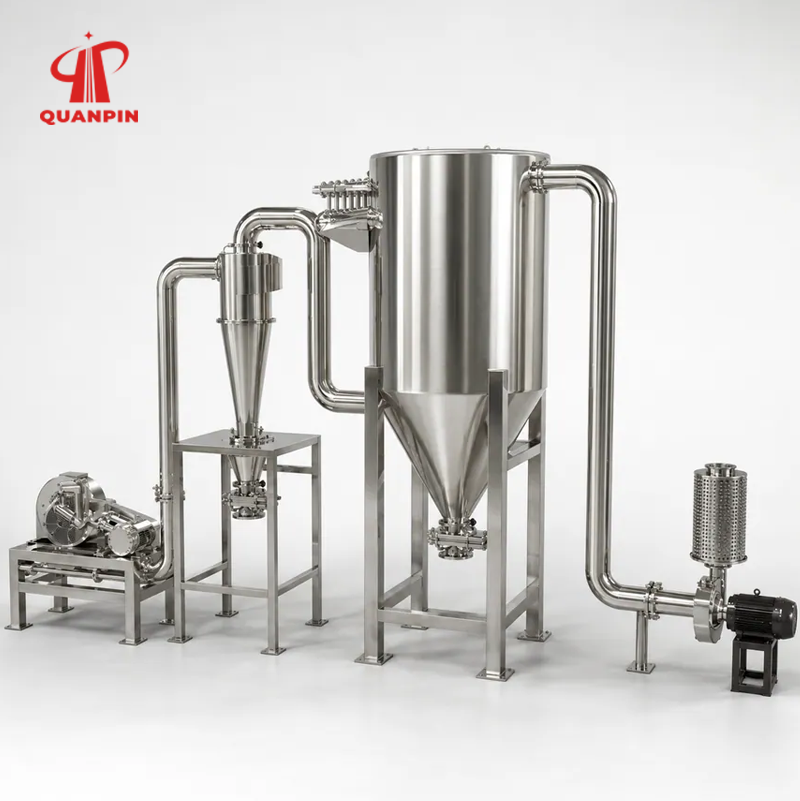
Safety and Operating Requirements
Inspect only after the approved isolation and safe-access procedure; never approach operating grinding or classification parts.
Assess dust exposure and actual excipient hazards separately from the wear and product-quality investigation.
Prepare Your Equipment Enquiry
Send QUANPIN the excipient identity, required contact documentation, campaign basis and relevant product-quality concerns. Define the interface with downstream Mixing Equipment rather than treating grinding and blending as one machine duty.
Ask which inspection locations and tests can support evaluation of the proposed grinding and recovery arrangement. Where granulation follows milling, assess that later product independently under its own acceptance plan. Retain knowledge and manage adopted process changes through the pharmaceutical quality system. See FDA ICH Q10 pharmaceutical quality system.
Frequently Asked Questions
Does accepted particle size resolve wear concerns?
No. Particle size and contamination or contact-condition requirements are separate acceptance questions.
Which contact surfaces need consideration?
Identify all relevant surfaces within the actual supplied grinding, classification, conveying and recovery scope.
Can photographs provide a complete wear measurement?
Only as supporting condition evidence with a defined location and method; a photograph does not establish every required measurement.
Can a replacement inherit an old part's history?
Do not assume equivalence when construction, geometry or service conditions have changed.
How should investigated material be handled?
Use the product’s approved investigation and disposition procedures for material associated with an unexplained finding.
What wear information does QUANPIN need?
Provide the material, contact-component and quality requirements so QUANPIN can discuss a representative milling duty.
Discuss Your WFJ Fine Pulverizer Application with QUANPIN
Discuss your application with WFJ Fine Pulverizer specialists at QUANPIN. Use the enquiry below or our contact page.
Email sales@quanpinmachine.com or stacie@quanpinmachine.com. Call +86 19850785582, or contact us on WhatsApp: +86 15921493205.