Pressure Spray Dryer for Ceramic Powder: Specify Granule Quality Before a Trial
By QUANPIN
A pressure spray dryer for ceramic powder should make granules your forming process can use, not merely remove water. Compare the QUANPIN pressure spray dryer against defined slurry, moisture and granule targets before ordering. A material trial should connect the feed preparation to the quality of the collected product.
This guide follows the equipment selection process from slurry to forming trials. Use it to prepare an enquiry with enough detail for a useful comparison. Explore the drying equipment range when another feed or product route may be more suitable.
What Should a Ceramic Spray Dryer Deliver?
A pressure spray drying machine turns a suitable pumpable ceramic slurry into droplets and then dried granules. Whether those granules are useful depends on their measured size distribution, moisture, handling and behavior in the intended forming process.
The purchaser should define the product target before comparing chamber dimensions. A sample that appears round and dry may still have unsuitable fines, poor flow or an unacceptable response to pressing. Include the downstream requirement in the acceptance document.
How Ceramic Slurry Becomes Granules
A feed vessel and pump supply the slurry to the nozzle atomization system. The drying gas contacts the spray, and a recovery arrangement separates the granules from the exhaust. Each stage needs to suit the actual formulation.
Inlet and outlet temperatures describe operating conditions, not a guaranteed temperature history for every particle. Assess the resulting ceramic granules using representative samples. Stable readings are helpful, but product measurements determine whether the trial meets the requirement.
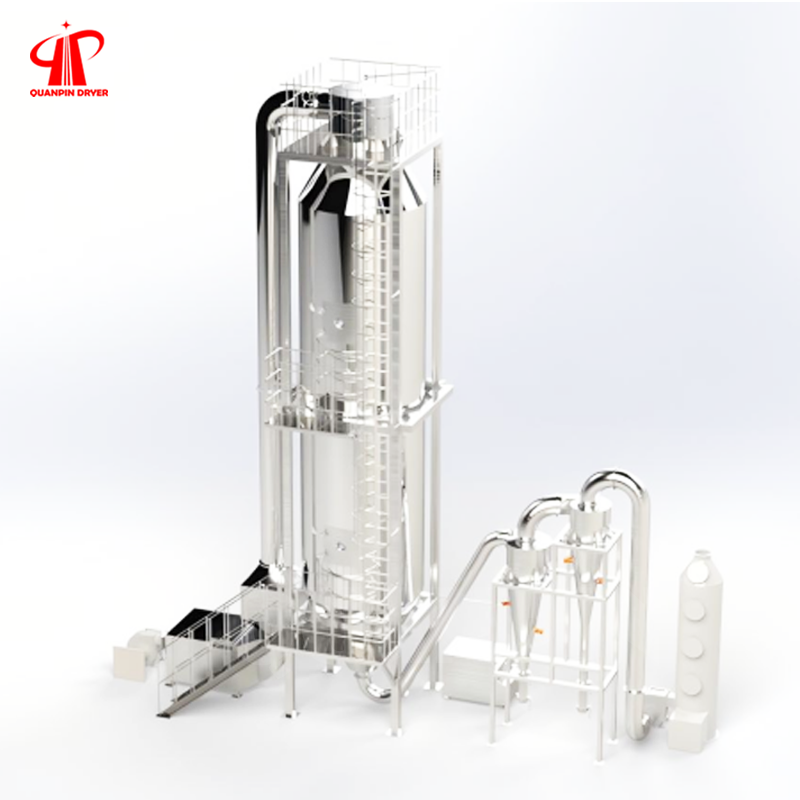
From Slurry Preparation to Accepted Granules
1. Prepare a Consistent Slurry
Record slurry solids, viscosity, temperature and preparation history. Include settling during the expected holding period and the mixing needed before transfer. The trial feed should represent normal production rather than an unusually dilute laboratory preparation.
2. Assess the Nozzle and Droplet Distribution
Review the pressure nozzle spray dryer with the intended slurry. Nozzle geometry, operating conditions and material properties interact. Record nozzle condition and the resulting granule distribution so that future comparisons have a clear basis.
3. Match Spray and Drying Gas
Assess gas distribution and spray behavior as one system. The chamber must accommodate the chosen atomization arrangement. During the trial, document wet zones or deposits rather than assuming that a stable nozzle pressure establishes acceptable chamber performance.
4. Verify Moisture and Granule Properties
Measure the dried granules against the forming specification. Include moisture, size distribution and appropriate handling or application tests. Drying appearance alone cannot establish whether the granules will fill a die consistently or give the required formed result.
5. Separate and Handle the Product
Identify the collection streams and sampling locations. Separate accepted granules, fines and deposits in the material balance. If streams are recombined, test the actual combined material that will enter the next production operation.
Four Checks for a Useful Ceramic Trial
Feed and atomization: verify consistent slurry delivery and record nozzle condition. A change in feed concentration can affect both evaporation duty and spray behavior, even if the nominal pump setting stays the same.
Drying: record stable operating periods and planned changes. Keep transitional samples separate so that the accepted granule result is tied to a defined condition rather than a mixture of several trial settings.
Recovery: account for product collected at each location and material left in the chamber. Use the same recovery boundary when comparing proposals so that nominal feed throughput does not conceal a large off-specification fraction.
Forming: test the collected granules using a representative procedure agreed with the purchaser. Record the preparation and measurement method, because different testing arrangements may lead to different conclusions about suitability.
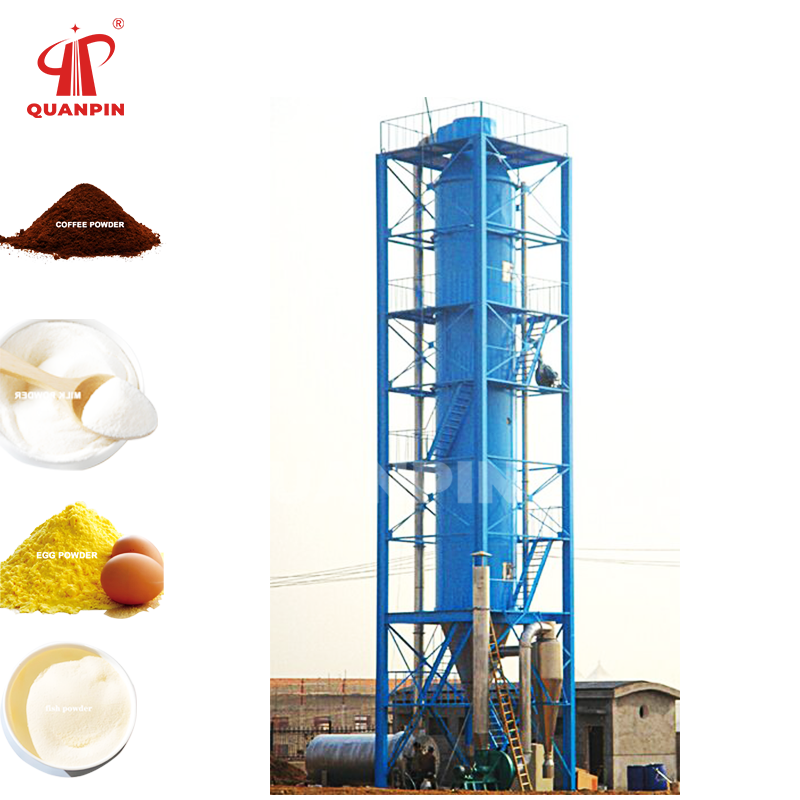
Main Equipment to Review Before Ordering
Slurry Vessel and Feed Pump
Specify slurry holding, mixing and transfer requirements. A feed system must cope with the material’s actual consistency and settling behavior. Ask which components are included in the quotation and which will be supplied by the purchaser.
Pressure Nozzle and Feed Pressure
For a pressure atomization spray dryer, review the nozzle and pump together. Ask how wear, inspection and replacement are addressed for the formulation. Do not treat a nozzle pressure as a guaranteed finished-granule diameter.
Chamber and Air Distributor
Review the chamber and air distributor alongside the intended spray. Include access for inspection and cleaning. A configuration should be assessed with the chosen operating range rather than judged independently from atomization and material behavior.
Heating and Gas Handling
State available heating utilities and the requirements for gas handling. Ask where temperatures and flows will be measured. A clear proposal identifies the included heater, fans, filtration and ducting interfaces rather than leaving the process boundary uncertain.
Granule Recovery and Discharge
Identify the separation and discharge arrangement for the expected distribution. Check whether fine material will be collected separately or returned to the process. Assess retained product and transfer behavior as part of the accepted output.
Controls and Instrumentation
Define operating records, alarms and the variables relevant to the trial. Ask how deviations will be identified and how product sampling relates to the recorded conditions. Instrumentation should support an explainable process window.
Configurations to Compare on a Common Basis
By Atomization Method
Pressure nozzle: assess the actual slurry and granule target. Include nozzle condition, pump duty and expected material variability. The QUANPIN contact team can review these requirements as part of a material-specific enquiry.
Two-fluid nozzle: a separate atomizing gas changes the equipment and utility requirements. If this route is proposed for development work, document what remains representative of the planned production system and what requires further assessment.
Rotary atomizer: evaluate an alternative using the same formulation and accepted-granule criteria. Compare the centrifugal spray dryer on the complete duty rather than assuming one atomization route is always preferable.
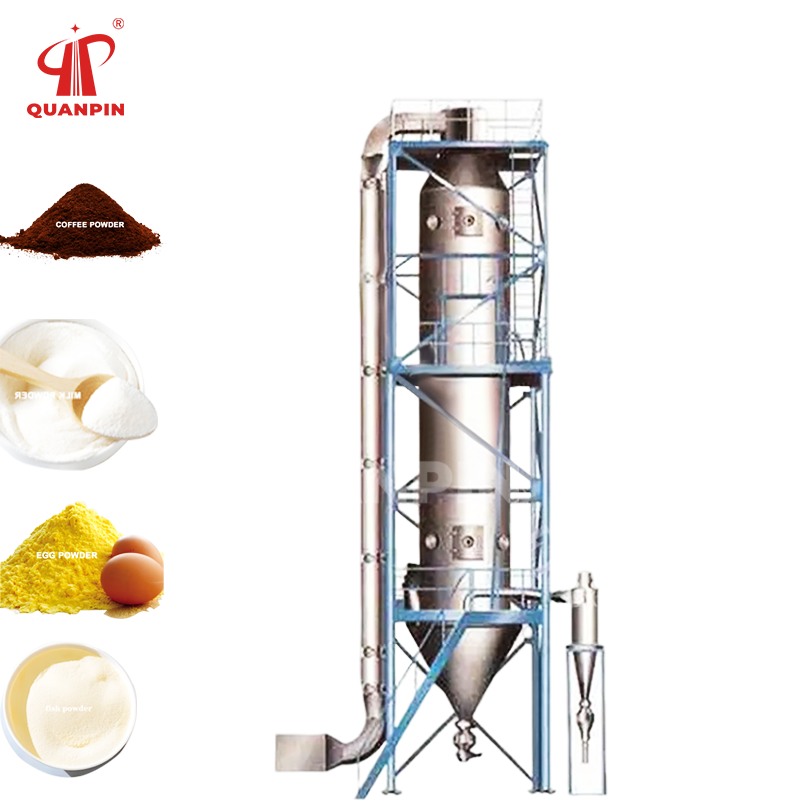
By Gas and Spray Direction
Parallel flow: for a parallel flow pressure spray dryer, identify how the gas and spray enter and travel through the chamber. Review this arrangement together with drying time and the observed granule result.
Counter-current: an opposing overall flow direction changes the material’s exposure history. Suitability needs to be established for the formulation and required granules; it cannot be decided from the flow label alone.
Mixed flow: document the proposed chamber arrangement and spray direction. Compare measured drying and recovery performance with the required product. Do not assume that combining directions automatically improves the result.
Special Process Arrangements
Process atmosphere: identify the actual liquid and material hazards before choosing gas treatment. An aqueous formulation and a solvent-containing formulation should not be assumed to require the same complete installation.
Operating pressure: clarify whether the proposed spray process is conventional or purpose-designed for different pressure conditions. A reduced-pressure label does not remove the need to evaluate atomization, heat transfer and product recovery.
Finishing stages: if an additional conditioning or handling stage is proposed, explain its objective and sample the product after that stage. Include the additional equipment, cleaning and controls in the proposal boundary.
Where Granule Requirements Change the Decision
Pressing feed: assess granule distribution, filling behavior and the agreed forming result. Good flow alone does not establish acceptable compaction; the granules must also suit the purchaser’s material and forming procedure.
Storage and conveying: review moisture sensitivity, attrition and segregation where relevant. Sample after representative handling if that handling can change the distribution reaching the forming equipment.
Formulation changes: compare recipes separately where their feed or product behavior differs. A successful trial with one binder or solids condition cannot qualify every ceramic slurry without further checks.
Development work: use controlled comparisons to investigate an unresolved product requirement. Document the tested material and conditions, and distinguish a development observation from a production-capacity commitment.
Purchasing Benefits and Practical Limits
Spray drying can combine liquid removal with formation of usable granules. The practical purchasing benefit depends on delivering the accepted product to the next operation. Compare usable output, required handling and repeatability rather than a general claim about drying speed.
Highly viscous or unstable slurries, deposits and unsuitable fines can limit practical operation. A supplier may need to review feed preparation or another processing route. Record unresolved limitations before turning a trial result into an equipment order.
Factors That Influence Accepted Granule Output
Solids and viscosity: request measurements under defined conditions. Higher solids can change the liquid-removal duty, but the feed must remain suitable for transfer and atomization. Do not select a concentration without assessing the resulting granules.
Gas conditions: interpret temperature readings with feed rate and product results. The pressure spray dryer design should be reviewed against the accepted process window, not an isolated maximum temperature.
Particle distribution: evaluate coarse and fine fractions using a defined method. A mean value can hide material that affects die filling or recovery. Keep measurement and sample preparation consistent across trials.
Exposure and flow: relate the selected chamber arrangement to drying and recovery observations. A change that improves one sample may affect deposits or another collected fraction, so evaluate the full material balance.
Deposits and fines: include them in the assessment of accepted product. State which fractions can be used, returned or require another route. This makes spray drying equipment quotations easier to compare on a common basis.
Cleaning and changeovers: examine access, retained material and the practical campaign sequence. Accepted output over a complete operating period can be more useful to a buyer than a short favorable throughput result.
Safety and Operating Requirements
Review the actual formulation’s hazards, dust behavior and compatibility with qualified specialists. Protective measures must suit the material and installation. General ventilation does not establish that a specific dust or solvent hazard is adequately addressed.
Use the equipment-specific startup, shutdown, inspection and cleaning procedures. Do not import operating limits from another slurry or installation. Agree how material and process changes will be reviewed before extending the tested operating window.
Selecting Equipment for Your Ceramic Slurry
Prepare an enquiry with the slurry composition, solids, viscosity, required throughput, moisture, granule distribution and forming tests. Include utilities, layout and handling needs. A complete spray drying system proposal should state its equipment boundaries and unresolved trial questions.
Ask suppliers to use the same feed and accepted-product basis. Request a representative trial, a documented sampling plan and a report covering recovery and forming performance. Compare what the proposed equipment must achieve rather than only the machine price.
Frequently Asked Questions
Are larger granules always better for pressing?
No. The required granule size depends on the material and forming process. Moisture, distribution, structure and compaction behavior should be evaluated together. The largest granules are not automatically the most useful.
Can nozzle pressure guarantee particle size?
No. Nozzle conditions influence atomization, but slurry properties, nozzle condition and drying behavior also matter. Measure the finished distribution from the agreed product stream rather than using pressure as a particle-size guarantee.
Are droplet size and granule size identical?
No. Drying changes a liquid droplet as solids concentrate and a granule forms. The spray and product distributions answer different questions. An accepted finished-product distribution must be measured directly.
Which capacity basis should buyers request?
State feed rate, solids concentration, target moisture and the accepted granule output. Ask for evaporation duty and the recovery boundary. A capacity figure without these bases cannot be compared reliably with another proposal.
How should trial granules be compared?
Use the same sample preparation and particle-size method, then apply the agreed forming test. Check each relevant collected stream or the actual combined product. Retained samples help investigate apparent differences between trial runs.
What can limit a useful operating campaign?
Slurry variability, deposits, fine recovery, discharge and changeovers can affect a practical campaign. Ask how the proposal addresses these conditions and which observations are established by a representative trial rather than assumed.
Request a Ceramic Drying Proposal from QUANPIN
Ready to discuss ceramic granulation equipment? Send the material description and accepted granule targets to QUANPIN. Request a review of trial requirements and the proposed process boundary. Visit QUANPIN for the company and equipment overview before preparing your enquiry.
Email sales@quanpinmachine.com or stacie@quanpinmachine.com. Call +86 19850785582, or contact us on WhatsApp: +86 15921493205.