Coffee Spray Dryer: Investigate Powder Caking Across Cooling and Packing
By QUANPIN
Coffee powder can leave the collection system in an acceptable condition and change during cooling or packing. Investigate the handling boundary before attributing every caking observation to the drying chamber. A coffee dryer machine enquiry for coffee must specify liquid extract rather than whole-bean drying.
This guide concerns soluble-coffee extract converted into powder, including any declared carrier ingredients. Whole-bean drying is a different process. See the matching food industry applications.
At Which Handling Stage Does Coffee Powder Change?
Identify where the powder was collected, cooled, exposed and packed before comparing caking observations.
Keep moisture content, water activity and product-use tests distinct. One initial moisture result cannot describe every later storage condition.
Equipment Principle and Material Requirements
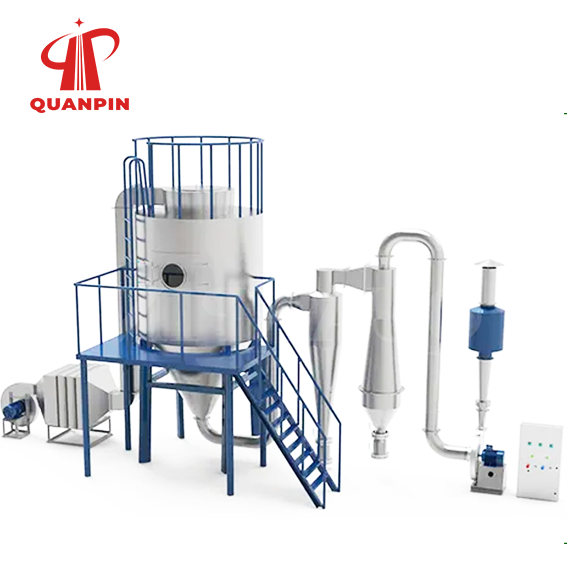
Atomization disperses the prepared liquid extract into droplets, and heated gas removes liquid while particles form. The coffee spray dryer route should preserve the identity of coffee solids and any carrier additions.
The collected particles then encounter downstream surfaces and surrounding conditions; this later history is part of the delivered food-product duty.
Five Steps for the Application Study
Define coffee and carrier solids
Define the extract composition and identify any carrier contribution to the finished powder.
Document cooling scope
Record collection conditions and the proposed cooling arrangement included in the supply scope.
Sample successive boundaries
Collect identified samples before and after the handling stages being investigated.
Apply consistent food tests
Apply the agreed powder and reconstitution methods using consistent sample preparation.
Evaluate packed-product conditions
Review the packed product under its intended evaluation conditions rather than claiming shelf life from an immediate trial sample.
Four Process Boundaries to Record
Dryer outlet: identify the powder condition at the end of the specified drying and recovery stage.
Cooling: record the actual method and relevant exposure history.
Packing: identify the container and barrier arrangement used for the trial product.
Storage assessment: distinguish a development comparison from a validated shelf-life claim.
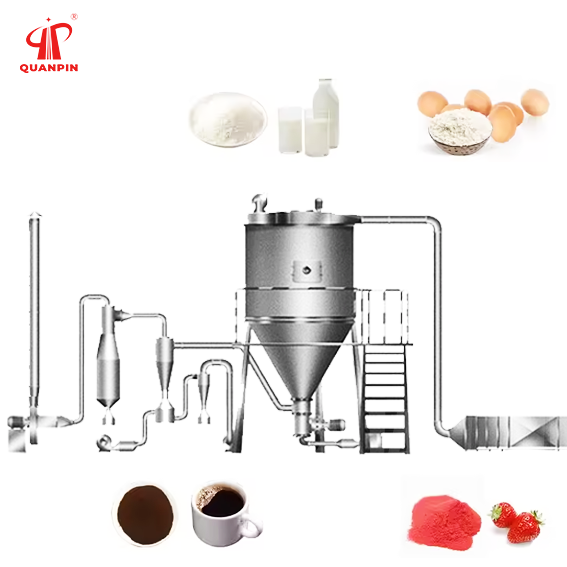
Coffee Spray Dryer Components and Interfaces
Extract and formulation vessel
The feed system should deliver the specified coffee extract with its preparation and composition recorded. The Centrifugal Spray Dryer assessment needs a prepared, atomizable liquid feed and a defined powder target.
Feed pump and atomizer
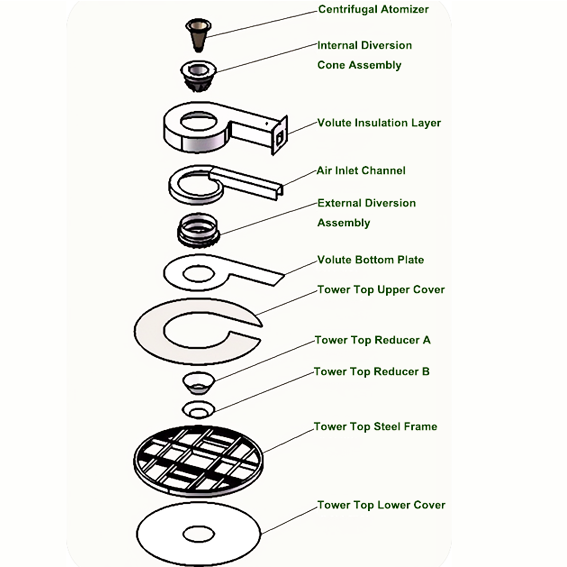
The atomizer creates droplets; its selection must match the actual extract and intended powder. Compare an Industrial spray dryer machine on its complete food ingredient duty, not gross powder mass alone.
Drying chamber
The chamber provides the gas-contact space and is only one part of the complete powder route.
Air heating and distribution
The air-handling arrangement needs a defined service scope and the relevant process measurements.
Powder recovery
Collectors and discharge connections determine where recovered coffee powder enters cooling or protected handling.
Packing and composition records
The packing interface should state which equipment and environmental controls are included or excluded.
Comparison Choices and Process Interfaces
Define the Reference Basis
Compare outlet and post-cooling samples to investigate a change across the cooling boundary.
Compare pre-packing and packed samples where the container or packing exposure is the unresolved question.
Preserve these identities rather than combining material from several locations into one sample.
Keep the Comparison Interpretable
When testing a different cooling arrangement, retain the extract and relevant drying conditions as comparable inputs.
If carrier content changes, acknowledge the formulation change before comparing caking or dissolution.
Gross powder mass does not distinguish coffee solids from added carrier solids.
Assess the Receiving Process
Evaluate intended beverage preparation separately from bulk powder appearance. Evaluate Spray Drying with the input solids balance and the final beverage method visible.
Define water addition, mixing and observation conditions in a reconstitution comparison.
Do not interpret an attractive initial powder as proof of performance throughout an untested storage period.
Industry Application and Acceptance
The matching industry is instant-drink food preparation, with coffee as the identified product. Food equipment and processing need appropriate hygiene controls. See FDA food manufacturing practices.
Food-contact hygiene and ingredient identity remain necessary across drying, cooling and packing. Identify allergens and cross-contact requirements when ingredients or carriers introduce them. See FDA food allergen information.
Any carrier or flavor addition should remain visible in the formulation and allergen review. Water activity describes a property different from total moisture content. See FDA water activity background.
Moisture protection should be assessed against the intended food and handling conditions rather than assumed from the package appearance.
Benefits and Practical Limits
A boundary-based investigation helps identify whether a powder change appears before or after the recovery stage. Select Spray drying equipment only after defining accepted coffee ingredient composition and recovery.
It does not establish one moisture target, cooling method or package suitable for every coffee formulation.
Six Details That Affect the Result
Retain extract solids and carrier records when comparing two powder trials.
Record sample timing relative to cooling and exposure.
Use consistent moisture and water-activity methods where those tests are part of acceptance.
Keep powder temperature observations separate from an assumption about later storage stability.
Identify packaging materials and closure conditions used in development samples. Include relevant sanitation and handling requirements in the food-process review. See FDA sanitation and transportation resources.
Review the intended beverage result alongside powder handling and storage observations.
Safety and Operating Requirements
Follow equipment-specific procedures for hot surfaces, atomization, cleaning and safe access to collectors.
Review food hygiene and actual powder dust hazards separately; low moisture alone does not establish safe storage or operation. Food hazard analysis and relevant preventive controls are separate from demonstrating a preferred ingredient appearance. See FDA preventive controls for human food.
Prepare Your Equipment Enquiry
Send QUANPIN the coffee extract, declared additions, intended powder tests and cooling-to-packing boundary. The spray drying system boundary should include collection, cooling and packing where those duties are purchased.
Ask the proposal to identify supplied recovery and handling components together with the trials needed to assess the delivered ingredient. A rotary atomizer spray dryer arrangement must be assessed with the actual extract and product specification.
Frequently Asked Questions
Does caking always originate in the chamber?
Not necessarily. Sampling at successive boundaries can help locate where the observed change develops.
Are moisture and water activity interchangeable?
No. They describe different properties and need appropriate methods where relevant to the food specification.
Can carrier content be ignored in a comparison?
No. Carrier additions change the formulation and should remain explicit in any comparison.
How should beverage performance be checked?
Use the defined beverage-preparation method in addition to powder handling observations.
Can the trial establish commercial shelf life?
An immediate equipment trial cannot establish an untested commercial shelf life.
What handling scope should QUANPIN review?
Provide the complete extract-to-packed-powder duty so QUANPIN can review the process interfaces.
Discuss Your Coffee Spray Dryer Application with QUANPIN
Discuss your application with Coffee Spray Dryer specialists at QUANPIN. Use the enquiry below or our contact page.
Email sales@quanpinmachine.com or stacie@quanpinmachine.com. Call +86 19850785582, or contact us on WhatsApp: +86 15921493205.