Ribbon Mixer for Seasonings: Investigate Density Differences Between Salt and Spice Ingredients
By QUANPIN
Salt, ground spices and minor seasoning ingredients can differ in bulk handling and particle properties. Evaluate the complete recipe and discharge sequence before accepting a ribbon-mixing trial. A Horizontal Ribbon Mixer enquiry should start with formulation and the required composition evidence.
This guide concerns dry food-seasoning blends. It separates the mixing duty from segregation introduced during later container filling or transfer. See the matching food industry applications.
How Should Ingredient Differences Be Investigated in a Seasoning Blend?
Characterize the relevant ingredient differences and define a composition test before changing mixing time. Density alone cannot predict every blend’s behavior.
An apparently even mixture can still vary between collected portions. Retain individual discharge samples using a justified food-product sampling plan.
Equipment Principle and Material Requirements
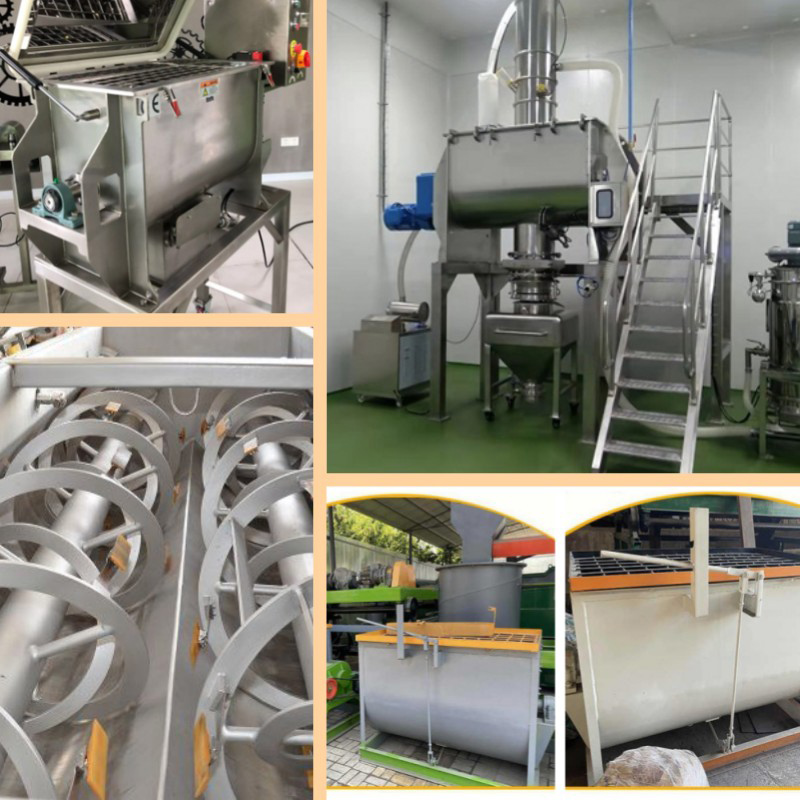
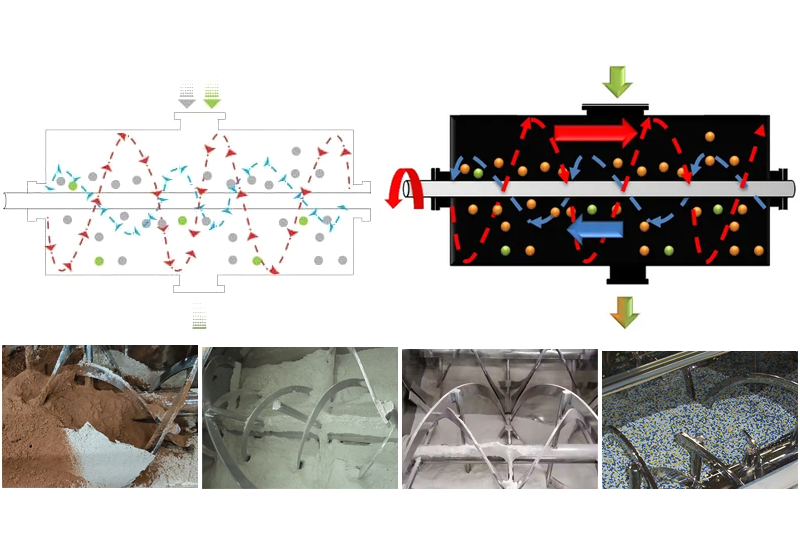
A horizontal ribbon assembly circulates compatible powders through a trough. The resulting movement depends on the charge as well as the installed ribbon arrangement. Describe the intended ribbon blender duty using the actual ingredient properties and working load.
The purpose is to distribute ingredients within the required recipe; it is not to remove the density difference between salt and spices.
Five Steps for the Application Study
Characterize the ingredients
Identify the recipe, ingredient lots and any preparation that changes their particle condition.
Record charge preparation
Record the proposed charge and addition sequence using the intended production ingredients.
Observe the defined mixing run
Run the agreed mixing comparison while preserving actual operating events and interruptions.
Sample across discharge
Collect identified portions across the discharge rather than testing only one convenient container.
Review packing effects
Review the receiving packaging or transfer step to determine whether it changes the delivered seasoning composition.
Four Process Boundaries to Record
Ingredient basis: record particle and handling observations without substituting one bulk-density figure for the recipe description.
Mixing basis: keep the actual charge and addition history with the trial data.
Discharge basis: preserve the order of collected portions so a trend is not lost through pooling.
Food acceptance: use relevant composition and product-use tests rather than appearance alone.

Ribbon Mixer for Seasonings Components and Interfaces
Ingredient charging
The charging arrangement needs clear ingredient identity controls, especially for small additions.
Ribbon assembly
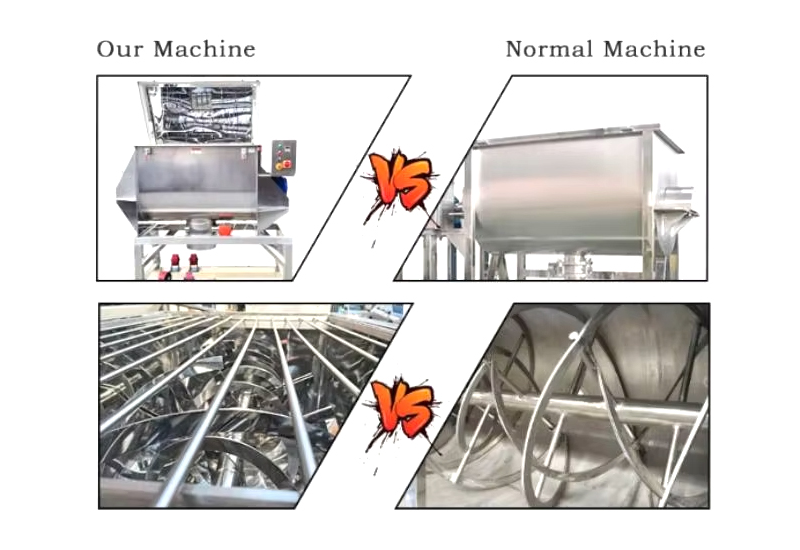
The ribbon assembly should match the quoted mixer configuration and the proposed material duty. Choose the dry blending arrangement for the documented material rather than a generic vessel-volume claim.
Trough and drive
The trough and product-contact surfaces need a defined cleaning and inspection arrangement.
Closure and access
Where a liquid-addition option is proposed, review it as a separate capability rather than assuming a dry mixer includes it.
Discharge arrangement
The discharge outlet and receiving container affect the movement of the finished seasoning.
Sampling and food-contact cleaning
Sampling and analytical preparation should reflect which ingredient distribution the recipe needs to control.
Comparison Choices and Process Interfaces
Define the Reference Basis
Compare ingredient preparation first when a new lot changes how the seasoning flows or forms agglomerates. Review the powder blender interfaces, including charging, sampling and receiving equipment.
Changing particle condition and mixing time together makes it harder to identify the cause of a different result.
Use representative food ingredients rather than an easier demonstration powder when defining the production duty.
Keep the Comparison Interpretable
A vessel sample describes its own collection location and time; it should not be presented as every packed portion.
Discharge samples help examine the material actually leaving the mixer across the selected operating period.
Packed-product samples can address an additional handling stage when that stage belongs to the study.
Assess the Receiving Process
Retain the identity of allergens, carriers and flavor additions throughout the recipe record. Define how powder mixer connects to the preceding preparation and the next operation.
Review cleaning and cross-contact boundaries between successive seasonings independently from blend uniformity.
Define the condition at which the accepted material is transferred to the next operator or packaging system.
Industry Application and Acceptance
Condiment and fragrance ingredients provide the matching food-industry application on the QUANPIN site. Food equipment and processing need appropriate hygiene controls. See FDA food manufacturing practices.
The finished seasoning should meet its recipe and intended food-use requirements after the handling being purchased. Identify allergens and cross-contact requirements when ingredients or carriers introduce them. See FDA food allergen information.
Food hygiene and allergen controls are necessary even when the trial’s main question is ingredient distribution. Water activity describes a property different from total moisture content. See FDA water activity background.
Where storage behavior matters, specify appropriate moisture or water-activity evaluation rather than inferring stability from free flow.
Benefits and Practical Limits
This approach distinguishes a mixer-distribution problem from a change arising at discharge or packing. Selection of Mixing Equipment should include cleaning access and the intended campaign sequence.
It cannot establish that every salt-and-spice recipe will remain uniform under any handling condition.
Six Details That Affect the Result
Retain incoming ingredient observations when replacing a spice grade or salt particle specification.
Define the marker or component used to assess distribution and explain why it is relevant.
Keep the specimen mass and preparation method consistent during the comparison.
Do not pool all discharge specimens before checking whether a meaningful sequence trend exists.
Document incomplete charging or retained seasoning so the recipe balance remains visible. Include relevant sanitation and handling requirements in the food-process review. See FDA sanitation and transportation resources.
Assess any proposed change against the actual food formulation and its approved acceptance plan.
Safety and Operating Requirements
Follow equipment isolation and guarded-access procedures when inspecting the trough or ribbon assembly.
Review food powder dust and exposure hazards using the actual ingredients; mixing uniformity is a separate acceptance question. Food hazard analysis and relevant preventive controls are separate from demonstrating a preferred ingredient appearance. See FDA preventive controls for human food.
Prepare Your Equipment Enquiry
Send QUANPIN the seasoning recipe basis, relevant ingredient differences and proposed packaging interface. Specify the evidence required for industrial mixers; a favorable visual impression is insufficient where composition matters.
Request a trial with defined discharge sampling and food-product tests so the quotation reflects delivered blend requirements. Compare uniform powder mixing at the same material and acceptance boundary before scaling the working batch.
Frequently Asked Questions
Does density alone explain seasoning segregation?
No. Density can contribute to handling differences, but particle size, cohesion and movement history also matter.
Is one vessel sample enough for packed-product acceptance?
It may address a development question, but it cannot alone describe composition throughout discharge and packing.
Will longer mixing always solve variation?
Only evidence from the actual blend can establish an appropriate mixing instruction; longer is not automatically better.
Can appearance replace composition testing?
No. Appearance cannot replace a relevant composition test for a seasoning blend.
Do allergen controls depend on uniformity results?
Allergen identity and cross-contact controls belong to the food process regardless of the uniformity result.
How can the seasoning duty be reviewed?
Provide the full recipe and receiving process so QUANPIN can evaluate a defined seasoning-mixing duty.
Discuss Your Ribbon Mixer for Seasonings Application with QUANPIN
Discuss your application with Ribbon Mixer for Seasonings specialists at QUANPIN. Use the enquiry below or our contact page.
Email sales@quanpinmachine.com or stacie@quanpinmachine.com. Call +86 19850785582, or contact us on WhatsApp: +86 15921493205.