V-Type Mixer: Plan Ingredient Charging Order for a Pharmaceutical Powder Blend
By QUANPIN
Ingredient charging order belongs in a pharmaceutical blending study because it changes the initial arrangement of the charge. A V-type mixer should be evaluated with the sequence intended for production.
The subject here is a compatible dry powder formulation. A sequence that works for one recipe cannot be treated as a universal loading instruction. See the matching pharmaceutical industry applications.
What Does a Pharmaceutical Charging-Sequence Study Need to Record?
Record ingredient identities, quantities and loading order before comparing blending results. Include any screening, premixing or transfer that occurs before the vessel is closed.
The question is whether the proposed sequence produces acceptable composition under the specified loading and mixing conditions, not whether one order looks intuitively better. Use product-specific development knowledge to justify the attributes being examined. See FDA ICH Q8 pharmaceutical development.
Equipment Principle and Material Requirements
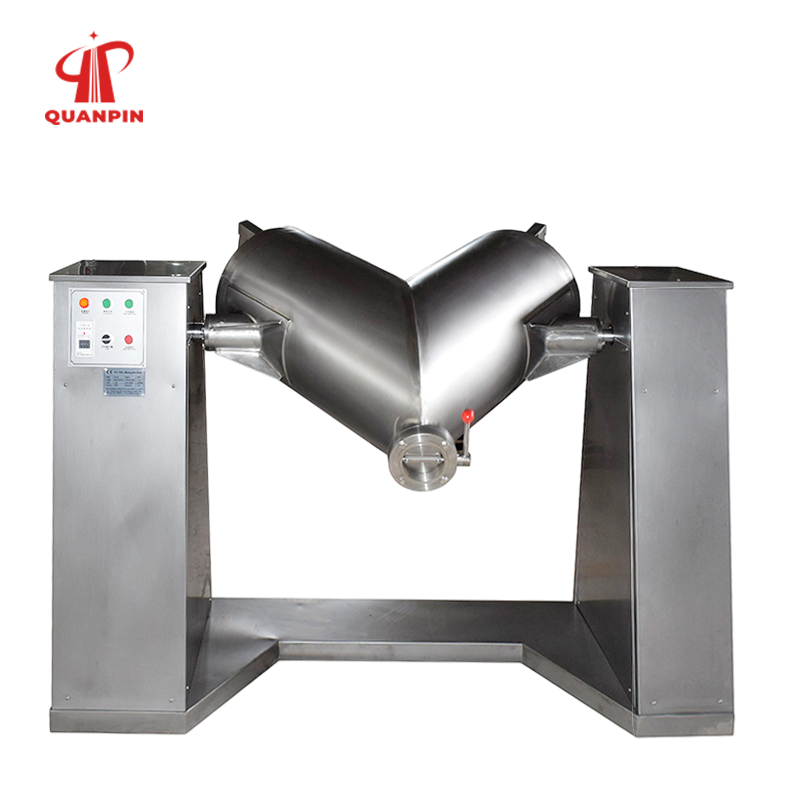
A V-shaped vessel redistributes powder through tumbling as the charge divides and recombines during motion. Describe the intended low-shear tumble mixing duty using the actual ingredient properties and working load.
Initial ingredient placement is one input to that movement. Powder cohesion, density differences and working fill also influence the comparison.
Five Steps for the Application Study
Define the formulation question
Define the intended formulation and the attributes that the blending study must assess.
Document loading order
Write the proposed loading sequence with the preparation and identity of each ingredient.
Control the comparison
Keep the selected load and approved mixing conditions comparable when examining a sequence change.
Preserve individual samples
Collect samples through the justified sampling plan, retaining individual results rather than only a mean.
Evaluate the agreed discharge scope
Assess discharge or downstream handling where those stages are included in the intended acceptance boundary.
Four Process Boundaries to Record
Preparation: a premix is an additional operation whose identity and composition should remain traceable.
Charging: record actual ingredient order rather than reconstructing it from the recipe afterward.
Blending: identify the vessel load and motion conditions represented by the result.
Discharge: satisfactory vessel samples do not automatically describe material delivered to every receiving container.
V-Type Mixer Components and Interfaces
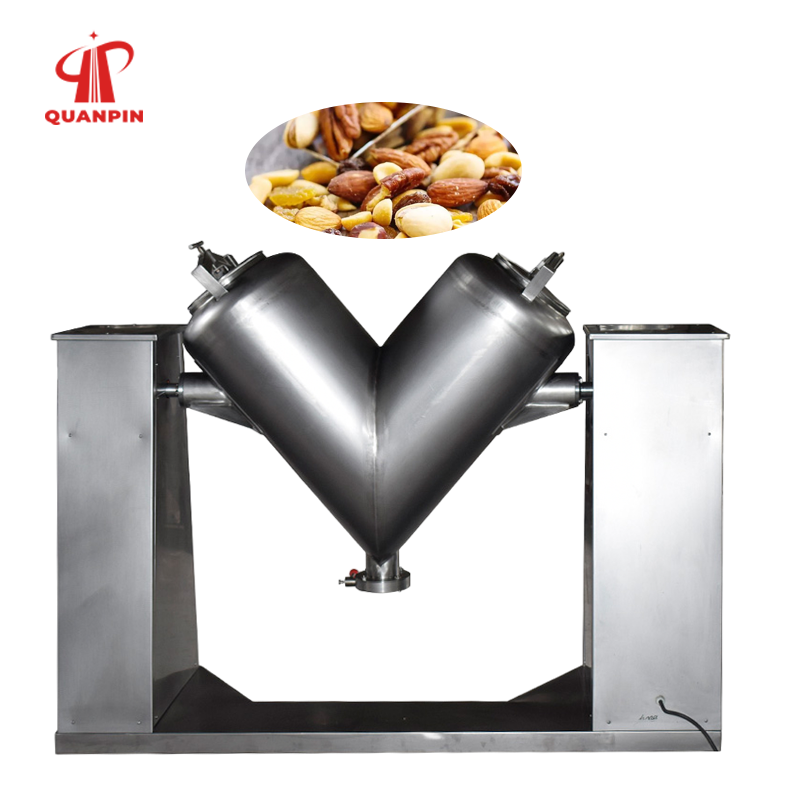
Ingredient loading
The loading opening and transfer route should support the proposed sequence without confusing ingredient identity. The dry blending comparison needs both the sample method and the discharge boundary.
V-shaped vessel
The vessel geometry provides the tumbling space; nominal volume is not the same as a justified working charge. Choose the powder blender arrangement for the documented material rather than a generic vessel-volume claim.
Rotation and drive
The drive and support arrangement must be operated within the supplied equipment procedures.
Access and closure
Where optional accessories are proposed, establish their actual duty before including them in the study description.
Discharge connection
The discharge valve and receiving arrangement define where the blended material leaves the equipment boundary.
Receiving and sampling records
The sampling and analytical methods should be capable of addressing the formulation’s composition question.
Comparison Choices and Process Interfaces
Define the Reference Basis
Compare two charging sequences only after specifying what remains unchanged between the runs. Review the powder mixer interfaces, including charging, sampling and receiving equipment.
If one sequence includes a premix and the other does not, the comparison concerns more than ingredient order.
Preserve the preparation records needed to explain that difference rather than attributing every result to the final mixer.
Keep the Comparison Interpretable
For a low-inclusion ingredient, define its addition and identity controls explicitly.
For ingredients with different handling properties, record bridging or incomplete transfer instead of assuming the weighed mass entered the vessel.
Review discrepancies through the approved material and development procedures before interpreting blend data.
Assess the Receiving Process
A repeat run helps examine reproducibility only when its input and sampling records are comparable. Define how Mixing Equipment connects to the preceding preparation and the next operation.
Changes in analytical preparation can alter observed variability and should not be concealed in a sequence comparison.
Use the complete dataset to decide which loading instruction is supported for the specified formulation.
Industry Application and Acceptance
This application falls within pharmaceutical preparation, where ingredient identity and documented process knowledge are necessary.
The intended product determines which blend attributes need evaluation and how samples should represent the material. A development comparison should not be presented as complete validation of an untested production process. See FDA process validation guidance.
Where granulation follows blending, its performance remains a separate part of the process-development assessment.
An accepted charging sequence should be reviewed when formulation or relevant ingredient properties change.
Benefits and Practical Limits
A documented sequence makes the development run repeatable and gives operators a clearer production instruction. Selection of industrial mixers should include cleaning access and the intended campaign sequence.
It does not prove uniformity by itself or remove the need for appropriate sampling and analysis. Assess relevant quality risks using the actual material and process context. See FDA ICH Q9 quality risk management.
Six Details That Affect the Result
Record ingredient lot and preparation history along with the loading sequence.
Distinguish the planned order from the order actually completed during the trial.
Identify any ingredient left in a transfer container and resolve its disposition.
Keep specimen collection separate from replicate analysis of the same specimen. Interpret measurements through process understanding rather than treating an isolated instrument reading as product acceptance. See FDA process analytical technology framework.
Report individual results so an acceptable average does not hide meaningful differences.
Preserve deviations and corrective actions with the record for the affected blend.
Safety and Operating Requirements
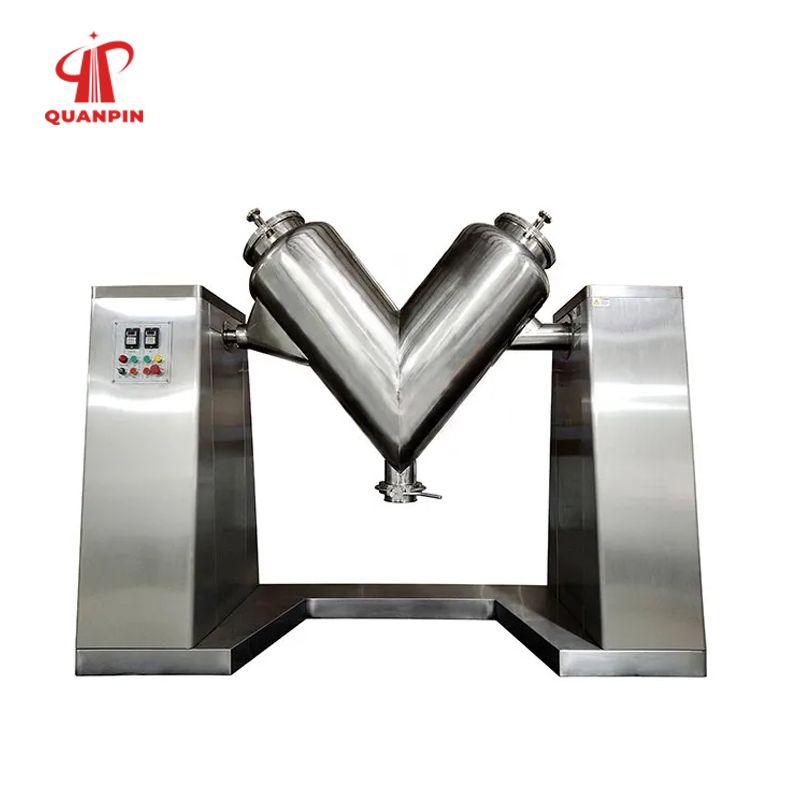
Close and secure the equipment as required before motion; charging and sampling must follow approved procedures.
Assess dust exposure and material hazards separately from the blending-quality comparison.
Prepare Your Equipment Enquiry
Provide QUANPIN with the recipe basis, ingredient properties, proposed sequence and required blend evidence. Specify the evidence required for uniform powder mixing; a favorable visual impression is insufficient where composition matters.
Request a configuration review that covers charging, working load and discharge as well as the main vessel. Compare mixing machines at the same material and acceptance boundary before scaling the working batch. Retain knowledge and manage adopted process changes through the pharmaceutical quality system. See FDA ICH Q10 pharmaceutical quality system.
Frequently Asked Questions
Is there one best ingredient loading order?
There is no universal order suitable for every powder formulation; establish the instruction through relevant development evidence.
Can a new sequence be compared with an older run?
Only when the comparison preserves or explicitly accounts for the changed preparation, load and analytical conditions.
How should a premix be recorded?
A premix should remain an identified operation rather than an undocumented convenience during loading.
Can visual appearance prove uniformity?
No. Visual appearance cannot establish composition where analytical evidence is required.
When should the charging instruction be reviewed?
Review ingredient or formulation changes through the responsible development and quality procedures.
What loading information does QUANPIN need?
Share the actual charging and transfer plan so the proposed V-type configuration can be evaluated against it.
Discuss Your V-Type Mixer Application with QUANPIN
Discuss your application with V-Type Mixer specialists at QUANPIN. Use the enquiry below or our contact page.
Email sales@quanpinmachine.com or stacie@quanpinmachine.com. Call +86 19850785582, or contact us on WhatsApp: +86 15921493205.