Pharmaceutical Pulverizer Unit: Specify Product-Contact Materials for the Actual Excipient
By QUANPIN
Selecting a pharmaceutical pulverizer requires more than asking whether the machine is stainless steel. Identify the full product-contact path and review compatibility with the actual excipient and cleaning procedure. The pulverizer unit duty begins with the required powder rather than an isolated machine setting.
This guide addresses material selection and documentation for excipient grinding. It makes no claim that one alloy, seal or surface finish is suitable for every pharmaceutical formulation. See the matching pharmaceutical industry applications.
Which Surfaces Belong in a Product-Contact Materials Review?
Request an identified product-contact schedule covering the grinding chamber, rotor, transfer path, collectors, seals and any flexible connections.
Review the schedule against material chemistry, cleaning agents, temperature exposure and the product’s contamination requirements before approving construction. Use product-specific development knowledge to justify the attributes being examined. See FDA ICH Q8 pharmaceutical development.
Equipment Principle and Material Requirements
Mechanical impact reduces the prepared feed while the conveying and collection arrangement moves the powder to its destination. In pharmaceutical powder grinding, the feed and product measurement method must be stated together.
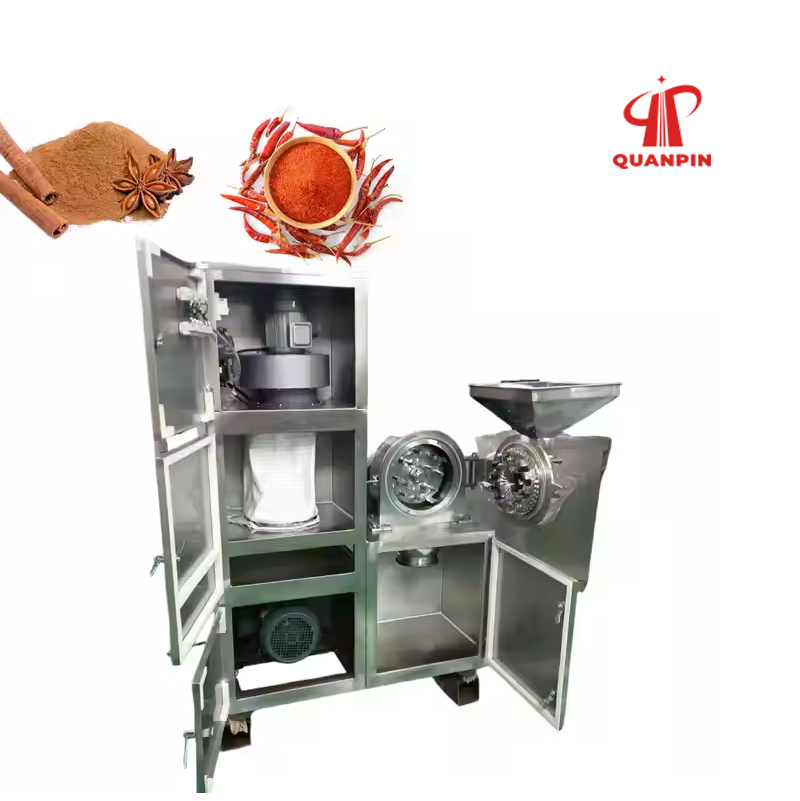
Contact can occur beyond the main grinding chamber. A collector gasket or transfer sleeve can require as much attention as the vessel wall.
Five Steps for the Application Study
Map the contact path
Map every surface that contacts the excipient during charging, grinding, recovery and discharge.
Identify construction documents
Identify construction materials and distinguish supplied documentation from unspecified commercial descriptions.
Record cleaning conditions
List the intended cleaning and drying conditions, including approved agents and contact duration where these are already defined.
Review application compatibility
Review compatibility and contamination risks with the responsible technical and quality personnel.
Control substitutions
Resolve material substitutions through the agreed change process before accepting the delivered equipment.
Four Process Boundaries to Record
Main unit: identify the grinding and discharge surfaces rather than relying on the external frame material.
Powder path: include ducts and collectors within the supplied product-contact boundary.
Nonmetallic parts: record seals, sleeves and filter media separately from the steel specification.
Cleaning contact: a surface encounters the cleaning system as well as the production powder.
Pharmaceutical Pulverizer Unit Components and Interfaces
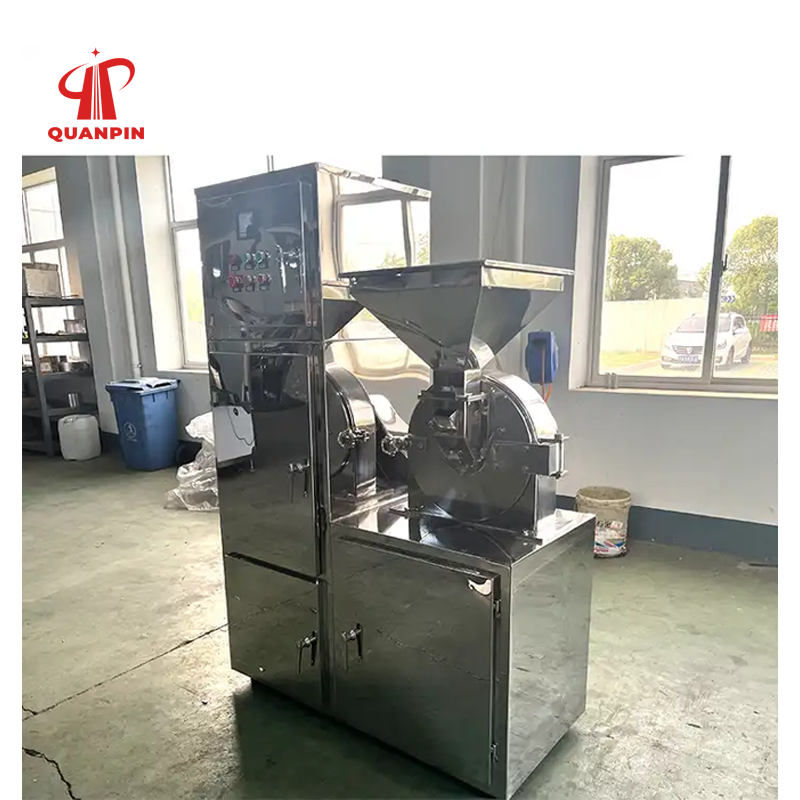
Feed inlet
The charging interface should have a clear material identity for any hopper, valve or transfer connection contacting powder. Evaluate impact milling against the incoming and accepted distributions, with the collection boundary defined. Review cleaning evidence for the actual product-contact path; identifying an alloy alone does not establish a validated cleaning process. See FDA inspection guide to cleaning-process validation.
Impact and cutting chamber
Grinding elements experience mechanical service; their construction and inspection requirements should be stated for the proposed duty. The powder collection assessment should include retained inventory and separately collected fractions.
Conveying air system
The chamber needs practical inspection access so deposits or damage are not concealed behind an attractive external finish.
Cyclone separation
Conveying connections should be included in the compatibility review, including flexible components where fitted.
Bag collection
The collector and discharge arrangement need their own materials schedule and cleaning access description.
Discharge and balance records
Instrument fittings and seals can create additional contact surfaces; review the actual drawing rather than a simplified product photograph.
Comparison Choices and Process Interfaces
Define the Reference Basis
A dry-only service and a frequently wet-cleaned campaign can expose the same equipment to different conditions. Downstream dry blending needs powder whose relevant properties remain traceable after size reduction.
Where cleaning conditions are still being developed, identify the unresolved compatibility question instead of asserting approval.
A supplier material certificate supports identity documentation but does not establish suitability for every cleaning agent.
Keep the Comparison Interpretable
For a proposed alloy change, review which surfaces change and whether fabrication or finish also changes.
For a seal change, consider its actual contact and cleaning exposure rather than assuming equivalence from color or dimensions.
Document the responsible approval and the configuration to which that decision applies.
Assess the Receiving Process
Inspection before use should follow the agreed equipment procedure and scope. A receiving powder blender is a separate operation; its uniformity cannot be inferred from the mill result alone.
Any observation of wear or surface damage requires an investigation appropriate to the material and process.
An acceptable product sample from one run cannot establish long-term compatibility of every contact component.
Industry Application and Acceptance
The industry context is medical excipient preparation within pharmaceutical manufacturing.
Product-contact selection contributes to the process quality strategy alongside material identity, cleaning and maintenance controls. A development comparison should not be presented as complete validation of an untested production process. See FDA process validation guidance.
The finished excipient still requires the tests defined for its intended formulation use.
If the next operation uses different contact materials, review that transfer separately rather than extending the pulverizer approval automatically.
Benefits and Practical Limits
A clear contact schedule makes quotations comparable and reduces ambiguity when replacement parts are ordered. Check whether transfer into the specified powder mixer changes segregation or handling behavior.
It cannot replace product-specific compatibility evidence or confer regulatory certification on the equipment. Assess relevant quality risks using the actual material and process context. See FDA ICH Q9 quality risk management.
Six Details That Affect the Result
Separate the external housing specification from the internal product-contact specification.
Keep material grades and document references traceable to the actual supplied components.
Identify any optional filter or discharge accessory excluded from the main quotation.
Define how replacement parts will preserve the approved construction basis.
Retain the approved cleaning conditions with the compatibility decision.
Reassess unexpected contamination or damage using the actual equipment and material records.
Safety and Operating Requirements
Isolate the machine through the approved procedure before opening, inspecting or replacing contact components.
Material compatibility does not by itself establish containment, dust protection or safe maintenance access.
Prepare Your Equipment Enquiry
Supply QUANPIN with the excipient identity, relevant chemistry, cleaning procedure and required construction documentation. Define the interface with downstream Mixing Equipment rather than treating grinding and blending as one machine duty.
Ask the proposal to identify the product-contact boundary and unresolved selections, including seals and powder recovery accessories. Where granulation follows milling, assess that later product independently under its own acceptance plan. Retain knowledge and manage adopted process changes through the pharmaceutical quality system. See FDA ICH Q10 pharmaceutical quality system.
Frequently Asked Questions
Is a stainless-steel description sufficient?
No. A general stainless-steel description leaves the alloy, nonmetallic parts and supplied boundary unresolved.
Which seals belong in the review?
Include any seal that contacts the product or can affect it under the proposed operating and cleaning conditions.
Can cleaning changes affect compatibility?
They may, particularly when cleaning agents, temperature or contact duration differ from the original reviewed conditions.
Does a certificate establish application suitability?
No. Material identity evidence and application compatibility evidence answer different questions.
What if the cleaning method is unresolved?
Identify a review point before equipment approval; do not invent cleaning conditions merely to complete a quotation.
How can QUANPIN review the construction duty?
Share the contact schedule requirements and process conditions so the proposed construction can be reviewed explicitly.
Discuss Your Pharmaceutical Pulverizer Unit Application with QUANPIN
Discuss your application with Pharmaceutical Pulverizer Unit specialists at QUANPIN. Use the enquiry below or our contact page.
Email sales@quanpinmachine.com or stacie@quanpinmachine.com. Call +86 19850785582, or contact us on WhatsApp: +86 15921493205.