Double Cone Dryer for Heat-Sensitive Materials: Verify Temperature Exposure
Choosing a double cone dryer for heat-sensitive materials requires evidence about the product’s temperature exposure and quality after drying. Vacuum operation may allow evaporation at a lower temperature, but it does not prove that every part of a batch stays within a material’s limit. Define what heat sensitivity means for your product and use that definition to guide a representative drying trial.
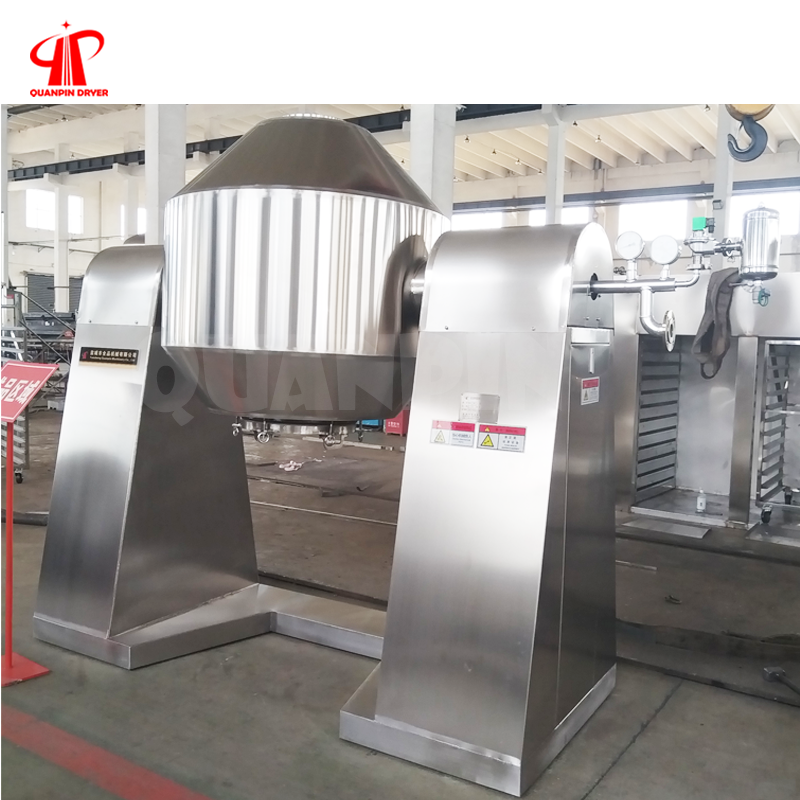
Turn heat sensitivity into a measurable requirement
Identify the product attribute that changes with heat: it may be color, assay, aroma, structure or another measurable property. Provide the allowable limit and the agreed measurement method. If an acceptable temperature and exposure duration are not established, request a process review before treating a heating setpoint as a validated product limit.
BUCHI explains the relationship between reduced pressure and solvent boiling temperature in its vacuum technology guidance. That general relationship supports a vacuum drying evaluation. It does not supply operating values for a QUANPIN dryer or demonstrate preservation of a particular ingredient.
Separate heating conditions from product conditions
A double cone rotary vacuum dryer uses a rotating vessel and indirect heating. Ask where temperature and pressure are measured in the proposed configuration. A heating-medium reading and a product reading describe different conditions; agree which measurements the trial can actually provide.
As moisture changes, the material’s behavior and drying rate can change. Review the complete drying period and any required cooling or holding stage. Ask the supplier how the proposed measurement arrangement works with a rotating vessel. Do not assume that a quotation includes direct product temperature measurement unless it is specified.
Use representative loading and quality tests
For a double cone vacuum dryer evaluation, provide wet feed from the intended process and document its starting moisture and consistency. Agree the loading condition and the observations needed to confirm that the charge moves as intended. Include any limits on particle damage or agglomeration in the trial brief.
Check final moisture alongside the heat-sensitive quality attribute, using an agreed sampling plan. Record drying conditions and duration so the results can be interpreted. If a smaller trial uses different loading or heat-transfer conditions, request an explanation of what the trial establishes and what remains to be confirmed for production.
Clarify the proposed design before ordering
In a double cone vacuum dryer design review, ask for the heating scope, vapor handling, controls, sampling arrangement and unloading or cooling sequence. Specify the removable liquid and any atmosphere requirements. Neither a vacuum label nor a low heating setpoint is a substitute for a material-specific assessment.
Browse the QUANPIN drying equipment range and company website. Submit a heat-sensitive material brief with the quality limit, feed condition, moisture target and available trial sample to discuss a suitable evaluation.