Spray Dryer Wall Deposition: Build a Useful Troubleshooting Record
Spray dryer wall deposition should be investigated as a change in the complete drying process. Record where deposits appear, when they begin and what changed in the feed or operating sequence. For a centrifugal spray dryer, review atomizer condition together with feed preparation and air handling. Spray dryer inlet and outlet temperature readings are useful context, but neither reading alone explains why material remains on a wall. Spray dryer particle size control should be assessed alongside moisture, recovery and deposit formation. Review spray drying equipment against representative powder drying trials and the product limits relevant to heat-sensitive material drying.
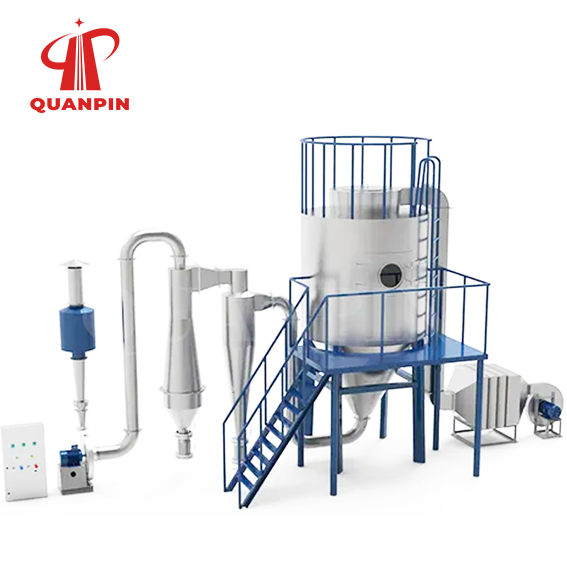
Separate the Symptom from the Suspected Cause
Describe the deposit before proposing a setting change: location, appearance, approximate buildup pattern and the operating stage when it was observed. Compare observations across runs with the same formulation. A deposit near a feed transition may require a different investigation from material that accumulates gradually during steady operation.
Keep an event timeline containing batch identity, feed concentration and viscosity measurements, cleaning status, operating readings and product sampling times. Note whether the issue followed a change in formulation, feed preparation, atomizer components or start-up sequence. Missing records should remain identified as missing rather than reconstructed as precise values.
Review Feed and Atomization Together
Check whether the feed remained consistent between the stable run and the affected run. Settling, separation or changing concentration can make a nominally identical formulation behave differently. Ask the equipment supplier which feed measurements are relevant to the installed atomization arrangement and how they should be taken.
Follow the manufacturer-approved inspection procedure for the atomizer and feed path. A suspected wear or assembly issue needs an equipment-specific assessment. Do not assume that changing speed, feed rate or a component size will solve every deposit problem. Collect evidence before altering the approved operating envelope.
Include Start-up, Shutdown and Feed Changes
Treat feed switching, flushing and shutdown as part of the investigation, not merely the steady production period. GEA describes residual-feed purging in a dairy spray-dryer system as a way to address deposits associated with that specific arrangement. This is background on transition behavior, not evidence that the same system or result applies to a QUANPIN dryer.
Where combustible powder or other process hazards are present, use the site hazard assessment and approved shutdown rules. Do not enter the chamber, open equipment or perform cleaning while it is in an unsafe condition. A deposit investigation is not a reason to bypass interlocks or continue an abnormal run.
Evaluate a Change against More than Deposit Appearance
Agree a controlled trial with the process team. Record the factor changed, the comparable feed conditions and the observations that will determine success. Review outlet moisture, particle properties, recovered product and cleaning needs together. A cleaner-looking wall does not by itself prove that the product specification or production target is met.
Request a trial report that identifies uncertainty and the system boundary. GEA’s virtual spray-dryer testing brochure discusses why plant changes and wall deposits can require more careful evaluation than casual adjustment. Supplier studies for another plant cannot establish performance for your material.
Discuss the Required Equipment Scope
For related preparation, read the nozzle clogging investigation guide. Review the QUANPIN equipment range and company website, then send an application inquiry with your material, production requirements and the questions you need the proposal to answer.