Vacuum Paddle Dryer vs Double Cone Dryer: Compare Material Movement
A vacuum paddle dryer vs double cone dryer decision should start with how the material behaves while losing liquid. Paddle agitation moves material inside a vessel; a double cone arrangement turns the vessel to tumble the charge. Both can be considered for vacuum drying, but that shared label does not make their material handling interchangeable. Evaluate the wet, intermediate and dry stages before selecting the equipment. For low-temperature vacuum drying, review the proposed vacuum dryer and industrial vacuum dryer system against the actual limits relevant to heat-sensitive material drying.
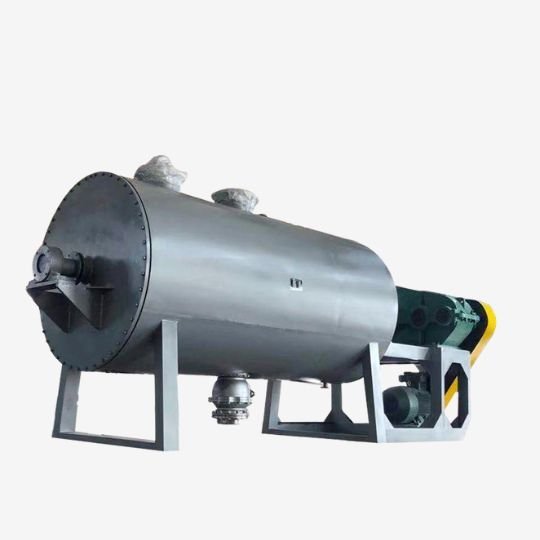
What moves the material?
In the QUANPIN vacuum paddle dryer, the proposed agitation arrangement is central to the process review. Ask how the paddles move your material and how the selected configuration provides heating. Request a drawing that identifies the surfaces and components included in the quoted model.
A double cone rotary vacuum dryer rotates its vessel to tumble the load. Ask the supplier to assess whether your feed can move as intended at the proposed loading condition. A photograph of a rotating vessel does not show whether a particular wet charge will tumble, adhere to the wall or form persistent lumps.
Evaluate changes during drying
Describe the feed’s consistency at loading and any observed transition to sticky, lumpy or free-flowing material. Include particle fragility if product breakage matters. Supplier review should address those changes rather than evaluating only the final dry powder.
For a vacuum paddle dryer trial, record whether material accumulates in parts of the vessel and whether the intended movement remains effective. For a double cone vacuum dryer trial, observe tumbling and the ease of emptying the dried load. These are proposed acceptance observations, not guarantees about which design will handle an untested material better.
Measure quality and recoverable yield
Use the same starting material and agree moisture and product quality tests for both options. If particle size matters, measure it before and after drying. Record the discharged product and retained material separately. A low final moisture value can coexist with difficult discharge or excessive retained product.
Review cleaning access, sampling, loading height and the receiving container arrangement. Ask how operators carry out these tasks safely in the proposed installation. Describe vapor handling requirements separately from material movement: a suitable mixing mechanism does not establish vacuum-system capacity or solvent recovery performance.
Choose using an agreed trial brief
Explore the industrial dryer catalogue and QUANPIN company information. Send a material movement review request with feed consistency, moisture target, particle quality requirements and discharge expectations. Ask for a representative test and documented results before comparing purchase scope.