Vacuum Tray Dryer vs Hot Air Tray Dryer: Match the Drying Environment
In a vacuum tray dryer vs hot air tray dryer comparison, the key question is which drying environment fits the material and the finished product requirements. Vacuum equipment dries a stationary tray load under reduced pressure. Hot air equipment circulates heated air around a tray load. Compare quality and total batch turnaround using representative material, rather than assuming that one method is always faster or gentler. For low-temperature vacuum drying, review the proposed vacuum dryer and industrial vacuum dryer system against the actual limits relevant to heat-sensitive material drying.
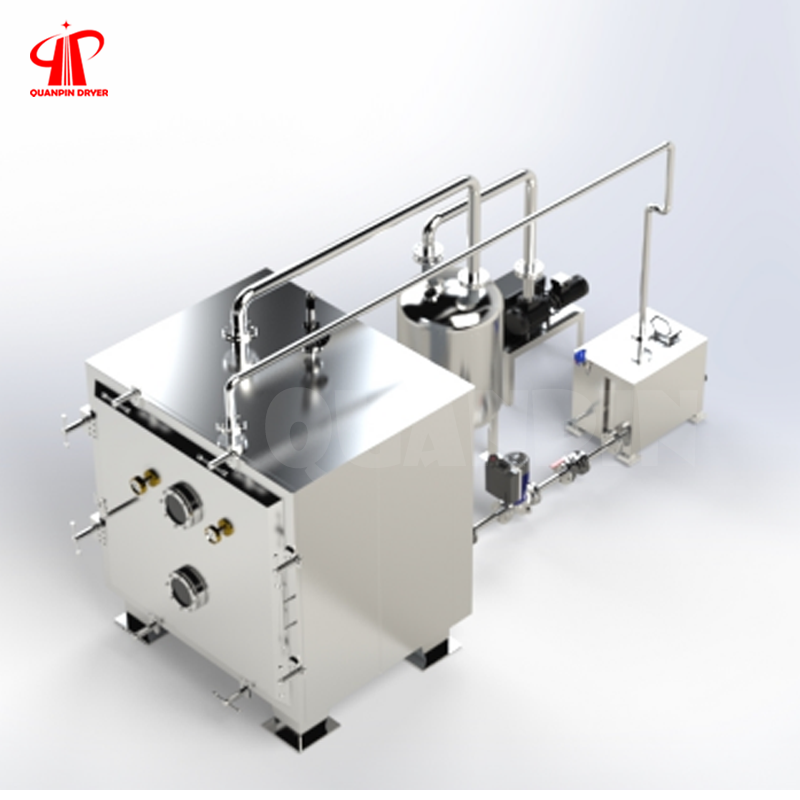
Match pressure and atmosphere to the material
Reduced pressure can lower a solvent’s boiling temperature, as explained in BUCHI’s discussion of vacuum and solvent behavior. That principle does not mean a vacuum tray process is freeze drying, nor does it set a safe product temperature. Heat transfer, material condition and exposure time still need evaluation.
A vacuum tray dryer therefore needs a material-specific pressure, heating and vapor-handling review. If oxidation or solvent handling is a concern, tell the supplier what is being removed and which product properties must be preserved. Reduced pressure alone does not establish an oxygen-free atmosphere or a complete solvent recovery system.
For a hot air circulation oven, define the acceptable temperature exposure and the air or exhaust conditions relevant to the material. Confirm that the proposed system is suitable for the stated feed. Do not put solvent-bearing material into a generic hot air oven on the assumption that an exhaust connection makes it suitable.
Control loading before judging the equipment
Keep the starting moisture, tray fill depth and material preparation documented. A test with a thin layer does not validate a substantially thicker production load. For vacuum tray drying, inspect differences between trays and across the load. For hot air drying, include tray positions that help reveal differences in airflow exposure.
Define how moisture is measured and which locations are sampled. Include quality checks relevant to the buyer: color, assay, texture or another specified attribute. The chosen tests should reflect the actual product; a dry appearance is not a moisture measurement.
Compare the entire batch cycle
Request a timeline that includes loading, drying, any required cooling, unloading and cleaning. Ask which utilities and auxiliaries are included in the quotation. Vacuum pumps, vapor treatment, heating and air handling should have clear scope boundaries. Evaluate operators’ access to trays and cleaning surfaces as well as the drying stage.
Make the selection brief specific
Review the QUANPIN product range and company profile, then request a drying environment review. Provide the material, removable liquid, tray loading plan, quality limits and required batch schedule so that the comparison can be based on a relevant test.