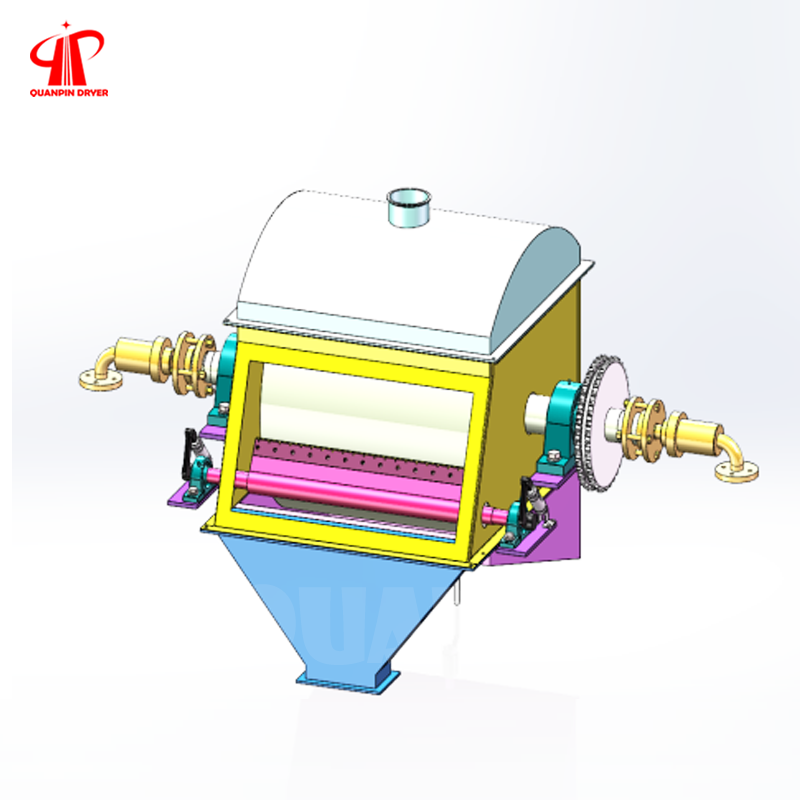
Drum Scraper Dryer Trials: Film Formation and Finished Product Checks
A drum scraper dryer trial should show how the actual feed forms a layer, dries on the heated surface and leaves the scraper. Material that spreads well initially may still be difficult to remove or handle after drying. Define finished-product requirements before deciding which observations demonstrate success. Review the drum scraper dryer using film-formation and discharge trials: drum dryers rely on conductive drying, and thin-film drying behaviour depends on the actual feed.
Connect the feed to the drying surface
Describe solids content, viscosity at the relevant temperature and any settling or lumps. Explain preparation and holding arrangements. Provide representative samples rather than a specially adjusted feed that production cannot reproduce.
QUANPIN describes drum drying equipment as applying material to a heated rotating surface, followed by scraper discharge. Consider the feed arrangement, drum conditions and layer behavior together. The proposal should state its assumptions about these inputs.
Observe the layer throughout the trial
The drum dryer working principle involves contact heat transfer through the rotating surface. Ask the supplier to record how material spreads, whether the layer varies and what changes as moisture is removed. Evaluate film behavior directly instead of assuming a thickness from another feed.
The trial must identify the actual feed mechanism and equipment configuration. A diagram of another manufacturer’s dryer can explain a general concept, but cannot establish the hardware or performance of the quoted QUANPIN configuration.
Assess scraping and collected product
Define the acceptable finished form and next operation. Record whether the collected material can be conveyed, cooled, milled or packaged as planned. Appearance alone may not establish final moisture or other quality requirements.
Ask how the scraper arrangement will be inspected and maintained according to the equipment procedure. Do not specify blade adjustments from a photograph or adjust components while the system operates. Document trial outcomes within the supplier’s approved procedure.
Separate observations from performance estimates
Request measured feed and discharge information, the endpoint analysis method and a description of material retained in the system. Record trial duration and interruptions. Ask which results are measured and which are estimates for a different installation.
Include cleaning and product changeovers in the discussion. Contact surfaces, feed connections and discharge areas may require different access arrangements. Identify maintenance space in the installation proposal.
Compare quotations on a shared basis
Compare drum scraper dryer price using the same feed, required output, endpoint and supply boundaries. Confirm heating interfaces, exhaust requirements, controls, discharge equipment and buyer responsibilities.
Send QUANPIN the material information, intended product form, utilities, layout constraints and acceptance criteria. Use a representative trial to resolve uncertain behavior before interpreting a quotation as a production commitment.
Review the QUANPIN equipment page, explore the drying equipment range, learn about QUANPIN, or send your process requirements.