Drum Drying vs Spray Drying: Choose by Feed Behavior and Finished Product
The decision in drum drying vs spray drying starts with how the wet feed behaves and what the customer needs from the finished material. A drum process spreads material on a heated surface and removes a dried layer. Spray drying disperses a liquid feed into droplets that dry in a chamber. Neither route has a universal quality or cost advantage: a useful comparison follows the same feed sample through drying, collection and any required finishing.
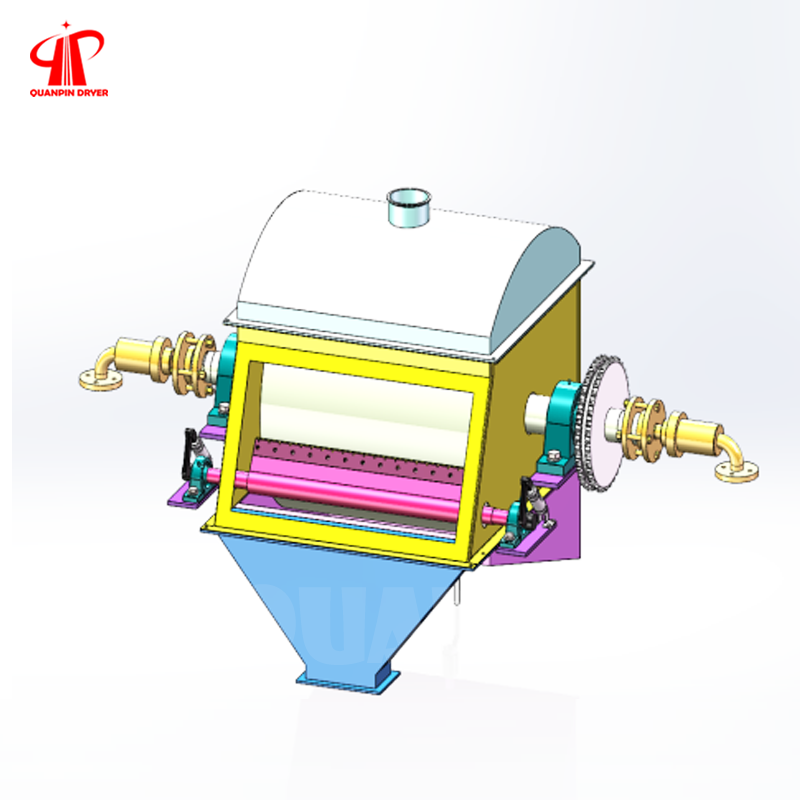
Define the product you need to sell
State the acceptable moisture range, particle size, bulk density, handling behavior and quality attributes before comparing machines. A scraped film may need further size reduction to meet a powder specification. An atomized powder still needs checks for fines, wall deposits and collection losses. Include those downstream steps in the comparison; the dryer outlet alone does not establish whether a product is ready for packaging.
Can the feed form a stable film or spray?
For a drum scraper dryer, examine spreading, adhesion during drying and release at the scraper. Feed consistency can change those behaviors. ANDRITZ describes film application, contact drying and scraping in its drum dryer technical brochure; its published specifications apply to its equipment.
For a centrifugal spray dryer, ask whether the intended concentrate can be delivered consistently to the rotary atomizer. A pressure spray dryer requires a feed and pumping arrangement suited to its nozzle. Provide viscosity at the relevant feed temperature, solids concentration, suspended solids and a description of settling or separation. These are inputs for a supplier review, rather than proof that either machine will work.
Compare trials with the same acceptance criteria
Use representative feed and agree how samples will be collected. Record feed properties, output moisture, saleable yield, retained material, cleaning observations and the finished product tests. Include changes in feed concentration that production is likely to encounter. Avoid treating a short successful run as evidence of an entire production campaign.
Request utility measurements with clear boundaries: heating, feed preparation, air handling, collection and finishing should be identified. If one proposal excludes grinding or powder collection while another includes them, adjust the scope before comparing totals. Do not infer energy use or production capacity from the equipment name.
Bring a clear comparison brief
Browse the QUANPIN equipment range and company website, then send a process inquiry with feed properties, product requirements and the downstream steps you expect. Ask for a material-specific trial plan before choosing the drying route.