Vacuum Rake Dryer for Filter Cakes: Process and Selection Checks
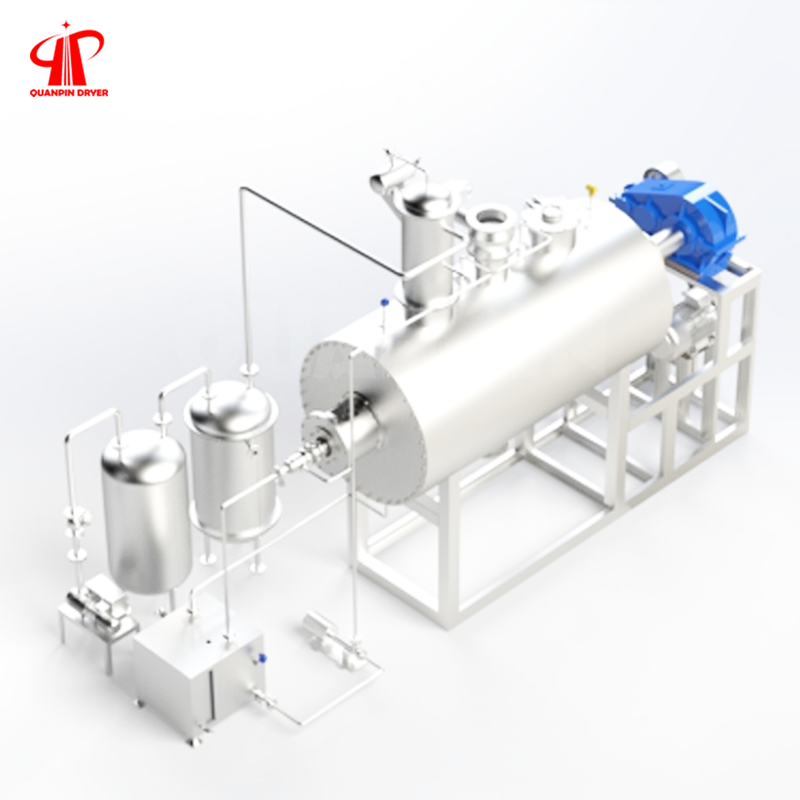
A vacuum rake dryer for filter cakes combines indirect heating, mechanical agitation and reduced pressure inside an enclosed vessel. Also called a vacuum harrow dryer, it requires assessment of how the cake behaves as it heats and dries. Compare rake vacuum drying machine details with vacuum paddle dryer options before selecting the handling arrangement. Representative material data and trials should establish the final moisture, vapor-handling and cleaning requirements; the term filter cake alone does not determine suitability.
Filter cakes vary in composition, liquid content, particle structure, and stickiness. Two cakes from different filtration or washing conditions can behave differently in the same dryer. Before comparing equipment, record the material and process conditions that will affect charging, mixing, heat transfer, vapor removal, and discharge.
Start with the Feed Cake
Describe the cake at the dryer inlet, including its composition, batch mass, moisture or solvent content, bulk behavior, and variation between batches. Note whether it arrives as a cohesive mass, crumbly cake, paste, or mixture of these forms. If the material changes during drying, record when it becomes sticky, friable, dusty, or difficult to move.
Also identify temperature-sensitive ingredients, residual solvents, corrosive components, and any product-contact or cleaning requirements. These details influence the materials of construction, seals, operating limits, vapor path, and the safe method of discharge. Confirm them with the process and safety teams.
Questions That Shape the Dryer Configuration
- What must the final product be? Define target moisture or solvent content, acceptable uniformity, particle condition, and the downstream handling step.
- How much material is processed per batch? State normal and peak batch size, operating schedule, and upstream variability. Equipment sizing requires more than a nominal capacity label.
- What temperature limits apply? Provide the product’s allowable temperature range and the available heating utility. Do not assume a standard jacket temperature from another application.
- What vapor load is expected? Estimate the liquid to be removed and identify whether vapors require condensation, recovery, treatment, or another controlled route. Solvent identity and process safety conditions matter.
- How will the dry cake leave the vessel? Specify the desired discharge form and the interface with conveying, cooling, milling, or packaging equipment.
- How will the equipment be cleaned and inspected? Confirm product-contact materials, access, cleaning method, inspection frequency, and any cross-contamination limits.
Why Agitation and Vacuum Must Be Considered Together
A rake agitator moves the material while heat is supplied indirectly through the dryer’s designed heated surfaces. Reduced pressure can change evaporation conditions, but achievable drying performance depends on the complete system: the cake, heat-transfer arrangement, vapor flow, condenser or treatment equipment, and vacuum source all interact.
Agitation may help expose material to heated surfaces and redistribute a changing cake. The needed motion and residence time are application-dependent. Excessive assumptions about mixing, heat sensitivity, or drying time can create a poor specification. Ask the supplier which facts are measured, which are estimated, and which need to be confirmed with a material trial.
When to Compare Other Dryer Types
Compare alternatives when the cake must remain nearly static, when the material flows freely after drying, when batch handling is preferred, or when another unit operation needs to be integrated. A tray-type unit, a rotating vessel, or another agitated dryer may be more appropriate depending on material movement, cleaning, heat-transfer needs, and production scale. A comparison should use the same feed data and target product for each option.
QUANPIN’s Vacuum Harrow (Rake) Dryer page describes the relevant equipment family. Review the Double Cone Rotary Vacuum Dryer when a rotating-vessel configuration is also under consideration.
Compare Supplier Proposals on the Same Cake Basis
| Input | State in the inquiry | Decision it informs |
|---|---|---|
| Liquid content | Initial and target values, method and wet or dry basis | Liquid removal duty and endpoint comparison |
| Material movement | Cake form at charging, sticky stage and discharge | Agitator suitability and unloading |
| Vapor route | Water or identified solvent, condensation and treatment scope | Vacuum system boundary and recovery needs |
| Acceptance | Sample plan, residual liquid limit and product condition | Trial evidence and the proposed acceptance test |
List the dryer, condenser, vacuum equipment and treatment items included in each quotation. An equipment name alone does not define the complete drying system.
Prepare a Useful Supplier Inquiry
A practical inquiry includes a representative feed sample or complete material description, batch size, initial and final moisture targets, temperature limits, heating utility, vapor or solvent requirements, cleaning expectations, and installation constraints. Include a process flow sketch if the dryer connects to filtration, condensation, solvent recovery, or downstream handling.
The supplier can then identify missing data, recommend trial conditions, and state which design values remain provisional. For an application review, contact QUANPIN with these process details.
References
- Tsukishima Kikai, filtering and drying machine process overview (background on cake washing and drying equipment; not a specification for a rake dryer).