Hot Air Tray Dryer for Herbs: Airflow, Loading, and Quality Checks
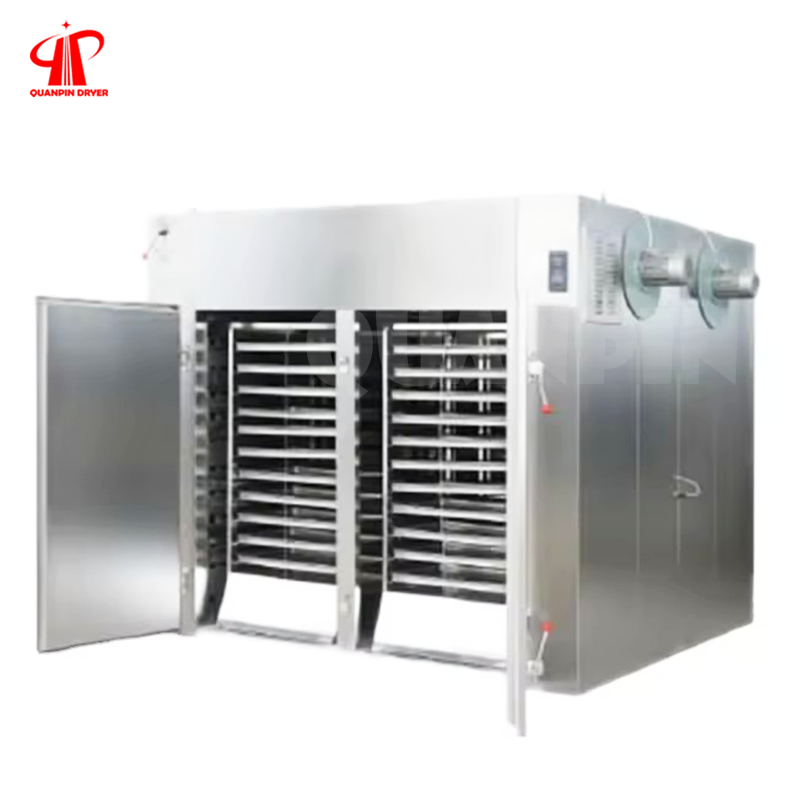
A hot air tray dryer for herbs should be evaluated around the plant material, required quality and airflow through loaded trays. A hot air drying oven must be reviewed for loading depth, moisture exhaust, hygiene and acceptable color, aroma and texture. Compare vacuum tray dryer requirements when a reduced-pressure route is being considered; the two processes are different. Establish tray dryer drying time from the specific herb and loading arrangement rather than temperature alone. Compare hot air ovens using a representative working load; hot-air circulation drying and batch oven drying trials should check uniformity across the hot air circulation oven.
Herbs differ in leaf size, stem content, initial moisture, and sensitivity to heat. A production process should therefore be developed with representative material and a defined endpoint. Guidance written for household dehydrators can explain basic principles, but its settings should not be copied directly into an industrial dryer specification.
What to Define Before Choosing the Dryer
- Herb and plant part: identify the species, whether leaves, flowers, stems, or a mixture are dried, and how much the incoming material varies.
- Feed condition: record the incoming moisture, washing or preparation steps, drainage time, and whether the product is loose or bundled.
- Product-quality targets: define the desired final moisture or water activity using the method appropriate to the product, together with color, aroma, appearance, and downstream requirements.
- Batch and tray loading: establish batch mass, tray dimensions, layer depth, spacing, and load arrangement. Uneven loading can produce different drying conditions across the chamber.
- Air and heat requirements: specify the operating range to be validated, air circulation needs, humidity removal, and the available heat source. The design should support the process rather than rely on a single temperature setpoint.
- Cleaning and separation: plan how trays, chamber surfaces, and product-contact areas will be cleaned between herbs or lots.
Why Tray Loading and Air Distribution Matter
The air must reach the product and carry away moisture. If trays are overloaded or material is packed too densely, airflow paths can be restricted and drying may vary from tray to tray. A shallow, consistent layer is a useful starting point for trials, but the final loading pattern must be tested in the intended equipment with the actual plant material.
Check the product at multiple chamber positions during validation. Record tray location, material depth, drying time, and the measured endpoint. If results vary, investigate loading uniformity, airflow distribution, sensor position, and how moist exhaust air leaves the chamber before simply increasing heat.
Build a Product-Specific Drying Protocol
- Define measurable product-quality and moisture endpoints before the trial.
- Prepare and drain the herbs consistently, and record the condition of each test batch.
- Load trays to a repeatable depth and keep a map of tray positions in the chamber.
- Run controlled trials within equipment and product limits. Change one process factor at a time where practical, and record temperature, time, airflow settings, and humidity or exhaust observations that the system can measure.
- Sample more than one tray location and evaluate both the moisture endpoint and the qualities important to the customer or next process.
- Repeat the trial to confirm the process is reproducible before writing production instructions.
Do not treat brittle leaves or a household recipe as a universal industrial endpoint. The target depends on the intended use, storage, packaging, analytical method, and applicable product requirements. Food safety and microbiological controls should be set with the qualified process and quality teams.
Map the Batch Before Setting a Drying Time
| Trial record | What to record | How it supports selection |
|---|---|---|
| Incoming herb | Species, plant part, lot and preparation | Separates raw material variation from equipment effects |
| Tray map | Position, batch mass and loading depth | Shows whether wetter samples cluster in a chamber location |
| Endpoint samples | Method, position and moisture or water activity result | Checks the agreed endpoint rather than elapsed time |
| Product quality | Color, aroma, texture and customer acceptance criteria | Identifies conditions that dry sufficiently but damage quality |
Agree sampling with the quality team and repeat a trial using the same loading arrangement before approving production settings.
Cleaning, Records, and Change Control
Herb aromas can transfer between products, and plant debris may remain on trays or chamber surfaces. Define a cleaning method and inspection check that match the product and site hygiene program. Keep records for the herb type, raw-material lot, tray loading, process run, product tests, cleaning, and deviations. Reassess the protocol when the plant source, particle size, batch size, or equipment configuration changes.
QUANPIN offers a Hot Air Circulation Oven for batch drying applications. The correct configuration and process conditions depend on the material and production requirements. See the Food Drying application page, or contact QUANPIN to discuss a representative herb, batch size, and quality target.
References
- NC State Extension, Medicinal Herbs for Commerce: How to Grow.
- National Center for Home Food Preservation, Herbs (basic drying principles, not industrial process settings).