WFJ Fine Pulverizer: Distinguish Laboratory Dispersion from Actual Excipient Grinding
By QUANPIN
A different particle-size report can come from a different laboratory preparation, even when the collected powder has not changed. Establish the dispersion method before adjusting a WFJ milling trial. The fine pulverizer duty begins with the required powder rather than an isolated machine setting.
This guide follows pharmaceutical excipient powder from collection to analysis. The objective is a defensible comparison between processing changes and changes introduced while preparing the test specimen. This application belongs to our pharmaceutical processing industry scope.
Which Particle State Is Being Measured?
Dispersion separates particles for measurement. Grinding changes feed through mechanical size reduction; a laboratory procedure should not silently become an additional milling operation.
An agglomerate and an individual particle can contribute differently to the reported distribution. Specify what the method is intended to measure before deciding which preparation represents the product.
Equipment Principle and Material History
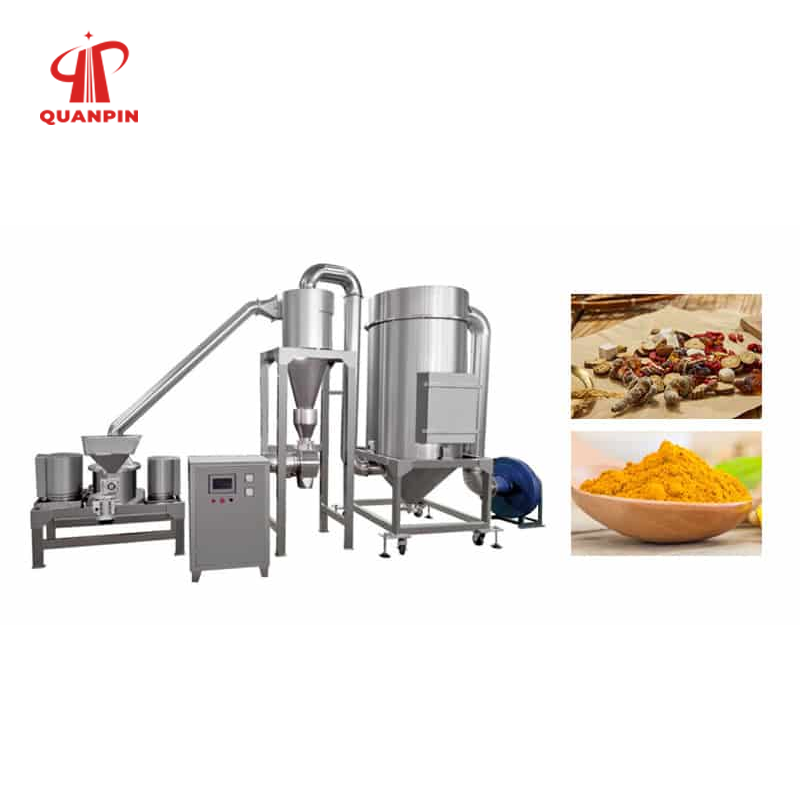
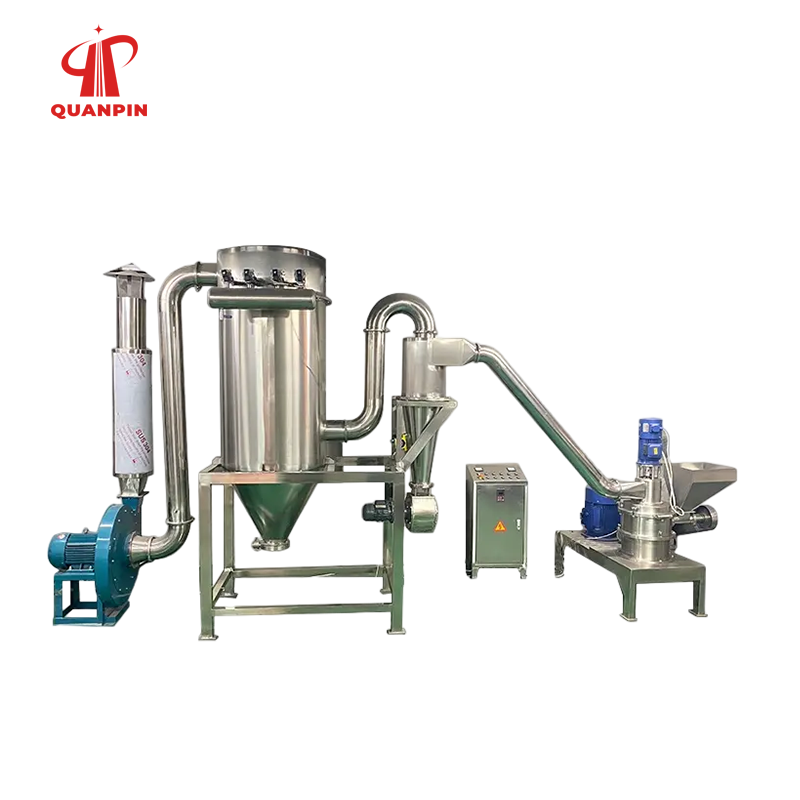
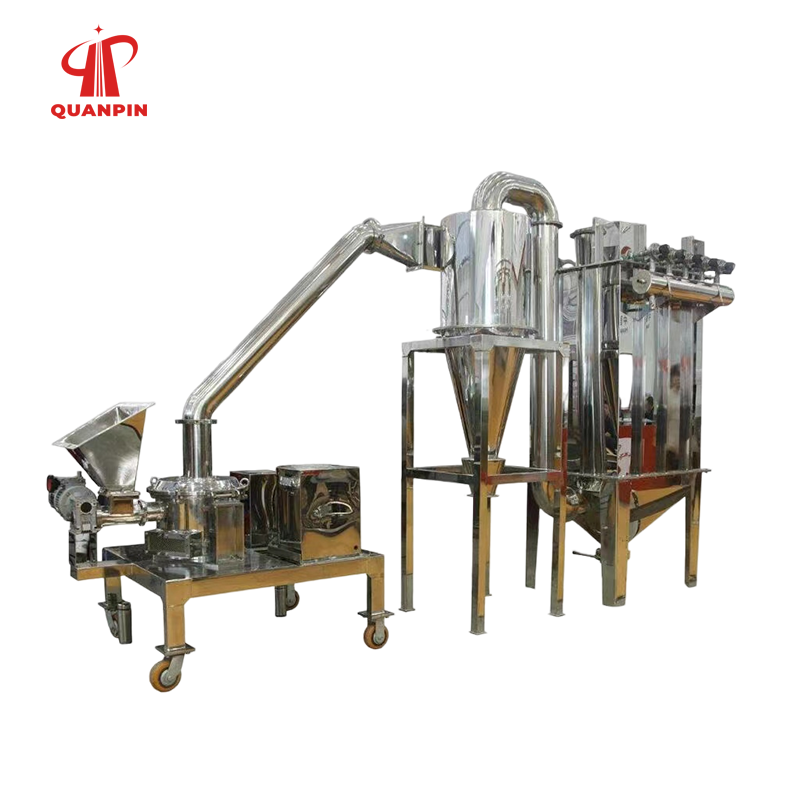
The WFJ arrangement combines grinding, classification and powder collection. A sample taken from its product outlet still needs a defined preparation before its measured size becomes comparable. In pharmaceutical milling, the feed and product measurement method must be stated together.
Laboratory dispersion is outside the grinding chamber. A changed dispersant, mixing treatment or instrument preparation can complicate interpretation without demonstrating a changed machine result.
A Trial Sequence for This Application
Identify the powder being measured
Choose a representative collected powder and record its lot, outlet and collection period. Keep a retained portion before laboratory treatment.
Record the dispersion procedure
Write down the preparation medium or dry-dispersion arrangement. Include the actual method settings and any justified conditioning steps.
Compare matched retained portions
Prepare matched portions using the established method. A method comparison should identify which preparation variable changed while keeping the powder source fixed.
Review the complete distribution
Review the complete distribution and the instrument’s applicable quality checks. Do not choose a favorable single percentile while ignoring a conflicting coarse or fine fraction.
Separate measurement and milling changes
Repeat an appropriate comparison on independently collected material before attributing the difference to a grinding adjustment. Keep measurement uncertainty visible in the interpretation.
Four Observation Boundaries
Before collection, identify whether the relevant product is one outlet or an accepted combination. A laboratory method cannot correct an unrepresentative source sample.
During preparation, track every action that could disperse, dissolve or damage the specimen. Compatibility with the test medium needs a material-specific review.
During measurement, preserve the method version and reporting basis. Results from different preparation procedures should not be pooled without justification.
After analysis, connect each result to the retained powder and the actual processing record. Keep unexplained preparation differences separate from equipment conclusions.
WFJ Fine Pulverizer Components to Include
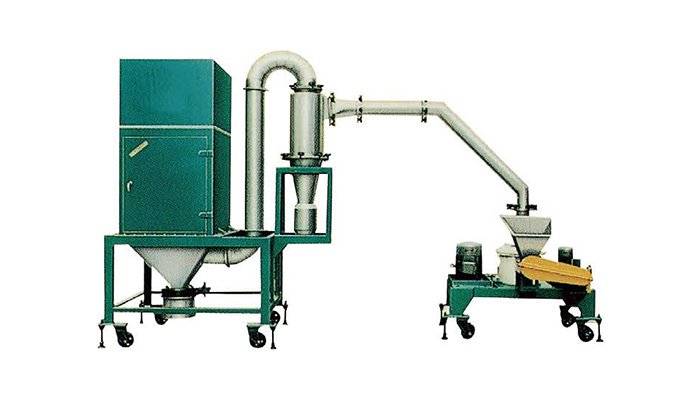
Excipient feed delivery
The feed system determines which material enters grinding. Retain incoming excipient identity when comparing a new lot with an earlier laboratory result. Evaluate particle size reduction against the incoming and accepted distributions, with the collection boundary defined.
Grinding assembly
The grinding assembly provides the mechanical treatment. Record its inspected configuration rather than inferring that configuration from the measured powder alone. The classifier mill assessment should include retained inventory and separately collected fractions.
Classification assembly
The classifier separates material within its demonstrated arrangement. Its setting and the laboratory preparation answer different questions about the finished distribution.
Air and conveying path
The process-air and conveying path transfers powder toward collection. Keep the collection period linked to the relevant operating history. See Frewitt size reduction and sifting for the distinction between milling and classification.
Powder recovery outlets
Cyclone or filter fractions can require separate sample identities. An analysis of one fraction should not be labeled as the complete accepted batch.
Laboratory preparation and measurement
The instrument and preparation equipment need their own traceable records. Equipment readiness, sampling quality and analytical suitability are distinct checks.
Configuration and Study Choices
Define the Demonstrated Starting Point
For a dry measurement route, document the dispersion arrangement and investigate whether treatment changes fragile agglomerates. Downstream dry blending needs powder whose relevant properties remain traceable after size reduction.
For a liquid route, review medium compatibility before interpreting a fine distribution. Dissolution would change the question being measured.
For a method-transfer comparison, use matched retained powder so preparation effects can be examined without a simultaneous feed change. See Fitzpatrick milling and granulation technologies for separating size reduction from agglomeration.
Separate the Changed Variable
For a milling-setting comparison, retain the analytical method while changing the defined equipment variable. Record intervening events and sample timing.
For an agglomerated specimen, decide whether the required attribute concerns primary particles, loose clusters or the product as received.
For an excipient specification, identify the distribution basis and the justified reporting method. A supplier’s typical graph is not a substitute.
Review the Complete Process Boundary
For downstream blending, evaluate the powder as actually handled. Analytical dispersion may describe a different state from the material entering a blender. A receiving powder blender is a separate operation; its uniformity cannot be inferred from the mill result alone.
For a new laboratory, verify method comparability with suitable shared material. Instrument model names alone do not establish equivalent preparation. See FDA ICH Q8 pharmaceutical development for product attributes and formulation-specific development.
For investigations, retain contradictory results and the preparation records that accompany them. Repeating only the preferred procedure obscures the cause.
Industry Application and Product Acceptance
The application is pharmaceutical excipient preparation, where powder attributes must be connected to the intended formulation.
A formulation may require flow, dissolution or blending evidence in addition to particle size. Select the relevant attributes rather than treating smaller as universally better.
The trial acceptance report should identify the powder boundary, analytical preparation and distribution result together.
Any extension to another excipient grade requires review of its measurement suitability and processing behavior. A common material name is insufficient evidence.
Benefits and Limits of the Comparison
Separating analytical effects from machine effects can prevent an unnecessary equipment adjustment and make trial comparisons more informative. Check whether transfer into the specified powder mixer changes segregation or handling behavior.
The approach does not establish a universal dispersion setting or pharmaceutical release limit. Those choices remain specific to the material and approved method.
Variables That Need a Clear Record
Sample splitting can introduce bias if coarse and fine material segregate. Use a suitable preparation procedure and retain its identity.
Storage exposure can change agglomeration between collection and testing. Record the condition and elapsed handling history.
Changing the dispersion medium may change compatibility. Review the specimen rather than assuming every liquid is inert.
Changing treatment intensity may change fragile clusters. Interpret that change against the intended particle definition.
Changing the calculation basis can change how a distribution is presented. Keep units and basis explicit beside the result. See FDA process validation guidance for linking process evidence to the demonstrated operating range.
Changing both the mill and the method in one comparison leaves two potential causes. Use a study design that can separate them.
Safe Operation and Material Handling
Collect samples only through the equipment’s approved arrangement. Opening an operating grinding or classification assembly is not a sampling method. See FDA ICH Q9 quality risk management for risk-based sampling and process review.
Handle excipient dust and preparation media under the relevant material and laboratory procedures. The measurement plan does not replace exposure or equipment protection controls.
Prepare a Useful Equipment Enquiry
Provide the excipient identity, collection arrangement, existing preparation method and disputed results when requesting a WFJ trial review. Define the interface with downstream Mixing Equipment rather than treating grinding and blending as one machine duty.
Ask the supplier and laboratory to agree which comparison answers the actual question: a changed powder, a changed method or both. Where granulation follows milling, assess that later product independently under its own acceptance plan.
Frequently Asked Questions
Where should a size-result investigation begin?
Begin with one retained powder and its complete preparation history. Establish comparability before changing a classifier or grinding setting.
Does a finer report always mean finer grinding?
No. A finer reported distribution can reflect more effective dispersion, a changed calculation basis or actual processing differences; the evidence must distinguish them.
Can any liquid be used for dispersion?
Only where justified by the method and material. A liquid that dissolves or alters the specimen cannot be assumed to represent the untreated product.
What belongs beside the reported distribution?
Report the agreed distribution together with sample identity, preparation version and collection boundary. Keep any unresolved method differences in the report.
What if the instrument result is repeatable?
Review the feed, collection and analytical records together. A stable instrument reading alone cannot establish representative production sampling.
Can the method be transferred to another grade?
A new grade can behave differently during both grinding and laboratory preparation. Review compatibility and the required formulation attributes before extending the result.
Discuss Your WFJ Fine Pulverizer Application with QUANPIN
Discuss this application with WFJ Fine Pulverizer specialists at QUANPIN. Share the material specification and the trial question through our contact page.
Email sales@quanpinmachine.com or stacie@quanpinmachine.com. Contact QUANPIN on WhatsApp: +86 15921493205.