
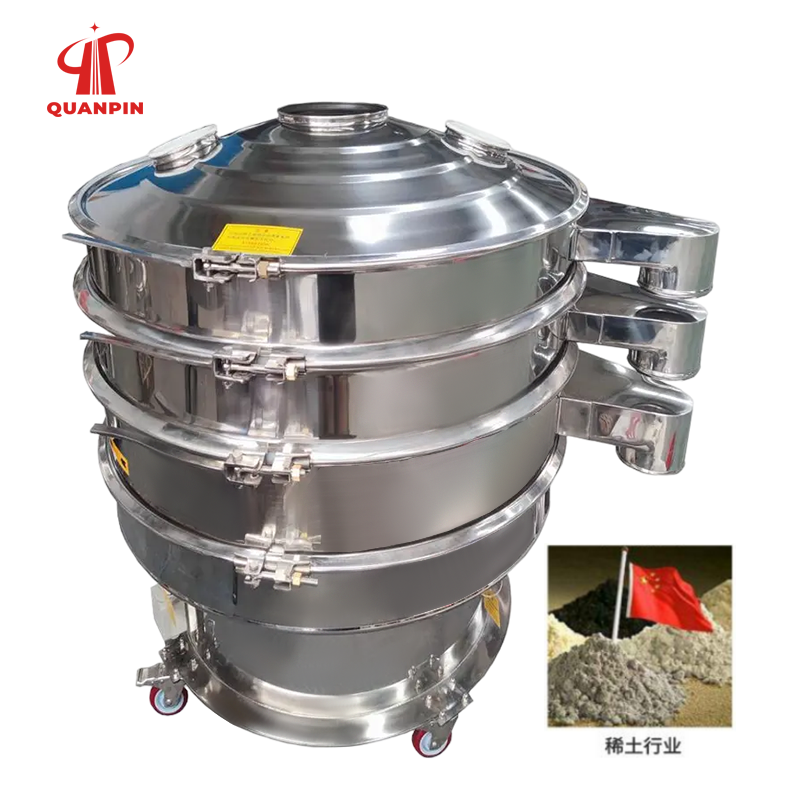
ZS Series Vibrating Screen for Pharmaceutical Powder and Granule Sieving
Equipment: ZS
Separate powder or granule feeds with a vibrating circular screen. The selected mesh and deck arrangement define the fractions to be recovered. Review the circular vibrating screen as a vibratory sieve for the required powder sieving and granule classification duty. Specify the vibrating screen using representative mesh-blinding and fraction-recovery trials.
Product Overview
Separate powder or granule feeds with a vibrating circular screen. The selected mesh and deck arrangement define the fractions to be recovered.
Working Principle
An eccentric drive produces compound vibration in the circular screen assembly. Feed travels over the mesh, smaller particles pass through the openings, and larger particles follow a separate discharge path.
Key Features
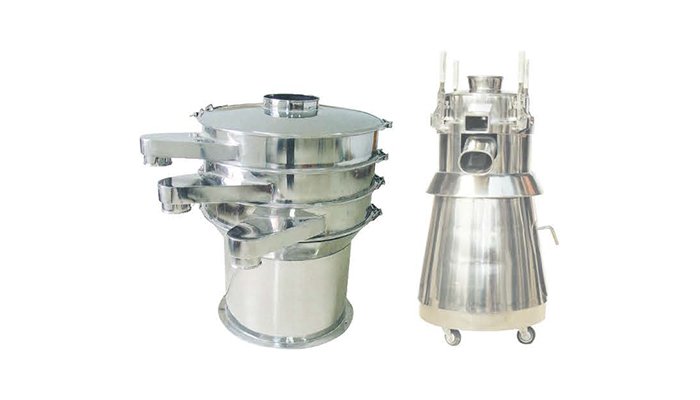
- A circular vibrating deck spreads feed over the mesh.
- Mesh openings determine which particles pass through.
- Discharge arrangements are matched to the required product fractions.
Suitable Materials
- Powders and granules suited to sieving or separation into particle-size fractions.
- Assess the actual material properties, moisture or solvent content, temperature limits and required finished-product condition before selecting the machine.
Applications
Consider routine sieving and size classification of compatible powder or granular feeds. Test screening efficiency and mesh blinding against the proposed rate before final selection.
Review our industry applications and confirm your process duty with QUANPIN.
Technical Parameters
On smaller screens, swipe the table sideways to view all models and values.
| Model | ZS-350 | ZS-515 | ZS-650 | ZS-800 | ZS-1000 | ZS-1500 | ZS-2000 |
|---|---|---|---|---|---|---|---|
| Production Capacity (kg) | 40–500 | 60–600 | 80–800 | 150–1200 | 300–2000 | 350–2800 | 500–4000 |
| Screen Mesh Range | 12–200 | 12–200 | 12–200 | 12–200 | 5–325 | 5–325 | 5–325 |
| Motor Power (kW) | 0.55 | 0.55 | 0.55 | 0.75 | 1.5 | 2.2 | 3 |
| Main-Shaft Speed (rpm) | 1380 | 1370 | 1370 | 1500 | 1500 | 1500 | 1500 |
| Overall Dimensions (mm) | 540×540×1060 | 710×710×1290 | 880×880×1350 | 1000×1000×1400 | 1100×1100×1200 | 1600×1600×1200 | 2100×2100×1200 |
| Net Weight (kg) | 100 | 180 | 250 | 300 | 350 | 400 | 500 |
Confirm the selected configuration and material duty before ordering. Final dimensions, options and supply scope are recorded in the approved technical documents.
Selection and Configuration
Define the desired fractions, particle distribution, bulk density, moisture and feed rate. Confirm mesh specification, deck count, discharge connections, screen changeover and cleaning requirements.
For pharmaceutical installations, specify product-contact materials, containment, cleaning procedures, controls and documentation requirements. These are project requirements to be agreed, rather than an automatic claim of certification.
Frequently Asked Questions
What is this equipment used for?
Which material information should be supplied?
How should the configuration be verified?
Agree a representative feed, output requirement and acceptance method with QUANPIN. Review particle-size distribution, product recovery, temperature limits and cleanability as applicable to the selected process.
Request Pricing & Specifications
Send your material name, feed condition, required throughput, target particle range and cleaning requirements.
Application Review: Pharmaceutical Powder and Granule Sieving
Define the mesh opening, required size fractions and acceptable fines or oversize carryover. Evaluate the circular deck using the actual powder or granule feed, with attention to mesh blinding, product recovery and cleaning between batches.
For pharmaceutical process evaluation, consult FDA process validation guidance.
For an active-ingredient application, review the equipment and documentation topics in FDA Q7A guidance.
For pharmaceutical cleaning requirements, consult the FDA equipment and cleaning questions.
Review the actual powder characteristics using the HSE safe handling of combustible dusts.
Include moving-part access in the installation review using HSE work equipment and guarding guidance.
Discuss Your
Processing Requirements.
Share your material, particle-size target and processing rate with QUANPIN to discuss an equipment configuration.