
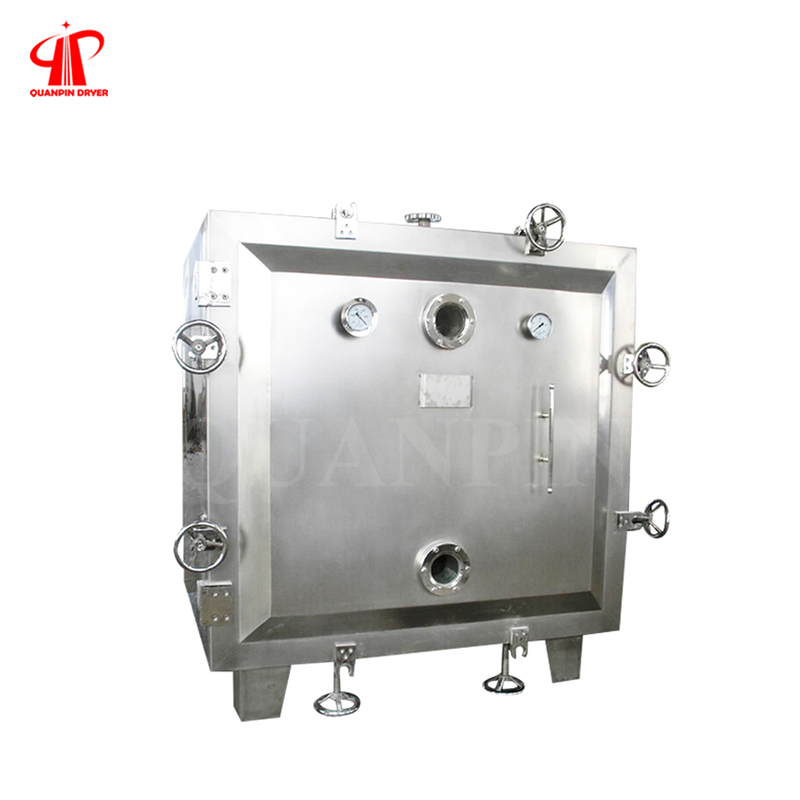
FZG Vacuum Tray Dryer for Pharmaceutical Manufacturing: Microcrystalline Cellulose Excipient
FZG Vacuum Tray Dryer is evaluated for microcrystalline cellulose excipient in pharmaceutical manufacturing. The defined feed is damp cellulose particles or tray-loaded solids. Review the material-specific operating requirements below alongside the original equipment specifications.
Microcrystalline Cellulose Excipient: Application and Process Requirements
For microcrystalline cellulose excipient, retain the moisture window and physical properties required by the excipient grade. Start with damp cellulose particles or tray-loaded solids, and identify the volatile phase and incoming variability before choosing a cycle.
Feed, Quality and Downstream Interface
| Review item | Microcrystalline Cellulose Excipient |
|---|---|
| Defined feed | damp cellulose particles or tray-loaded solids |
| Material-specific focus | retain the moisture window and physical properties required by the excipient grade |
| Product quality checks | moisture, bulk density, particle size and compaction-related properties |
| Downstream handling | contained transfer into qualified excipient packaging |
Loading and Material Movement
Set layer depth, loading distribution and tray position; inspect the slowest drying locations.
Include moisture, bulk density, particle size and compaction-related properties in the trial record. Define the sampling locations and analytical methods before the test; a result from a different grade, loading pattern or residual liquor cannot establish the operating endpoint for this feed.
Material-Specific Configuration
Vacuum Tray Dryer selection for this feed should be assessed alongside the industrial vacuum dryer process description. Evaluate low-temperature vacuum drying and heat-sensitive material drying with representative microcrystalline cellulose excipient. This pharmaceutical vacuum drying application requires a material-specific sampling and acceptance plan.
After the batch meets the agreed specification, arrange contained transfer into qualified excipient packaging. Examine the effect of discharge, temporary holding and packaging exposure on the measured product condition. Establish the usable batch and cycle for this material; the original model parameters below remain the equipment reference, not a throughput promise for every formulation.
View the FZG Vacuum Tray Dryer range and original equipment specifications
Technical References for This Application
Agree material-specific sampling and acceptance criteria for the process. FDA process-validation guidance.
Review the quality and documentation requirements appropriate to the pharmaceutical duty. FDA Q7A manufacturing guidance.
Define product-contact surfaces, cleaning access and changeover requirements. FDA equipment and cleaning guidance.
Apply the relevant residual-solvent specification to the actual formulation; this is separate from water content. FDA ICH Q3C residual-solvent guidance.
Use the actual powder test data when defining dust collection and handling. HSE combustible-dust handling guidance.
Equipment Reference Parameters
These are the FZG Vacuum Tray Dryer model specifications. The operating duty for microcrystalline cellulose excipient must be established from the feed and the finished-product requirements above.
| Item | YZG-600 | YZG-1000 | YZG-1400 | FZG-8 | FZG-15 | FZG-20 | FZG-30 | FZG-45 |
|---|---|---|---|---|---|---|---|---|
| Internal Chamber Dimensions (mm) | Φ600×976 | Φ1000×1527 | Φ1400×2054 | 1140×890×1400 | 1500×1220×1400 | 1500×1800×1400 | 3200×1220×1400 | 3200×1220×1700 |
| Overall Dimensions (mm) | 1150×810×1020 | 1740×1226×1385 | 2386×1657×1800 | 1580×1203×1924 | 2060×1513×1924 | 2060×1883×1924 | 3760×1513×1924 | 3760×1513×2224 |
| Shelf Layers | 4 | 6 | 8 | 8 | 8 | 8 | 8 | 12 |
| Layer Spacing (mm) | 81 | 98 | 102 | 122 | 122 | 122 | 122 | 102 |
| Tray Dimensions (mm) | 310×600×45 | 640×460×45 | 640×460×45 | 640×460×45 | 640×460×45 | 640×460×45 | 640×460×45 | 640×460×45 |
| Number of Trays | 4 | 12 | 32 | 16 | 32 | 48 | 64 | 96 |
| Capacity (kg) | 5 | 30 | 60–80 | 30–40 | 60–80 | 100–120 | 130–150 | 200–240 |
| Allowable Heating-Pipe Pressure (MPa) | ≤0.784 | ≤0.784 | ≤0.784 | ≤0.784 | ≤0.784 | ≤0.784 | ≤0.784 | ≤0.784 |
| Operating Temperature (°C) | 35–150 | 35–150 | 35–150 | 35–150 | 35–150 | 35–150 | 35–150 | 35–150 |
| No-Load Chamber Vacuum (MPa) | −0.09 to −0.096 | −0.09 to −0.096 | −0.09 to −0.096 | −0.09 to −0.096 | −0.09 to −0.096 | −0.09 to −0.096 | −0.09 to −0.096 | −0.09 to −0.096 |
| Vacuum-Pump Model and Power | SK-1.5, 3 kW | SK-3, 5.5 kW | SK-6, 11 kW | SK-3, 5.5 kW | SK-6, 11 kW | SK-6, 11 kW | SK-12, 18.5 kW | SK-12, 18.5 kW |
| Weight (kg) | 400 | 900 | 1400 | 1400 | 2300 | 2800 | 3500 | 4800 |
| Selection Item | Information Required |
| Material | Composition, consistency and bulk density |
| Batch | Required loading quantity and production schedule |
| Moisture | Initial moisture and target final moisture |
| Temperature | Product temperature limit and heating utilities |
| Vacuum | Process pressure and expected vapor load |
| Construction | Contact materials, seals and cleaning requirements |
| Installation | Space, access and process connections |
Discuss Microcrystalline Cellulose Excipient Drying
Send QUANPIN the incoming microcrystalline cellulose excipient specification, sample information and the required final product condition for an equipment review.
Start Optimizing Your
Drying Process Today.
Our engineers are ready to assess your material and recommend a reliable, cost-effective drying solution.