WFJ Fine Pulverizer: Compare Excipient Milling Energy on an Accepted-Product Basis
By QUANPIN
An excipient mill can draw less electrical power yet consume more energy for each kilogram that meets the powder specification. Compare a defined campaign and its accepted product before calling a setting more efficient. The fine pulverizer duty begins with the required powder rather than an isolated machine setting.
This discussion concerns pharmaceutical excipient preparation before blending or granulation. Energy accounting supports equipment selection; it does not replace pharmaceutical product acceptance. See the matching pharmaceutical industry applications.
How Should Accepted-Product Milling Energy Be Compared?
Use measured electrical energy over an identified interval divided by accepted product from that same interval. State which drives and auxiliaries are inside the measurement boundary.
Gross collected mass can overstate useful output if a significant fraction fails particle-size or functional requirements. Keep off-specification powder visible in the calculation. Use product-specific development knowledge to justify the attributes being examined. See FDA ICH Q8 pharmaceutical development.
Equipment Principle and Material Requirements
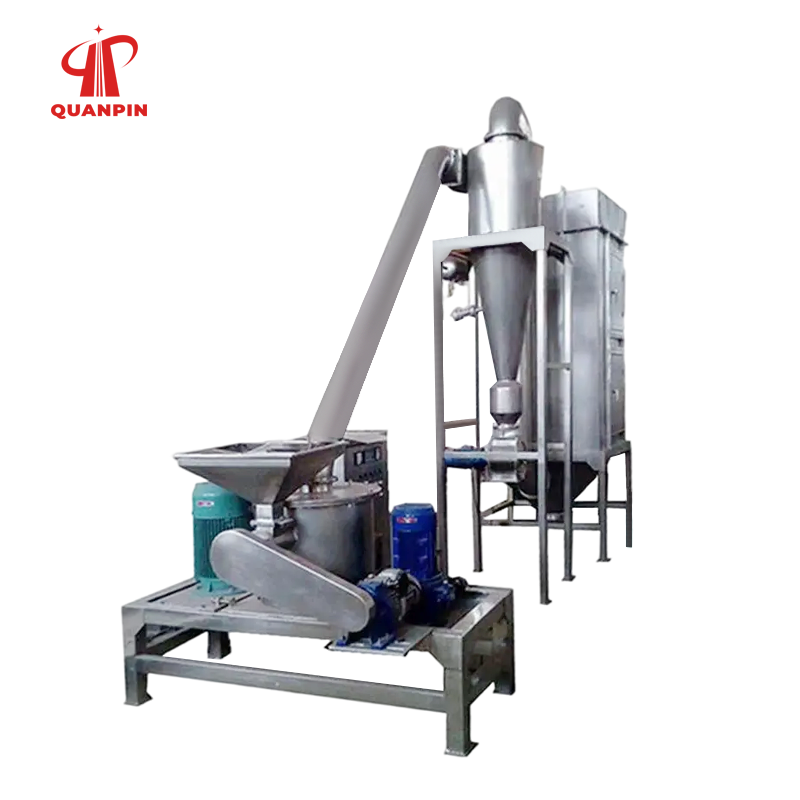
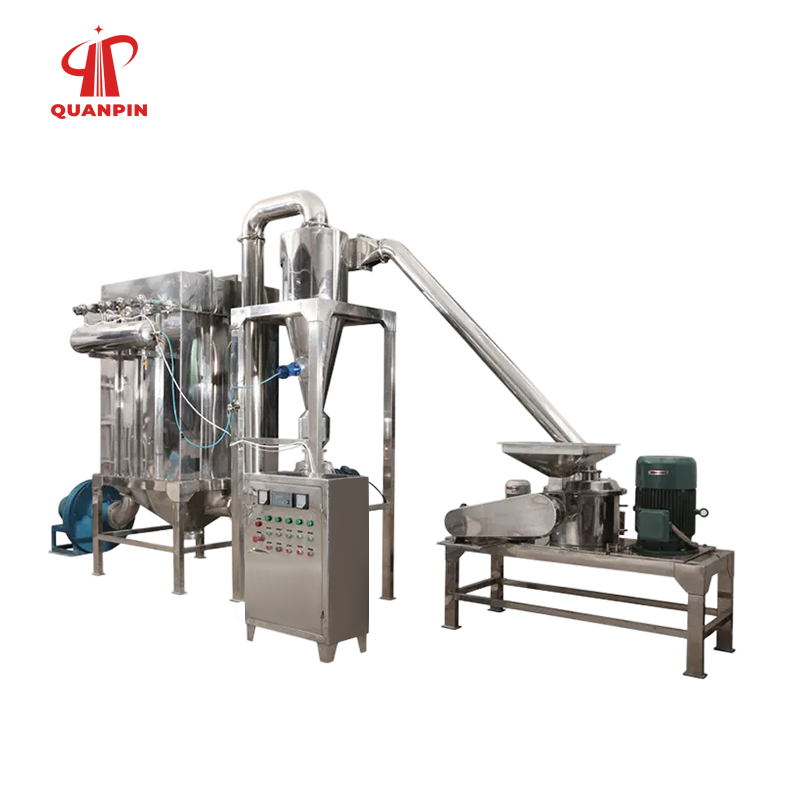
The WFJ combines mechanical grinding with classification and collection. The energy required by these functions depends on both material behavior and the selected operating arrangement. In pharmaceutical milling, the feed and product measurement method must be stated together.
A display showing instantaneous motor load does not provide cumulative campaign energy. Likewise, rated motor power is an equipment nameplate value rather than measured consumption.
Five Steps for the Application Study
Draw the electrical scope
Draw the electrical boundary before the run, identifying the mill, classifier, conveying fan and any separately supplied collection equipment.
Identify the measurement interval
Record the starting and ending meter readings together with the material lot and the time represented by those readings.
Reconcile collected fractions
Collect and label material produced during startup, stable operation and shutdown so the accepted fraction can be reconciled.
Test the required powder
Apply the same particle-size preparation and excipient acceptance methods to the reference and proposed energy-saving condition.
Report the complete comparison
Report energy, accepted mass, rejected mass and operating duration together. Explain any exclusions instead of presenting one favorable ratio alone.
Four Process Boundaries to Record
Electrical boundary: compare the same included consumers when evaluating two settings or proposals.
Time boundary: an active-grinding interval and a full campaign answer different operating questions.
Material boundary: retained powder is neither automatically lost nor automatically saleable product.
Quality boundary: a coarser distribution may reduce grinding demand while failing the intended formulation requirement.
WFJ Fine Pulverizer Components and Interfaces
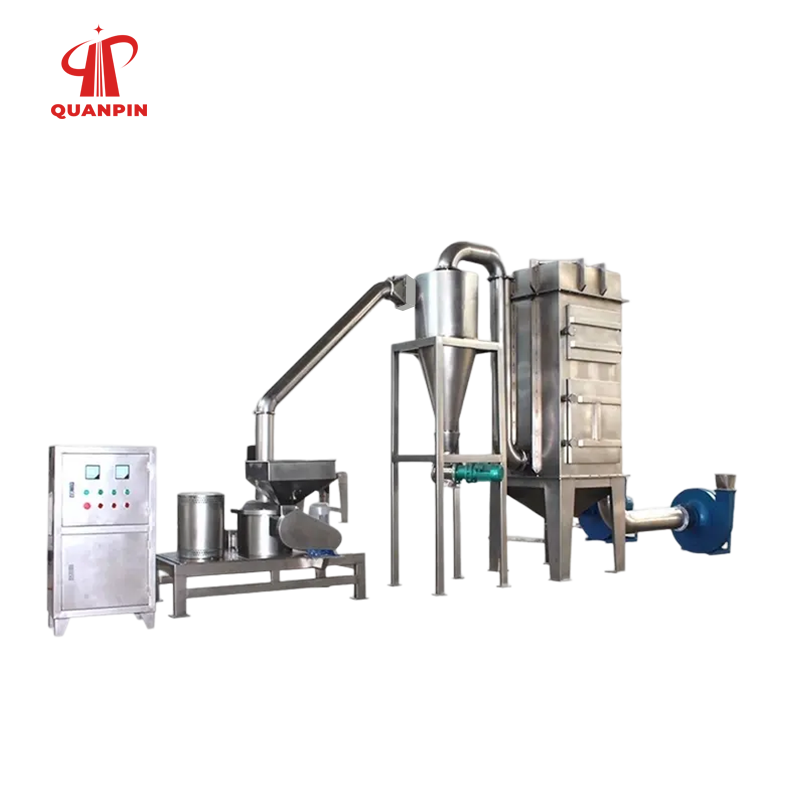
Feed delivery
Feed delivery influences how consistently the grinding zone is loaded; record interruptions rather than assuming the feeder follows its nominal setting. Evaluate particle size reduction against the incoming and accepted distributions, with the collection boundary defined.
Grinding rotor
The grinding rotor supplies mechanical work. Rotor speed alone cannot identify energy transferred into useful size reduction. The classifier mill assessment should include retained inventory and separately collected fractions.
Classification assembly
The classification assembly determines which particles pass onward under the actual operating conditions; its adjustment can change circulating material.
Process air path
The air path has its own pressure and flow requirements. Include the relevant fan energy when that service belongs to the comparison.
Powder collection
Cyclone and filter collections should retain their identities until the acceptance plan determines which fractions can be combined.
Sample and event records
The measurement arrangement needs an identified meter, units and logging interval, with installation and electrical work handled by qualified personnel.
Comparison Choices and Process Interfaces
Define the Reference Basis
For a production-capacity comparison, include the defined operating cycle and the accepted material delivered at its end. Downstream dry blending needs powder whose relevant properties remain traceable after size reduction.
For a development comparison, a stable interval can help isolate one variable, provided its limited boundary is stated.
Neither approach should silently replace the other when a trial result becomes an equipment-purchase claim.
Keep the Comparison Interpretable
Hold incoming material identity and analytical preparation comparable when testing a different classifier condition.
If feed rate changes, document the actual delivery history and check whether the mill inventory changes with it.
Avoid assigning a difference to grinding efficiency when the two trials include different auxiliary equipment.
Assess the Receiving Process
Assess the condition of powder destined for downstream formulation, including the properties relevant to its intended use. A receiving powder blender is a separate operation; its uniformity cannot be inferred from the mill result alone.
If an off-specification fraction is reprocessed, retain the additional treatment and its energy in the agreed campaign account.
Any proposed reuse of collected material needs a documented quality decision; an energy calculation cannot authorize that reuse.
Industry Application and Acceptance
Medical excipient preparation is the relevant application. This comparison concerns the powder supplied to the next manufacturing stage.
An acceptable size distribution is necessary only where the formulation specification requires it; other excipient functions can matter as well. A development comparison should not be presented as complete validation of an untested production process. See FDA process validation guidance.
Use the development record to explain why the selected quality attributes represent the intended formulation duty.
Changes to the feed grade or downstream process can require a review of the established energy-versus-quality comparison.
Benefits and Practical Limits
A common accepted-product basis makes quotations and operating trials easier to compare without hiding the quality tradeoff. Check whether transfer into the specified powder mixer changes segregation or handling behavior.
One trial does not establish annual consumption, maintenance costs or a universal energy saving for other excipients. Assess relevant quality risks using the actual material and process context. See FDA ICH Q9 quality risk management.
Six Details That Affect the Result
Record whether utilities started before material feeding; that interval may matter to the campaign boundary.
Keep meter resolution and reading frequency suitable for the duration being compared.
State whether the accepted mass is reported as collected or on another explicitly defined moisture basis.
Include filter retention and handling losses where they belong to the agreed material reconciliation. Interpret measurements through process understanding rather than treating an isolated instrument reading as product acceptance. See FDA process analytical technology framework.
Investigate an unexpectedly favorable result before extrapolating it; missing auxiliary loads can explain an apparent improvement.
Report uncertainty in mass and energy readings rather than implying precision beyond the measurement method.
Safety and Operating Requirements
Observe through approved sampling and instrument arrangements. Do not approach rotating equipment or alter electrical connections during operation.
Review the actual excipient dust and exposure hazards separately; low electrical consumption does not demonstrate adequate protection.
Prepare Your Equipment Enquiry
Send QUANPIN the feed identity, target powder properties, proposed campaign boundary and available energy measurements. Define the interface with downstream Mixing Equipment rather than treating grinding and blending as one machine duty.
Request an equipment scope that identifies auxiliary services and the tests needed to compare accepted output under the proposed configuration. Retain knowledge and manage adopted process changes through the pharmaceutical quality system. See FDA ICH Q10 pharmaceutical quality system.
Frequently Asked Questions
Is rated motor power the same as energy consumption?
No. Rated power describes the drive rating; consumption requires measurement over the relevant operating interval.
Can gross collected mass be used as accepted output?
Only if all that material meets the agreed acceptance requirements and belongs to the same measured campaign.
Should conveying-fan energy be included?
Include the fan when its service is inside the agreed system boundary, and state its treatment consistently.
Does a coarser target support a like-for-like saving?
A coarser accepted target can require less work, but a changed target cannot support a like-for-like efficiency claim.
How should reprocessed fractions be treated?
Keep the additional processing visible in the campaign calculation and obtain the required quality approval for its use.
What records does QUANPIN need?
Provide energy readings, timing, material reconciliation and product results together so QUANPIN can review a defined duty.
Discuss Your WFJ Fine Pulverizer Application with QUANPIN
Discuss your application with WFJ Fine Pulverizer specialists at QUANPIN. Use the enquiry below or our contact page.
Email sales@quanpinmachine.com or stacie@quanpinmachine.com. Call +86 19850785582, or contact us on WhatsApp: +86 15921493205.