
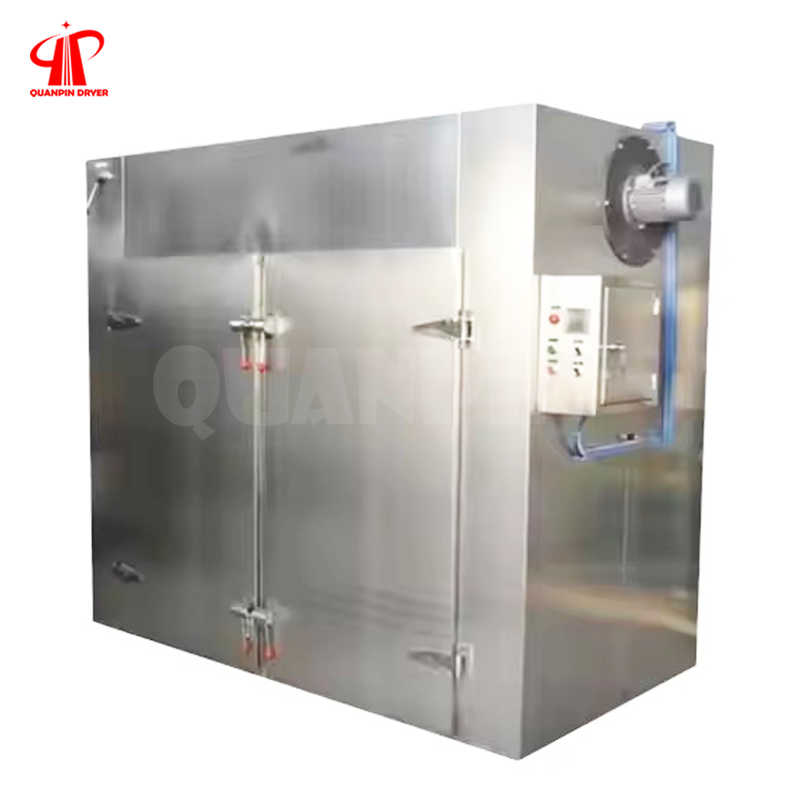
CT-C Hot Air Circulation Oven for Pharmaceutical and Herbal Processing: Aqueous Pharmaceutical Granules
CT-C Hot Air Circulation Oven is evaluated for aqueous pharmaceutical granules in pharmaceutical and herbal processing. The defined feed is aqueous-binder wet granules from the specified formulation. Match this duty to the material checks below and the unchanged original equipment parameters.
Aqueous Pharmaceutical Granules: Application and Process Requirements
For aqueous pharmaceutical granules, verify batch and tray uniformity; do not assume solvent-rated or sterile service. Begin with aqueous-binder wet granules from the specified formulation and confirm how the incoming grade varies before defining the drying cycle.
Feed, Product Quality and Downstream Handling
| Review item | Aqueous Pharmaceutical Granules |
|---|---|
| Defined feed | aqueous-binder wet granules from the specified formulation |
| Material-specific focus | verify batch and tray uniformity; do not assume solvent-rated or sterile service |
| Product checks | loss on drying, assay uniformity, granule size and downstream tablet performance |
| Downstream handling | contained cooling and transfer to the validated dosage-form process |
Material Movement and Drying Control
Include loss on drying, assay uniformity, granule size and downstream tablet performance in the trial record. Fix the sampling locations and analytical methods before comparing trials; feed preparation and cooling can affect the measured result.
Drying Endpoint and Product Acceptance
After acceptance, arrange contained cooling and transfer to the validated dosage-form process. Review discharge, temporary holding and packaging exposure as part of the moisture-control plan.
Application-Specific Equipment Selection
CT-C Hot Air Circulation Oven selection for aqueous pharmaceutical granules starts with Hot Air Circulation Oven requirements and the defined feed. Assess hot air ovens and hot-air circulation drying together with tray drying; the batch oven drying duty must be demonstrated using representative material and the required finished-product specification.
Define contact materials, cleaning, containment and qualification for the actual formulation. This application description does not establish sterile service, solvent-rated construction or a validated pharmaceutical process.
View the CT-C Hot Air Circulation Oven range and original equipment specifications
Technical References for This Application
Document the material-specific process and its acceptance criteria. FDA process-validation guidance.
Review the manufacturing controls applicable to the intended pharmaceutical use. FDA Q7 manufacturing guidance.
Define equipment suitability, cleaning and qualification requirements. FDA pharmaceutical equipment considerations.
Review the dust characteristics of the collected dry material. HSE combustible-dust guidance.
Review the thermal duty and utilities for the actual feed. U.S. DOE process-heat reference.
Equipment Reference Parameters
These are the CT-C Hot Air Circulation Oven model specifications. The operating duty for aqueous pharmaceutical granules must be established from the feed and the finished-product requirements above.
| Model | Equivalent Model | Drying Capacity (kg/batch) | Fan Power (kW) | Air Volume (m³/h) | Heat-Transfer Area (m²) | Steam Consumption (kg/h) | Electric Heating (kW) | Overall Dimensions (mm) | Trolleys | Trays | Weight (kg) |
|---|---|---|---|---|---|---|---|---|---|---|---|
| CT-C-O | RXH5-C | 30 | 0.55 | 3450 | 5 | 8 | 6 | 1300×1200×1600 | 0 | 16 | 680 |
| CT-C-IA | RXH-7-C | 50 | 0.55 | 3450 | 10 | 10 | 9 | 1400×1200×2000 | 1 | 24 | 800 |
| CT-C-I | RXH-14-C | 100–120 | 0.55×2 | 6900 | 20 | 18 | 15 | 2300×1200×2000 | 2 | 48 | 1300 |
| CT-C-I(B) | RXH-14-C | 100–120 | 0.55×2 | 6900 | 20 | 18 | 15 | 1400×2200×2000 | 2 | 48 | 1300 |
| CT-C-II | RXH-27-C | 200–240 | 0.55×2 | 6900 | 40 | 36 | 30 | 2300×2200×2000 | 4 | 96 | 1800 |
| CT-C-III | RXH-41-C | 300–360 | 0.55×3 | 10350 | 80 | 72 | 45 | 3300×2200×2000 | 6 | 144 | 2300 |
| CT-C-III(B) | RXH-41-C | 300–360 | 0.55×3 | 10350 | 80 | 72 | 45 | 2300×3200×2000 | 6 | 144 | 2300 |
| CT-C-IV | RXH-54-C | 400–480 | 0.55×4 | 13800 | 100 | 90 | 60 | 4450×2200×2000 | 8 | 192 | 2800 |
| CT-C-IV(B) | RXH-54-C | 400–480 | 0.55×4 | 13800 | 100 | 90 | 60 | 2300×4200×2000 | 8 | 192 | 2800 |
| CT-C-VI | / | 600–720 | 0.55×6 | 20700 | 160 | 144 | 90 | 4450×3200×2000 | 12 | 288 | 3800 |
| Parameter | Project Information |
| Product | Material form, initial moisture and temperature limits |
| Batch | Loading quantity and production schedule |
| Trays | Tray quantity, dimensions and loading depth |
| Heating | Available heat source and temperature requirements |
| Airflow | Circulation, ventilation and exhaust requirements |
| Controls | Temperature settings, timing and monitoring needs |
| Installation | Available utilities, space and cleaning requirements |
| Test Item | Record or Assessment |
| Loading | Material, batch mass and tray distribution |
| Preparation | Batch loading and initial moisture |
| Heating | Air and product temperatures and duration |
| Drying completion | Final moisture and drying time |
| Final product | Residual moisture, appearance and product-specific checks |
| Utilities | Measured consumption under the stated test conditions |
Discuss Aqueous Pharmaceutical Granules Drying
Send QUANPIN the incoming aqueous pharmaceutical granules specification, sample information and the required final product condition for an equipment review.
Start Optimizing Your
Drying Process Today.
Our engineers are ready to assess your material and recommend a reliable, cost-effective drying solution.