Silicon Carbide Drying Line
Category: Other engineering industries
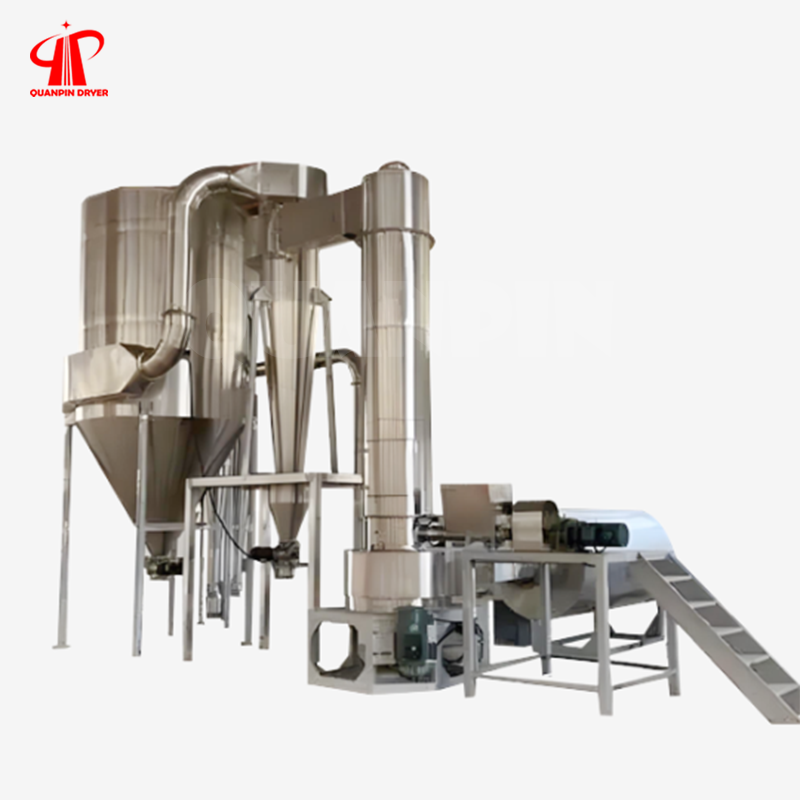
QUANPIN silicon carbide flash drying disperses wet fine powders in a moving hot-air stream.
Case Details
Engineering Overview
Black and green silicon carbide are abrasive and refractory materials. Feed wear characteristics and fine-powder handling influence equipment selection.
Equipment Overview
The process combines fluidization with mechanical dispersion to reduce the limitations of static drying.
Working Principle
Wet agglomerates break in the lower rotor zone. Finer particles rise in the vortex, increasing gas–solid contact during evaporation.
Engineering Advantages
A compact continuous arrangement supports controlled feeding, mixing, drying and collection. Wear protection, containment and controls are specified around the powder duty.
Confirmed Technical Data and Operating Results
| Parameter / result | Confirmed value | Material / comparison basis |
|---|---|---|
| Material specific gravity | 3.20–3.25 | Silicon carbide material property, not bulk density. |
| Material microhardness | 2840–3320 kg/mm² | Reference silicon carbide property. |
Material and Process Review
Flash drying brings suitable wet material into contact with a moving heated-air stream. Feed preparation, particle behavior and powder collection affect equipment selection. For a spin flash dryer, review airflow drying performance using representative paste drying or chemical powder drying trials.
Provide feed composition, initial and final moisture, throughput, temperature limits, utilities and cleaning requirements so QUANPIN can define the project operating conditions.
Project Pictures
Picture Collection
Previous: Three-Dimensional Movement Mixer
Next: Hollow Paddle Dryer for Environmental Processing
Inquire
Discuss Silicon Carbide Drying Line with QUANPIN.
Related Cases
Hot Air Circulation Oven
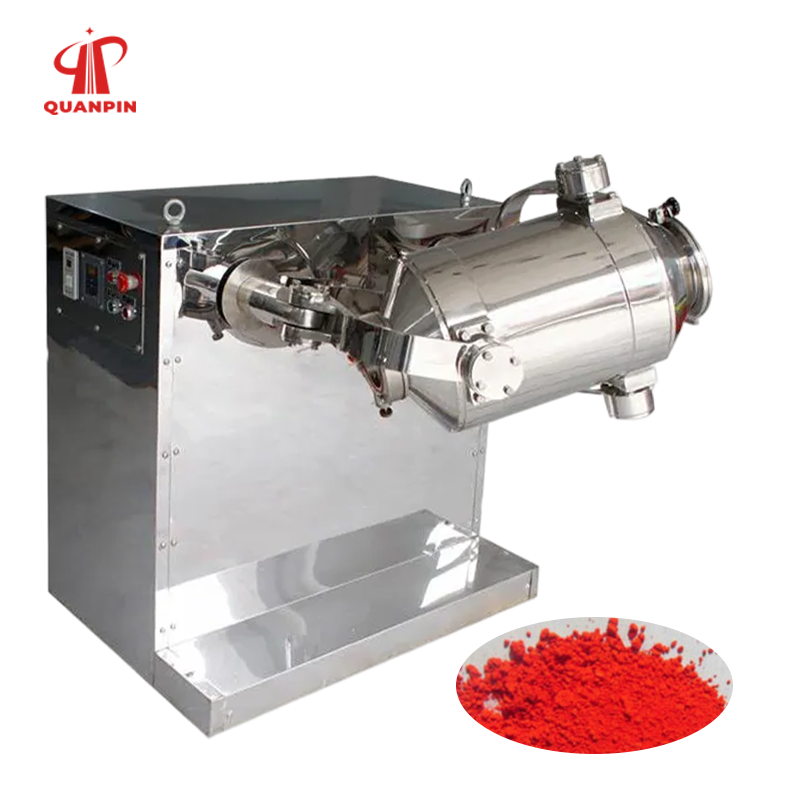
Three-Dimensional Movement Mixer