Fruit Juice Spray Drying: Evaluate Carrier Solids and Saleable Powder Yield
By QUANPIN
When evaluating a food spray dryer for fruit juice concentrate, start with the finished ingredient and the feed that must produce it. The purchasing objective is to avoid a high apparent powder yield achieved by changing the ingredient composition. This guide connects feed preparation, atomization, powder collection and acceptance testing to a comparable supplier quotation.
Use QUANPIN’s centrifugal spray dryer and pressure spray dryer pages as equipment starting points. Review the industry applications and describe your intended material before selecting a configuration. The final process needs representative trial evidence.
What Spray Drying Must Deliver for Fruit Juice Concentrate
Spray drying turns a suitable liquid feed into particles through atomization and evaporation. For fruit juice concentrate, the useful output is powder meeting flavor, color, dispersibility, final moisture and ingredient composition; simply removing liquid does not establish that the ingredient is fit for use.
Carrier solids alter the finished ingredient as well as drying behavior. Keep the juice-solids basis visible when comparing recoveries so added carrier does not create a misleading improvement in yield.
How the Fruit Juice Concentrate Process Works
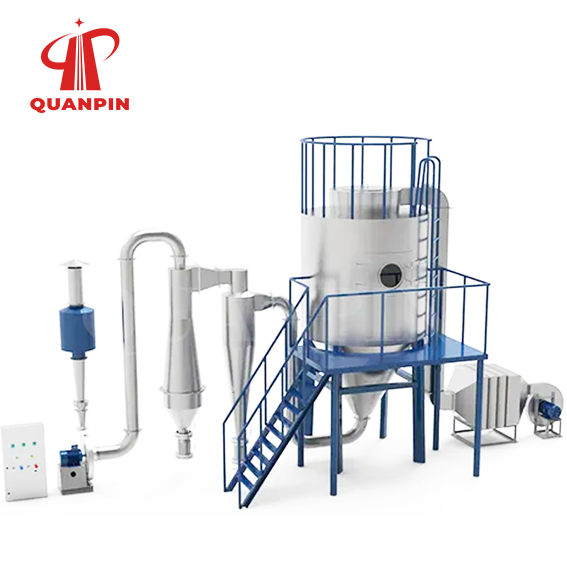
A feed vessel supplies fruit juice concentrate to an atomizer. Droplets contact a drying gas, form particles and enter powder recovery. Treat preparation, drying and discharge as a connected system because a change upstream can alter the powder collected downstream.
Record the complete operating history alongside flavor, color, dispersibility, final moisture and ingredient composition. Gas temperature readings describe measurement locations, not the exposure of every particle. Compare samples from startup, stable operation and shutdown before interpreting an average result as representative.
From Fruit Juice Concentrate to Accepted Powder
1. Prepare a Consistent Feed
Document juice identity, soluble solids, pulp content, acidity and carrier additions. Include the range expected during production, the sampling method and the feed holding time. Juice lot, pulp fraction and carrier proportion should be represented in trial material rather than hidden behind a single nominal feed specification.
2. Create the Droplet Distribution
Compare a co-current food spray dryer and a single-stage food spray dryer only on a matched feed and accepted powder basis. Ask the supplier to define what each equipment description means for this formulation. Observe feed stability, spray behavior and resulting particle distribution.
3. Bring Droplets into Contact with Drying Gas
Gas distribution and spray direction must suit the chamber and fruit juice concentrate. Review wet zones and deposition locations with the supplier. A trial should document where deposits form, how they change over time and whether they affect the accepted campaign duration.
4. Evaporate the Liquid and Form Particles
Particle formation must be assessed against flavor, color, dispersibility, final moisture and ingredient composition. Calculate powder recovery on a documented dry-solids basis. Compare color and flavor with a retained feed reference using the same dilution and viewing conditions. Include the analytical method and sample conditioning in the acceptance document so both purchaser and supplier judge the same product.
5. Separate, Cool and Collect
Sample chamber, cyclone and filter fractions separately before combining them. For fruit juice concentrate, different fractions may have different properties. Record cooling, transfer and packaging conditions as part of the trial; a useful powder at discharge can change before the customer receives it.
Four Stages to Check During a Material Trial
Atomization: establish repeatable feed delivery for fruit juice concentrate. Record interruptions, pump behavior and atomizer inspection results. Compare stable samples with samples collected after a disturbance to identify whether the process recovers consistently.
Drying: measure flavor, color, dispersibility, final moisture and ingredient composition against the agreed methods. Include operating settings, sampling times and feed composition. A change that increases throughput is useful only if the collected product remains within acceptance limits.
Separation: reconcile incoming dry solids with collected fractions and deposits. Keep rejected material separate. Report usable powder yield on a defined basis so a favorable total collection figure does not hide a high apparent powder yield achieved by changing the ingredient composition.
Collection: test the actual transfer and packing route for fruit juice concentrate. Observe bridging, dust release and changes during cooling. Retain packaged samples for the storage checks included in the finished-product specification.
Main Equipment for Fruit Juice Concentrate Drying
Feed Vessel and Pump
The vessel and pump should handle the expected range of juice lot, pulp fraction and carrier proportion. Ask how feed agitation, holding temperature and recirculation are controlled. Specify inspection and cleaning access, not only the nominal pump capacity.
Atomizer
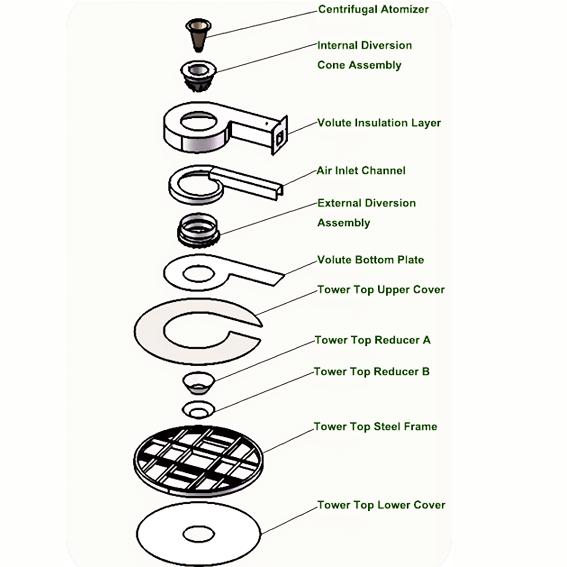
A horizontal food spray dryer should be evaluated within the complete atomization and drying comparison. Specify the feed and powder objective first. A supplier should explain the chosen mechanism, wear parts, utility needs and evidence supporting its use with fruit juice concentrate.
Drying Chamber and Air Distributor
The chamber provides the flow path for droplets and gas. For fruit juice concentrate, inspection access matters because a high apparent powder yield achieved by changing the ingredient composition may be accompanied by changes in deposited or retained material. Include deposit observations in the trial record rather than examining only discharged powder.
Heating and Air-Handling System
Define gas filtration, heating utilities and measurement points for the proposed line. The gas arrangement must suit the formulation and applicable contamination controls. Use FDA food manufacturing practices as background for the quality or hazard review, with applicability assessed for your market and material.
Powder Recovery and Discharge
Recovery and discharge equipment must preserve the accepted properties of fruit juice concentrate. Identify how each fraction is sampled, which fractions may be blended and how the product is isolated from unsuitable ambient conditions. Include practical cleaning and inspection provisions.
Controls and Instrumentation
Controls should record feed flow, relevant temperatures, gas conditions and interruptions on a common time basis. Link those records to flavor, color, dispersibility, final moisture and ingredient composition results. Specify alarm handling and authorized operating limits through the equipment-specific process review.
Configurations to Compare on a Matched Basis
By Atomization Method
Pressure atomization: evaluate pump and nozzle compatibility with juice identity, soluble solids, pulp content, acidity and carrier additions. Include nozzle wear and blockage observations. A throughput figure obtained with a different formulation should not be used as the acceptance basis for this purchase.
Rotary atomization: for a rotary atomizer spray dryer, review the operating range and feed delivery with fruit juice concentrate. Compare collected particle distributions under matched conditions, including any differences between fractions. Do not choose an atomizer solely because its label appears in a supplier catalog.
By Gas and Feed Direction
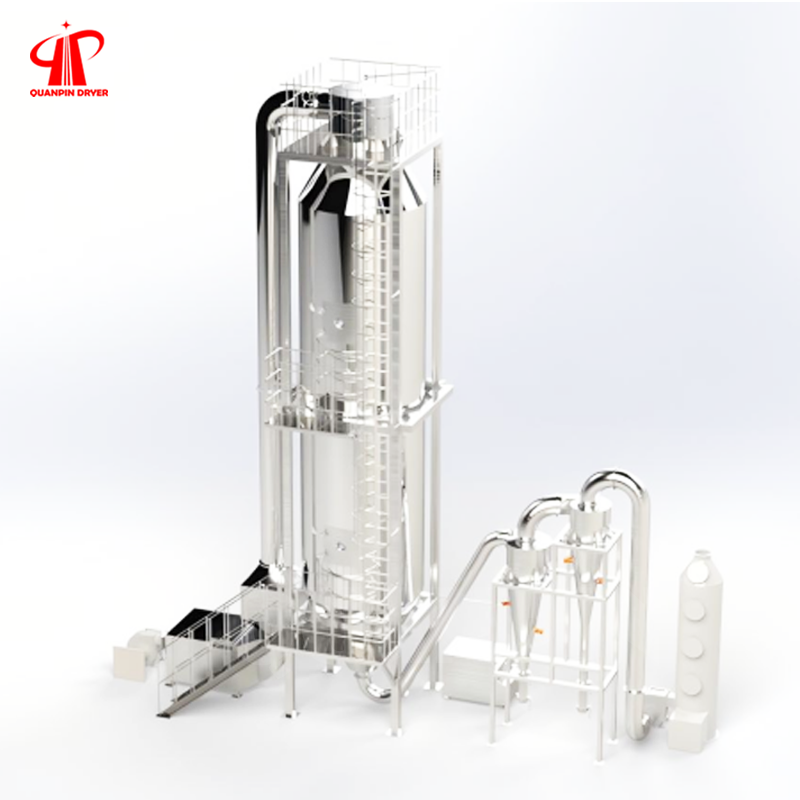
Co-current flow: review how the wet feed meets the incoming gas. A co-current flow spray dryer should still be tested against flavor, color, dispersibility, final moisture and ingredient composition; the flow designation alone does not establish product quality or a safe operating window.
Counter-current flow: changes the overall relationship between material and gas movement. Ask the supplier to justify any proposed arrangement for fruit juice concentrate. Do not transfer results from a different chamber or formulation without supporting process evidence.
Special Process Arrangements
Special pressure conditions: purpose-designed equipment may be discussed where material requirements justify it. Establish the need through flavor, color, dispersibility, final moisture and ingredient composition and a process assessment. Neither reduced pressure nor a specialized product name guarantees a better result for fruit juice concentrate.
Additional finishing: consider a separate conditioning stage only when trial evidence identifies a useful duty. Review cooling, final drying or handling objectives with fruit juice concentrate, together with space, cleaning and control implications. Compare the complete line against the accepted product.
Applications and Acceptance for Fruit Juice Concentrate
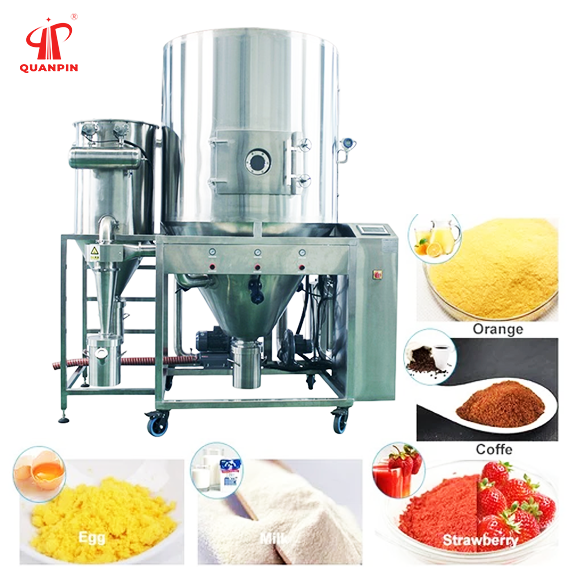
Primary application: this guide addresses fruit beverage powders and food premixes. Define the customer specification before approving a dryer trial. For industry background on process and hazard controls, consult Codex food hygiene codes; the reference does not certify any particular equipment or formulation.
Incoming material: establish lot identity and traceability for fruit juice concentrate. Describe expected variation in juice lot, pulp fraction and carrier proportion. A supplier trial should use representative material and document any preparation steps that differ from the planned factory process.
Finished product: acceptance should cover flavor, color, dispersibility, final moisture and ingredient composition. Use FDA water activity guidance as relevant background, while selecting material-specific tests. Regulatory or technical guidance must be interpreted within its scope rather than treated as a universal dryer specification.
Downstream use: Calculate powder recovery on a documented dry-solids basis. Compare color and flavor with a retained feed reference using the same dilution and viewing conditions. Record the actual customer preparation or handling procedure. Differences in mixing, storage or sampling can otherwise be mistaken for a change in dryer performance.
Benefits and Practical Limits
A spray drying route can combine drying with particle formation for fruit juice concentrate. The commercial benefit depends on usable output and consistent flavor, color, dispersibility, final moisture and ingredient composition. Include labor, utilities, cleaning and rejected material when comparing the proposed line with your existing process.
A fruit concentrate that atomizes successfully in a short trial may still deposit during a full campaign. Evaluate elapsed running time. Resolve uncertainty with representative samples and a written acceptance plan. Where juice lot, pulp fraction and carrier proportion changes, confirm that the evidence still applies before extending an approved operating window.
Factors That Influence Fruit Juice Concentrate Results
Feed concentration: higher solids change the evaporation requirement and may also change feed handling. Record juice identity, soluble solids, pulp content, acidity and carrier additions at the actual feed delivery conditions. Compare accepted output per campaign rather than a concentration figure in isolation.
Gas conditions: measure temperature and relevant humidity or solvent conditions with the feed rate. For fruit juice concentrate, interpret these measurements together with flavor, color, dispersibility, final moisture and ingredient composition. Repeat sampling when a process disturbance or feed change occurs.
Droplet and particle distribution: distinguish feed breakup from the properties of dried powder. Use the same measurement and conditioning procedures for each trial. Relate the distribution to fruit beverage powders and food premixes before deciding whether a narrower or coarser result is preferable.
Exposure and flow: the full path through the chamber and recovery equipment matters for fruit juice concentrate. Compare startup, stable running and end-of-campaign samples. Ask how operating interruptions are handled and whether affected product is segregated.
Deposits and fines: count both when reviewing the solids balance. Carrier solids alter the finished ingredient as well as drying behavior. Keep the juice-solids basis visible when comparing recoveries so added carrier does not create a misleading improvement in yield. Report rejected and retained fractions transparently; total powder weight alone cannot demonstrate useful production performance.
Changeovers: review cleaning access and the time needed to return to accepted fruit juice concentrate production. Document product-contact parts and inspection points. Compare campaign availability with the same cleaning and maintenance assumptions across quotations.
Safety and Operating Requirements
Material hazards need a qualified, formulation-specific assessment covering feed handling, drying, powder collection and cleaning. OSHA combustible dust guidance provides background for that review. Protective systems and safe procedures must be defined for the actual installation; no generic temperature or airflow is recommended here.
Follow the equipment-specific startup, shutdown and maintenance procedures.
Selecting Equipment for Fruit Juice Concentrate
The quotation brief should state juice identity, soluble solids, pulp content, acidity and carrier additions; the target flavor, color, dispersibility, final moisture and ingredient composition; and the expected campaign duration. Add utilities, installation constraints, cleaning, sampling and packing details. Specify which uncertainties need a trial rather than accepting unqualified performance claims.
Agree on a matched comparison: representative fruit juice concentrate, documented preparation, calibrated measurements and the same acceptance methods. Calculate powder recovery on a documented dry-solids basis. Compare color and flavor with a retained feed reference using the same dilution and viewing conditions. Require the report to distinguish results demonstrated in the trial from projections requiring scale-up review.
Frequently Asked Questions
How is spray drying different from tray drying?
Tray drying starts with material held on trays, while spray drying creates powder from a liquid feed. For fruit juice concentrate, compare the preparation and downstream duties as well as drying. The correct route follows the finished-product objective and representative evidence.
How does it differ from a fluid bed dryer?
A fluid bed normally handles particles, while a spray dryer forms particles from a pumpable feed. If a finishing stage is proposed for fruit juice concentrate, specify its separate purpose and test its contribution to flavor, color, dispersibility, final moisture and ingredient composition.
Can a spray dryer handle every liquid feed?
No. A fruit concentrate that atomizes successfully in a short trial may still deposit during a full campaign. Evaluate elapsed running time. Pumpability, stability, thermal response and material hazards must be reviewed. Include the expected range of juice lot, pulp fraction and carrier proportion in the development plan before assuming that one successful sample establishes production suitability.
What information is needed to estimate capacity?
Provide the actual feed rate, solids basis and target moisture for fruit juice concentrate. Capacity must identify whether it means feed input, evaporation duty or accepted powder output. State operating hours and campaign losses before comparing supplier figures.
How can energy use be reduced?
Compare measured utilities per unit of accepted product. Evaluate feasible feed concentration and energy recovery only within the demonstrated quality window for fruit juice concentrate. A lower energy figure has limited value if it increases rejection or cleaning downtime.
How often should the dryer be maintained?
Use the manufacturer’s schedule and service evidence. For fruit juice concentrate, pay attention to atomizer condition, deposits, seals, filters and measurement devices. Define inspection records and replacement criteria through the operating review rather than inventing a universal maintenance interval.
Discuss Your Fruit Juice Concentrate Project with QUANPIN
Send QUANPIN the feed details and flavor, color, dispersibility, final moisture and ingredient composition targets for your fruit beverage powders and food premixes project. Include available trial material and acceptance methods. Visit QUANPIN or contact the team to discuss the process evaluation and quotation scope.
Email sales@quanpinmachine.com or stacie@quanpinmachine.com. Call +86 19850785582, or contact QUANPIN on WhatsApp: +86 15921493205.