Double Cone Vacuum Dryer vs Tray Dryer: Choose by Product Handling
A double cone vacuum dryer vs tray dryer comparison should begin with how the material may move during drying. A double cone vacuum dryer rotates its vessel, while a vacuum tray dryer supports material on trays. Vacuum tray drying and rotating-vessel drying therefore create different handling requirements even when both use reduced pressure. Choose the process around feed behavior, acceptable physical changes and the required final product.
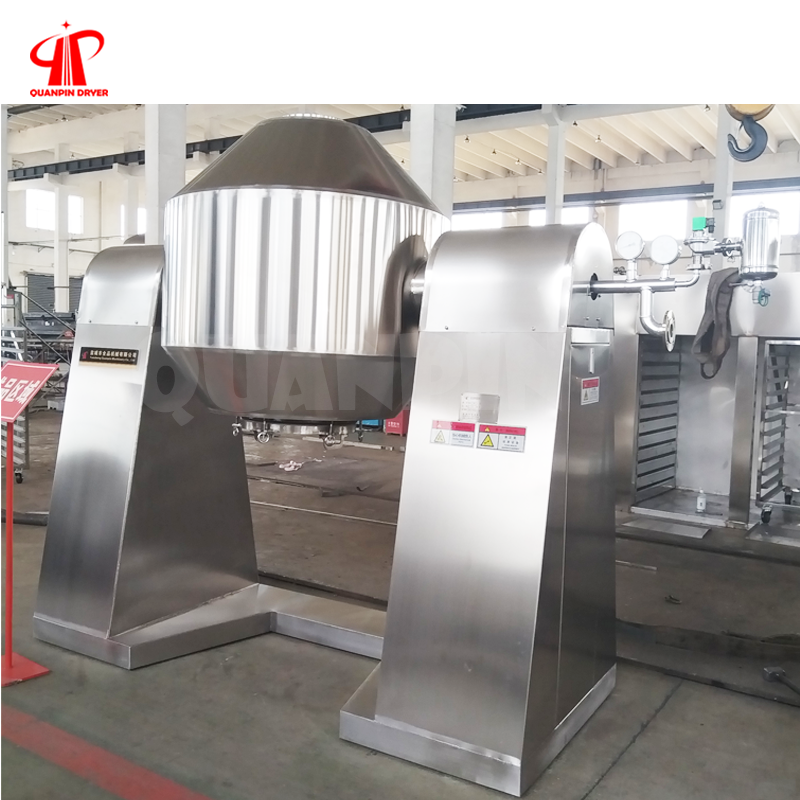
Decide Whether Material Movement Is Acceptable
Describe the material at loading and throughout the expected drying stages. Does it begin as a wet powder, crystals, granules, cohesive cake or a formed product? Record whether it becomes sticky or fragile. Ask whether tumbling, breakage or changes in particle form are acceptable. A feed description such as powder is too broad to establish the correct handling arrangement.
Discuss this information with the supplier before comparing vessel capacities. A rotating vessel should be evaluated for the actual material movement and discharge behavior. A tray arrangement should be evaluated for spreading, layer depth and handling. Neither process name proves suitability for every heat-sensitive or solvent-bearing feed.
Compare the Loading and Unloading Work
For a tray proposal, define mass per tray, layer depth, tray dimensions and how operators load and remove material. Include preparation, cleaning and handling between the dryer and the next operation. The usable batch is linked to the required loading arrangement, rather than just the space available in the chamber.
For a double cone proposal, define charging and discharge interfaces, the expected wet and dry bulk behavior and how samples can be obtained safely. Discuss what happens if the product bridges, adheres or does not discharge as expected. Request evidence for the proposed feed instead of assuming rotation will resolve a handling problem.
Use the Same Product and Vapor Requirements
Compare both proposals against a shared product specification: residual moisture or solvent, acceptable particle form, temperature limits and downstream requirements. Identify the measurement method and sampling plan. Trials should use representative material and check variation within the batch, not only a convenient sample taken at the end.
Define the vacuum and vapor-handling scope separately. State the liquid being removed and any condensation, recovery or treatment requirements. An enclosed vessel and reduced pressure do not establish complete containment or safety. A solvent-bearing process requires a material-specific design and hazard review.
Include Cleaning and the Complete Batch Cycle
Ask how product-contact surfaces, trays, seals and discharge areas are inspected and cleaned. Review access, cleaning methods and product-change requirements with the site team. Require the supplier to identify the items included in the quotation and the activities that remain the buyer’s responsibility.
Compare loading, preparation, drying, cooling where required, unloading and cleaning as a complete cycle. Evaluate saleable output and repeatability under the agreed conditions. The live product descriptions linked above explain the two QUANPIN equipment families; they do not replace material trials or a project-specific specification. A useful comparison ends with the unresolved questions and the evidence needed to decide.
Discuss the Required Equipment Scope
Review the QUANPIN equipment range and company website, then send an application inquiry with your material, production requirements and the questions you need the proposal to answer.