Producing a consistent batch of wet pharmaceutical intermediates requires a clear connection between equipment movement and the condition of the material delivered downstream. A vacuum chamber lowers the pressure surrounding material spread on trays. Heat supplied to the loaded material supports evaporation, while the vacuum system removes vapor; these linked duties must be evaluated together. The useful selection question is whether that mechanism matches the actual feed and handling route.
This guide organizes the assessment around preparation, operation and verification. Start with representative production material and define what the next process needs to receive. Supplier information establishes the equipment concept; a documented material trial establishes whether the proposed arrangement is suitable for the application, without assuming a universal cycle or guaranteed result.
- For the vacuum tray dryer, describe the wet intermediate before choosing a cycle. Record whether the material is crystalline, sticky or paste-like, and identify the liquid to be removed rather than assuming every load contains only water. Record the observation alongside the batch identity and operating arrangement so that a later comparison reflects the same material-handling conditions rather than an undocumented change in preparation or loading.
- For the vacuum tray drying machine, control the depth spread across each tray. A thick center and thin edges create different paths for heat transfer and vapor escape, even when the chamber conditions are shared. Record the observation alongside the batch identity and operating arrangement so that a later comparison reflects the same material-handling conditions rather than an undocumented change in preparation or loading.
- For the FZG vacuum tray dryer, arrange trays consistently between batches. Loading position, spacing and access influence the practical heat-transfer arrangement and should remain identifiable in the operating record. Record the observation alongside the batch identity and operating arrangement so that a later comparison reflects the same material-handling conditions rather than an undocumented change in preparation or loading.
- For the vacuum tray dryer for pharma, distinguish chamber pressure from product condition. A vacuum reading describes the surrounding environment; it does not by itself establish internal material temperature or residual liquid content. Record the observation alongside the batch identity and operating arrangement so that a later comparison reflects the same material-handling conditions rather than an undocumented change in preparation or loading.
- Coordinate vapor removal with heat input. Increasing heat without adequate vapor handling can change the drying behavior, so review the complete chamber, connection and vacuum-system arrangement. Record the observation alongside the batch identity and operating arrangement so that a later comparison reflects the same material-handling conditions rather than an undocumented change in preparation or loading.
- Develop a representative endpoint method. Sample according to an approved material procedure and investigate differences between tray positions instead of judging dryness solely from surface appearance. Record the observation alongside the batch identity and operating arrangement so that a later comparison reflects the same material-handling conditions rather than an undocumented change in preparation or loading.
- Quality-unit responsibilities in 21 CFR 211.22 include approval or rejection duties. Route the drying protocol and material disposition through the applicable quality system. Consult the relevant primary guidance for its stated scope. This source supports the handling or governance issue described here; it supplies no model-specific production rate, drying endpoint or blend-uniformity guarantee.
- Personnel qualification and continuing training are addressed in 21 CFR 211.25. Train operators on loading, unloading and recognizing deviations in this particular process. Consult the relevant primary guidance for its stated scope. This source supports the handling or governance issue described here; it supplies no model-specific production rate, drying endpoint or blend-uniformity guarantee.
- Personnel hygiene requirements appear in 21 CFR 211.28. Define clothing and handling practices for the exposed intermediate during tray preparation. Consult the relevant primary guidance for its stated scope. This source supports the handling or governance issue described here; it supplies no model-specific production rate, drying endpoint or blend-uniformity guarantee.
- Facility design requirements in 21 CFR 211.42 concern suitable space and orderly operations. Include wet and dried material movement in the layout review. Consult the relevant primary guidance for its stated scope. This source supports the handling or governance issue described here; it supplies no model-specific production rate, drying endpoint or blend-uniformity guarantee.
- Ventilation and air-control provisions in 21 CFR 211.46 provide a facility context. Assess the room and associated services separately from the chamber vacuum. Consult the relevant primary guidance for its stated scope. This source supports the handling or governance issue described here; it supplies no model-specific production rate, drying endpoint or blend-uniformity guarantee.
- Prepare the supplier inquiry around representative wet pharmaceutical intermediates, incoming condition, required outgoing condition and the complete transfer route. Include loading, emptying, inspection and changeover when comparing the production cycle. Request a trial that records these variables and retains samples for the agreed assessment. Select the configuration on the strength of that evidence and the actual installation requirements.
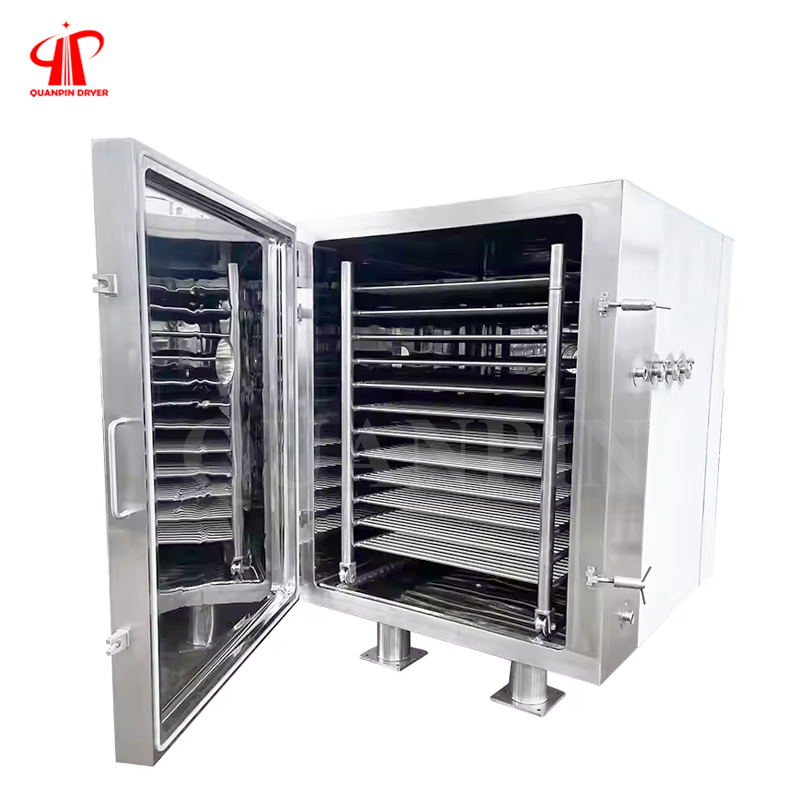
Discuss your material and production route with QUANPIN. Review the corresponding equipment information before arranging a material trial.
YANCHENG QUANPIN MACHINERY CO.. LTD
Sales Manager – Stacie Tang
MP: +86 19850785582
Tel: +86 0515-69038899
E-mail: stacie@qpdryer.com
WhatsAPP: 8615921493205
https://quanpindrying.en.alibaba.com/
Address: Jiangsu Province, China.