Producing a consistent batch of cut botanical materials requires a clear connection between equipment movement and the condition of the material delivered downstream. A moving mesh belt carries a spread layer through a drying enclosure. Heated air contacts the solids and removes moisture, while a permeable layer allows air to pass through the material rather than simply bypassing it. The useful selection question is whether that mechanism matches the actual feed and handling route.
This guide organizes the assessment around preparation, operation and verification. Start with representative production material and define what the next process needs to receive. Supplier information establishes the equipment concept; a documented material trial establishes whether the proposed arrangement is suitable for the application, without assuming a universal cycle or guaranteed result.
- For the Belt Dryer, define the botanical feed by cut size and condition. Leaves, stems and sliced roots have different shapes, and a mixed feed can form a bed with uneven resistance to airflow. Record the observation alongside the batch identity and operating arrangement so that a later comparison reflects the same material-handling conditions rather than an undocumented change in preparation or loading.
- For the belt conveyor drying, create a consistent layer at the inlet. A deep ridge and a thin edge give air different routes, so evaluate the feeder together with the belt instead of treating feeding as a separate convenience. Record the observation alongside the batch identity and operating arrangement so that a later comparison reflects the same material-handling conditions rather than an undocumented change in preparation or loading.
- For the mesh-belt dryer, observe whether pieces overlap or mat together. A mesh support permits through-flow only when the product layer itself allows air movement; sticky or compacted material requires specific trials. Record the observation alongside the batch identity and operating arrangement so that a later comparison reflects the same material-handling conditions rather than an undocumented change in preparation or loading.
- For the through-flow drying, relate belt movement to the material response. Residence time follows the transport arrangement, but a slower belt also changes loading and must be assessed with the actual feed rate. Record the observation alongside the batch identity and operating arrangement so that a later comparison reflects the same material-handling conditions rather than an undocumented change in preparation or loading.
- Check airflow distribution across the width. Preferential paths through thinner regions can leave denser regions wetter, making cross-belt observations useful during commissioning. Record the observation alongside the batch identity and operating arrangement so that a later comparison reflects the same material-handling conditions rather than an undocumented change in preparation or loading.
- Follow fragile pieces into the discharge receiver. Continuous transport can simplify material movement, but drops, transfer points and handling may still break dried leaves or generate fines. Record the observation alongside the batch identity and operating arrangement so that a later comparison reflects the same material-handling conditions rather than an undocumented change in preparation or loading.
- Sanitation requirements in 21 CFR 211.56 address maintaining buildings in a clean condition. Include the belt inlet and discharge surroundings in the sanitation plan. Consult the relevant primary guidance for its stated scope. This source supports the handling or governance issue described here; it supplies no model-specific production rate, drying endpoint or blend-uniformity guarantee.
- Maintenance provisions in 21 CFR 211.58 apply to buildings used in manufacture. Review room condition alongside the installation rather than assigning every issue to the dryer. Consult the relevant primary guidance for its stated scope. This source supports the handling or governance issue described here; it supplies no model-specific production rate, drying endpoint or blend-uniformity guarantee.
- Equipment design provisions in 21 CFR 211.63 concern suitable design, size and location. Assess access for belt inspection and product removal in the proposed layout. Consult the relevant primary guidance for its stated scope. This source supports the handling or governance issue described here; it supplies no model-specific production rate, drying endpoint or blend-uniformity guarantee.
- Equipment-construction provisions in 21 CFR 211.65 address product-contact surfaces. Confirm the actual supplied materials and their suitability for the botanical process. Consult the relevant primary guidance for its stated scope. This source supports the handling or governance issue described here; it supplies no model-specific production rate, drying endpoint or blend-uniformity guarantee.
- Cleaning and maintenance requirements in 21 CFR 211.67 concern written procedures and records. Define how the mesh and retained fragments will be inspected between campaigns. Consult the relevant primary guidance for its stated scope. This source supports the handling or governance issue described here; it supplies no model-specific production rate, drying endpoint or blend-uniformity guarantee.
- Prepare the supplier inquiry around representative cut botanical materials, incoming condition, required outgoing condition and the complete transfer route. Include loading, emptying, inspection and changeover when comparing the production cycle. Request a trial that records these variables and retains samples for the agreed assessment. Select the configuration on the strength of that evidence and the actual installation requirements.
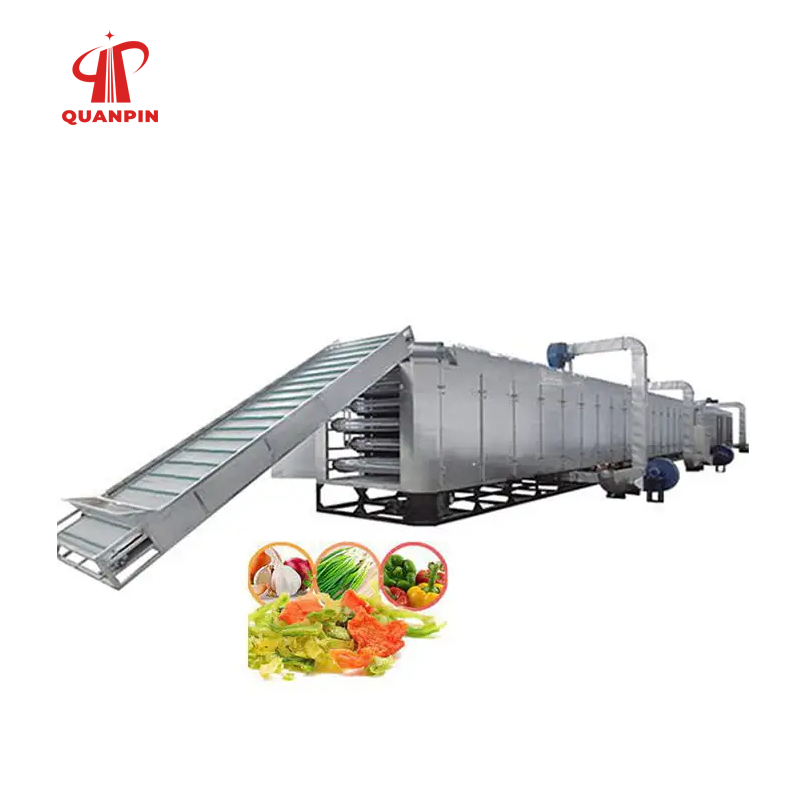
Discuss your material and production route with QUANPIN. Review the corresponding equipment information before arranging a material trial.
YANCHENG QUANPIN MACHINERY CO.. LTD
Sales Manager – Stacie Tang
MP: +86 19850785582
Tel: +86 0515-69038899
E-mail: stacie@qpdryer.com
WhatsAPP: 8615921493205
https://quanpindrying.en.alibaba.com/
Address: Jiangsu Province, China.