Vacuum Freeze Dryer for Fruit: Distinguish Shelf Temperature from Product Collapse Limits
By QUANPIN
Shelf temperature and fruit temperature describe different parts of a freeze-drying trial. A programmed heating condition cannot establish the temperature throughout every fruit piece.
A Vacuum Freeze Dryer removes frozen water by sublimation under reduced pressure. Product behaviour depends on the material and the heat-transfer arrangement as well as the programme.
Why Shelf and Product Temperatures Differ
The shelf supplies heat through the tray and loaded fruit. The product responds while water vapour moves through the developing dried structure.
A local temperature observation should therefore identify its position and cycle stage. An isolated reading cannot reconstruct the entire batch history.
Define the Fruit before Selecting a Programme
Define whether the proposed feed consists of whole berries, slices, juice or puree. These forms provide different structures and routes for water to escape.
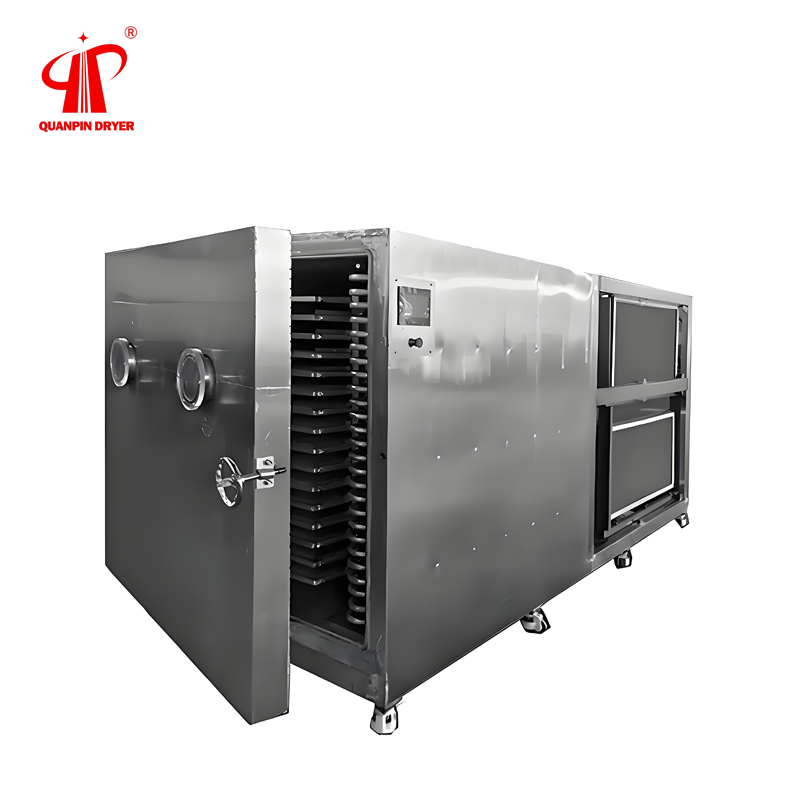
A Vacuum Freeze Dryer Machine enquiry should describe the material being evaluated before asking a supplier to recommend a trial programme.
Five Inputs for an Interpretable Trial
Fruit identity
Record the fruit identity and relevant pretreatments. Differences introduced before loading may influence later observations even if the drying programme is repeated.
Formulation
Disclose ingredients added to puree. A carrier-containing formulation is a different material from unmodified fruit and needs a corresponding development description.
Geometry and loading
Describe the actual cut geometry and loading arrangement. Comparing different thicknesses or mixed product forms can complicate interpretation of drying responses.
Freezing history
Retain the freezing history used in each comparison. Do not attribute every difference in dried structure to the later heating schedule alone.
Quality objective
Specify the quality questions that matter: structure, moisture, colour or another justified attribute. A preferred appearance does not establish every required product characteristic.
Distinguish Thermal Transitions from Collapse
Glass transition concerns molecular mobility in amorphous material. Its measured temperature depends on composition, water condition and how the measurement is defined.
Collapse is an observed structural response under particular conditions. A thermal-analysis result and a visible collapse observation are connected evidence but are not interchangeable measurements.
The condition of frozen material differs from that of a nearly dry powder. Keep those material states explicit when discussing thermal results.
Do not use a dry-powder glass-transition value directly as a primary-drying shelf setpoint. That shortcut omits material state and actual product temperature.
Apply Fruit Research within Its Limits
Material structure
Original apple research compared pulsed-electric-field pretreatment and fast, slow and vacuum freezing. Drying-rate effects depended on the combination of pretreatment and freezing history; they were not a universal benefit of pretreatment. See the original apple freezing-history experiment.
Study limitations
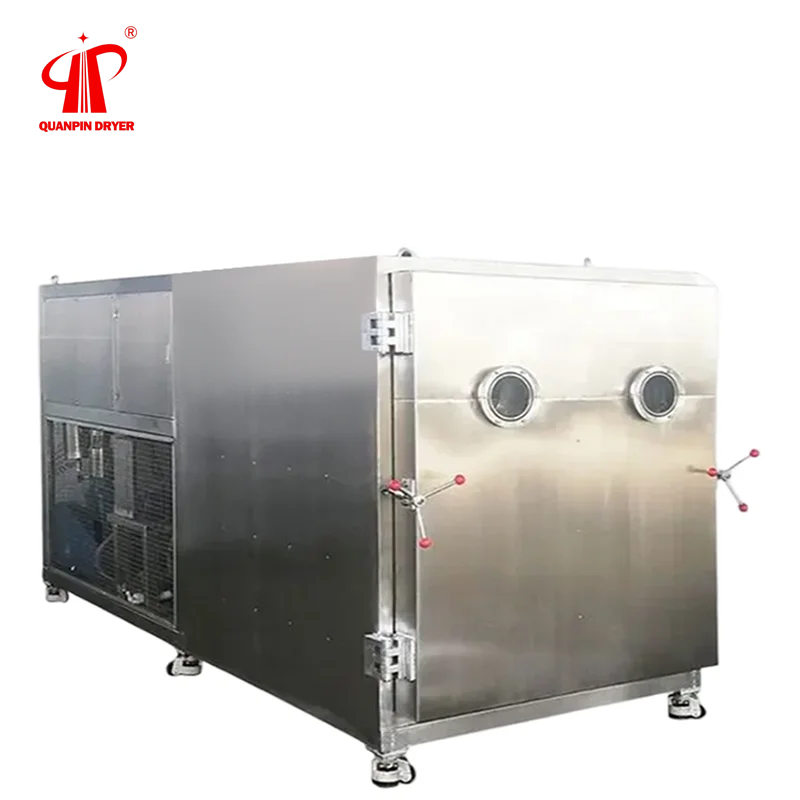
Record freezing history alongside the shelf programme. This apple experiment does not provide a collapse limit for a different fruit, formulation or tray load. Include these material details when specifying a food vacuum freeze dryer.
Analytical definition
Ask the laboratory which sample state and analytical definition produced a reported thermal transition. Preserve those details beside the numerical result.
Representative sample
A laboratory measurement becomes useful when the tested material represents the development question. Unexplained sample preparation can make apparently similar values difficult to compare.
Quality responses
An original orange-puree experiment varied freezing rate, chamber pressure and shelf temperature and measured several quality responses. The puree contained gum Arabic and bamboo fibre, so its results describe that formulation rather than untreated fruit. See the formulated orange-puree experiment.
Programme applicability
Use the orange study to frame a trial with several quality responses. Its formulation and programme are not a validated QUANPIN operating recipe or a universal safe temperature.
Follow the Product and Measurement Responsibilities
Loading and cycle history
At loading, identify the actual trays, material arrangement and batch. These details link later observations to the product that experienced the programme.
During early drying, retain the programmed conditions and available product-temperature information together. A final reading alone does not describe the preceding thermal path.
Where sensors are used, record their locations and installation method. A measurement from one piece should not silently represent all pieces or trays.
Recovery and evaluation
During the cycle, record interruptions and agreed programme changes. Assess their relevance before treating two runs as directly comparable experiments.
At unloading, use the agreed structural assessment method. A photograph of a selected attractive piece cannot characterize the entire trial output.
Protect samples from uncontrolled moisture uptake before analysis. Otherwise, the tested material may differ from its condition when it left the drying chamber.
Measurement responsibilities
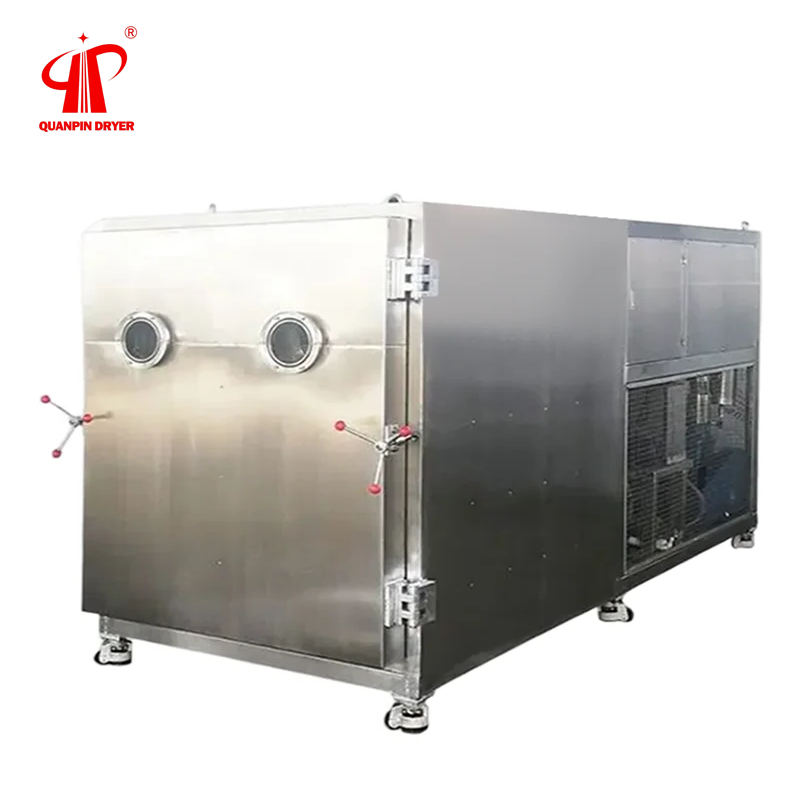
A vacuum freeze drying machine enquiry should explain how product temperature will be observed. Confirm the supplied measurement scope instead of assuming accessories from photographs.
Discuss how tray geometry and material loading affect measurement access. Practical sensor-placement constraints should be visible before trial responsibilities are agreed.
Identify who supplies thermal analysis and who interprets the result. Equipment operation and material characterisation require coordinated expertise, without implying a universal acceptance limit.
Interpret Composition and Sample State
An original apple experiment measured mechanical properties during the hot-air stage of a combined freeze-drying and hot-air process. Sample temperature relative to glass transition was associated with changing stiffness; this was a hybrid process, not a primary freeze-drying collapse measurement. See the original hybrid-drying apple experiment.
Keep the hybrid apple result within its measured process stage. For primary drying, establish the relevant limit and actual product temperature for the frozen material rather than importing a hot-air-stage observation.
Original strawberry research measured sorption isotherms, state diagrams and glass transition for uncoated, dark-chocolate-coated and milk-chocolate-coated freeze-dried slices. Coating reduced hygroscopic behaviour in the studied snacks; these are storage and formulation findings. See the original strawberry state-diagram experiment.
Do not infer a need for chocolate or any particular additive in the proposed product. The strawberry comparison illustrates why composition and moisture condition must accompany thermal data; storage evidence cannot set the frozen-product limit.
Keep the Formulation Context Explicit
Preserve the intended ingredient formulation and product objective in supplier discussions. Commercial formulation decisions should be reviewed alongside the technical trial questions.
Food vacuum drying covers a broader family of processes. Freeze-drying additionally depends on frozen feed and the intended sequence of drying stages.
Separate Thermal Mechanisms and Storage Effects
Consequently, a temperature from an unfrozen vacuum-drying experiment is not automatically suitable for a freeze-drying programme. Establish the actual process before comparing evidence.
Later moisture adsorption creates a separate stability question. A fruit powder that remains structured during drying may change during handling or storage.
Original research on freeze-dried apple powders examined gliadin and glutenin additions under different humidities. The reported moisture responses concerned the particular formulations after drying. See the original fruit freeze-drying study.
Use that evidence to explain why composition and post-drying environment matter. It does not establish a primary-drying collapse threshold or an ingredient recommendation.
Keep cycle observations separate from later storage-test conditions. This helps prevent a change during storage being interpreted automatically as a drying-equipment defect.
When shrinkage is observed, review material, loading and thermal history together. One shelf setting cannot independently explain every structural difference between samples.
Prepare the QUANPIN Enquiry
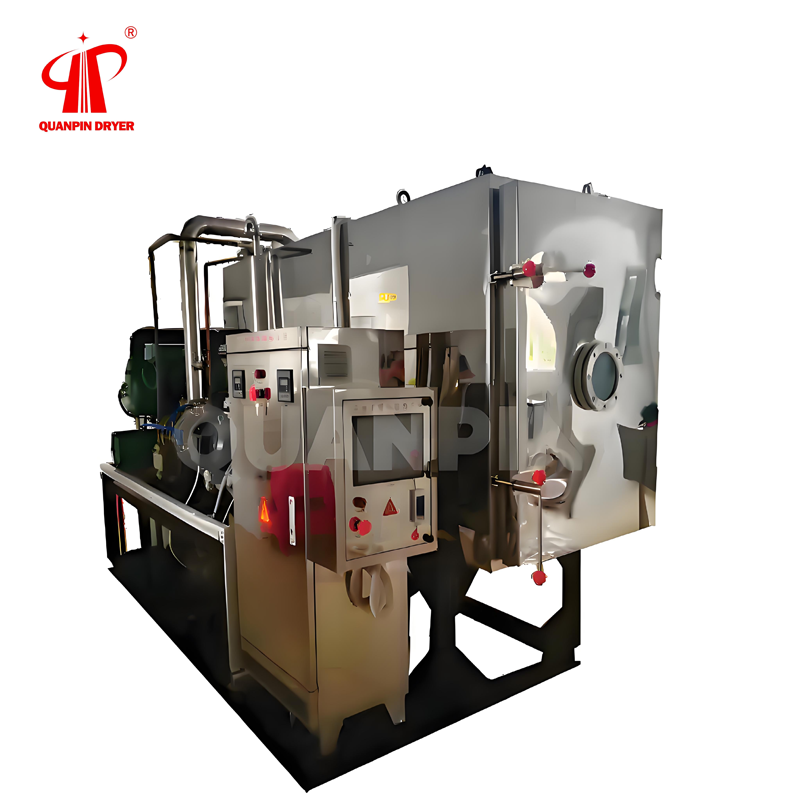
Send QUANPIN the fruit form, pretreatments, tray concept and proposed measurements. Explain which product observations the trial is intended to resolve.
Ask the supplier to confirm the equipment and measurement interfaces included in its proposal. Keep unsupported operating limits out of the commercial specification.
Retain Evidence for the Actual Product
A useful trial programme connects material evidence with observable responses. It identifies unresolved questions rather than promising that a universal temperature avoids collapse.
Retain programme details, product-temperature information, sample identities and quality results together. A later reviewer should understand the experiment actually performed.
Frequently Asked Questions
Is shelf temperature product temperature?
No. The shelf setting describes the heating programme, while a product sensor describes a local response affected by heat and mass transfer.
Does every fruit have one collapse limit?
No. Fruit composition, water condition and internal structure differ. Establish relevant material evidence rather than assigning every fruit the same numerical threshold.
Can dry-powder Tg define primary drying?
No. A dry-powder glass-transition result describes that analysed state. Applying it to primary drying requires a technically appropriate assessment of the different material conditions.
What belongs beside a temperature result?
Record where and how temperature was measured, together with material identity and cycle stage. Do not assume that a single position represents every tray.
Can a published schedule be copied?
Not automatically. Published trials use particular formulations and arrangements. Their observations guide useful questions without becoming equipment-specific settings for another process.
What information supports an enquiry?
Provide fruit identity, form, ingredients, freezing history, loading proposal and quality objectives. Agree which temperature measurements and laboratory assessments will support the trial.
Discuss Your Fruit Freeze-Drying Trial
Discuss the intended material and trial requirements with QUANPIN equipment details. Visit QUANPIN or our contact page to agree the enquiry scope.
Email sales@qpdryer.com or stacie@qpdryer.com. Call +86 19850785582; WhatsApp: +86 15921493205.
For process evaluation, consider the vacuum tray dryer for batch drying on trays under vacuum; the vacuum rake dryer for agitated drying under vacuum; the double cone vacuum dryer for rotating batch drying under vacuum; and the hot air circulation oven for batch tray drying with circulating hot air. Confirm suitability with representative material, the required product properties and the proposed process conditions.