Fluid Bed Drying: Why Uneven Fluidisation Complicates Moisture Endpoint Measurements
By QUANPIN
A fluid bed drying endpoint is only useful when the measurement represents the granules being evaluated. Uneven fluidisation can complicate that relationship.
Before accepting an endpoint signal, ask what material the sensor or sample actually observes. A stable number does not independently demonstrate uniform conditions throughout the bed. Review our pharmaceutical processing applications.
What Does the Endpoint Measurement Represent?
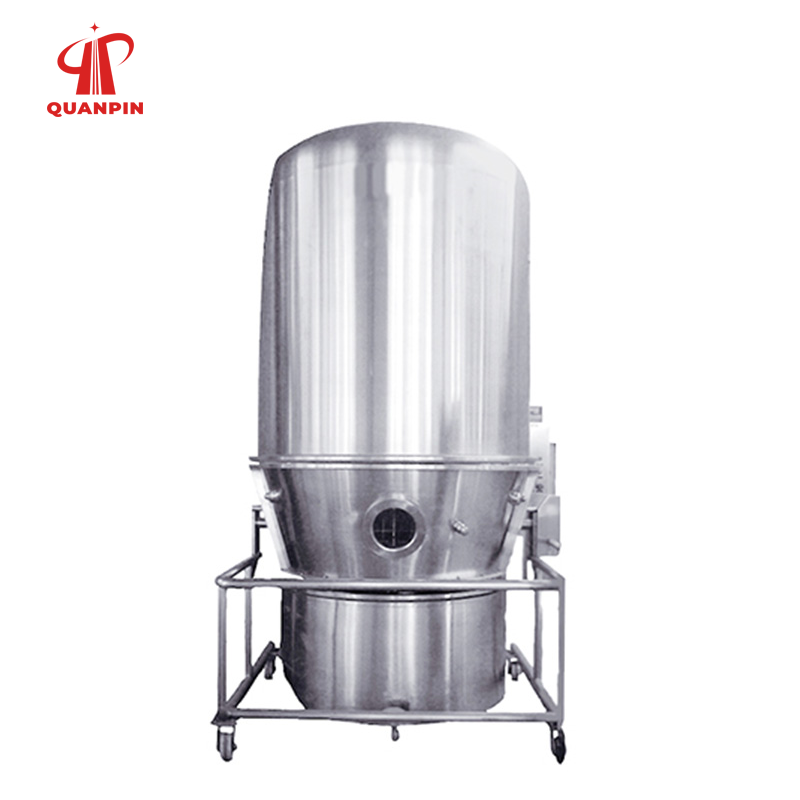
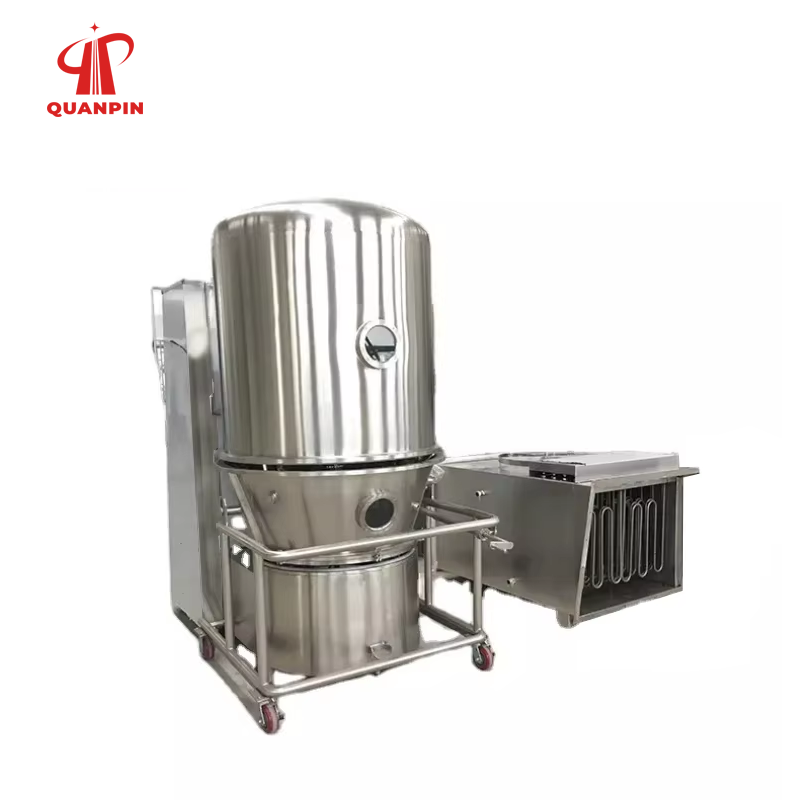
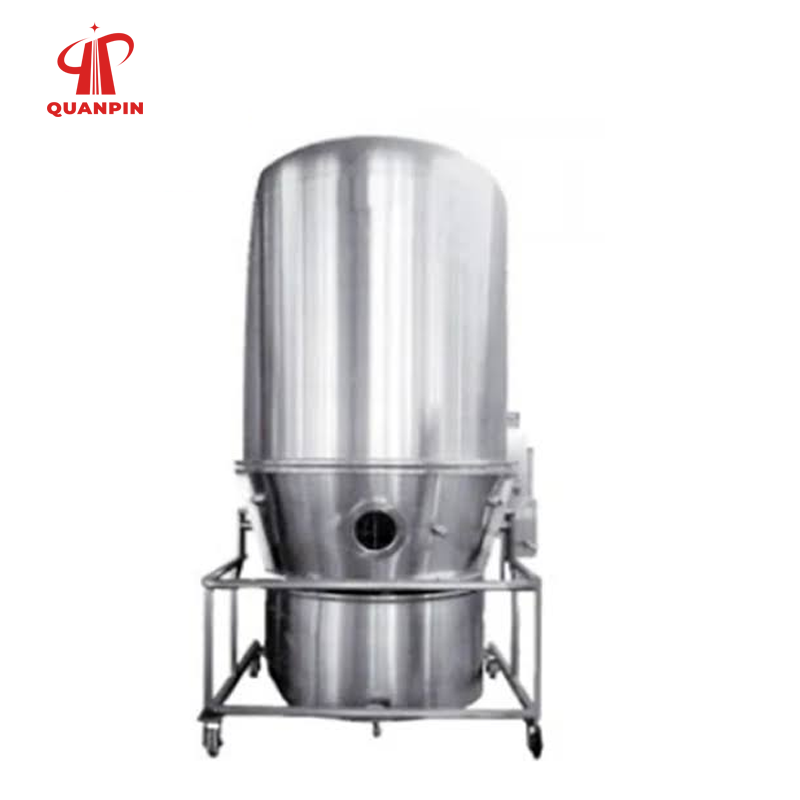
A fluid bed dryer brings moving air into contact with granular material. The resulting particle movement and moisture transfer depend on the actual feed and operating arrangement.
Where contact is uneven, some observations may describe a local condition rather than the entire batch. Keep that limitation visible when interpreting moisture results.
Define the Material and Monitoring Question
A fluidized bed dryer enquiry should identify the wet granules and the proposed evidence for completion. Time and temperature settings alone do not define material acceptance.
Specify whether the question concerns a development trial, routine monitoring or method qualification. These activities have related objectives but require different evidence.
Five Inputs to a Representative Comparison
Formulation
Describe the granule formulation and how it was prepared. A monitoring model developed for one material cannot be assumed valid for every pharmaceutical formulation.
Incoming granules
Record the incoming wet condition and any relevant size distribution. Differences in the material presented to the bed can affect the observed drying behaviour.
Loading arrangement
Describe the loaded amount and distribution using the actual trial record. Do not infer the bed condition from a nominal equipment capacity alone.
Measured property
Identify what the proposed measurement detects: sampled water, a spectral response, temperature or another process signal. Similar-looking trends can describe different phenomena.
Endpoint reference
Define the endpoint question and reference method before selecting a preferred trace. An unexplained signal threshold cannot independently establish final product suitability.
Uneven Fluidisation Changes the Evidence
Original placebo-granule research compared vibration, acoustic and pressure information during fluidised drying. The different signals did not provide interchangeable evidence of completion. See original pharmaceutical drying signal experiments.
Its reported acoustic endpoint limitations illustrate why a promising process signal needs investigation in context. Do not transfer a research threshold directly into production instructions.
The same research context highlights representativeness problems when material movement and air contact are uneven. A sample from one location may miss other conditions.
For a development study, preserve the connection between the observation and the material it represents. Avoid presenting an attractive signal as an established universal moisture measurement.
Keep Reference Tests and Process Signals Distinct
Reference sample
A reference moisture test supplies evidence about the tested sample. Its interpretation still depends on where, when and how that sample was obtained.
Method identity
Keep the reference method and sample identity beside the result. Disagreement between methods may require investigation rather than simply selecting the lower reported moisture.
Process trend
A process trend provides information over time. More readings can improve visibility without automatically resolving a systematic sampling or model limitation.
Thermal response
Temperature can support process understanding, but a local thermal response is not the same measurement as the water content of every granule.
Bed observations
Where the bed condition changes, retain that observation with the signal. Understanding the measurement context helps distinguish a material change from an analytical artefact.
Safe trial access
Do not introduce unapproved sampling into operating equipment to investigate a concern. Trial access and sampling responsibilities must be agreed with qualified equipment and process personnel.
Connect Trial Stages with Sampling Scope
Charging and monitoring
At charging, identify the actual granules and their preparation history. Link the batch identity to the monitoring record before interpreting its endpoint.
During early drying, record relevant air and product observations using the agreed scope. A changing material condition can also change the way a sample is presented.
Where a sensor observes a local region, describe its position and interface. Do not silently treat that region as representative of all material.
Sampling and recovery
Where laboratory samples are taken, preserve timing and location. The relationship between an inline reading and a later laboratory result requires a traceable comparison.
At the proposed endpoint, retain the supporting observations and applicable reference tests. A threshold crossing should remain connected to the material assessment it is intended to support.
At discharge, maintain sample identity through the receiving arrangement. Combining material before the intended assessment may remove evidence about differences within the trial.
Research applicability
A pharmaceutical fluid-bed granulation experiment tested how operating variables affected the relationship between IR absorbance and granule moisture. Under unusually slow wetting, surface drying changed water distribution and influenced that relationship. See original fluid-bed granulation moisture-spectroscopy study.
That experiment concerns granulation with liquid addition, rather than a separate drying endpoint. Its relevant lesson is limited: a moisture-sensitive optical signal can depend on the water distribution created by the process.
For a drying investigation, establish sensor repeatability, reference-method uncertainty and sampling representativeness separately. A successful granulation calibration does not validate a drying measurement.
Interpret Complementary Signals
Compare results only after identifying the material and sampling relationship. A calibration result is less informative when its reference samples cannot be traced to the measured condition.
Ask what the proposed model has actually been tested against. A published study on another formulation does not establish validation for the intended pharmaceutical operation.
Original research using a compact MEMS NIR sensor combined moisture information with temperature observations to examine water transport during drying of placebo granules. See university research on compact NIR drying measurements.
That experiment illustrates how complementary signals can support process understanding. It does not establish that the pictured QUANPIN dryer includes the research sensor or model.
Define the Analytical Equipment Scope
If additional analytical equipment is proposed, identify its supplier scope and integration responsibilities. Keep optional measurement development separate from confirmed standard equipment features.
An original pharmaceutical fluid-bed granulation study developed a water-content soft sensor from process measurements and compared it with NIR. The authors evaluated their model across manufacturing scales using experimental data. See original cross-scale pharmaceutical granulation soft-sensor research.
Keep Air Conditions and Models Material-Specific
This was a granulation study, not proof of an endpoint rule for the proposed dryer. It illustrates why model inputs and prediction performance need process-specific experimental evaluation.
Separate an observed air-temperature trend from a validated moisture prediction. A model developed for another formulation, process stage or machine cannot establish the moisture state of this batch.
Another original NIR development study investigated water content and granule-size changes across drying stages. Its models were connected to the studied materials and reference measurements. See original pharmaceutical NIR granule-monitoring research.
Use that evidence to explain why stage and particle condition belong in method development. It does not authorize an untested model for another formulation.
A practical development plan should identify which sources of variation the study covers. State the remaining limits instead of implying that all materials behave alike.
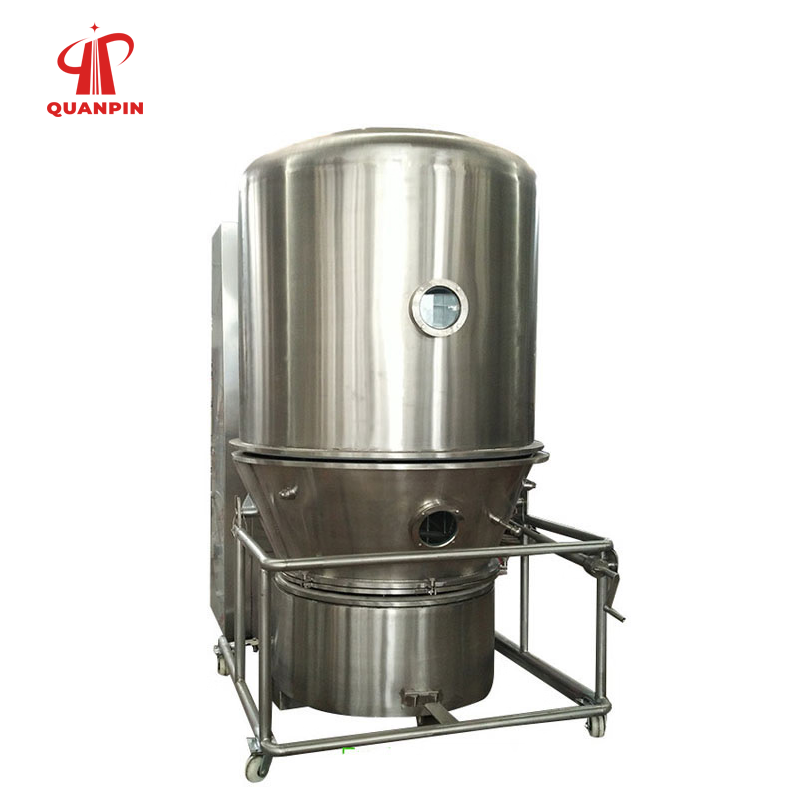
When comparing a fluid bed dryer for sale, ask how the supplied process arrangement supports the intended trial and measurement interfaces. Confirm the actual equipment scope.
Compare the Actual Supplier Scope
A fluid bed dryer price comparison should include agreed sampling access, controls and responsibilities. A quotation total cannot resolve an undefined endpoint measurement question.
Send QUANPIN the granule description, incoming condition and proposed moisture evidence. Explain whether uneven results have been observed and which comparisons require investigation.
Retain Evidence for the Endpoint Decision
Ask the supplier to confirm practical interfaces and operating documentation. Assign pharmaceutical acceptance and analytical method decisions to the responsible qualified team.
A useful report connects material movement, sampling and the measured endpoint. It distinguishes an observed process trend from evidence sufficient for the intended decision.
Frequently Asked Questions
Does a stable signal prove a uniform bed?
No. A stable local signal can be consistent while another region behaves differently. Establish what the measurement represents before generalising to the batch.
Is drying time alone an endpoint test?
No. Timer settings describe the programme. The intended material condition needs appropriate evidence under the actual process and incoming-air circumstances.
Can temperature replace moisture testing?
Not automatically. Temperature and moisture content are different measurements. Their relationship requires material-relevant understanding and an appropriate assessment of the observed location.
Why does sampling configuration matter?
Because heterogeneity affects which material reaches a sensor or sample point. A comparison can appear precise while failing to represent the whole process.
Can a published NIR model be copied?
No. A published research model concerns defined materials and conditions. Confirm applicability, reference testing and responsibilities before using an analytical model for another formulation.
What should accompany the enquiry?
Provide formulation, granule preparation, incoming moisture information, loading proposal and the monitoring question. Agree sample handling, reference methods and equipment interfaces before interpreting endpoint results.
Discuss Your Pharmaceutical Drying Trial
Discuss the intended material and trial requirements with QUANPIN solid dosage production line. Visit QUANPIN or our contact page to agree the enquiry scope.
Email sales@qpdryer.com or stacie@qpdryer.com. Call +86 19850785582; WhatsApp: +86 15921493205.
For process evaluation, consider the vibrating fluid bed dryer for drying suitable particles in a fluidized bed. Confirm suitability with representative material, the required product properties and the proposed process conditions.