Granule Conditioning Before Testing: Keep Moisture Exposure in the Development Record
By QUANPIN
Dried granules can take up moisture after the drying step. A development comparison should therefore identify the condition in which specimens were tested, rather than treating the drying endpoint as their permanent state.
For a high shear granulator trial, establish a conditioning and sampling plan that connects each result to a known material history. This is particularly useful when handling or compression results change between otherwise similar batches.
Distinguish Moisture Content from Hygroscopic Response
Moisture content describes the measured condition of a specimen. Hygroscopic behavior concerns its response to surrounding conditions over time; the two observations answer different questions.
Do not infer moisture resistance simply from successful granule formation. A larger particle or improved handling result does not independently demonstrate that the formulation will resist water uptake.
Define the Post-Drying Condition
Define which post-drying condition is relevant to the development decision. A specimen tested immediately after collection represents a different history from one left exposed before analysis.
Keep measured sorption behavior separate from a packaging or storage recommendation. Those decisions require appropriate product-specific evidence beyond an isolated granulation comparison.
Five Records Needed for a Fair Comparison
Formulation identity
Record the formulation and actual material grades. Different components and their proportions can influence the moisture response and should remain identifiable in every comparison.
Drying and handling history
Record the original drying and subsequent handling history. Include the interval between collection, conditioning and testing rather than using the batch date as the only timing information.
Exposure environment
Record the surrounding temperature and humidity where they are relevant to the study. A statement that specimens were stored under laboratory conditions may be insufficient for interpreting a difference.
Moisture-analysis method
Record the method used to determine moisture content or sorption behavior. State the sampling and analytical procedures instead of treating every reported moisture value as interchangeable.
Functional testing state
Record the associated performance tests and material state. Flow and compression observations should be connected to the specimens actually tested, not merely to a nominal batch identifier.
Plan the Conditioning Experiment
Begin with a comparison plan that explains the problem. Investigating an unexpected handling change requires a different experiment from measuring the moisture response of a newly proposed formulation.
Select specimens using a defined procedure. Avoid comparing fresh material from one condition with previously exposed material from another without acknowledging the handling difference.
Use consistent conditioning when that is appropriate to the question. If exposure history is intentionally varied, identify it as an experimental factor rather than an uncontrolled inconvenience.
Retain actual observations and unexplained results. A neat average moisture value can conceal variability that matters when connecting material condition with handling behavior.
Follow Six Specimen Checks
Identify the specimen
First identify the starting specimen and its history. Preserve information about formulation, granulation, drying and collection before beginning a conditioning or sorption comparison.
Define the exposure
Next define the exposure conditions and the observation period. Explain which condition the experiment represents and avoid implying that it covers every possible storage environment.
Measure material condition
Then collect material-condition measurements with traceable specimens. Record relevant sample handling so that transfer to the analytical instrument does not become an invisible part of the experiment.
Test the agreed state
Evaluate the selected functional properties in the agreed state. If the specimen changes condition before testing, document that history instead of assigning the result to its earlier measured state.
Compare all observations
Compare results across the planned conditions. Investigate whether a trend is supported by the complete observations rather than selecting only the samples that fit an expected explanation.
Bound the conclusion
Finally report what the comparison establishes and what remains uncertain. A conditioning study may guide further development without establishing shelf life or a final manufacturing specification.
What Original Moisture Studies Establish
Formulation isotherms
An original formulation study investigated moisture isotherms and the effects of manufacturing parameters. Its findings emphasize the importance of distinguishing material composition from particular physical changes in the tested formulations.
The formulation-isotherm investigation provides a useful experimental comparison. It does not establish that granulation always reduces moisture uptake or that all products behave like those formulations.
A rapid mixer granulator development report should therefore retain both formulation and process information. Improved granule handling alone cannot serve as proof of reduced hygroscopicity.
Botanical extract granules
Original research developed granules from a spray-dried botanical extract and assessed their technological characteristics, including moisture-related behavior. Different preparation and formulation choices were evaluated in that material system.
The botanical-granule investigation illustrates why formulation details belong with a moisture observation. Its specific formulation findings are not a general recommendation to alter another pharmaceutical product.
Use the study as a reason to evaluate the actual formulation, not as evidence that any particular ingredient will provide a universal protective effect.
Cellulose sorption history
An original doctoral investigation at Bath examined moisture sorption of ungranulated and granulated microcrystalline cellulose. Its experimental chapters considered material history and preparation in interpreting sorption observations.
The Bath thesis supports documenting how specimens were prepared and conditioned. It is a research source, not an approved storage instruction for a commercial granulated formulation.
A high shear mixer granulator trial can adopt the same traceability principle. Keep the actual specimen history visible before assigning a difference solely to granulation settings.
Keep Material Identity in the Interpretation
A separate original material-library investigation evaluated changes caused by high-shear wet granulation across different materials. It assessed multiple attributes rather than assuming a single response for every powder.
The material-library study supports a material-specific comparison. Its observations do not guarantee that a new formulation will show the same moisture response after processing.
Original research also examined moisture content and flowability in pharmaceutical excipients using several measurement approaches. Different materials did not all respond identically within that investigation.
The moisture-flow study reinforces the need to test the relevant material and property. It cannot supply a universal moisture limit or prove that drier material will always handle better.
Investigate Conflicting Moisture and Handling Results
If fresh and conditioned specimens behave differently, preserve their histories and inspect the comparison method. The difference may be useful evidence without establishing a general mechanism for every formulation.
If moisture results are similar but handling differs, investigate additional material attributes and analytical procedures. One moisture measurement does not reconstruct the complete state of a granule population.
Prepare the Granulation Trial Enquiry
Describe the moisture-related problem when enquiring about a high shear wet granulator. State which material is being considered and which downstream observation requires explanation.
Provide the proposed conditioning and sampling plan together with the granulation duty. This helps distinguish equipment trials from a separate analytical study of the collected material.
Agree responsibility for moisture and functional testing. Confirm which methods and laboratory resources are available before promising conclusions that the proposed experiment cannot support.
Include the handling between equipment discharge and specimen analysis. Containers, waiting periods and transfers may be relevant to the interpretation of a moisture-sensitive comparison.
When comparing high shear granulator price, distinguish the equipment supply from conditioning facilities and specialist analysis. Those activities should not be assumed to be included in every quotation.
Ask for the records required from the trial and their stated limits. Equipment observations can support product development without constituting a shelf-life assessment or an approved packaging instruction.
Confirm the Equipment and Analytical Scope
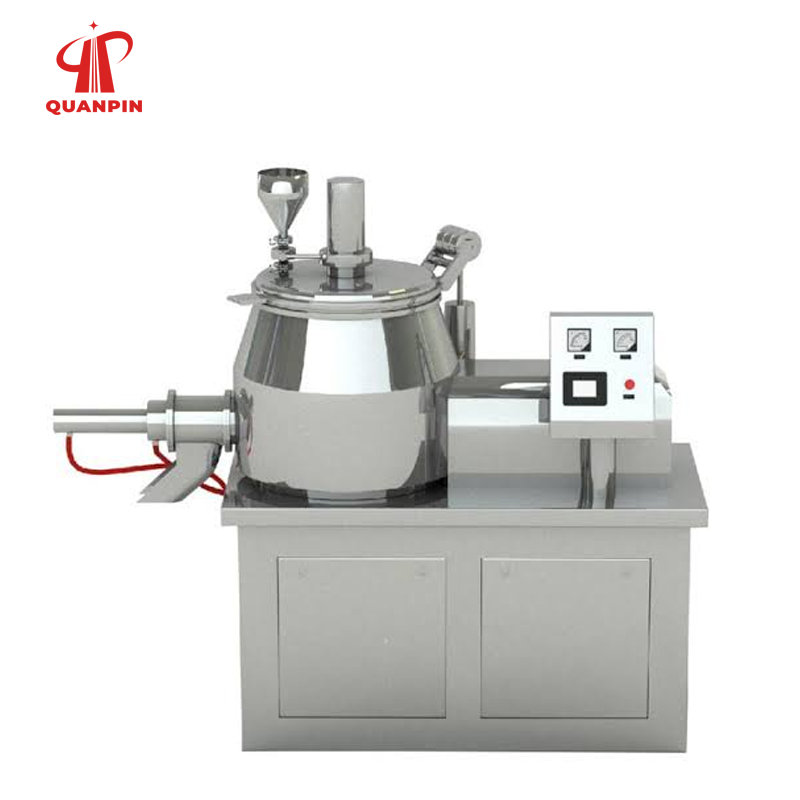
Use GHL information to discuss the confirmed granulation duty and specimen collection arrangements. A product photograph cannot demonstrate a formulation’s moisture resistance or its future storage behavior.
Select equipment for the material and process conditions actually proposed. A conditioning study complements that decision but does not confirm compatibility with every cleaning, solvent or containment requirement.
Write a Traceable Conditioning Report
The final report should connect each moisture and performance result with an identifiable specimen. Preserve preparation, exposure and analytical information so that the comparison can be reviewed later.
State uncertainty proportionately. A finding about the specimens tested should not become an unsupported guarantee of long-term stability, universal handling behavior or a manufacturing operating limit.
Frequently Asked Questions
Does granulation prevent moisture uptake?
No. Granulation changes physical form but does not universally prevent water uptake. Evaluate the actual formulation and exposure conditions rather than assuming a protective effect.
Are moisture content and hygroscopicity the same?
No. Moisture content describes a measured specimen condition. Hygroscopic behavior describes response to surrounding conditions and needs an appropriate exposure and measurement framework.
Can fresh and exposed specimens be compared directly?
Not without accounting for the difference. Fresh and exposed material have different histories, which may matter when interpreting moisture or handling observations.
Does drier material always handle better?
No. Original excipient research found material-dependent responses. A lower moisture result alone does not establish better handling for every formulation or operation.
Does a conditioning study establish shelf life?
No. A development conditioning study does not automatically establish shelf life or packaging requirements. Those decisions need evidence appropriate to the actual product and intended conditions.
What should an enquiry include?
Provide the formulation, collection history, exposure plan and required analytical tests. Agree the equipment and laboratory responsibilities before treating the enquiry as a complete moisture-behavior study.
Discuss Your Granulation Requirements
Discuss the material, processing objective and required trials with QUANPIN. Review the equipment information and the relevant industry applications, or send an enquiry through our contact page.
Email sales@qpdryer.com or stacie@qpdryer.com. Call +86 19850785582 or contact WhatsApp +86 15921493205 to discuss the proposed scope.