GHL Wet Granulation: Preserve Light-Exposure History When Assessing Photosensitive Granules
By QUANPIN
A high shear granulator trial can establish useful physical observations without answering whether a light-sensitive ingredient remains chemically stable during handling.
Photostability describes resistance to change under light exposure. For pharmaceutical granules, the formulation, exposure history and protective packaging deserve separate consideration.
Physical Granulation and Photostability Answer Different Questions
An acceptable granule size distribution cannot establish retained drug content. A physical development result and a chemical stability result answer different questions.
Plan specimen protection before the first trial. Otherwise, transfer and laboratory handling may introduce an exposure history that complicates interpretation of the manufacturing experiment.
Define the Trial and Handling Scope
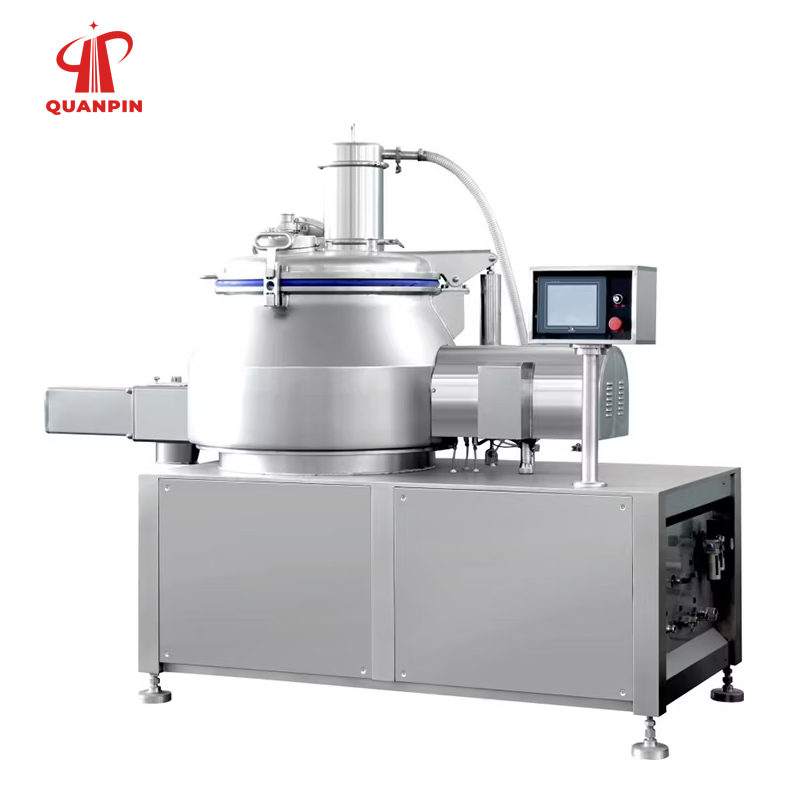
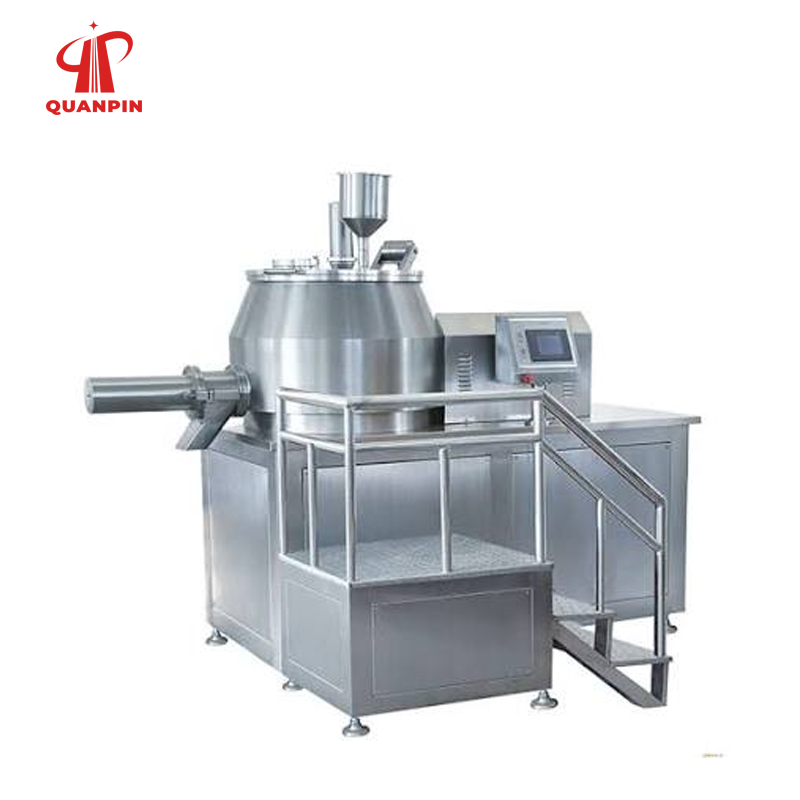
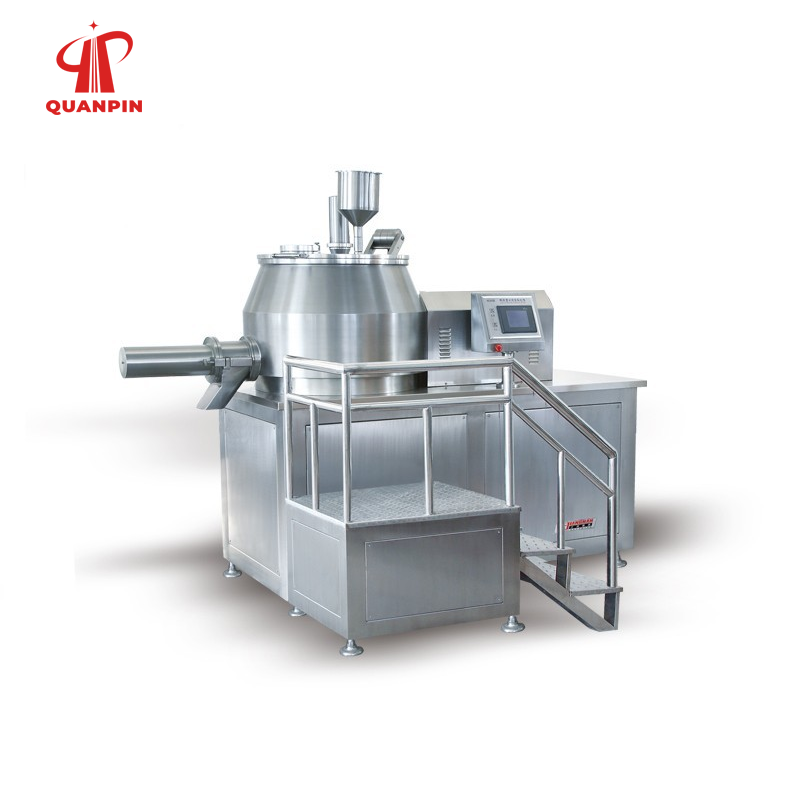
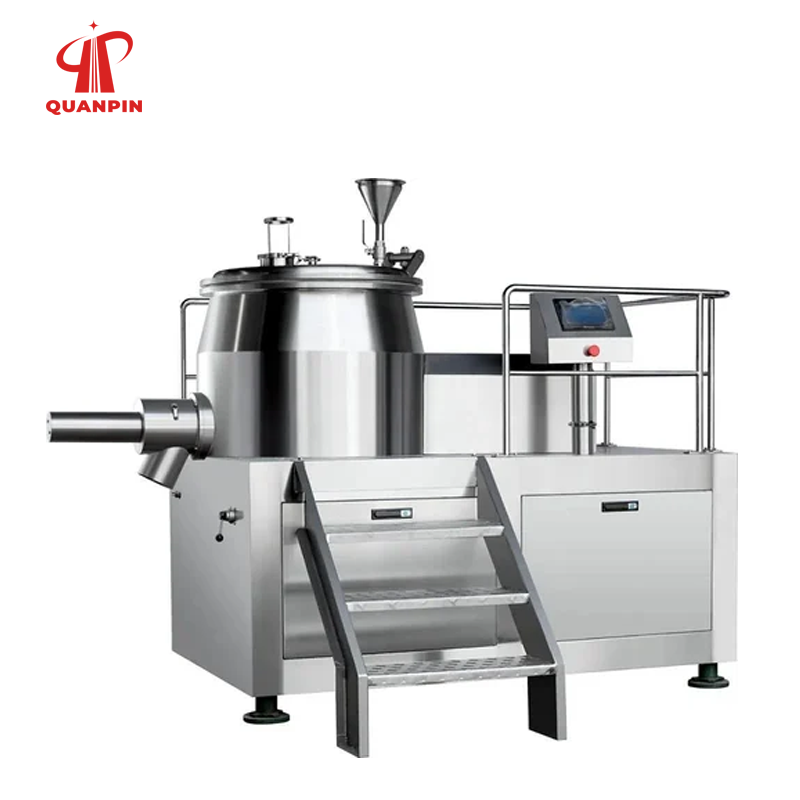
For a rapid mixer granulator enquiry, describe the actual formulation and proposed downstream route. Discuss material handling requirements without assuming that the machine supplies light protection.
The studies below concern specific nifedipine preparations and packaging experiments. They illustrate assessment questions rather than proving performance for every drug or commercial granulator.
Five Inputs for Interpretable Specimens
Formulation identity
Identify the photosensitive ingredient and its formulation context. Evidence about a pure powder cannot automatically describe a finished granule containing several excipients.
Specimen stage
Define the specimen stage. Incoming powder, wet mass, dried granules and finished tablets represent different materials with different processing histories.
Exposure conditions
Record the exposure conditions associated with each specimen. A clock time alone does not identify the light source or the protection present.
Protective container
Identify the container and closure used during collection and transfer. A protective package must be described precisely enough for the comparison to remain meaningful.
Analytical assessment
Assign the chemical assessment and acceptance basis to qualified personnel. Appearance alone cannot supply an assay or an assessment of degradation products.
Separate Exposed Material from Packaged Product
Retain physical observations alongside laboratory results. The objective is to understand both material handling and chemical quality without allowing one measurement to replace another.
The official ICH Q1B Photostability Testing of New Drug Substances and Products provides evidence within its stated scope.
The guideline describes a systematic approach involving the active substance, exposed product and, where needed, immediate and marketing packaging. These are distinguishable assessment stages.
For a high shear mixer granulator programme, use that distinction to frame questions about specimens and handling. It does not qualify the equipment or establish a universal manufacturing exposure limit.
Six Stages from Formulation to Review
Development question
Begin with a clearly identified formulation and development question. State whether the work investigates granule formation, handling protection or a separately designed stability comparison.
Processing record
Document the ingredients and actual processing sequence. Keep formulation changes identifiable so that a different composition is not mistaken for an equivalent specimen.
Collection points
Define collection points and specimen quantities through the approved study plan. Avoid choosing a convenient sample without recording which fraction it represents.
Protected transfer
Preserve the assigned protection during transfer and storage. Record departures promptly rather than reconstructing the exposure history from memory after laboratory testing.
Physical measurements
Measure physical properties using the agreed methods. Report those observations as physical findings without adding an unsupported claim about chemical stability.
Joint interpretation
Review the analytical findings with the specimen history. Decide which conclusions are supported and which require another controlled comparison before changing the manufacturing approach.
Keep Preparation and Packaging Context
Commercial preparations
The original study Photostability Nifedipine in Powder, Obtained by Crushing Tablet, Granule or Fine-Granule provides evidence within its stated scope.
This original study compared commercial powders obtained from tablets, granules and fine granules, and examined coloured glassine packaging under specified illumination conditions.
The preparations differed in their behaviour, and packaging affected the observations. The findings should remain attached to those materials and experimental conditions.
Solid-dispersion fine granules
The separate study Dissolution Properties and Photostabilities of a Sustained Release Nifedipine Fine Granules provides evidence within its stated scope.
This separate investigation concerned a sustained-release fine-granule product prepared using solid dispersion. It evaluated dissolution behaviour and compared protection provided by different packaging materials.
Its reported contrast between laminate packages demonstrates why a package description matters. It does not prescribe a packaging system for an unrelated wet-granulated formulation.
Packaging and microencapsulation
A high shear wet granulator trial should therefore preserve the identity of the tested intermediate. Do not describe a solid-dispersion fine-granule result as evidence from that trial.
The original study Compatibility between Drugs and Photodegradation of Sustained Release Fine Granules of Nifedipine provides evidence within its stated scope.
The researchers investigated compatibility and photodegradation of sustained-release nifedipine fine granules. Their light experiment included several wrapping and packaging arrangements rather than a single unqualified storage condition.
Read Fine-Granule Evidence Precisely
The light-resistant multilayer bag performed differently from the other arrangements in that experiment. A generic statement that any bag protects the product would erase the comparison.
The original study Effect of Microencapsulation on Photo-Stability of Nifedipine provides evidence within its stated scope.
The original research examined a formulation strategy involving microencapsulation. That is a distinct intervention from producing an ordinary wet-granulated intermediate or placing a specimen in protective packaging.
Its relevance is the need to identify what supplied any observed protection. These findings cannot establish that an uncoated GHL granule has the same behaviour.
Distinguish Protection Strategies
For a high shear granulator price discussion, separate mechanical equipment supply from stability studies, protective handling arrangements and analytical responsibilities. Each requires a defined scope.
Explain which material stages the proposed trial will generate. Confirm how those specimens will reach the laboratory with an interpretable record of handling and protection.
Interpret Physical and Chemical Findings Together
If a granule handles well but chemical results change, retain both findings. Physical success does not resolve the cause or acceptability of a chemical observation.
If packaging differs between specimens, do not attribute every difference to granulation. The comparison contains another variable that needs appropriate consideration.
If only the collection time is known, preserve that limitation. Unknown illumination and protection prevent a complete reconstruction of the specimen’s light exposure.
If a formulation changes, review whether the original assessment remains applicable. Evidence about one drug-excipient combination should not silently migrate to another composition.
If a study involves sustained-release commercial granules, state that context. Its findings should not become an instruction to alter prescribed products or a claim about every granulator.
If a coating or encapsulation strategy is proposed, assess it as an additional formulation operation. Do not infer that the quoted mixer supplies that function.
Prepare the Granulation Enquiry
Prepare the enquiry with ingredient identity, intended dosage-form route and the physical granulation objective. Include known material protection requirements and planned specimen stages.
Describe the laboratory support available for chemical assessment. Confirm who defines sampling, handling and interpretation before treating the equipment demonstration as a stability investigation.
Confirm Specimen and Laboratory Responsibilities
Discuss transfer and downstream processing within the proposed equipment scope. Do not infer a validated protective enclosure, coating operation or finished-product stability claim.
A useful trial report links physical findings and analytical findings to identifiable specimens. That connection makes the evidence reviewable without overstating what the experiment established.
Frequently Asked Questions
Does granule size establish stability?
No. Size describes a physical attribute. Retained content and degradation require appropriate chemical assessment tied to the actual formulation and specimen history.
Is there a universal exposure limit?
No. The cited studies concern particular preparations and packages. Their observations do not establish a universal light-exposure limit for pharmaceutical granulation.
Does any bag protect a specimen?
No. The package composition and experimental conditions matter. A loosely described bag cannot be assumed equivalent to the protective arrangement in a published experiment.
Does microencapsulation prove wet-granule stability?
No. Microencapsulation is a distinct formulation intervention. Evidence from encapsulated material cannot establish the behaviour of ordinary uncoated wet granules.
Should specimen transfer be documented?
Yes. Record the actual protection and handling history so the responsible laboratory can interpret results. Do not infer exposure conditions from elapsed time alone.
What should the enquiry include?
Provide formulation identity, physical objectives, specimen stages and known protection requirements. Define analytical responsibilities separately so the trial supports a clear and appropriately limited decision.
Discuss Your Granulation Application
Discuss the material, processing objective and required trials with QUANPIN. Review the equipment information and the relevant industry applications, or send an enquiry through our contact page.
Email sales@qpdryer.com or stacie@qpdryer.com. Call +86 19850785582 or contact WhatsApp +86 15921493205 to discuss the proposed scope.
For process evaluation, consider the high speed mixer granulator for high-shear preparation of a suitable wet granulating mass. Confirm suitability with representative material, the required product properties and the proposed process conditions.