Binder Screening for Wet Granulation: Build a Formulation-Specific Evidence Matrix
By QUANPIN
Binder screening should produce a reasoned shortlist for a particular formulation, not a league table of polymers. The useful question is which material can deliver the required intermediate and downstream attributes within the proposed process.
For a high shear granulator trial, prepare a comparison matrix that records material identity, activation conditions, granule behavior and subsequent product tests. This makes the selection more informative than choosing the strongest available granules.
Define the Problem the Binder Must Solve
Begin with the failure that the binder is intended to address. Excessive fines, weak intermediates and poor downstream behavior are different problems, and one screening criterion may not capture all of them.
State which product attributes must be preserved alongside the intended improvement. A candidate that improves handling but prevents acceptable downstream performance has not met the complete development objective.
Understand the Material in Its Process Context
A binder’s behavior belongs to a formulation and a processing history. Relevant observations can include its interaction with liquid and filler, the preparation method and the time available for activation.
Do not assume that an ingredient’s generic polymer name defines its performance. Record the exact grade and the information available about its properties before interpreting differences between candidates.
Five Inputs for a Useful Screening Matrix
Filler and formulation context
Identify the filler system and the other formulation components. The surrounding material can influence how a candidate behaves, so a binder comparison should not silently change the rest of the mixture.
Binder preparation route
Record whether the candidate enters as a dry ingredient or a prepared liquid. These preparation routes create different experimental questions and should be distinguished in the screening record.
Liquid and addition history
Record the liquid system and the actual addition history. An equal nominal liquid quantity does not guarantee equal local distribution or equal activation of the candidates being compared.
Intermediate test methods
Define the observations used to assess intermediate quality. Include the test method and sample condition so that a reported improvement does not merely reflect different preparation for analysis.
Downstream acceptance
Specify the downstream evaluation needed to support the choice. Strong granules and an acceptable final pharmaceutical product are related development objectives, but they are not interchangeable measurements.
Design a Fair Candidate Comparison
Use a matrix with one row per candidate and explicit columns for the formulation, preparation route, process observations and final tests. Keep missing information visible rather than assigning a favorable assumption.
Compare candidates under a justified experimental plan. Identical settings can be a useful starting comparison, but they do not necessarily represent an appropriate operating condition for every material.
Distinguish a screening experiment from an optimization study. Screening can identify useful candidates and unresolved questions without establishing a final recipe, operating range or validated manufacturing instruction.
Retain candidates that fail an individual test in the report. Understanding why a material failed may help explain the formulation constraints and prevent the same unsuccessful approach from being repeated later.
Follow Six Steps Through the Study
Verify candidate identity
First verify the identity and condition of each candidate. Record the supplier information and grade without substituting the properties of another material that happens to share its polymer name.
Document preparation
Next document preparation of the binder and the powder blend. Retain the actual sequence so that a preparation error is not mistaken for an intrinsic disadvantage of a candidate.
Run traceable trials
Then run the agreed granulation comparison with traceable specimens. Record the events needed to interpret the results rather than relying only on an operator’s impression of the final wet mass.
Test the intermediate
Evaluate the intermediate under consistent handling and testing conditions. Where sample treatment differs, identify that difference explicitly before comparing the reported values between candidate binders.
Assess the downstream product
Continue to the relevant downstream tests. A candidate that performs well in the bowl still needs evidence for the part of the process that motivates its selection.
Explain the selection
Finally explain the selection and its limits. Identify what the study established, what remains uncertain and which conditions would require another comparison rather than an automatic material substitution.
What Original Binder Studies Establish
Soluble-filler attribute study
Original research with a soluble model filler investigated which binder attributes were associated with effectiveness during continuous twin-screw wet granulation. Its conclusions were explicitly connected to the formulation studied.
The critical-attribute investigation supports recording formulation context when comparing binders. It does not establish that one polymer attribute should be maximized in every batch high-shear process.
Use this distinction when preparing a rapid mixer granulator enquiry. The equipment discussion should include the material system and the intended comparison rather than only the name of a preferred binder.
PVA grade comparison
A later study evaluated different polyvinyl alcohol grades as binders during continuous twin-screw granulation. The investigation considered grade-related differences instead of treating the entire polymer family as one material.
The PVA-grade study illustrates a useful material-identity question for screening. It is not a recommendation to replace an approved ingredient or a performance guarantee for a GHL installation.
Where grade information is incomplete, retain the uncertainty in the matrix. A promising generic description cannot substitute for the identity of the actual material used in a trial.
Wet and dry addition research
Another original investigation studied wet and dry binder addition with a poorly soluble filler. It linked binder characteristics to the behavior of the granulated material within that experimental context.
The university record of the addition-route study supports keeping preparation route visible. Its observations do not mean that a route successful in continuous equipment will transfer unchanged to batch granulation.
A high shear mixer granulator study should therefore confirm the proposed preparation and addition arrangement. Treat any transfer of formulation knowledge as a development hypothesis until appropriate observations support it.
Account for the Complete Formulation
Research on a high-dose, poorly soluble model drug examined formulation approaches including binder addition and surfactants. This was a targeted investigation of a challenging system rather than a universal formulation platform.
The original formulation investigation shows why the difficulty being addressed belongs in the screening brief. Its experimental choices are not general instructions to add a surfactant or change a pharmaceutical formulation.
Binder selection also interacts with other formulation decisions. Original work on binder and disintegrant combinations examined granules and tablets after twin-screw granulation rather than evaluating the binder in isolation.
The binder–disintegrant study reinforces the need for downstream assessment. A favorable intermediate result alone cannot establish the suitability of the full tablet formulation.
Interpret Conflicting Rankings
If candidates exchange their apparent ranking between intermediate and final tests, retain both results. The screening objective may require balancing attributes rather than selecting whichever candidate wins a single measurement.
If a candidate behaves inconsistently, investigate preparation, material identity and sampling before concluding that its polymer family is unsuitable. A repeat experiment is useful when it addresses a specific possible cause.
Prepare the Granulator Trial Enquiry
Provide a formulation description appropriate for the proposed trial, including the binder candidates and the reason for comparing them. Identify confidential information through an agreed exchange process when necessary.
Describe whether the high shear wet granulator will receive a dry binder, prepared solution or another confirmed feed arrangement. The equipment proposal should match the intended experiment rather than an assumed preparation method.
List the required observations and analytical resources. Agree who will perform testing and how the results will be linked to the specimens created during the granulation comparison.
Include cleaning and containment requirements for the actual materials. General equipment descriptions cannot confirm suitability for every formulation, solvent system or operating procedure without a specific review.
When comparing high shear granulator price, keep the supply boundary consistent. Binder preparation, addition equipment, development trials and analytical services should be identified separately where they affect the quotation.
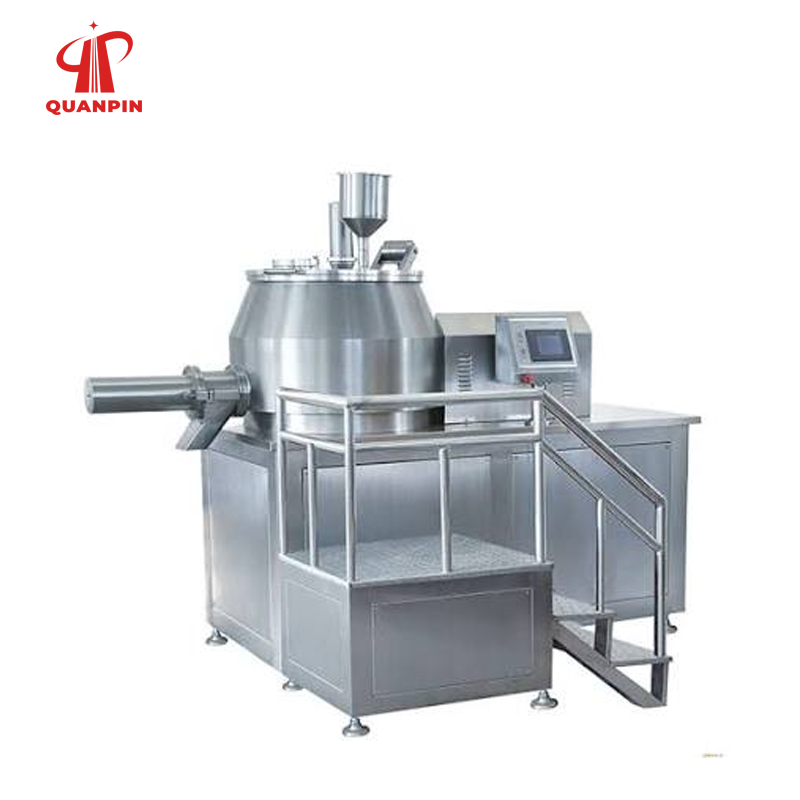
Ask for confirmation of the proposed configuration and trial scope. Reference photographs can support discussion, but they do not confirm an unlisted feed arrangement or a specific development outcome.
Confirm the Proposed Equipment Duty
The GHL product information can provide a starting point for discussing a batch trial. It does not replace formulation work or demonstrate that results from continuous twin-screw equipment will be reproduced.
Select equipment against the confirmed material and process duty. A binder study should inform that discussion without becoming an unsupported claim about universal compatibility or guaranteed product quality.
Preserve the Selection Rationale
The final screening report should connect each recommendation to identifiable experimental evidence. Preserve methods, samples and the conditions under which the comparison was made, including deviations and incomplete measurements.
Keep the difference between a shortlisted candidate and an approved manufacturing change clear. Further development or formal change control may be required before an organization adopts a new formulation or process.
Frequently Asked Questions
Is there a universally best binder?
No. Binder effectiveness depends on the formulation and process being investigated. A screening study should explain the conditions supporting a choice rather than produce an unrestricted ranking of polymers.
Do the strongest granules identify the winner?
No. Granule strength is one possible intermediate attribute. The selection must also consider the downstream requirements and any other acceptance criteria relevant to the actual product.
Does the binder grade matter?
Yes. Original PVA research explicitly investigated different grades. Record the actual grade used and avoid attributing its observed behavior to every material sold under the same polymer name.
Are wet and dry addition equivalent?
Not automatically. Wet and dry addition create different preparation histories. Compare them through an appropriate study instead of assuming that equal binder quantity makes the resulting intermediates equivalent.
Can continuous-process findings be transferred directly?
No. Published continuous-process observations can guide useful questions, but batch equipment, material exposure and operating arrangements require a relevant assessment before transferring a conclusion.
What should an enquiry include?
Provide the formulation context, candidate identities, intended addition routes, required tests and the reason for the comparison. Confirm the trial responsibilities and equipment scope before treating a proposal as a complete development plan.
Discuss Your Granulation Requirements
Discuss the material, processing objective and required trials with QUANPIN. Review the equipment information and the relevant industry applications, or send an enquiry through our contact page.
Email sales@qpdryer.com or stacie@qpdryer.com. Call +86 19850785582 or contact WhatsApp +86 15921493205 to discuss the proposed scope.
For process evaluation, consider the sifter for screening suitable powders or granules; the high speed granulator for controlled granule sizing in the proposed process; and the pulverizer machine for grinding suitable prepared dry feed. Confirm suitability with representative material, the required product properties and the proposed process conditions.