Vacuum tray drying combines a stationary wet load with heat input and reduced chamber pressure. The pressure influences evaporation conditions, but the material must still receive heat and release vapor through its own structure. For a wet pharmaceutical intermediate cake, the tray loading pattern therefore matters as much as the chamber setting. Thickness, contact with the tray and changes in texture can create different drying paths within one batch.
The useful engineering question is how a prepared cake becomes a consistently dried material that can be removed and transferred. Begin with its liquid composition and physical behavior, then consider loading, heating, evacuation, vapor handling and unloading in sequence. This guide explains those connections without assigning a universal temperature, pressure or endpoint. Those choices require product knowledge, an appropriate installation review and trials with representative feed.
- Discuss the vacuum tray dryer in terms of the actual cake. A crumbly filtered solid, a dense wet mass and a sticky paste do not present the same heat-transfer or vapor-release conditions. Describe the initial texture and liquid content, including whether the liquid is water or another solvent. These details help the supplier assess the intended equipment and supporting vapor-handling arrangement.
- Prepare a loading method for the vacuum tray drying machine that creates a repeatable layer. Uneven spreading leaves thick regions with longer internal escape paths and thin regions that may finish sooner. Use a consistent loading tool and record both tray mass and the physical distribution. The objective is comparable starting conditions across trays, rather than a visually tidy surface alone.
- Consider the heat path when reviewing the FZG vacuum tray dryer. Heat must pass from the heating arrangement into the tray and then through the material. Contact conditions and layer thickness influence that route. Ask the supplier to describe the supplied heating configuration and tray arrangement so the trial can distinguish equipment behavior from differences in how individual trays were loaded.
- Evaluate the vacuum tray dryer for pharma with a material-specific endpoint. Chamber pressure indicates one operating condition; it does not directly measure liquid remaining inside every part of the cake. Define the relevant analytical method and sampling locations in advance. A suitable trial compares those results with the loading map and operating record before deciding whether the proposed cycle is acceptable.
- Watch for texture changes during evaporation. A surface crust can change the route by which vapor leaves the interior, while shrinkage can alter contact with the tray. Record these observations during development using an appropriate inspection procedure. They may explain why a thicker load behaves differently even when the same chamber conditions are used.
- Coordinate technical decisions with the responsible quality function. 21 CFR 211.22 assigns responsibilities to the quality-control unit for drug products within its scope. That is relevant when deciding who reviews a drying procedure and its acceptance criteria. It does not prescribe a particular dryer cycle; the product and process assessment must supply that technical basis.
- Make tray preparation a trained task. 21 CFR 211.25 addresses personnel qualifications and continuing training for drug manufacture. In a drying operation, apparently small differences in spreading and sample handling can make trial comparisons unreliable. Define how operators weigh and distribute the wet cake, identify each tray and document observations so the procedure can be followed consistently.
- Plan unloading with the material condition in mind. 21 CFR 211.28 addresses personnel hygiene and protective practices in its regulatory scope. Translate that requirement into a product-specific unloading procedure reviewed by the responsible team. The cake may become more fragile or dusty after drying, so its final handling route needs consideration alongside the wet charging operation.
- Leave room for the full tray route. 21 CFR 211.42 addresses building size, construction and defined areas for drug manufacture. A practical installation review should show where wet trays wait, how they are loaded and where dried material is received. This prevents a nominal equipment footprint from concealing congestion or confusing flows around the drying chamber.
- Review room ventilation separately from the chamber vacuum. 21 CFR 211.46 concerns air filtration, pressure, microorganisms and dust controls where appropriate for drug production. Its scope supports assessing the surrounding room conditions. It does not specify the vacuum-system design, which must be reviewed against the liquid being removed, its vapor load and the supplied installation.
- Compare candidate loading depths through evidence. Keep feed preparation and the analytical method consistent while changing a defined loading variable. Retain the tray positions in the record and compare more than a convenient surface sample. This can reveal whether differences follow layer geometry, chamber position or incoming cake condition before the operating procedure is finalized.
- Prepare the supplier inquiry around wet-cake properties, liquid identity, target outgoing condition, tray handling and the available services. Request review of the heating and vapor-removal arrangement as a connected system. The resulting trial should establish a defensible loading procedure and sampling approach, providing a practical basis for selecting a vacuum tray drying configuration.
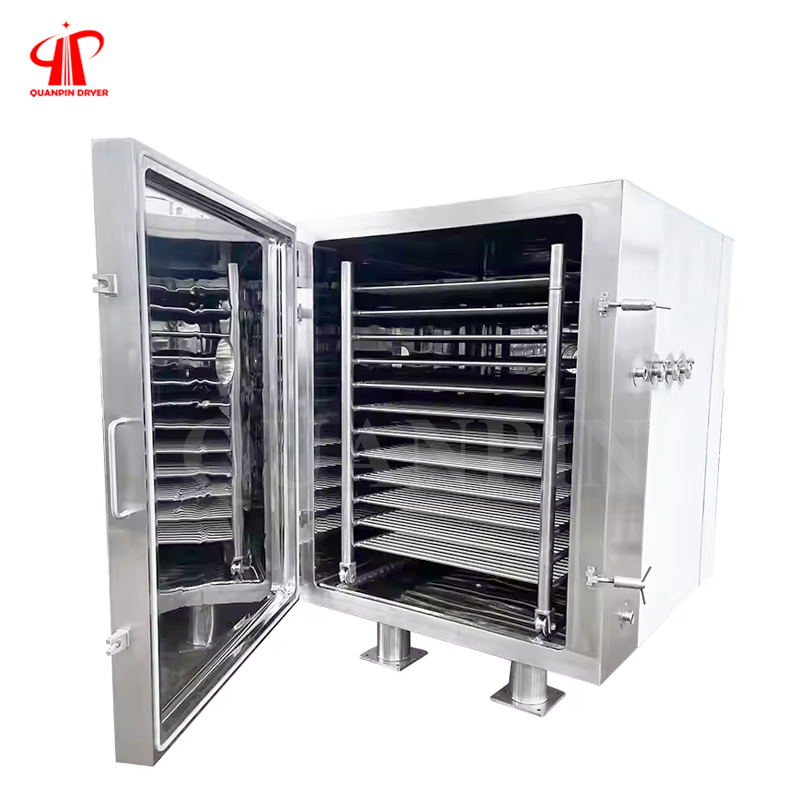
Discuss your material and production route with QUANPIN. Review the corresponding equipment information before arranging a material trial.
YANCHENG QUANPIN MACHINERY CO.. LTD
Sales Manager – Stacie Tang
MP: +86 19850785582
Tel: +86 0515-69038899
E-mail: stacie@qpdryer.com
WhatsAPP: 8615921493205
https://quanpindrying.en.alibaba.com/
Address: Jiangsu Province, China.