Cut botanical material enters a mesh-belt dryer as a porous bed whose structure affects the movement of drying air. Leaves, stems and fines can pack differently, even when the incoming mass rate appears steady. Through-flow drying relies on contact between the air and accessible wet surfaces, so feed preparation and distribution across the belt are central process decisions rather than minor loading details.
For a medicinal-herb operation, begin with the cut geometry and the condition delivered by washing or other preparation. Then follow the material through draining, spreading, air contact, movement along the belt and collection. The aim is to develop a useful relationship between feed rate, bed structure and outgoing condition. Exact settings require the material and proposed machine configuration; a product name alone cannot establish drying performance.
- Choose the Belt Dryer around the botanical form. Flexible leaves can overlap, while short stems may leave larger passages between pieces. A mixed feed can rearrange as it moves. Give the supplier representative material and describe the intended cut distribution so the proposed belt and air-contact arrangement can be assessed against the actual bed rather than an idealized uniform layer.
- Prepare the feed before belt conveyor drying. Excess surface liquid from washing adds a different load from moisture retained within plant tissue. Define the draining step and keep it consistent during trials. Otherwise, changing incoming free water can obscure the effect of air conditions or belt movement and make two apparently similar production runs difficult to compare.
- Spread material evenly on the mesh-belt dryer. A ridge down the center presents a different resistance to airflow from a thin edge, potentially creating different drying histories across the width. Observe the loading point and the resulting bed profile. Any distributing device should be assessed for the actual leaf and stem mixture rather than assumed to create a stable layer automatically.
- Explain through-flow drying through the available air paths. Drying air must reach wet material and carry vapor away, while dense patches and fines can restrict passage. Describe bed permeability qualitatively during the trial and inspect where fines accumulate. These observations help connect changes in outgoing moisture with feed structure instead of attributing every difference to air temperature.
- Relate belt movement to residence rather than choosing speed in isolation. A change in movement affects how long material remains in the drying route, but feed distribution and air contact still determine what happens during that interval. Compare complete operating conditions and sample the discharge over time so a short favorable observation does not stand in for sustained production behavior.
- Include the surrounding area in the cleaning plan. 21 CFR 211.56 addresses sanitation of buildings in drug production. For botanical handling, loose leaves and fines can accumulate around feeding and collection stations as well as on the equipment. Identify those locations during layout review and give the responsible team a clear account of the proposed material route.
- Keep the installation accessible for upkeep. 21 CFR 211.58 requires buildings used in drug manufacture to be maintained in good repair. The practical connection is to preserve access around the dryer and its associated services. A tightly packed layout may complicate inspection of the surrounding installation, even if the equipment itself fits within the available floor area.
- Match equipment arrangement to its intended operation. 21 CFR 211.63 concerns equipment design, size and location for intended use, cleaning and maintenance. For a herb belt line, show loading, discharge and inspection access on the layout. These requirements inform the installation assessment without establishing a specific drying capacity or demonstrating suitability for an untested botanical material.
- Review contact surfaces against the material and process. 21 CFR 211.65 addresses surfaces that contact components and drug products, including limits on reactive, additive or absorptive effects. Ask the supplier to identify the supplied product-contact construction for the proposed configuration. The assessment should include the belt and transfer points, with suitability determined for the actual product and cleaning procedure.
- Define cleaning as an operating procedure. 21 CFR 211.67 addresses equipment cleaning, maintenance and associated procedures and records. Leaf fragments can remain at transfer points or in accessible recesses after a run. Review how those locations are inspected and cleaned between campaigns, keeping the procedure tied to the supplied construction and botanical product rather than assuming one method fits every line.
- Inspect dried material for more than average moisture. Compare leaf and stem fractions where they differ in thickness, and inspect physical condition after the collection step. An average result can hide a wet fraction or excessive fragmentation of a fragile fraction. Use an agreed sampling method and preserve the relationship between each sample and its operating conditions.
- Give QUANPIN a process brief covering cut size distribution, incoming free water, feed behavior, intended bed structure and the required outgoing condition. Include the downstream cooling or collection route and the available utilities. A representative trial can then connect spreading, air contact and residence with product observations, supporting a configuration decision grounded in the material rather than a generic herb-drying claim.
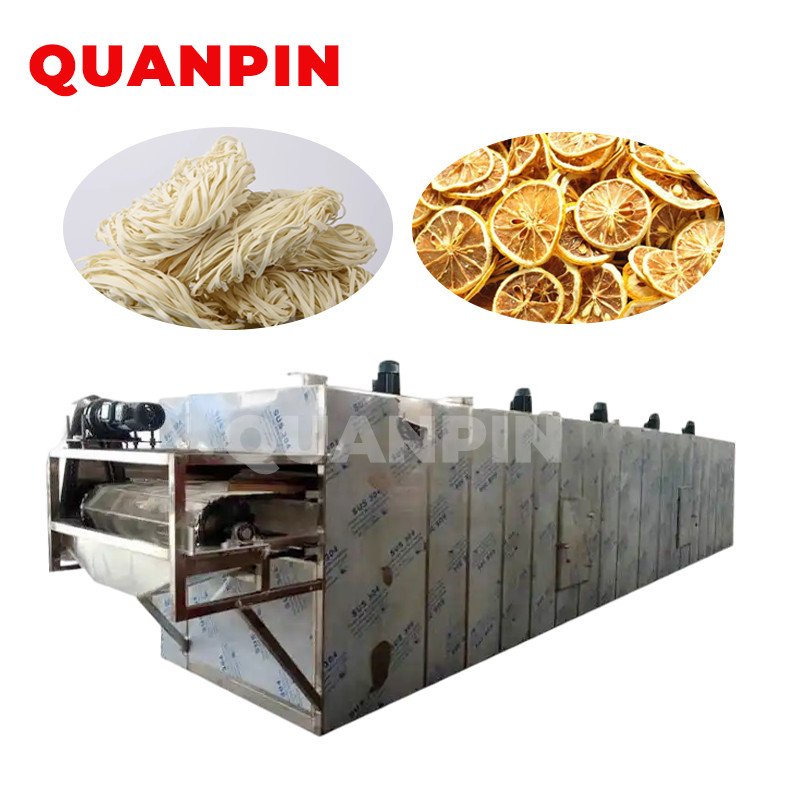
Discuss your material and production route with QUANPIN. Review the corresponding equipment information before arranging a material trial.
YANCHENG QUANPIN MACHINERY CO.. LTD
Sales Manager – Stacie Tang
MP: +86 19850785582
Tel: +86 0515-69038899
E-mail: stacie@qpdryer.com
WhatsAPP: 8615921493205
https://quanpindrying.en.alibaba.com/
Address: Jiangsu Province, China.