Internal Granule Imaging: Plan the Pore-Structure Question Before Ordering a Scan
By QUANPIN
An internal image of a granule can reveal features that external size measurements do not describe. The value of that image depends on a clear measurement question and an honest account of what the imaging method can resolve.
When developing a high shear granulator process, use internal imaging to investigate a defined structural issue. A reconstructed volume is evidence about the scanned specimen, not an automatic explanation of the complete batch or final product.
Define the Structural Question
Start by stating which structural feature matters to the investigation. Total resolved pore volume, large cavities and the arrangement of solid regions are different questions and require suitable interpretation.
Define how the structural observation will connect with other tests. Imaging can complement mechanical or product-performance measurements without replacing every test required for the material being developed.
Understand What the Image Represents
Micro-computed tomography reconstructs internal structure from X-ray observations. The resulting image depends on the sample, acquisition and processing choices, so a numerical porosity result needs its measurement context.
Keep the measured image volume distinct from the whole granule population. A detailed reconstruction of one particle does not establish that its structure represents every particle created during the process.
Five Records Needed for Internal Imaging
Formulation and powder identity
Record the formulation and the identity of the primary materials. Differences in composition or incoming powder condition can change the object being studied and should remain visible in the comparison.
Sample selection
Record the sampled size fraction and selection procedure. Selecting only large, intact granules may exclude material that behaves differently and produce an incomplete view of the process output.
Material state
Record whether the specimen is wet, dried or otherwise conditioned. An image of a dried intermediate cannot automatically describe the internal state that existed during wet massing.
Acquisition and reconstruction
Record the acquisition and reconstruction conditions, including the information needed to understand resolution. Describe what was actually measured instead of equating a sharp-looking display with complete structural information.
Pore identification method
Record the method used to distinguish pores and solid material. Changes in image processing can influence a quantitative result and should not be silently treated as changes in the granulation process.
Design an Interpretable Specimen Comparison
A useful study identifies specimens through the entire experiment. Preserve the link between preparation conditions, handling, imaging and any subsequent test rather than assembling unrelated representative results.
Plan which granules will be scanned and explain the sampling basis. Imaging is often resource-intensive, making a transparent selection procedure more important than presenting the most visually striking reconstruction.
Where different processing conditions are compared, keep the imaging procedure sufficiently consistent. If the procedure must change, document that difference before interpreting apparent shifts in the reconstructed structure.
Retain the original observations and processing decisions. A final screenshot cannot provide the same opportunity for independent review as the associated data and a reproducible analysis description.
Follow Six Steps Through the Imaging Study
Define the question
First define the structural question and the intended comparison. This makes it possible to judge whether the imaging method and the available specimens are suitable for the investigation.
Establish specimen history
Next establish the material state at scanning. Document collection, storage and preparation so that the reconstructed object can be related to the intermediate produced by granulation.
Acquire documented data
Then acquire and reconstruct the data under a documented method. Record any limitation affecting visibility or contrast rather than concealing it through presentation choices.
Evaluate resolved structure
Evaluate the resolved structure using a consistent interpretation. Report which regions were analyzed and how pores were identified, including uncertainty relevant to the stated question.
Connect independent tests
Connect the imaging findings with independent measurements where appropriate. A proposed relation between internal structure and performance should be assessed through the actual samples and methods used.
Bound the conclusion
Finally explain the scope of the conclusion. Distinguish a finding demonstrated in the scanned specimens from an untested hypothesis about other materials, scales or product behavior.
What Original Imaging Investigations Establish
Time-resolved wet structure
An original study used synchrotron-based dynamic micro-CT to investigate evolving internal structure during wet granulation of a model powder. The approach examined early structural change rather than only the final dried particle.
The dynamic-imaging investigation demonstrates a research capability for the studied system. It does not imply that routine GHL equipment includes synchrotron imaging or that laboratory scans capture the same time-resolved information.
For a rapid mixer granulator trial, identify whether the investigation concerns a final intermediate or an evolving wet structure. These are different experimental questions and should not share an unsupported interpretation.
Method-dependent porosity
A separate original study examined granules from continuous twin-screw equipment using X-ray micro-CT and another porosity method. The reported values differed despite a relationship between the two sets of observations.
The granule-microstructure study supports stating the measurement method with every porosity result. Its apparatus and model formulation do not establish a universal target for batch high-shear granulation.
If methods disagree, examine their resolved features and assumptions before treating one number as the definitive total porosity. The disagreement may identify a limitation that is important to the development question.
Single-granule pore evolution
Another original investigation studied single-granule formation with three-dimensional and time-resolved synchrotron imaging. It examined pore evolution and relationships with selected physical observations within an experimental material system.
The university record of the single-granule study provides context for linking structure with other attributes. It does not establish a general relationship between one image parameter and every pharmaceutical formulation.
A high shear mixer granulator development report should preserve that boundary. Describe the measured specimens and the tests that support the interpretation rather than extending a research correlation to an untested product.
Connect Structure with Independent Observations
A doctoral investigation at Sheffield examined drug release from granules through relationships between process, structure and performance. Its original experimental chapters considered granules across different length scales.
The original Sheffield thesis illustrates a broader structure–performance research program. A proposed commercial trial still needs a focused question and an appropriate experimental scope rather than attempting to reproduce every method in a thesis.
Original research on single-droplet granules from ultra-fine powders examined internal structures and the effects of powder-bed preparation. Its model materials and preparation route differ from a complete pharmaceutical batch process.
The university-hosted single-droplet study supports recording the powder’s preparation history. Its findings do not establish a universal pore distribution, operating instruction or guaranteed structure for GHL equipment.
Handle Uncertainty and Conflicting Results
If an imaged sample appears denser but another test changes unexpectedly, investigate the specimen population, resolved features and downstream treatment. A structural description alone cannot exclude every alternative explanation.
If a comparison relies on a small number of scanned granules, state that limitation. Avoid translating a detailed local observation into a claim of uniform structure throughout an entire batch.
Prepare the Granulation Characterization Enquiry
Explain the structural problem when requesting a high shear wet granulator trial. Identify the material, the process conditions to compare and the reason that conventional observations have not resolved the question.
Specify which specimens will be supplied for imaging and how they will be selected. Agree the handover so that the laboratory receives material with a documented state and preparation history.
Clarify whether imaging is available within the trial organization or through an independent laboratory. It should not be assumed to be included in the supply of a granulator.
Define the required report, data and interpretation. A decorative image may illustrate a sample, while a quantitative comparison requires the information needed to understand the analysis.
Agree responsibility for connecting imaging with product tests and acceptance criteria. Equipment observations, analytical interpretation and pharmaceutical product-release decisions remain distinct responsibilities.
When comparing high shear granulator price, separate equipment, development trials and specialist characterization services. A quotation should identify which parts of the proposed investigation are actually included.
Confirm Equipment and Analytical Scope
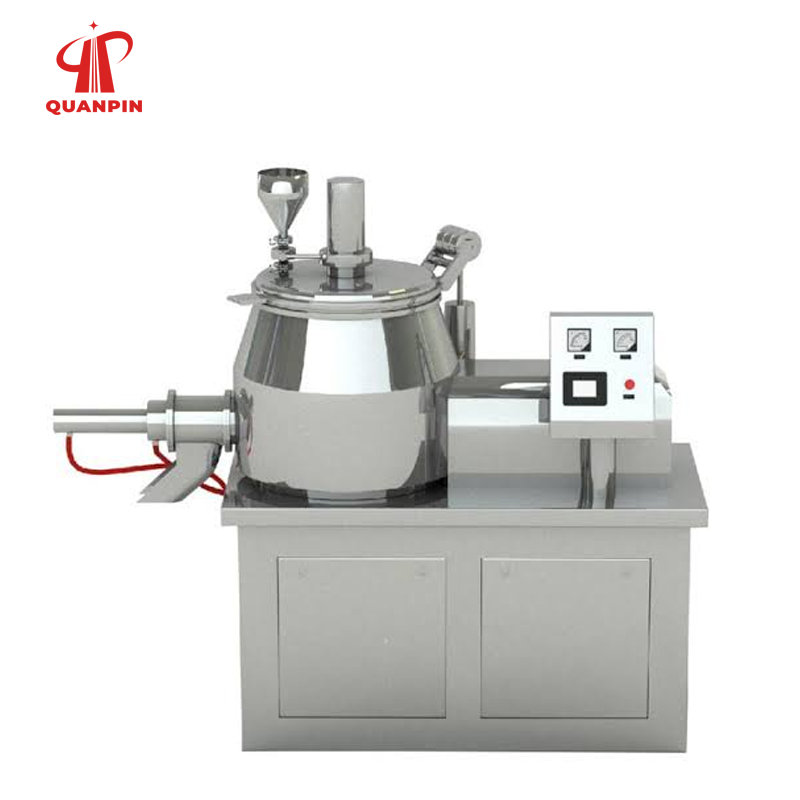
Use the GHL product information to discuss the material and required trial duty. A granulator photograph cannot confirm an imaging function or demonstrate the internal structure of a product made from another formulation.
Confirm the proposed configuration and process suitability independently of the imaging plan. Characterization can investigate material behavior, but it does not establish compatibility with every solvent, cleaning procedure or containment requirement.
Preserve a Reproducible Interpretation
The final report should connect each structural observation to an identifiable specimen and method. Preserve the acquisition, reconstruction and analysis information that makes the stated result interpretable.
Keep the conclusion proportionate to the evidence. An internal imaging study may identify the next useful experiment without yet establishing a final manufacturing specification or a complete explanation of product behavior.
Frequently Asked Questions
Does size describe internal structure?
No. An external size measurement does not directly describe the internal pore arrangement. Imaging can address internal questions, provided its resolution and specimen limitations are understood.
Are all porosity measurements equivalent?
No. Different methods can measure or resolve different aspects of pore structure. Report the method and relevant interpretation instead of assuming every porosity number is interchangeable.
Can one scan represent a batch?
No. A detailed reconstruction describes the scanned specimen. Representative sampling and appropriate additional observations are needed before drawing conclusions about a larger population of granules.
Can a dried scan describe wet massing?
Not automatically. A dried specimen has undergone further treatment. An investigation of evolving wet structure requires a method and experimental arrangement suited to that question.
Is synchrotron imaging part of GHL equipment?
No. Synchrotron imaging is a specialist research technique. Its use in published granulation studies does not mean that it is included in a standard GHL machine or trial.
What should the enquiry specify?
Provide the structural question, material state, sampling plan and required independent tests. Confirm the characterization resources and responsibilities before treating the enquiry as a complete imaging study.
Discuss Your Granulation Requirements
Discuss the material, processing objective and required trials with QUANPIN. Review the equipment information and the relevant industry applications, or send an enquiry through our contact page.
Email sales@qpdryer.com or stacie@qpdryer.com. Call +86 19850785582 or contact WhatsApp +86 15921493205 to discuss the proposed scope.