Tomato Drying Trials: Define Carotenoid Recovery Before Claiming Retention
By QUANPIN
A tomato powder can return a higher measured carotenoid concentration after drying without demonstrating that the process created more carotenoid molecules. Water removal, reporting basis and extraction from the altered matrix all affect how the result should be interpreted.
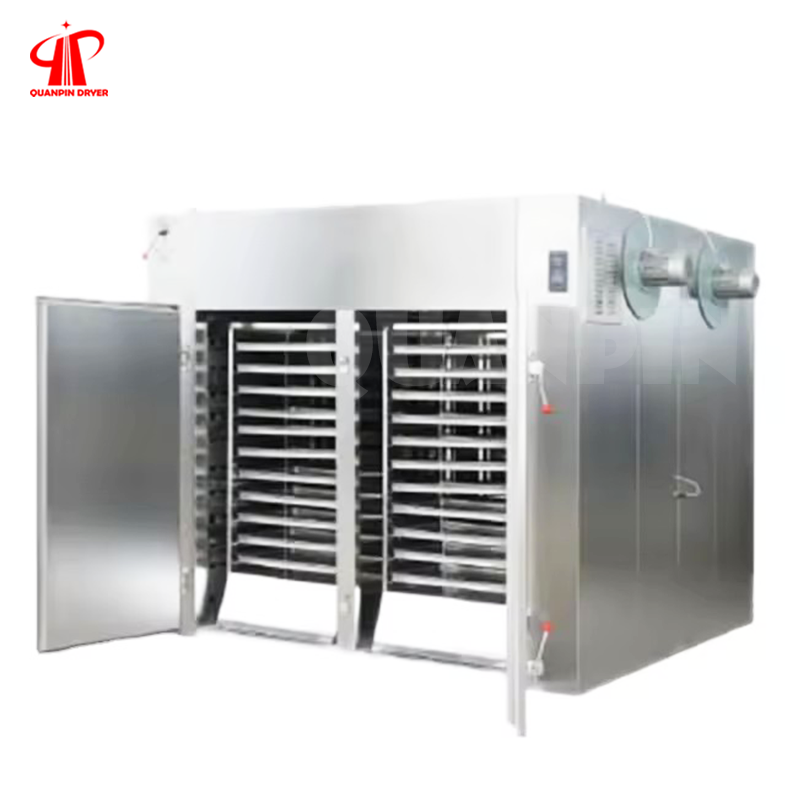
For a hot air circulation oven trial, define which compounds the laboratory will measure and how fresh and dried specimens will be compared. A red appearance or an unspecified lycopene value is insufficient for a defensible retention calculation.
Concentration, retention and extractability are different endpoints
Concentration describes an amount relative to a stated mass or volume. Retention compares a defined amount before and after processing. Changing the denominator from fresh material to dried powder can change the numerical result without describing the same physical question.
Extractability concerns what the analytical preparation recovers from the material. Drying can alter the matrix presented to the extraction procedure, so a change in measured recovery requires investigation rather than automatic interpretation as preservation or degradation.
Name the compounds and limit the claim
Tomato components should also be named accurately. Lycopene, phytoene and phytofluene are different compounds, and the measured isomer profile can be a separate question from the reported total of a selected compound.
This article proposes a development comparison, not a food health claim or a validated analytical method. Published experiments do not establish guaranteed carotenoid retention or a universal drying schedule for QUANPIN equipment.
Five details needed beside a carotenoid result
Input fraction
Identify the material fraction entering the comparison. Whole fruit, pulp, peel and pomace have different compositions and structures; keep that distinction visible instead of treating every tomato-derived specimen as interchangeable.
Mass and moisture basis
Record the fresh or dry mass basis used by the laboratory. Where moisture is needed for conversion, retain the measured value and calculation rather than substituting an assumed water content.
Compounds and isomers
Name the target compounds and whether the method resolves isomers. A broad spectrophotometric estimate and an isomer-specific chromatographic result should not be reported as the same measurement.
Extraction procedure
Describe the extraction procedure and specimen preparation. Milling, solvent selection and the number of extraction stages belong to the analytical route, not automatically to the equipment’s drying capability.
History before analysis
Preserve the collection and storage history before analysis. Light, oxygen exposure, temperature and delays may matter to the comparison and should not disappear when results are reduced to a table.
Read tomato-pulp drying measurements in context
A tomato-pulp investigation compared drying technologies while measuring phytoene, phytofluene and lycopene. It explicitly considered differences in extraction from fresh pulp and tomato powder when interpreting the measured carotenoid results.
The original tomato-pulp drying study shows why named compounds and matrix-dependent extraction belong in the trial discussion. Its experimental conditions do not supply a guaranteed retention value for another tomato variety, loading arrangement or dryer.
For an equipment comparison, distinguish a measured concentration increase from an amount-based retention conclusion. Ask which calculation was made and whether the analytical recovery from the compared material states was adequately considered.
If isomers are measured, preserve their identities and the method’s scope. A change among detected forms is not interchangeable with a change in total recovered carotenoid, and neither automatically establishes a nutritional benefit.
Design a comparable drying and analysis sequence
Agree the material duty
Agree the actual tomato material and the practical drying objective. Identify whether the product will be used as a powder ingredient or as feed for a subsequent extraction operation, since the required evidence may differ.
Collect references
Collect an appropriate input reference and representative dried specimens under a documented plan. Keep their identities attached to the corresponding material quantity, collection point and preparation history.
Set the reporting basis
Determine the reporting basis before comparing results. Fresh-weight and dry-weight figures can both be useful, but their labels and any conversions must be explicit to avoid an artificial processing advantage.
Check the analytical route
Use an analytical procedure appropriate to the compounds and matrix. If the compared states extract differently, investigate that limitation through the qualified laboratory rather than treating the difference as a machine effect.
Calculate the endpoint
Calculate the intended endpoint with the required supporting measurements. A concentration ratio alone may not answer a retention question when input and output quantities or moisture bases differ.
Review with process records
Review the individual observations with the drying record. A useful conclusion explains what was measured, what the process comparison supports and what remains uncertain about recovery or compound identity.
Read three tomato investigations without merging their endpoints
Pomace drying and extraction
A tomato-pomace study linked sustainable drying with extraction using deep eutectic systems. This makes the extraction stage part of the experimental design rather than an invisible preparation step following drying.
The original tomato-pomace drying and extraction investigation illustrates why extraction conditions and material fraction need to remain traceable. It does not establish that an extraction solvent or recovery result can be transferred unchanged to another tomato ingredient.
If the commercial project stops at dried powder, keep a later extraction experiment separate from the equipment acceptance question. An attractive extract yield does not independently verify the entire powder manufacturing route.
Solar-dried tomato measurements
A solar-dried tomato study measured several quality attributes and described solvent extraction for carotenoid and lycopene assessment. Its storage and drying context differs from a controlled hot-air oven comparison.
The original solar-dried tomato experiment provides a documented example of method-specific measurements. Solar drying results should not be represented as observed performance of a commercial CT-C oven or used as a universal process setting.
For a new trial, the transferable requirement is a clear analytical method and sample history. The actual recipe, material geometry and drying route still require their own evidence.
Thermal processing and endpoint scope
A thermal-processing tomato investigation compared chemical and other experimental outputs under its selected treatments. Its broader biological experiments are distinct from the chemical measurements needed for a powder drying comparison.
The original thermal-processing tomato study should be read within that experimental scope. Cell or isolated-tissue observations are not evidence of a human health effect and are not equipment performance claims for another processing route.
Use only the endpoints relevant to the development decision. A carotenoid measurement can support a defined chemical comparison without implying an unmeasured clinical effect, nutritional superiority or suitability for every final application.
Connect the analytical route to the actual oven trial
A hot air drying oven enquiry should describe the input material and the intended dry product. Include whether the laboratory comparison uses slices, pulp or another preparation, rather than assuming those forms behave identically.
Record loading and specimen locations according to the trial plan. Keep process observations separate from analytical preparation so that a later change in extraction is not attributed automatically to drying distribution.
If the dried material is milled before analysis, identify that preparation step. Particle preparation can affect what the laboratory receives and should be consistent across comparable specimens where the method requires it.
Retain actual moisture and material-quantity records needed by the chosen calculation. A complete retention interpretation requires more than a table of instrument concentrations with an unspecified denominator.
Investigate unexpected changes before assigning a cause
When apparent retention exceeds expectation, review basis conversions and extraction comparability before claiming a processing benefit. The result may be scientifically informative without proving formation of additional carotenoid in the dryer.
When measurements decline, consider the actual method and specimen history before assigning a specific degradation mechanism. The available evidence may justify further analysis rather than a definitive chemical explanation.
Prepare the equipment enquiry and reporting basis
Provide the actual tomato preparation, proposed loading and required final condition with the enquiry. The equipment supplier needs the material duty, while the laboratory needs the compound and reporting definitions.
State whether the acceptance question concerns drying endpoint, measured carotenoid concentration, amount-based retention or extractability for downstream processing. These objectives should not be collapsed into a single undefined quality promise.
Describe the planned analytical handover, including packaging and timing. Specimens compared under different storage histories can create uncertainty that a more detailed dryer specification alone will not resolve.
Confirm which measurements the supplier will provide and which belong to an independent or site laboratory. A general equipment demonstration should not be reported as a validated carotenoid assay or a nutritional claim.
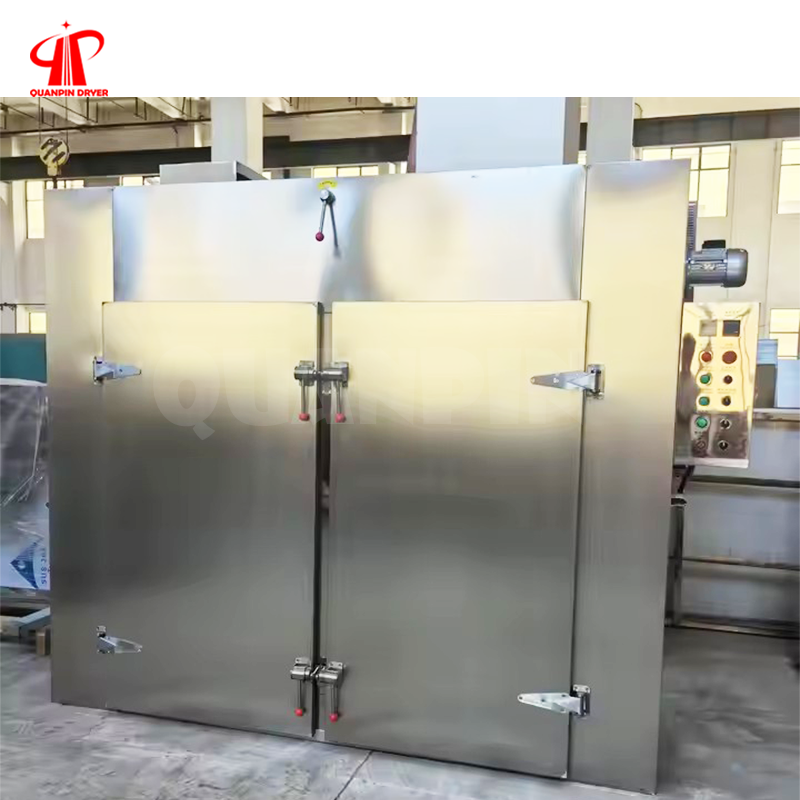
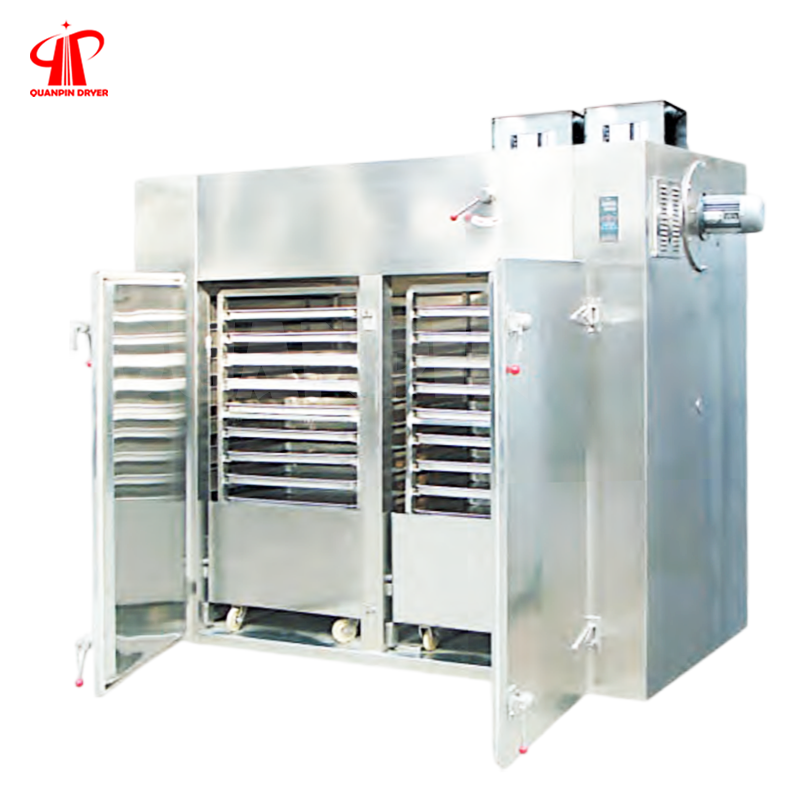
Clarify any sampling access, tray handling and cleaning requirements for the actual supplied configuration. Do not infer material or construction details solely from a photograph of another oven in the product family.
When requesting a hot air tray dryer price, identify the quoted scope and the separate development-testing responsibilities. This keeps commercial comparison distinct from unsupported promises about chemical retention.
Keep the supplied configuration and testing roles explicit
An ultrasound-assisted tomato-waste extraction study optimized recovery and then investigated encapsulation by spray drying. Its sequence makes clear that extraction and later drying are separate operations with different experimental variables.
The original extraction-optimization study supports treating recovery as method-dependent. It does not show that an oven itself performs ultrasound extraction or that its measured recovery can be used as the retention result of an unrelated drying trial.
Use extraction research to sharpen the acceptance question
A tray dryer proposal should therefore be assessed against the stated material duty, supplied configuration and agreed trial evidence. Published extraction studies can improve the analytical questions without substituting for that actual equipment comparison.
The final report should connect every carotenoid result to its compound definition, mass basis, extraction method and specimen history. That record supports a useful decision even when the evidence cannot resolve every change in the tomato matrix.
Frequently Asked Questions
Does a higher concentration prove retention?
No. Water removal and changes in analytical extractability can increase a reported concentration. Establish the comparison basis and the amount-based calculation before making a retention claim.
Are all carotenoid results equivalent?
Not necessarily. Different carotenoids and isomers can have different analytical responses. Identify what the method measures and avoid treating a broad estimate as an isomer-specific result.
Can different extraction methods be compared?
Only when the analytical scope and comparability are justified. A change in solvent, preparation or extraction efficiency can make the numerical results answer different questions.
Does the result establish a health benefit?
No. A chemical measurement, cell experiment and human nutritional outcome are distinct types of evidence. This article makes no health or dietary benefit claim for the dried product or equipment.
What records belong with the result?
Retain the input fraction, quantities, moisture basis, target compounds, extraction method, collection point and pre-analysis history. Those details allow a reviewer to understand what the reported comparison actually establishes.
What should a dryer enquiry include?
Provide the actual tomato preparation and drying objective, the required laboratory endpoint and the proposed sampling route. Confirm the supplied CT-C arrangement and testing responsibilities before accepting a broad retention claim.
Discuss Your Tomato Drying Requirements
Discuss the material, processing objective and required trials with QUANPIN. Review the equipment information and the relevant industry applications, or send an enquiry through our contact page.
Email sales@qpdryer.com or stacie@qpdryer.com. Call +86 19850785582 or contact WhatsApp +86 15921493205 to discuss the proposed scope.
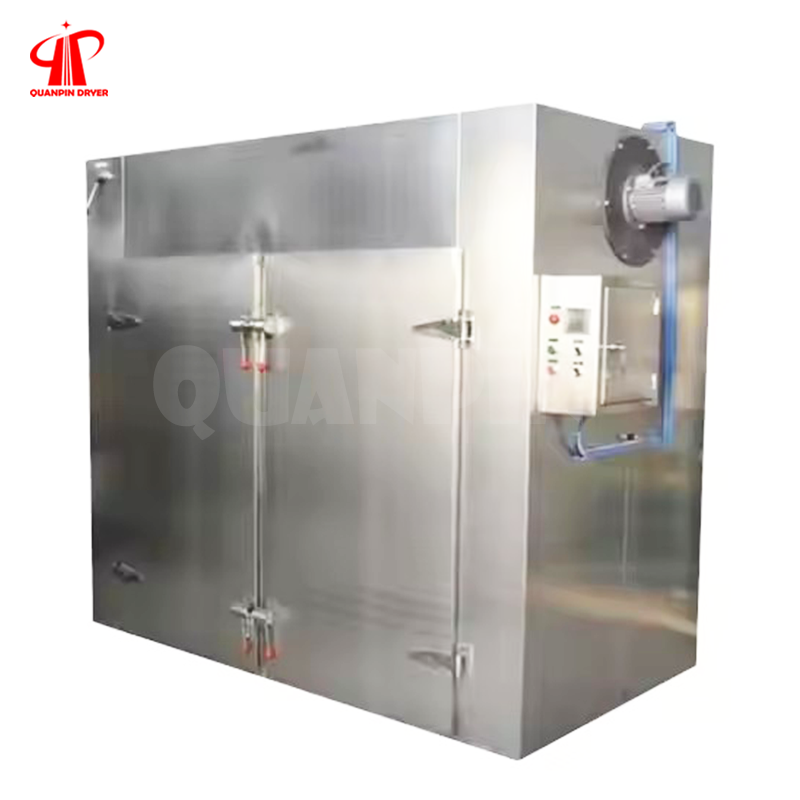
For process evaluation, consider the hot air oven for batch tray drying with circulating hot air. Confirm suitability with representative material, the required product properties and the proposed process conditions.