Vacuum Tray Drying of Hydrated Salts: Distinguish Mass Loss from Crystal-Water Transformation
By QUANPIN
An inorganic salt can lose mass during heating because liquid evaporates, because a hydrate changes, or through overlapping processes. A drying curve alone cannot identify which event produced every increment of loss.
For an FZG vacuum tray dryer trial, define whether the intended duty removes surface liquid while preserving a hydrate or deliberately changes the solid phase. These require different analytical questions.
Separate Water Removal from Phase Identification
Free liquid and water incorporated in a crystal are different material descriptions. Report the state actually established rather than calling every water-related result surface moisture.
A mass-loss method measures a change under its stated conditions. It does not independently identify the original or resulting crystal structure.
Define the Intended Solid Product
Vacuum tray drying exposes loaded material to an agreed thermal and pressure history. That environment does not guarantee retention of every starting hydrate.
A vacuum tray drying machine proposal should therefore identify the salt, starting phase and intended solid product before any numerical endpoint is selected.
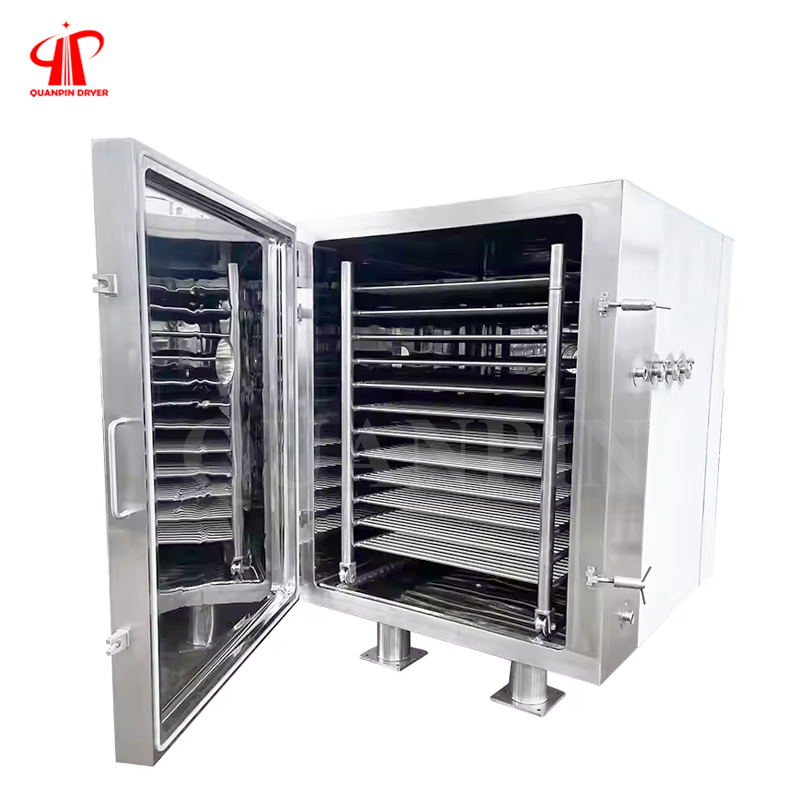
Five Inputs for Interpretable Salt Measurements
Salt and hydrate identity
Identify the salt composition and known hydrate form. Retain uncertainty if the starting material has not been characterised by a suitable phase method.
Surface-liquid history
Describe mother liquor, surface liquid and any washing history. Their presence can complicate interpretation of a subsequently measured mass decrease.
Trial conditions
Record the actual material temperature and chamber-pressure history where available. Utility settings should remain distinguishable from sample conditions.
Analytical methods
State the analytical procedure and reporting basis. Thermogravimetry, diffraction and spectroscopy investigate different aspects of the same material.
Specimen handling
Preserve the specimen collection and handling history. Exposure between collection and analysis can change a water-sensitive salt specimen.
Use Thermal Research without Inventing an Endpoint
Original gypsum research compared dehydration under different atmospheres and used thermal analysis and proton magnetic resonance to investigate water states. Under the studied reduced-pressure or dry-flow conditions, the author did not observe an intermediate hemihydrate. See the original Japanese gypsum-dehydration experiment.
These findings concern the studied gypsum preparations and laboratory conditions. They illustrate why the atmosphere and analytical method matter, without establishing a universal phase sequence or operating programme for a QUANPIN tray load.
For a new salt duty, first decide which transformations are permitted. A lower final mass is not automatically a better result if the required hydrate must remain.
This makes the product definition a prerequisite for interpreting a drying endpoint. The laboratory and equipment supplier need the same description of the intended solid.
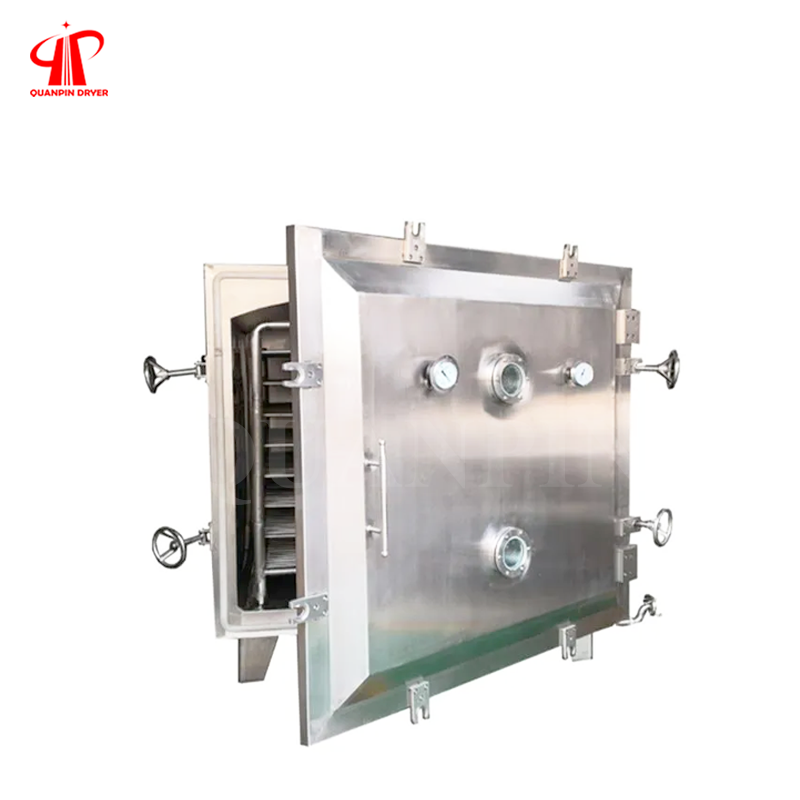
Follow Six Specimen Boundaries
Receiving
At receiving, retain the salt identity and documented preparation. A familiar chemical name does not establish a particular hydration state.
Loading preparation
Before loading, identify the sample used to represent the feed. Separate that specimen from material already conditioned for laboratory analysis.
Drying history
During drying, retain the actual trial history. An unexplained final mass cannot show when a structural transformation occurred.
Collection
At collection, label the specimen and collection time. Keep its process history connected to the subsequent analytical record.
Transfer
During transfer, follow the laboratory handling procedure appropriate to the water-sensitive material. Record departures that may alter interpretation.
Analysis
During analysis, identify the measured property. A result assigned to a phase should be supported by a method capable of resolving that phase.
Combine Mass and Phase Evidence Deliberately
Read mass-loss events
Begin with complementary measurements chosen for the actual uncertainty. More tests are useful only when their specimen basis and interpretation are clear.
A mass-loss trace can show overlapping or separated events. Assigning an event to crystal-water removal requires supporting evidence rather than its position alone.
Retain the instrument atmosphere and heating programme with the trace. A different experimental history may produce a different observed sequence.
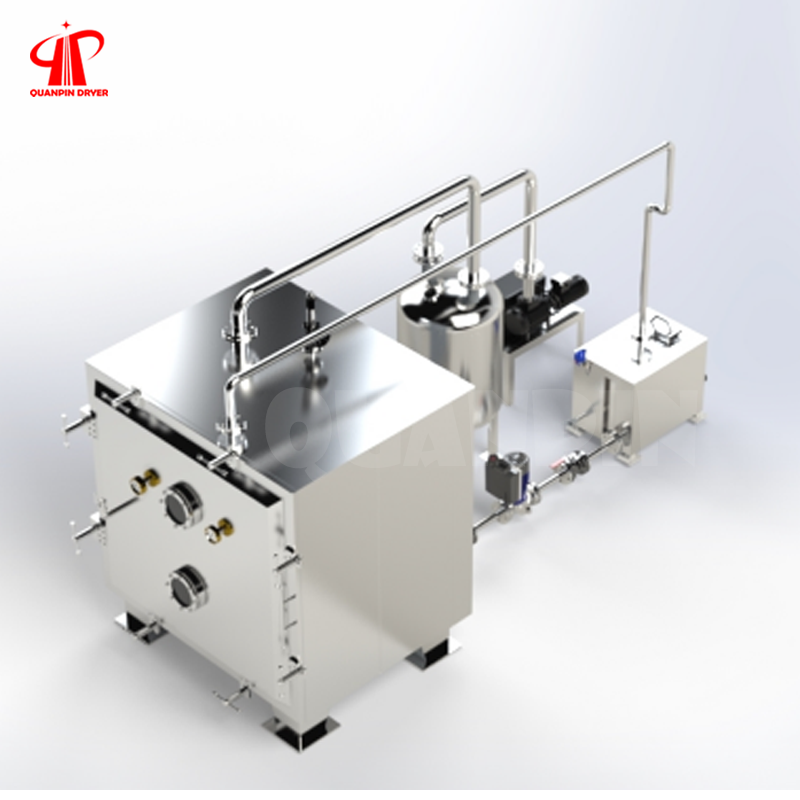
Use phase-sensitive observations
Diffraction can help distinguish crystalline phases where the method is suitable. An absent resolved peak should be interpreted within detection and specimen limitations.
Spectroscopy provides another description of local chemical environments. Interpret the bands for the actual salt and avoid borrowing an unrelated assignment.
Compare the thermal and structural observations on appropriately linked specimens. Separate specimens with different handling histories may not represent the same material state.
Preserve the comparison boundary
A vacuum tray dryer for chemical powders should be evaluated using representative feed. A small analytical specimen does not reproduce every thermal and transport boundary of a loaded tray.
Use literature to frame hypotheses about the transformation, then test the actual material. Do not convert an analytical experiment directly into equipment cycle instructions.
Where results disagree, preserve the disagreement. It can identify a specimen-history difference, overlapping event or unresolved phase question needing further investigation.
Account for the Starting Crystal State
Original experiments on synthetic gypsum crystals found that crystal state and shape distribution affected dehydration behaviour and thermal curves. See the original crystal-state comparison.
This supports retaining crystal characteristics alongside composition. It does not establish that all materials sold under the same salt name follow one identical thermal response.
An apparently broad thermal event may conceal a population of different crystal behaviours. The actual measurement needs interpretation within the studied specimen and method.
Keep the proposed industrial endpoint distinct from the research observation. Agree which phase and water-related requirements the actual product must satisfy.
Do Not Infer Structure from External Shape
Original sodium-sulfate microscopy and Raman work showed that hydrated crystals could retain an overall external shape while their internal dried structure changed. See the original hydrated-salt crystal investigation.
A familiar outline is therefore insufficient evidence of an unchanged hydrate. The experiment concerns specific salts, solution exposure and laboratory conditions, not demonstrated FZG performance.
Read Spatial and Bulk Evidence Together
A recent original research preprint combined Raman, weight-loss measurements and imaging to examine distinct regimes during mirabilite dehydration. See the author-deposited multiscale dehydration study.
The preprint’s mechanism interpretation remains tied to its tested system. Its reported structural change should not be adopted as a universal shrinkage factor for another salt.
Its methodological value is the combination of spatial and bulk evidence. A single total mass result cannot reveal every transformation that microscopy or phase-sensitive methods may resolve.
For a plant trial, select measurements that can answer the product question without assuming all research instruments are part of the supplied dryer.
Another original research preprint reported water-rich amorphous products from drying mixed-metal sulfate solutions. See the author-deposited mixed-sulfate experiment.
This is a mixture-specific solution-drying result. It does not show that every dried salt crystallises, nor that every water-containing product is a simple crystalline hydrate.
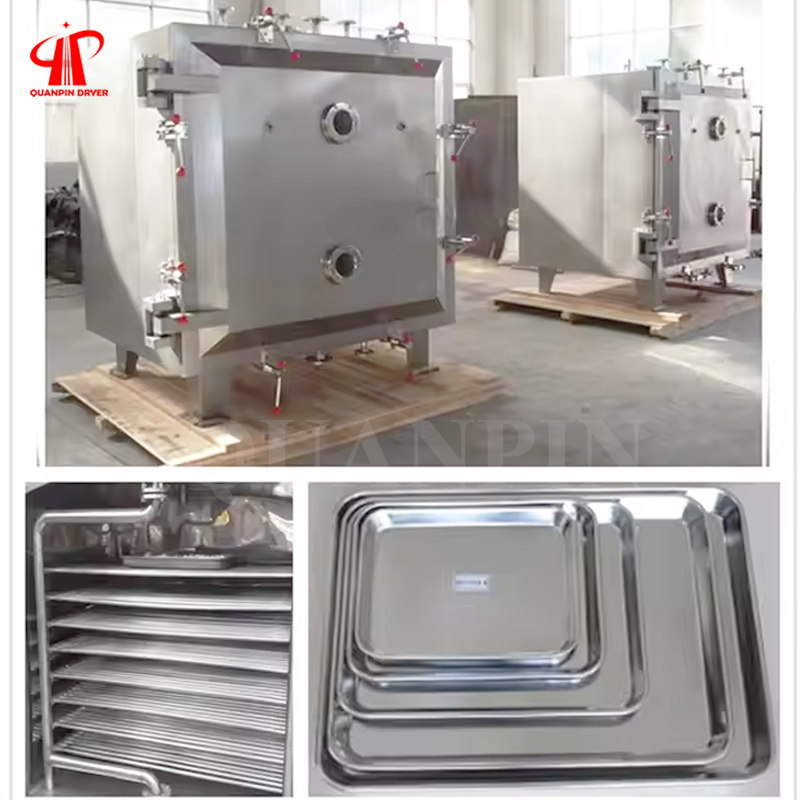
Prepare the Chemical Salt-Drying Enquiry
Provide QUANPIN with the salt composition, starting phase information and intended product state. Explain whether free-liquid removal or a controlled solid transformation is the actual objective.
A vacuum tray dryer price comparison should include the confirmed trial and analytical responsibilities. Specify which measurements are supplied separately from the equipment.
Retain Distinct Mass and Phase Conclusions
Retain sample identities, process histories, analytical procedures and structural results together. Mark any phase assignment that remains provisional.
Conclude separately about measured mass loss and demonstrated solid-state change. This keeps a drying observation from becoming an unsupported statement about crystal identity.
Frequently Asked Questions
Does mass loss identify free water?
No. A mass decrease is an observation under defined conditions; it does not identify the physical location or binding state of all removed water.
Does unchanged shape prove an unchanged hydrate?
No. A retained outline can coexist with changes inside the crystal. Use phase-sensitive evidence where the hydrate identity matters.
Can gypsum set another salt endpoint?
No. Different crystal states, compositions and experimental histories limit transfer. The actual salt and required product need their own evaluation.
Does vacuum establish phase identity?
Not by itself. Temperature and pressure describe process conditions, while phase identity requires suitable material evidence and representative specimens.
Can an analytical specimen define tray capacity?
No. Analytical specimens and loaded trays have different geometry and transport boundaries. Literature supports questions rather than a guaranteed industrial cycle.
What should accompany an enquiry?
Provide salt and phase identities, liquid history, intended product state, sampling procedure and complementary analytical requirements. Identify who will interpret the measurements.
Discuss Your FZG Salt-Drying Duty
Discuss the material, processing objective and required trials with QUANPIN. Review the equipment information and the relevant industry applications, or send an enquiry through our contact page.
Email sales@qpdryer.com or stacie@qpdryer.com. Call +86 19850785582 or contact WhatsApp +86 15921493205 to discuss the proposed scope.
For process evaluation, consider the vacuum drying oven for batch drying on trays under vacuum. Confirm suitability with representative material, the required product properties and the proposed process conditions.